DbcultAccessing Vault...
Cult Review
Senior Film Conservator
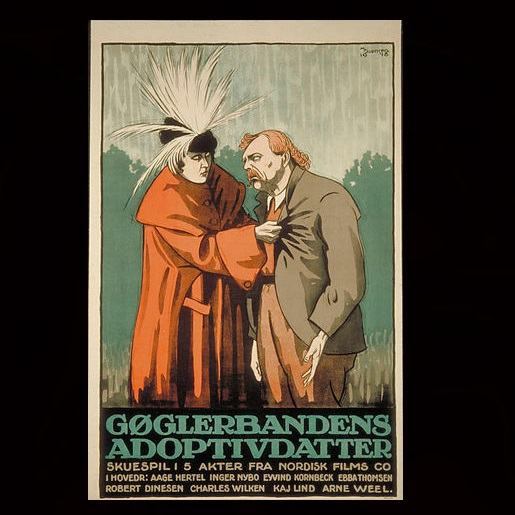
To witness Gøglerbandens adoptivdatter in the modern era is to participate in a cinematic séance. This 1919 relic from the Nordisk Film powerhouse is not merely a piece of celluloid history; it is a breathing, flickering testament to a period when Denmark dictated the visual grammar of the world. The film, directed with a keen eye for the chiaroscuro of the human soul, navigates the treacherous waters of social stratification with a sophistication that belies its age. It eschews the simplistic morality plays common in early American cinema—such as the heavy-handedness found in St. Elmo—and instead opts for a nuanced, almost tactile exploration of the itinerant life.
The visual texture of the film is immediately arresting. The cinematography captures the ephemeral nature of the showman’s life—the 'gøgler'—with a grit that contrasts sharply with the sterile elegance of the aristocratic parlors the protagonist eventually encounters. There is a palpable sense of atmospheric pressure in the scenes within the circus wagons; the air feels thick with the scent of old wood, cheap makeup, and the quiet desperation of those living on the fringes. Unlike the more sanitized portrayal of domestic struggle in The Prince Chap, this film leans into the visceral grime of the performers' existence.
Kai Lind delivers a performance of remarkable restraint. In an era where histrionics were the standard currency of the screen, Lind utilizes his physicality to convey a complex internal landscape. His portrayal of the troupe leader is neither a caricature of the villainous showman nor a saintly guardian; he is a man forged by the necessity of survival. This moral ambiguity is a hallmark of A.V. Olsen’s writing, which avoids the black-and-white characterizations seen in contemporary works like Western Blood. Instead, the characters inhabit a gray space where every act of kindness is tempered by the looming specter of poverty.
Inger Nybo, as the titular adopted daughter, serves as the narrative’s emotional fulcrum. Her performance is a masterclass in silent expressionism. She conveys the burgeoning awareness of her own 'otherness' with a subtlety that is haunting. As she moves through the world of the circus, she is clearly a part of it, yet there is a lingering refinement in her gestures that suggests a different provenance. This thematic obsession with the 'foundling' who possesses inherent nobility is a recurring trope of the era, yet here it is handled with a psychological depth that rivals the character arcs in The Better Wife.
The film’s exploration of class is not merely a plot device but a profound existential inquiry. When the girl is confronted with her true heritage, the conflict is not just about wealth or status; it is about the fundamental construction of the self. Can a person truly belong to a world they were stolen from, or are we irrevocably shaped by the environment of our upbringing? This question echoes the thematic concerns of The Squatter's Daughter, yet the Danish approach is far more melancholic and fatalistic. The resolution does not offer easy comfort; it leaves the viewer with a sense of the permanent scars left by social displacement.
The direction by the Nordisk team (though credits from this era can be murky, the house style is unmistakable) demonstrates a sophisticated understanding of pacing. The transition between the frenetic energy of the circus performances and the hushed, stagnant atmosphere of the noble estates is handled with surgical precision. The use of depth of field—even within the limitations of 1919 technology—creates a layered narrative where the background action often comments on the foreground drama. This is particularly evident in the scenes featuring Ebba Thomsen, whose screen presence is so magnetic it threatens to overshadow the central plot. Thomsen, a titan of the silent era, brings a level of gravitas that elevates the film from a mere melodrama to a high-art tragedy.
Furthermore, the film’s editing is surprisingly modern. The rhythmic cutting during the climactic sequences creates a sense of mounting dread that is rarely achieved in films of this vintage. While Who Is Number One? relied on episodic cliffhangers to maintain interest, Gøglerbandens adoptivdatter builds its tension through psychological friction and the slow-burn revelation of secrets. It shares a certain DNA with the mystery elements of The Green Cloak, but it prioritizes emotional resonance over plot-driven puzzles.
The ensemble cast, including stalwarts like Charles Wilken and Aage Hertel, provides a rich tapestry of human eccentricity. Each member of the 'gøglerbande' feels like a fully realized individual with their own history and motivations. This ensemble approach prevents the film from becoming a mere star vehicle and instead creates a sense of a living, breathing community. The interactions between the troupe members are imbued with a weary affection that is genuinely moving. Even the smaller roles, such as those played by Peter Jørgensen and Frederik Buch, are handled with a level of care that suggests a deep respect for the craft of acting.
One cannot discuss this film without mentioning its thematic cousin, The Typhoon. Both films deal with characters who are outsiders in their own environments, struggling to navigate cultural and social barriers that are invisible yet insurmountable. However, where The Typhoon focuses on the clash of national identities, Gøglerbandens adoptivdatter focuses on the internal fractures caused by class mobility. It is a more intimate, and perhaps more devastating, look at the price of belonging.
As we analyze the film's second act, the narrative takes a turn toward the Gothic. The discovery of the daughter’s true identity is handled not with a triumphant fanfare, but with a sense of impending doom. The cinematography shifts, employing harsher shadows and more restrictive framing to mirror the protagonist's feeling of entrapment within her 'rightful' social sphere. This stylistic shift is reminiscent of the atmospheric tension in Hidden Valley, yet it is grounded in a much more recognizable human reality. The film suggests that the 'civilized' world of the elite is just as much a performance as the circus—only the costumes are more expensive and the stakes are higher.
The screenplay by A.V. Olsen is a marvel of economy. In the absence of spoken dialogue, the intertitles are used sparingly, allowing the visual storytelling to carry the heavy lifting. The dialogue that is provided is sharp and purposeful, avoiding the flowery sentimentality that plagued many silent scripts. This lean approach to storytelling is what allows the film to remain so engaging over a century later. It doesn't feel like a museum piece; it feels like a modern story told through an ancient medium. The parallels with Saints and Sorrows are evident in how both films use silence to amplify the internal agony of their protagonists.
Contextually, Gøglerbandens adoptivdatter arrived at a pivotal moment in European history. The aftermath of World War I had left the continent’s social structures in a state of flux. The film’s preoccupation with the instability of identity and the fragility of class status would have resonated deeply with a contemporary audience. It reflects a world where the old certainties had been dismantled, and individuals were forced to reinvent themselves in the ruins of the old order. This sense of post-war malaise is something it shares with The Governor's Boss, though the Danish film approaches the subject with a more poetic sensibility.
Even the lighter moments of the film, which provide a brief respite from the central drama, are tinged with a certain irony. The scenes of circus life are filled with a frantic, performative joy that feels thin, as if the performers are trying to convince themselves as much as the audience. This layering of emotion is a testament to the sophisticated direction and the high caliber of the Nordisk acting ensemble. It’s a far cry from the straightforward escapism of Happiness a la Mode or the lighthearted antics of Captain Jinks of the Horse Marines.
The conclusion of Gøglerbandens adoptivdatter is where the film truly cements its status as a masterpiece. It avoids the easy 'happily ever after' in favor of an ending that is both intellectually satisfying and emotionally devastating. The protagonist's ultimate decision is a rejection of the binary choices offered to her. She chooses a path that is uniquely her own, even if it means existing in a state of permanent exile from both worlds. This ending is as bold and uncompromising as anything found in The Trouble Buster, though it carries a much heavier emotional weight.
In the final analysis, this film is a towering achievement of the silent era. It showcases a national cinema at the height of its powers, utilizing every tool in the cinematic arsenal to tell a story that is as relevant today as it was in 1919. The performances are haunting, the direction is masterful, and the themes are universal. It stands as a stark reminder that before Hollywood dominated the global screen, the Danes were the true poets of the moving image. To watch Gøglerbandens adoptivdatter is to rediscover the soul of cinema itself—a medium capable of capturing the most fleeting of human emotions and preserving them in a amber of light and shadow. While films like Miss U.S.A. may have captured the zeitgeist of their moment, this Danish gem captures something far more enduring: the immutable complexity of the human heart.
IMDb 5.9
1934
Community
Log in to comment.