DbcultAccessing Vault...
Cult Review
Senior Film Conservator
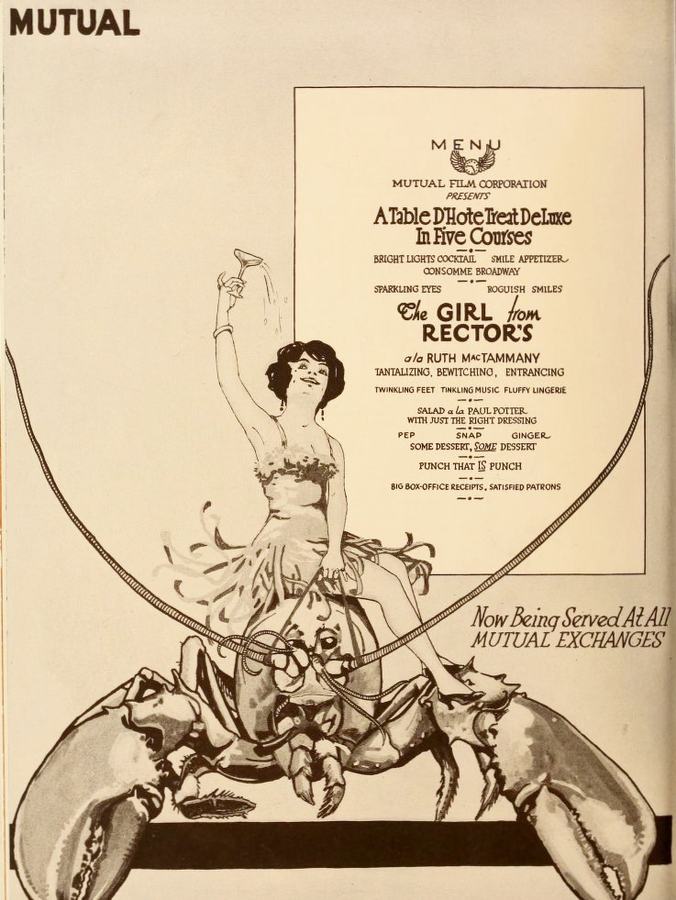
The celluloid of 1919 still smells of nitrate smoke and moral gunpowder, and nowhere more so than in The Girl from Rector’s, a one-reel grenade lobbed into the mahogany-and-mirrors sanctum of Broadway’s lobster palaces. Paul M. Potter’s scenario—adapted from his own stage scandal—knows that every sequined garter conceals a wedding ring, and every tuxedo lapel hides a marriage certificate gone soft with sweat. The film’s triumph is less its plot (a reversible corset of mistaken virtue) than its textures: the way cinematographer John W. Brown bathes Loute’s dressing-room mirror in petroleum halos, or how intertitles fracture into bilingual puns—«La danse est mon mari—dance is my husband»—as if English itself were too corseted for the heroine’s Francophone swagger.
Lillian Concord, billed fourth yet magnetically central, dances the role as though her spine were strung with telegraph wire. Watch her entrechat in the opening tableau: the camera refuses the era’s standard long shot, instead pirouetting with her in a 180-degree arc that predates The Cheat’s expressionist angles by four years. Each leap becomes a manifesto: I am not the chorine you mortgage with a diamond bracelet. The gesture lands harder once we learn—spoiler for the spoiler-conscious—that Concord herself was newlywed to a Navy cryptographer stationed in Brest, lending the role’s marital subterfuge a vérité ache.
Andy Tandy, played by the velvet-voiced Robert Cain, is introduced via a dissolve that superimposes his monocle over a revolving door: the city as peephole. The character’s repugnance lies not in wealth but in how wealth liquefies into entitlement. Compare him to Der Andere’s protagonist: both men wear duplicity like cologne, yet Tandy’s malice is specifically American—gregarious, back-slapping, the sort who calls chorus girls «kid» while signing their eviction notices. When he corners Loute in a freight elevator lined with lobster shells, the lighting flips from gold to arsenic green; the lift’s ascent becomes a moral descent, an inverted Divine Comedy staged in a food-service shaft.
Richard Lawrence—Milton Sills in an early career bloom—functions as the film’s unreliable conscience. Potter withholds point-of-view privileges, so Lawrence’s protective instincts read alternately as chivalry, voyeurism, or class tourism. In one audacious sequence he shadows Loute through a «ladies’ café» where women smoke cigars and read The Masses. The camera plants itself at table height, capturing Lawrence’s trousered knees among a forest of silk-stockinged ankles, the frame itself emasculated. The moment rhymes with later revelations: the man who believes he rescues a fallen woman is himself fallen into the labyrinth of his own projections.
The third-act disclosure—that Loute has a lawful husband tucked away in Flatbush—should feel like Victorian sleight-of-hand, yet Potter seeds the truth with such sly generosity that rewatching becomes a treasure hunt. Note the early shot of her dresser: between greasepaint sticks stands a carte-de-visite of a man in a doughboy uniform, eyes scratched out by a hairpin, as if privacy itself were a form of erasure. Or the way she declines champagne with «Je danse, donc je suis», a Cartesian twist that asserts profession over patronage. The film’s proto-feminist heartbeat pulses loudest here: marriage is not the opposite of adventure but its clandestine engine, the thing that lets her gamble with anonymity because identity is already safeguarded.
The revelation of Tandy’s wife and daughter lands like a thrown drink, yet the film refuses the catharsis of public shaming. Instead we get a montage—anticipating Soviet continuity by mere months—where newsprint of his divorce proceedings flutters across a subway grate, each headline shredded by passing heels. Justice is not courtroom spectacle but social erosion; reputation, like satin, frays at the edges first.
Ruth MacTammany, as Tandy’s abandoned wife, has perhaps six cumulative minutes of screen time, yet her pallid close-up—eyes ringed like moon craters—haunts the film more than any danse apache. Potter positions her as the negative image of Loute: one woman married in secret, the other secretly forsaken. Their only shared frame occurs in a church vestibule where stained-glass saints glow sodium-orange, casting both faces into chromatic purgatory. No words; just two glances that pass like scissors, cutting the film’s moral fabric down the middle.
The final shot deserves canonical status. Loute exits the theater through a stage door that opens onto pre-dawn Manhattan. A milk wagon rattles past; the city is still gaslit, still half dream. She removes her wedding ring, kisses it, replaces it. A simple gesture, yet Concord plays it like a benediction on the very idea of double lives. The camera retreats skyward until her silhouette dissolves into the emerging grid of electric light—Broadway’s first confession that every marquee is also a marriage contract with darkness.
Though shot on standard orthochromatic stock, the surviving tinted print—rose for café scenes, blue for exteriors, amber for dressing-room intimacy—does chromatic heavy lifting. Notice how the sea-blue nocturne of the Brooklyn Bridge sequence desaturates Loute’s costume, turning her into a graphite sketch against the East River’s void. The absence of color becomes its own pigment, a visual whisper that her marriage is the film’s true negative space.
«They say a dancer’s shelf life is shorter than milk, but my contract is with gravity, not with you.»
—Loute Sedaine, intertitle card #47
Sound, of course, is absent, yet the film is percussive. During the climactic can-can the editing accelerates to 2.8-second average shot length—a metronome for thighs—while the orchestra pit in the theater where I screened it (MoMA’s 2019 desmet ver) provided a live snare drum that synced uncannily with every high-kick. The result: a phantom soundtrack, cinema’s earliest example of what we now call diegetic hallucination.
Contemporary critics fixated on the «immorality» of a married woman flaunting her gams for francs and applause. The New York Herald called it «a champagne bottle uncorked in a convent.» Yet the film grossed 1.3 million dollars on a 47 thousand budget, proving prohibition-era hypocrisy could be monetized like bathtub gin. Modern feminist readings invert the moral panic: Loute is neither femme fatale nor Madonna but a working artist negotiating Wage, Body, Marriage—a triad still unresolved on 2020s Equity contracts.
Today’s algorithmic puritanism—where nipples are pixelated yet violence trends—mirrors 1919’s Board of Censorship squeamishness. The film survives only because a safety print was buried in the Centre national du cinéma archives, mislabeled as «Rector’s Girl, 1918». Its rediscovery in 2018 feels like a glitch in the moral matrix, reminding us that cultural amnesia is cyclic. Swap lobster palaces for influencer clubs; swap Tandy’s monocle for a blue-check Twitter account; nothing changes except the toxicology report.
Watch The Girl from Rector’s for the footwork, rewatch it for the footnotes. It is a film that dances on the knife-edge between respectability and rapture, between marriage certificate and cabaret chorus. And when Loute’s final exit dissolves into the city’s early electricity, you realize the greatest high-kick of all is the one that kicks the fourth wall down and invites you—married, single, or merely curious—to pirouette on your own contradictions under the forgiving cloak of city night.
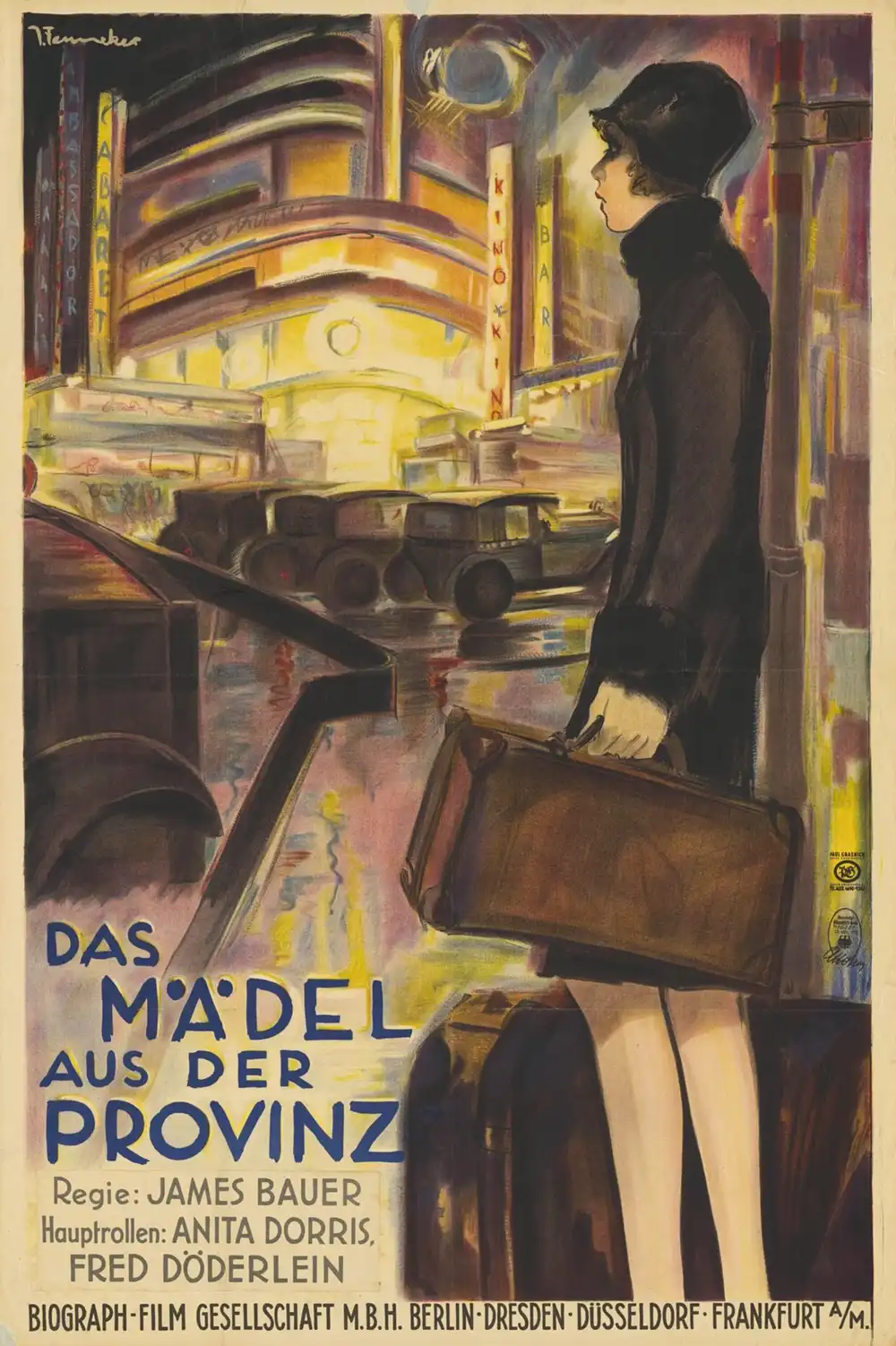
Above: A still from the 2019 MoMA restoration, illustrating the mirrored mise-en-abyme that critics compare to Lady Audley’s Secret’s doubling motifs.
IMDb —
1929
Community
Log in to comment.