DbcultAccessing Vault...
6.6/10
Senior Film Conservator
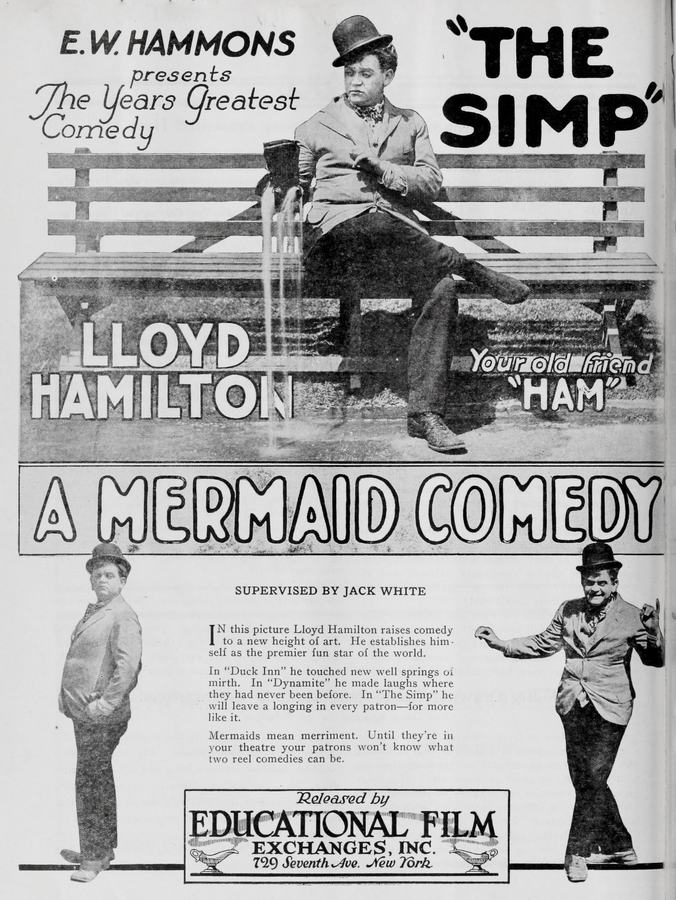
A definitive 6.6/10 rating for a film that redefined the boundaries of cult cinema. The Simp remains a cornerstone of transgressive art.
Stepping into the world of early 20th-century silent cinema often feels like unearthing a forgotten treasure, a celluloid artifact that speaks volumes without uttering a single word. Such is the experience of encountering The Simp, a 1920 production that, despite its seemingly unassuming title, offers a surprisingly nuanced and emotionally resonant journey. This film, a product of the creative minds of Arthur Somers Roche and Owen Davis, and brought to life by the inimitable Lloyd Hamilton, is more than just a relic; it's a poignant reflection on human fragility, the arbitrary nature of fate, and the cruel irony of good intentions gone awry. It is a testament to the power of visual storytelling, where every gesture, every expression, and every intertitle carries the weight of an unspoken narrative, drawing the viewer into a world both distant and eerily familiar.
At its core, The Simp unfurls a narrative steeped in the stark realities of destitution. We are introduced to Hamilton, portrayed with a masterful blend of vulnerability and understated resilience by Lloyd Hamilton himself. His plight is immediately established as one of profound familial rejection; cast out from his home by a seemingly unfeeling father, he is forced into the harsh anonymity of urban homelessness. His sanctuary becomes a public park, a common ground for the desperate and the forgotten, a place where the grandeur of nature offers little comfort against the gnawing pangs of hunger and the chill of societal indifference. This initial setup paints a vivid, if bleak, portrait of a man on the precipice, teetering between survival and surrender. It's a powerful opening, setting a somber tone that grounds the film's subsequent comedic and dramatic beats in a bedrock of genuine human suffering. The cinematic language of the era, relying heavily on visual cues and expressive pantomime, excels at conveying this immediate sense of despair, making Hamilton’s predicament instantly relatable even across the chasm of a century.
A turning point, however, arrives in the form of a compassionate young woman, brought to life by Marvel Rea. Her appearance is akin to a sudden ray of sunshine piercing through a dense cloud cover. Sensing Hamilton’s profound vulnerability and the quiet dignity with which he endures his hardship, she extends a hand of genuine human kindness. This act of unsolicited benevolence is not merely a plot device; it serves as a crucial thematic anchor, highlighting the transformative power of empathy in a world often characterized by its harshness. She leads him to a rescue mission, an institution ostensibly dedicated to providing succor to the downtrodden. For a fleeting moment, the viewer, alongside Hamilton, is lulled into a sense of impending relief, a belief that his fortunes are about to turn. This delicate dance between hope and despair is masterfully orchestrated, drawing the audience deeper into Hamilton’s emotional landscape, priming them for the inevitable twist of fate that is to follow. The sequence at the mission, intended as a haven, subtly builds an atmosphere of fragile optimism, only to cruelly subvert it, demonstrating the film's keen understanding of dramatic irony.
It is within the very confines of this supposed sanctuary that The Simp delivers its most potent dramatic blow. Hamilton, though entirely innocent and driven only by the desperate need for sustenance and shelter, finds himself inexplicably implicated in the theft of the collection basket. This accusation, a devastating blow to his already fragile existence, transforms his brief respite into a nightmarish ordeal. The film ingeniously exploits the inherent irony of the situation: a man seeking help is instead branded a criminal, his vulnerability twisted into perceived culpability. This narrative turn is not merely a plot contrivance; it's a trenchant commentary on societal judgment, the ease with which appearances can condemn, and the precariousness of reputation, especially for those on the margins. The film does not revel in Hamilton’s misfortune but rather presents it with a quiet, almost observational pathos, allowing the audience to feel the sting of injustice alongside him.
The brilliance of this particular plot point lies in its ability to generate both dramatic tension and a profound sense of sympathy. Hamilton’s wide-eyed bewilderment and silent protestations of innocence are conveyed with such clarity by Lloyd Hamilton’s performance that the audience is left with no doubt as to his true character. The accusation serves as a powerful symbol of how easily the system, even one built on benevolence, can fail the very individuals it purports to serve. It highlights the often-unseen struggles of the poor, who are not only deprived of material comforts but also frequently stripped of their dignity and good name. This theme of false accusation, while a staple in many narratives, feels particularly potent here, amplified by the silent medium’s reliance on visual storytelling to convey Hamilton’s internal turmoil and the external forces arrayed against him. It's a stark reminder that sometimes, the greatest threats come not from overt malice, but from misunderstanding and the rush to judgment. One might even draw parallels to films like A Case at Law, where the intricacies of legal systems often entangle the innocent, or even the more fantastical elements of The Hand Invisible, where unseen forces conspire against a protagonist, though here the forces are tragically human and societal.
Lloyd Hamilton, a name that perhaps doesn't resonate with the same immediate recognition as Chaplin or Keaton today, was nonetheless a significant figure in early silent comedy. In The Simp, he delivers a performance that transcends mere slapstick, venturing into the realm of tragicomedy with remarkable finesse. Hamilton's particular genius lay in his ability to embody the 'simp' – a character often naive, earnest, and perpetually bewildered by the complexities and injustices of the world around him. His physical comedy is never gratuitous; it's always rooted in his character's circumstances, conveying his awkwardness, his desperation, and his profound sense of being out of place. When he is kicked out of his home, his slumped shoulders and downcast gaze speak volumes. When he finds temporary solace, his tentative smiles are fleeting but genuine. And when he is accused, his wide, innocent eyes and frantic, yet restrained, gestures of denial are heartbreakingly effective.
Hamilton’s portrayal here is a masterclass in silent acting, relying on subtle facial expressions and precise body language to communicate a rich inner life. He doesn't need intertitles to tell us he's heartbroken, confused, or unjustly accused; his very being radiates these emotions. This nuanced approach differentiates him from some of his more overtly boisterous contemporaries. While films like Oh, Susie, Be Careful might lean more heavily into broad comedic scenarios, Hamilton often found humor in the pathos of everyday struggles. His character in The Simp evokes a deep well of sympathy, making the audience genuinely root for his vindication. It’s a performance that reminds us of the profound expressive power of the human form when words are absent, highlighting why silent cinema, in its heyday, captivated millions. His ability to blend genuine pathos with moments of accidental humor, often derived from his character's earnest attempts to navigate an unfair world, is truly what makes his performance in The Simp stand out.
While Lloyd Hamilton anchors The Simp, the film benefits greatly from its supporting cast. Marvel Rea, as the girl who extends a lifeline to Hamilton, embodies compassion and serves as the narrative’s moral compass. Her gentle demeanor and genuine concern provide a stark contrast to the harshness of Hamilton’s circumstances, underscoring the film’s exploration of kindness amidst adversity. Otto Fries and Jess Weldon, though perhaps in less prominent roles, contribute to the film's texture, filling out the world with believable characters who react to Hamilton’s plight in various ways, from indifference to suspicion. The interplay between these characters, though wordless, is remarkably effective in conveying the social dynamics at play, particularly within the confines of the rescue mission.
The strength of The Simp also lies in its well-structured narrative, credited to Arthur Somers Roche and Owen Davis. Given the simplicity of the core plot, their achievement lies in crafting a story that feels both compelling and emotionally resonant. They understand the power of dramatic irony, building up Hamilton’s hopes only to dash them in a way that feels tragically inevitable rather than merely coincidental. The pacing is deliberate, allowing moments of quiet reflection and building tension effectively towards the climactic accusation. The writers skillfully use the silent medium to their advantage, relying on visual cues and character reactions to propel the story forward, ensuring that the audience remains invested in Hamilton’s fate. Their writing, in essence, provides a sturdy framework upon which the actors can weave their silent magic, demonstrating a clear understanding of how to build empathy and suspense without the aid of dialogue. This attention to narrative construction is a hallmark of well-made silent films, allowing them to transcend their technical limitations and deliver powerful emotional experiences, much like the intricate plotting seen in works such as On the Trail of the Spider Gang, albeit in a different genre.
Beyond the individual plight of Hamilton, The Simp offers a subtle yet potent critique of societal structures and the ease with which individuals, particularly the vulnerable, can be judged and condemned. The rescue mission, a place meant for salvation, becomes a site of further humiliation and injustice. This paradox is central to the film’s thematic concerns. It forces the viewer to confront questions about the true nature of charity, the biases inherent in institutions, and the often-unforgiving gaze of society towards those who fall through the cracks. Hamilton's perceived theft of the collection basket is not just a personal tragedy; it's a microcosm of a larger societal issue where the marginalized are often viewed with suspicion, their innocence presumed guilty until proven otherwise, a burden rarely placed upon those of higher standing. This resonates with the social commentary found in films like Cash, which might explore the devastating impact of financial hardship and the moral compromises it forces upon individuals, or even His Bonded Wife, which could delve into the societal expectations and constraints placed upon individuals in different social strata.
The film, through its silent narrative, eloquently articulates the fragility of reputation. For Hamilton, already stripped of his home and dignity, the accusation of theft threatens to strip him of his very character, branding him as something he is not. This theme is timeless, speaking to the universal human fear of being misunderstood, misjudged, and unfairly labeled. The power of a single accusation, even if unfounded, to dismantle a person’s standing is vividly portrayed. It's a reminder that true justice often requires looking beyond the surface, beyond the immediate evidence, to understand the full context of a situation and the individual caught within it. The film's quiet plea for empathy and understanding, delivered without a single spoken word, is remarkably effective and remains relevant in an era where public perception can be shaped and shattered with alarming speed. It’s a narrative that, in its own way, stands alongside other early films that subtly challenged social norms or highlighted individual struggles against greater forces, perhaps even like the allegorical nature of The Bottle Imp, where a character's fate is tied to an unfortunate circumstance.
The Simp, like many films of its era, serves as a vital historical document, offering a glimpse into the filmmaking sensibilities and societal concerns of the early 1920s. It stands as a testament to the ingenuity of silent filmmakers who, without the crutch of synchronized sound, developed sophisticated visual languages to tell their stories. The use of expressive acting, often exaggerated yet deeply felt, combined with carefully crafted mise-en-scène and intertitles, allowed for a rich and immersive cinematic experience. While the technology was nascent, the artistry was often profound, laying the groundwork for much of what we recognize as cinematic grammar today. The film’s ability to evoke strong emotional responses through purely visual means is a powerful reminder of the enduring power of this art form. Comparing it to another film from the period, such as The Ballet Girl, one can appreciate the diverse range of narratives and character studies that silent cinema explored, from lighthearted romps to more somber dramatic pieces like The Simp.
The film’s continued relevance stems not just from its historical significance but also from its timeless thematic explorations. The struggle against adversity, the search for belonging, the pain of false accusation, and the power of human compassion are themes that transcend generations and technological advancements. Lloyd Hamilton’s performance, in particular, ensures that The Simp remains more than just a curio; it is a compelling human drama. For those interested in the evolution of cinema, in the nuances of silent acting, or simply in a story that touches the heart, The Simp is an invaluable watch. It reminds us that long before dialogue filled the screen, filmmakers were already mastering the art of storytelling, creating worlds and characters that could move, entertain, and provoke thought through the sheer power of their visual poetry. It’s a film that quietly asserts its place in the pantheon of early cinema, perhaps not with the grand spectacle of a Samson (1915) but with a profound, intimate resonance that lingers long after the final reel.
In a world that often rushes to judgment and overlooks the plight of the individual, The Simp stands as a quiet, powerful testament to the enduring human spirit and the timeless search for justice and understanding. It’s a film that invites us to look closer, to feel deeper, and to remember that even in the simplest of narratives, profound truths can be found.

IMDb 4.4
1915
Community
Log in to comment.