DbcultAccessing Vault...
Cult Review
Senior Film Conservator
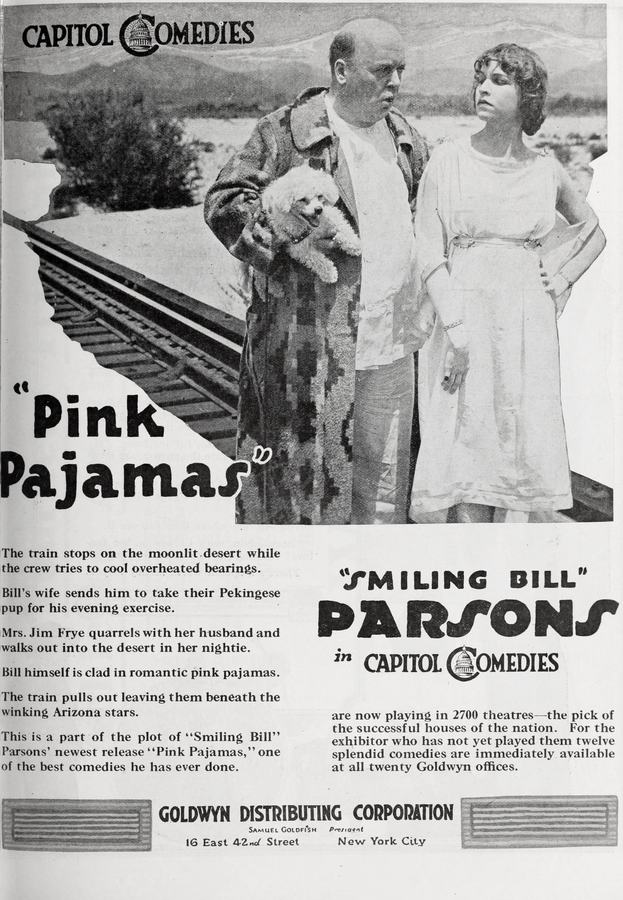
Moonlight bleaches the Arizona badlands to quicksilver in A Pair of Pink Pajamas, transforming the desert into a stage for cosmic slapstick. Director Tom Bret—better known for wartime propaganda like Outwitting the Hun—here crafts a sly inversion of domestic drama. The locomotive’s overheated bearings serve as metaphor: societal machinery grinding to a halt, releasing simmering tensions into the wild.
William Parsons’ Bill embodies middle-class absurdity through fabric. His candyfloss-pink pajamas—ruched at the cuffs, billowing like misplaced ballroom curtains—become a visual manifesto against dignity. Parsons wields physical comedy with surgical precision: the sash tangling around his ankles as he chases the capricious Pekingese, sleeves flapping like embarrassed wings when Mrs. Frye (Mary McIvor) emerges from creosote shadows. Unlike the constrained uniforms in Fighting Along the Piave, these pajamas represent liberation through humiliation.
McIvor’s lace-trimmed negligée, meanwhile, operates as armor and vulnerability. The gossamer fabric catches moonlight like cobwebs, rendering her simultaneously ethereal and exposed. Her quarrel with the unseen Mr. Frye—audible through the train window as fragmented shouts—culminates not in melodramatic tears but in steely resolve. She strides into the scrubland with the regal bearing of a queen exiled from her own drawing room.
Bret orchestrates the desert’s unpredictability like a drunken conductor. Watch how the Pekingese—a pom-pom with legs—darts between cholla cacti, yapping at jackrabbits while Bill’s desperate lunges send sand spraying. Cinematography alternates between wide shots emphasizing human insignificance against endless dunes and tight close-ups capturing McIvor’s flinch as a scorpion scuttles near her bare foot. The comedy derives not from punchlines but from environmental hostility: thorns snagging silk, cold night air raising gooseflesh on bare arms, the cruel mathematics of distance as the train’s lanterns shrink to pinpricks.
Parsons’ genius lies in his eyebrows. One arched millimeter conveys worlds: bafflement at the dog’s rebellion, dawning horror at the departing train, reluctant admiration for Mrs. Frye’s composure. McIvor answers with micro-tremors—a lip quiver suppressed by jaw tension, fingers plucking nervously at lace. Their silent exchange upon realizing their abandonment is the film’s nucleus: mutual recognition of shared catastrophe. Compare this to the overstated romantic entanglements in The Summer Girl, where attraction feels manufactured. Here, necessity forges connection.
The Arizona sky functions as both witness and trickster. Stars don’t just twinkle; they wink—a textual choice suggesting cosmic amusement at human folly. Cinematographer Elmer Fry (no relation to our heroine) bathes the duo in cold luminescence, their pastel sleepwear glowing like radioactive blossoms. The Pekingese—Fu Dog incarnate—serves as accidental agent of fate. His bladder demands relief, triggering the chain of abandonment. He’s neither noble like the wolves in John Ermine of Yellowstone nor vicious like the creatures in The Monster and the Girl, merely a tiny engine of chaos.
Bret subverts Edwardian expectations through fabric and fauna. Bill’s pink pajamas—traditionally feminine—clash with his flustered masculinity, while Mrs. Frye’s delicate nightgown conceals volcanic resolve. When she tears a strip from her hem to bandage Bill’s cactus-pricked hand, it’s not damsel-to-hero but equal-to-equal. Their evolving dynamic foreshadows the partnership comedies of the 1930s, yet retains a silent-film lyricism. Unlike the exotic peril of Saved from the Harem, danger here is quotidian: hypothermia, dehydration, social embarrassment.
That departing locomotive haunts the narrative. Its sudden lurch forward—steam billowing like a dismissive sigh—epitomizes industrial indifference. Workers focused on bearings forget flesh-and-blood passengers. Bret frames its departure in deep focus: tiny figures scrambling in the foreground, monstrous wheels swallowing tracks in the midground, indifferent stars above. The sequence echoes the societal critiques in The Crisis but replaces political rhetoric with visual poetry.
What elevates Pajamas beyond farce is its acknowledgment of the infinite. Scenes linger on the vastness swallowing our protagonists—ants in a sugar bowl. Bill’s attempts at fire-making transform into a Beckettian struggle: twigs snap, matches fizzle, his pink silhouette crouched against eternity. The desert isn’t backdrop but antagonist, its contours shifting under moonlight like a living creature. This scale manipulation anticipates the surrealism of Bunuel, though Bret leavens dread with the Pekingese’s relentless tail-chasing.
The film’s crescendo arrives wordlessly. Huddled beside a flickering mesquite fire—Mrs. Frye’s bandaged hand resting on Bill’s sleeve, the dog finally asleep—they share a canteen. Parsons lets exhaustion soften his features; McIvor allows a chink in her stoic armor. Their mutual embarrassment fades into camaraderie. When dawn stains the horizon peach, it illuminates not stranded fools but survivors. Bret denies us a tidy reunion. Instead, we glimpse them trekking toward distant railroad tracks, two dots of color—one rose, one ivory—defiant against the desert’s beige expanse. The final gag: Bill’s pajama bottoms now torn at the knee, flapping like a surrender flag he doesn’t mean to raise.
Few films capture pre-war American innocence colliding with existential awe so deftly. Bret’s background in shorts like Liberty trained him in economical storytelling, but here he discovers profundity in ridiculousness. Unlike the gothic excess of The Devil at His Elbow or historical weight of Du Barry, Pajamas finds universality in underwear. Its descendants include everything from The Out-of-Towners to Into the Wild—tales of civilization stripped away, revealing our essential, absurd, resilient selves. That stubborn Pekingese, padding toward the horizon? He’s all of us.
IMDb —
1930
Community
Log in to comment.