DbcultAccessing Vault...
Cult Review
Senior Film Conservator
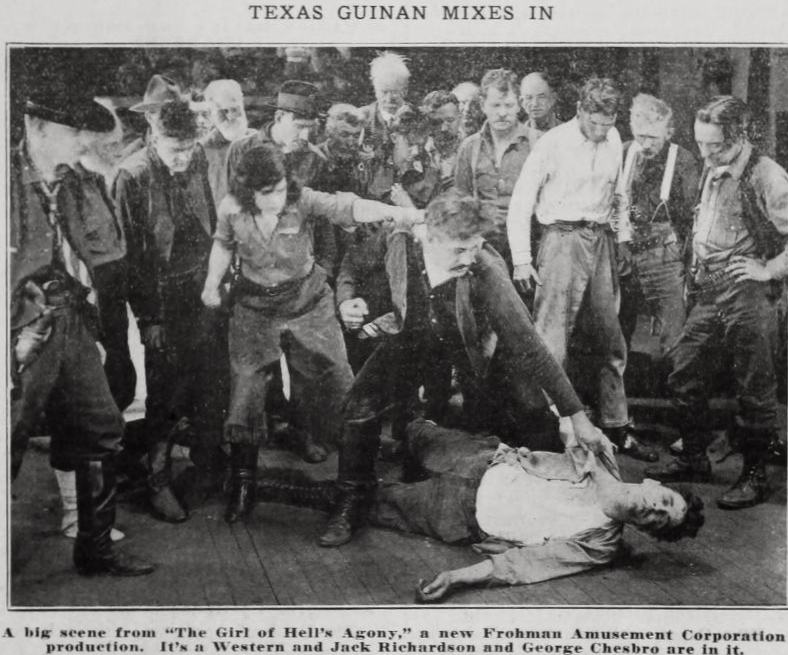
There's something inherently captivating about the silent era Western, a genre often distilled to its purest form, where grand narratives unfold through gesture, expression, and the sheer force of cinematic will. 'The Girl of Hell's Agony' stands as a compelling artifact from this period, not merely as a historical curiosity but as a vibrant, pulsating tale of grit, justice, and the indomitable spirit of a woman carved from the harsh realities of the frontier. Directed with a keen eye for dramatic tension and featuring a performance by Texas Guinan that is nothing short of magnetic, this film transcends its vintage to deliver a story that still resonates with remarkable power. It’s a testament to the enduring appeal of archetypal struggles – good versus evil, order versus chaos, and the fight for autonomy in a world determined to subjugate.
At the heart of 'The Girl of Hell's Agony' lies Meg Carter, a character whose transformation from dutiful daughter to formidable force is nothing short of epic. We are introduced to Meg within the tumultuous confines of her father's establishment, the aptly named 'Hell's Agony' saloon. This isn't just a place of business; it's a microcosm of the lawless West, a crucible where fortunes are made and lost, and lives are extinguished with alarming regularity. When her father is brutally murdered in a brawl, Meg's world shatters, only to be reforged in the fires of necessity and revenge. Instead of succumbing to grief or retreating from the chaos, she steps into the void, assuming control of the saloon. This isn't a passive inheritance; it's an active, deliberate reclamation of power in a domain traditionally ruled by men and brute force. Her tools of governance? Not ledgers and diplomacy, but a pair of trusty revolvers, extensions of her unwavering will. Meg's ability to quell the constant fights, to impose a semblance of order through sheer presence and marksmanship, paints her as a truly revolutionary figure for her time, challenging societal norms and cinematic expectations of female roles in the Western genre. Her portrayal by Texas Guinan imbues Meg with a raw, unvarnished authenticity that makes her defiance utterly believable and profoundly inspiring.
The narrative gains significant traction with the introduction of Brian McTavish, the town's supposed arbiter of law and order, a character whose moral compass is clearly broken. McTavish is not merely an antagonist; he embodies the corrupting influence of power when left unchecked. His attempts to exploit Meg, to leverage her vulnerability for his own gain, highlight the precarious position of women in this era and underscore the systemic injustices prevalent in the unpoliced territories. It's a stark reminder that sometimes the greatest threats don't come from external bandits, but from those entrusted with maintaining peace. Contrastingly, the arrival of Bad Lands O'Connor serves as a moral counterpoint. His intervention on Meg's behalf, preventing McTavish's predatory advances, immediately establishes him as a man of integrity, a true hero in a landscape riddled with opportunism. This act of chivalry, however, marks O'Connor for McTavish's vengeful machinations, setting in motion the central conflict of the film. The ensuing plot, where McTavish fabricates evidence to frame O'Connor for a series of murders, is a classic Western trope, yet it's executed here with a palpable sense of urgency and dread, drawing the audience deeper into the plight of the innocent man.
The film truly ratchets up the tension as O'Connor faces the imminent threat of a lynching. The mob, easily swayed by McTavish's lies, represents the dangerous fragility of justice in a frontier town, where rumor and prejudice can quickly override due process. It is at this critical juncture that Meg's character truly shines. Her audacious rescue of O'Connor is not just an act of heroism; it's a profound statement on her commitment to fairness and her refusal to stand idly by while injustice unfolds. This sequence, undoubtedly a highlight, would have had audiences on the edge of their seats in 1918, and its emotional resonance remains powerful today. The subsequent challenge – a marksmanship contest between Meg and McTavish with O'Connor's life as the prize – is a brilliantly conceived resolution. It's a symbolic duel, pitting true skill and moral rectitude against deceit and malice. Meg's victory is not just a triumph of aim, but a triumph of character, solidifying her status as a legendary figure within the film's universe. This climactic showdown echoes the high-stakes duels found in many Westerns, but with a refreshing twist: the hero is a woman, proving her mettle against a male antagonist on his own terms.
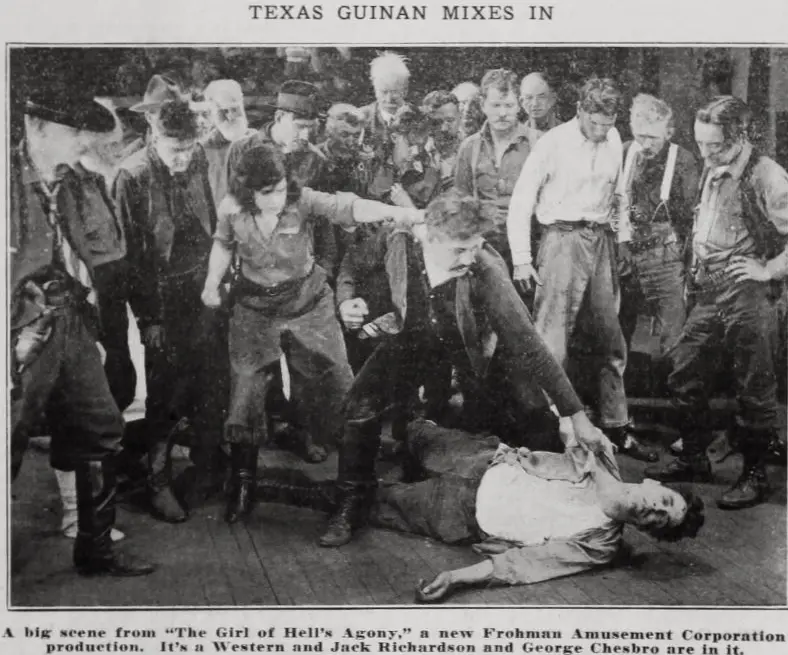
'The Girl of Hell's Agony' excels in its use of visual storytelling, a necessity in the silent era. The cinematography effectively captures the stark beauty and inherent danger of the Western landscape, using wide shots to establish the isolation and close-ups to convey intense emotion. The pacing, while characteristic of films from this period, builds steadily towards its dramatic peaks, ensuring sustained audience engagement. The performances, particularly Guinan's, are wonderfully expressive, relying on exaggerated gestures and facial expressions that translate well across time. The film's thematic richness extends beyond mere action. It’s a compelling exploration of justice, not as an abstract concept, but as a tangible force fought for and defended by individuals. It delves into the nature of power, both legitimate and corrupt, and the ways in which it can be wielded for good or ill. Furthermore, it offers a fascinating glimpse into the nascent stages of female empowerment in cinema. Meg Carter isn't merely a damsel in distress; she is the rescuer, the protector, the one who takes charge. This portrayal stands in stark contrast to many contemporary roles for women, making the film a significant work in the broader history of cinematic representation. One might even draw parallels to the spirited independence seen in films like Mayblossom, where female characters navigate challenging circumstances with a notable degree of agency, or the dramatic stakes of survival in The Port of Missing Men, though 'Hell's Agony' carves its own unique niche with its overt embrace of a gun-toting heroine.
Texas Guinan, with her distinctive persona and fearless on-screen presence, was a true trailblazer. Her portrayal of Meg Carter is not just a performance; it’s an embodiment of the 'Don't mess with Texas' ethos that would define her public image. Guinan brought an authentic toughness and charisma to her roles, often playing strong, independent women who defied convention. In 'The Girl of Hell's Agony,' she fully inhabits Meg, making her a believable and admirable figure. Her ability to convey complex emotions without dialogue, relying solely on her physical presence and expressive eyes, is a testament to her skill as a silent film actress. This film, among others, cemented her status as a Western icon, a proto-feminist figure who wielded power and commanded respect in a genre often dominated by male heroes. Her legacy, far from being confined to the silent era, paved the way for future generations of strong female characters in film, influencing how women were perceived and portrayed on screen. It’s impossible to watch her in this film without recognizing the sheer force of her personality, a quality that shines through even a century later. Comparing her self-reliant character to the complex moral dilemmas faced by protagonists in films like The Inner Struggle or the pursuit of justice in In Treason's Grasp, Guinan's Meg Carter stands out for her direct, physical assertion of agency.
To truly appreciate 'The Girl of Hell's Agony,' it's crucial to understand the broader landscape of the silent Western. This genre was not just about cowboys and Indians; it was a canvas for exploring the foundational myths of America, the struggle for civilization, and the rugged individualism that defined the frontier spirit. Films like this one, released during a pivotal time in both American history and cinematic development, often reflected contemporary anxieties and aspirations. The themes of justice, lawlessness, and self-reliance resonated deeply with audiences grappling with a rapidly changing world. While many silent Westerns focused on male protagonists, 'The Girl of Hell's Agony' offers a refreshing and vital counter-narrative, proving that heroism knows no gender. It contributes to a rich tapestry of early cinema that, despite its technical limitations by today's standards, managed to tell compelling stories with profound emotional impact. The simplistic yet powerful moral framework of good versus evil, often a hallmark of these early films, allows for clear character motivations and high-stakes drama, making them accessible and engaging even to modern viewers. The directness of its storytelling, much like the clear-cut conflicts in films such as No Man's Land, allows the audience to fully immerse themselves in the unfolding drama without distraction.
In conclusion, 'The Girl of Hell's Agony' is far more than a relic from a bygone cinematic era. It is a vibrant, engaging Western that delivers a powerful story of courage, justice, and the transformative power of adversity. Meg Carter, brought to life by the incomparable Texas Guinan, remains an iconic figure, a testament to the strength and resilience of women in the face of overwhelming odds. The film's narrative, while adhering to certain genre conventions, subverts others with its strong female lead and her active role in shaping her destiny. Its themes of fighting corruption, seeking justice, and finding love amidst chaos are universal and timeless, ensuring its continued relevance. For anyone interested in the origins of the Western, the evolution of female characters in film, or simply a gripping tale of frontier heroism, 'The Girl of Hell's Agony' is an essential viewing experience. It reminds us that even in the silence of the past, powerful voices can emerge, speaking volumes about the human spirit's capacity for defiance and triumph. This is a film that deserves to be rediscovered and celebrated, not just for its historical significance but for its enduring narrative power and its unforgettable heroine. Its direct confrontation of injustice, much like the stark moral choices presented in a film such as God, Man and the Devil, provides a satisfying resolution driven by unwavering resolve.
IMDb —
1919
Community
Log in to comment.