DbcultAccessing Vault...
Cult Review
Senior Film Conservator
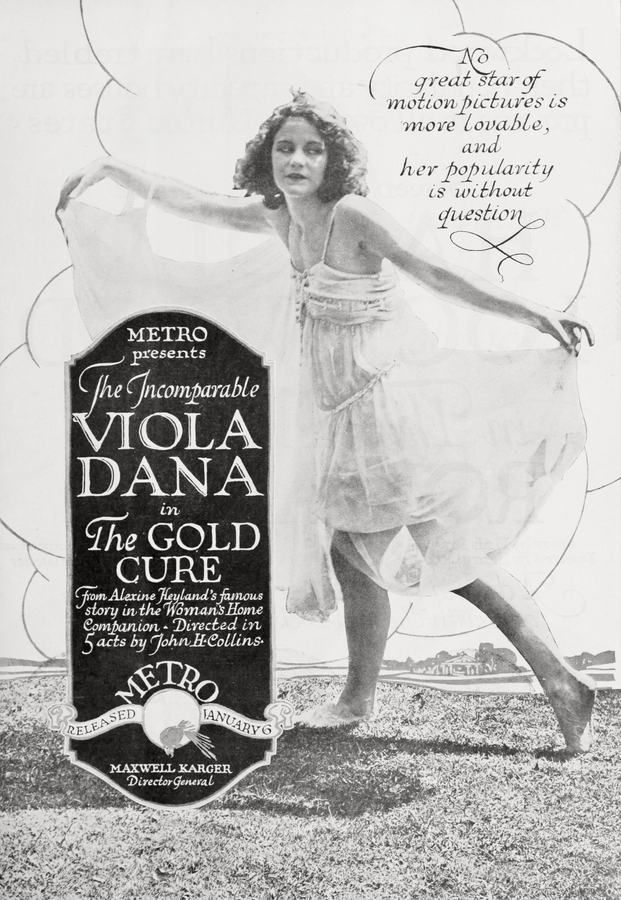
The cinematic tapestry of The Gold Cure, a delightful confection from 1921, unfurls with an audacious premise that immediately captivates the discerning viewer. It plunges us into the quiet desperation of Annice Paisch and her friend, Edna Lawson, two young women marooned in a provincial backwater, their matrimonial prospects as barren as a desert landscape. This opening tableau, a familiar trope in early 20th-century narratives, sets the stage for a rebellion against staid societal expectations, yet it is Annice’s particular brand of insurgency that elevates the film beyond mere genre convention. Her solution to the dearth of eligible bachelors is not a lamentation or a passive wait, but an act of almost anarchic ingenuity: she meticulously strews tacks across the heavily traveled road skirting her home. This isn't merely a prank; it's a strategic, if morally dubious, deployment of a marital snare, an active intervention in her own romantic destiny. The film, even in its silent grandeur, communicates this audacious spirit with clarity, painting Annice as a proto-feminist figure, taking agency in an era where women's roles were often rigidly defined.
The immediate consequence of Annice’s metallic ambush is the fortuitous (for her, at least) puncture of a tire belonging to Vance Duncan, a sophisticated New Yorker. Forced into recuperation at the home of Annice's father, the local doctor, Vance becomes the unwitting fulcrum around which the film's comedic machinations revolve. This forced proximity is a classic setup for romantic entanglement, but The Gold Cure swiftly complicates matters. While Edna Lawson finds herself drawn to the convalescing Vance, Annice's affections are destined for another. The narrative’s skillful weaving of these nascent romantic threads, often through subtle glances and gestural cues characteristic of the silent era, demonstrates a keen understanding of comedic pacing and character development, even within the constraints of the medium.
A pivotal turn arrives with Annice’s errand to the telegraph station, where she encounters Detective Robert Cord. Cord, presented as a figure of authority, albeit one prone to considerable misjudgment, introduces a layer of dramatic irony by informing Annice of Vance’s purported alcoholism. This revelation, a stark contrast to the lighthearted romantic pursuits, hints at the era’s burgeoning awareness of social issues, even if presented through a comedic lens. The film doesn't delve into the profound depths of addiction, as a more contemporary drama like The Eternal Sappho might explore a character's moral failings, but rather uses it as a catalyst for misunderstanding and farcical pursuit. The arrival of Vance's uncle, Mike Darcy, further complicates the romantic geometry, as Annice immediately falls for him, shifting her initial focus from Vance entirely. This rapid re-alignment of affections, while perhaps abrupt by modern standards, perfectly suits the brisk, almost breathless pace of silent comedies, demanding immediate emotional responses from its characters and its audience.
The screenplay, crafted by John H. Collins and Alexine Heyland, exhibits a robust sense of comedic timing and structural ingenuity. They orchestrate a series of escalating complications, culminating in Detective Cord's misguided imprisonment of Vance in Dr. Dumbbell's Sanitarium for Drunkards. The very name of the institution, 'Dumbbell's,' is a masterstroke of comedic nomenclature, instantly signaling the farcical nature of the establishment and the inherent folly of Cord's conviction. This sequence could easily descend into melodrama, but the writers maintain a light touch, ensuring that the audience is always aware of the comedic undercurrent. Annice's subsequent masquerade as a patient to smuggle Vance out is a testament to her unwavering determination and resourcefulness. It’s a classic 'damsel in distress rescues the presumed hero' inversion, a delightful subversion of traditional gender roles that resonates with the agency she displayed at the film's outset. This act of daring, reminiscent of the spirited heroines found in films like Captivating Mary Carstairs or even the more rebellious spirit of Golden Rule Kate, solidifies Annice's position as a genuinely compelling protagonist, driving the narrative with her wit and courage.
The humor in The Gold Cure is a multifaceted gem, sparkling with situational irony, physical comedy, and a charming naiveté that defines much of early silent cinema. The very premise of strewing tacks is inherently absurd, yet it's executed with a straight face, a testament to the film's commitment to its comedic conceit. The mistaken identity surrounding Vance's alleged alcoholism, and Cord's subsequent zealous but erroneous pursuit, provides a rich vein of humor. The audience is privy to the truth, creating a delightful tension as we watch the characters stumble through their misunderstandings. This type of dramatic irony, where the audience possesses more knowledge than the characters, is a powerful tool for comedy, expertly wielded here. The physical comedy inherent in Vance's accident and subsequent 'escape' from the sanitarium, though not overly elaborate, would have been highly effective for contemporary audiences, accustomed to the more overt visual gags of the era.
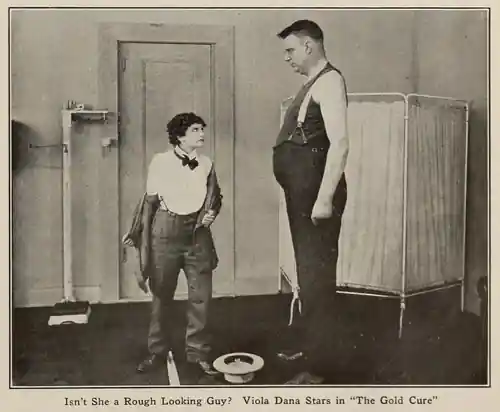
The performances, particularly from Viola Dana as Annice, are crucial to the film's success. Dana, a prominent star of the era, imbues Annice with a vibrant energy and a mischievous glint in her eye, making her daring schemes not only believable but endearing. Her expressions, vital in silent film, convey a range of emotions from cunning determination to genuine affection, allowing the audience to connect deeply with her character. The supporting cast, including George Dowling and Jack McGowan, effectively embody their roles, contributing to the comedic ensemble. William B. Davidson, as Detective Cord, likely brought a certain gravitas to his misguided character, making his blunders all the more amusing. The dynamic between the characters, particularly the evolving romantic pairings, is handled with a light touch, ensuring that the inherent absurdity of the situation never overshadows the genuine human emotions at play.
The culmination of the narrative is a masterclass in comedic resolution. Annice and Vance's triumphant return to her home is met not with relief, but with yet another layer of farcical confusion: the presence of a second 'Uncle Mike,' who is vehemently chastising Detective Cord for his egregious error. This double 'Uncle Mike' revelation is a brilliant stroke of comedic writing, a final, satisfying twist that untangles the entire web of mistaken identities and misplaced accusations. It’s a moment of pure, unadulterated comedic payoff, where all the pieces of the puzzle fall into place, not with dramatic tension, but with a hearty laugh. This kind of intricate plot construction, where multiple misunderstandings converge into a single, revelatory moment, is a hallmark of well-crafted farces, echoing the complex narratives of some melodramas like Called Back, but with a distinctly lighter intent.
The film's exploration of themes, while wrapped in a comedic package, offers interesting insights into the social fabric of its time. The pressure on young women to find husbands, even resorting to such extreme measures as Annice's tack-strewn road, speaks volumes about societal expectations. The portrayal of alcoholism, though simplified for comedic effect, reflects a period when public awareness and treatment of such issues were still evolving. The swift resolution of Vance's 'problem' upon the revelation of mistaken identity underscores the film's lighthearted approach, prioritizing romantic fulfillment over deeper social commentary. Yet, within its comedic framework, The Gold Cure subtly champions female resourcefulness and agency, even if the ultimate goal is conventionally romantic. Annice doesn’t wait for fate; she actively engineers it, a powerful, if whimsical, statement for the era.
Comparing The Gold Cure to other films of its period further illuminates its unique charm. While it shares the romantic comedy DNA with many contemporary productions, its particular blend of audacious female initiative, mistaken identity, and farcical pursuit gives it a distinctive flavor. It eschews the more overtly dramatic or suspenseful elements that might be found in a film like The Iron Hand or the psychological depth of Hedda Gabler, opting instead for a joyous romp through comedic chaos. Its focus remains firmly on the delightful convolutions of its plot and the endearing characters caught within them. The film’s ability to sustain its comedic momentum through a series of increasingly improbable events, yet always land on a satisfying, if predictable, romantic conclusion, is a testament to the strength of its writing and the engaging performances of its cast. It truly is a testament to the enduring appeal of clever storytelling, even when conveyed without spoken dialogue.
Ultimately, The Gold Cure remains a charming relic of early cinema, a testament to the power of a well-crafted comedic script and spirited performances. It reminds us that even in an era of silent storytelling, the universal quest for love, spiced with a healthy dose of mischief and misunderstanding, could resonate deeply with audiences. The film's legacy lies not just in its entertainment value, but in its subtle portrayal of a young woman who refuses to be a passive observer in her own life, instead taking destiny into her own hands, even if it means a few punctured tires along the way. The 'gold cure' in question might refer to marital bliss, but the real gold is found in the film's enduring wit and its vibrant depiction of human folly and affection. Its narrative, while rooted in its time, possesses a timeless quality that continues to amuse and charm, much like a perfectly preserved antique, shining with its original luster. Its influence, though perhaps not overtly revolutionary, lies in its contribution to the evolving language of cinematic comedy, demonstrating how intricate plots and character-driven humor could thrive even without the benefit of spoken words. It’s a delightful journey into a bygone era, proving that sometimes, the most effective path to happiness is paved with a few well-placed tacks and a whole lot of heart.
IMDb 4.2
1922
Community
Log in to comment.