DbcultAccessing Vault...
Cult Review
Senior Film Conservator
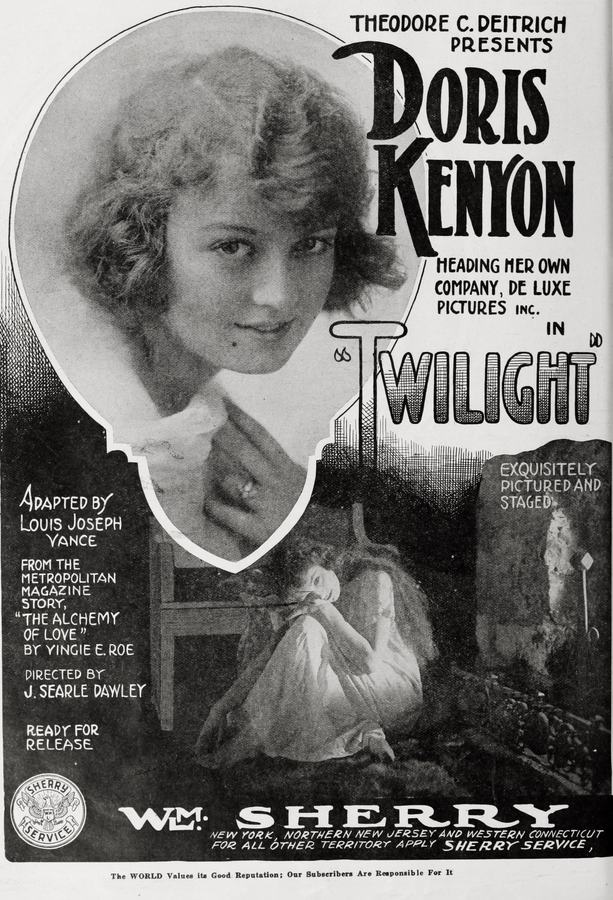
In the annals of early American cinema, where narrative often grappled with the nascent language of the moving image, certain films emerge as incandescent testaments to storytelling prowess. One such luminous artifact is the 1920 production, Twilight, a melodrama that transcends its genre confines to offer a visceral, psychologically charged exploration of love, madness, and sheer human endurance. Far from a mere period piece, this film plunges viewers into the untamed heart of the North Carolina mountains, weaving a tale as rugged and unpredictable as its setting. It’s a compelling reminder that the silent era, often mischaracterized by its lack of synchronized sound, possessed an unparalleled capacity for visual poetry and profound emotional resonance, demanding an active, interpretive engagement from its audience.
The narrative commences with an almost mythical genesis: a baby, discovered abandoned and strapped to a donkey, a solitary survivor in the wake of her father’s tragic drowning amidst the craggy peaks. This stark opening immediately establishes the film's thematic bedrock – the precariousness of life, the indifferent majesty of nature, and the indelible mark of one’s origins. Christened 'Twilight' by the kind-hearted Anwell family who adopt her, the girl’s name itself hints at a liminal existence, a bridge between the wild and the domesticated. As she matures, the film deftly portrays her as a creature of her environment – spirited, impulsive, and possessing an innate connection to the raw beauty surrounding her. Her upbringing by the Anwells, a family rooted in the arduous lumber business, grounds her, yet the echo of her wild beginnings resonates throughout her character, shaping her reactions and forging her destiny.
At sixteen, Twilight's world revolves around Jim, her foster brother, whose steadfast presence and leadership in the family's lumber enterprise make him the unwavering anchor of her affections. Their bond, deeply ingrained and unspoken, forms the emotional core of the film, a tender, burgeoning romance that feels both natural and inevitable. However, this idyllic connection is dramatically ruptured by the arrival of Elise Charmant, a sophisticated vacationer whose father, a distinguished brain specialist, lends her an aura of refined allure. At the boisterous Fireman's Ball, Elise’s calculated charm monopolizes Jim's attention, igniting a fierce, almost primal jealousy within Twilight. This emotional eruption culminates in a startling act: Twilight, unable to articulate her burgeoning fear of loss, impulsively rings the fire alarm, a desperate, almost symbolic attempt to disrupt the perceived flirtation and reclaim her beloved. This moment, rather than alienating Jim, serves as a catalyst, revealing the true depth of his reciprocal love for her, a revelation that momentarily stills the tempest within her heart.
Just as happiness seems within grasp, a darker, more menacing force intrudes upon their lives: Jules, a French Canadian lumberman, whose presence injects a palpable sense of danger and malevolence. His attempt to rob Jim's safe, followed by a cunning escape from his handcuffs, sets in motion a harrowing chain of events. Jules embodies the untamed, predatory aspects of the wilderness, a stark contrast to Jim's honorable masculinity. His subsequent attack on Twilight, culminating in his dramatic fall over a cliff, plunges her into a profound state of psychological derangement. The film's depiction of Twilight’s descent into madness is particularly striking for its era, relying heavily on Doris Kenyon’s expressive performance and the nuanced visual language of silent cinema to convey the shattering of her psyche. The inability of even the esteemed Dr. Charmant to offer solace underscores the depth of her trauma, suggesting a wound beyond conventional medical reach. This phase of the film delves into the raw fragility of the human mind when confronted with overwhelming horror, a thematic thread explored with similar psychological intensity in films like Hungry Eyes, which also probes the darker corners of obsession and mental anguish.
Twilight’s recovery, rather than being a gradual process, is as abrupt and dramatic as her initial breakdown, catalyzed by the shocking return of Jules. His reappearance, heralded by the ominous glow of woods set ablaze, signifies not just a physical threat but a confrontation with her deepest fears. This narrative choice, while perhaps melodramatic by modern standards, effectively portrays the idea that true healing sometimes requires facing the source of one's trauma head-on. The ensuing confrontation is a masterclass in silent film tension. Twilight, no longer a helpless victim, brandishes a newfound strength, wounding Jules with a gunshot. Yet, the villain's cunning endures; he retaliates by handcuffing them together, a cruel act designed to ensure a shared, lingering demise. This macabre tethering transforms the narrative into an epic struggle for survival, a testament to Twilight's burgeoning heroism. Jim, ever the protector, valiantly carries their conjoined burdens until exhaustion renders him immobile. It is in this desperate moment that Twilight truly transcends her past, pulling both her incapacitated lover and her chained tormentor through the perilous terrain, a feat of sheer will and indomitable spirit. This climactic act of self-sacrifice and strength mirrors the daring heroics found in other films of the period, such as The New Exploits of Elaine or The Daring of Diana, where female protagonists defy societal expectations to perform extraordinary feats in the face of grave danger.
The success of Twilight hinges significantly on the performances of its cast, particularly Doris Kenyon as Twilight. Kenyon delivers a portrayal of remarkable depth, navigating the character's journey from impetuous youth to psychological torment and eventual heroic resolve with compelling authenticity. Her facial expressions, gestures, and body language convey a spectrum of emotions—joy, jealousy, terror, and determination—with an intensity that transcends the absence of spoken dialogue. Frank Mills as Jim embodies the archetypal silent film hero: strong, noble, and unwavering in his devotion, offering a grounding presence amidst the chaos. Grif Davis, as the villainous Jules, is equally effective, his menacing physicality and sinister demeanor making him a truly formidable antagonist. The film's visual storytelling, a hallmark of the silent era, is particularly effective in utilizing the stark beauty of the North Carolina mountains. The rugged landscapes are not merely a backdrop but an active participant in the drama, mirroring the wildness of Twilight’s spirit and the untamed nature of the conflicts that engulf her. Wide shots emphasize the isolation and vastness of the wilderness, while close-ups draw attention to the nuanced emotional states of the characters, creating an intimate connection between the audience and their inner worlds. The use of intertitles is judicious, providing necessary exposition without detracting from the visual narrative, allowing the images to speak volumes.
At its core, Twilight explores several powerful themes that resonate far beyond its specific plot. The tension between nature and civilization is palpable throughout. Twilight, a child of the wild, struggles to reconcile her inherent impulsiveness with the societal expectations of her adopted family. Her actions, from ringing the fire alarm to her ultimate act of dragging Jim and Jules to safety, are often driven by a primal instinct for survival and protection, rather than calculated reason. This dynamic elevates the film beyond a simple love story, imbuing it with a sense of environmental determinism and the enduring power of one's origins.
The film also offers a compelling study in psychological trauma and recovery. Twilight's derangement following Jules's attack is portrayed with a surprising degree of sensitivity for the period, highlighting the fragility of the human mind. Her eventual recovery, spurred by the need to confront her tormentor, suggests a powerful, albeit unconventional, path to healing—one that involves facing one’s demons head-on rather than retreating from them. This exploration of mental states, though presented through the lens of silent film conventions, marks Twilight as a film unafraid to delve into the complexities of human psychology.
Furthermore, the narrative is a profound testament to resilience and feminine strength. Twilight's journey transforms her from a jealous, somewhat naive girl into a woman of formidable courage and self-sacrifice. Her final act of dragging two men to safety, one her love and the other her tormentor, is a powerful inversion of traditional gender roles and a forceful assertion of her agency. This theme of a woman overcoming immense adversity through sheer force of will is a recurring motif in silent cinema, finding echoes in films like Where Love Is, which often depicted women navigating complex emotional landscapes, or even The Bigger Man, by contrasting male physical strength with an emerging female spiritual and emotional fortitude. The raw, almost brutal depiction of her struggle underscores the film’s commitment to portraying the harsh realities of survival.
While Twilight may not be as widely known today as some of its contemporaries, it stands as a compelling example of early cinema’s ability to craft intricate, emotionally resonant narratives. Its blend of melodrama, psychological drama, and wilderness adventure creates a unique viewing experience that remains impactful. The film’s exploration of jealousy, madness, and ultimate redemption offers a window into the narrative concerns and artistic ambitions of the 1920s, proving that silent films were anything but simplistic. It’s a work that demands to be seen not just as a historical curiosity, but as a vibrant, living piece of cinematic art that continues to speak to the enduring human spirit.
The enduring power of Twilight lies in its unflinching portrayal of characters pushed to their absolute limits, forced to confront both external dangers and internal demons. It’s a narrative that, despite its century-old vintage, retains a surprising freshness, a testament to the universal themes it tackles and the masterful, albeit silent, execution of its storytelling. For those willing to immerse themselves in the rich tapestry of early film, Twilight offers a deeply rewarding journey into the heart of human passion and perseverance, proving that some stories, like the mountains themselves, endure long after the initial echoes have faded.
IMDb —
1923
Community
Log in to comment.