DbcultAccessing Vault...
Cult Review
Senior Film Conservator
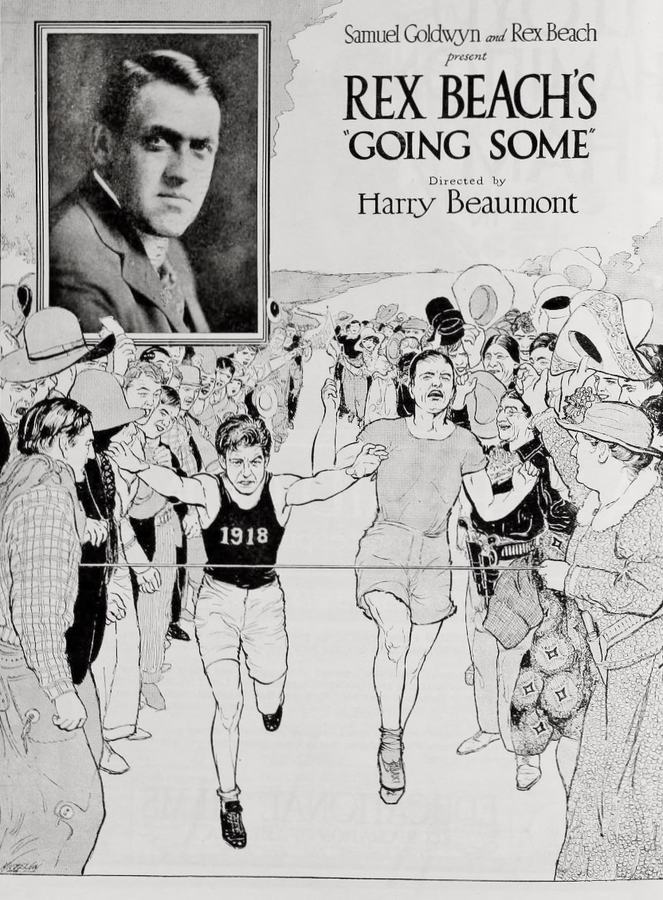
Cacti, cadence, and counterfeit heroes—Going Some sprints across the silent horizon like a comet trailing champagne dust.
The film’s very title is a Jazz-age wink, slang as ephemeral as a gin fizz yet eternal as wanderlust. Director Laurence Trimble—better known for guiding canine superstar Strongheart—here herds humans with the same kinetic instinct, letting Rex Beach and Paul Armstrong’s adaptation pirouette between bedroom farce and prairie epic. The result feels less like a conventional sports picture and more like a fresco where every brushstroke is adrenaline.
From the first iris-in on Culver Covington’s glistening deltoids, the movie establishes flesh as legal tender. Maurice ‘Lefty’ Flynn plays Covington with the languid menace of a circus lion who knows the cage door is merely ornamental. His strides are measured in camera pans, not yards; each cheer from the stands lands like silver dollars on a casino felt. It is no wonder that J. Wallingford Speed—embodied by Cullen Landis with a Buster Keaton-esque deadpan minus the melancholy—covets that applause the way Gatsby covets green luminescence across the bay.
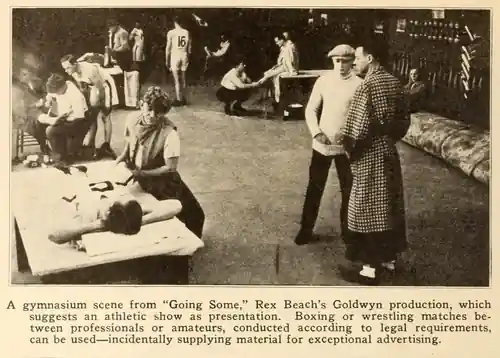
Yet Speed’s imposture is less athletic than anthropological: he studies the ritual of speed, the religiosity of stopwatches, then slips on the identity like a borrowed tuxedo two sizes too large.
Enter Helen Blake, a flapper whose eyes hold the same speculative glint found in commodity brokers just before a crash. Helen Ferguson delivers the role with a mouth perpetually poised between smirk and surrender, as though every conversation were a wager she has already hedged. Helen doesn’t merely want to be won; she wants the winning to be cinematic. Hence her Faustian persuasion: a footrace whose stakes escalate from bragging rights to real-estate Armageddon.
The script then pivots westward, trading stadium arc lights for the bruised violet skies of the high desert. Roberta Keap (Ethel Grey Terry) arrives like a displaced queen, silk scarf snapping against sagebrush. Her marriage to Donald (Kenneth Harlan) has calcified into something resembling petrified wood: once alive, now merely decorative and heavy. The divorce papers she waves are less a legal document than a passport to self-reinvention. It is here, amid tumbleweeds that roll like slack drums, that the film finds its existential engine: property as identity, identity as performance, performance as sport.
Trimble’s visual grammar mutates. Intertitles shrink, yielding to sprawling wide shots where horizons tilt like seesaws. The rival ranches become medieval keeps: the Keap estate—adobe cracking like dry icing—and the Gallagher fortress—barbed wire glinting like cheap diamonds—square off across a gulch dried to the texture of cracked crocodile skin. Cinematographer Frank Braidwood (pulling double duty as an actor) lets the camera linger on mirage shimmer, so that when characters traverse frame they appear to melt into their own footprints.
The film’s middle act is a bacchanal of subplots: moonshine masquerading as medicine, a near-sighted cook (Snitz Edwards) mistaking a rattlesnake for a necktie, and Wallingford Speed attempting wind-sprints in cowboy boots that might as well be iron slippers. Throughout, Lillian Langdon as Mrs. Gallagher exudes the matriarchal ruthlessness of a railroad baroness, her voice implied via florid intertitles that read like purple poetry slapped by a banker: “Land is the only lover who never divorces you—unless you bet him on a boy who cannot run.”
Yet the narrative’s centrifuge is that climactic race, a five-reel crescendo scored only by the wheeze of a player-piano and the audience’s communal heartbeat. When the Keap sprinter clutches his hamstring, the soundtrack—though non-existent—seems to emit a collective gasp that rattles the theater’s velvet. Speed, thrust into the blocks, becomes every underdog who ever swallowed his own doubt like broken glass. Trimble cross-cuts between faces: Roberta’s clenched jaw, Helen’s pupils dilated to lunar dimensions, Donald’s sudden recognition that maybe matrimony is less about possession than about witness.
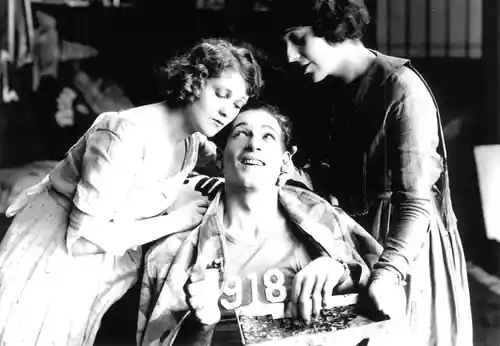
The race itself stretches 600 yards into mythic terrain; each stride ejaculates dust clouds that resemble phosphorus. Speed’s shadow lengthens, an ink-spill trying to outrun its creator.
Landis lets the panic bloom gradually across his face—eyebrows climbing like thermometer mercury—until desperation transmutes into grace. He wins by a thorax, collapsing across the tape as though kissing the edge of the known world. In that moment, the film achieves what few silents dare: it makes stillness roar. The spectators freeze, a tableau vivant of incredulity, before erupting into pantomimed cheers that rattle the theater’s rafters.
Reconciliation arrives not as sermon but as physics: centrifugal force flings Roberta and Donald into each other’s orbits, while Helen’s kiss to Speed is framed in chiaroscuro against the sinking sun—an ember sealing a brand. Trimble resists the temptation to fade-out on matrimonial cliché; instead he iris-in on the finish-line tape, now trampled and mud-splattered, a relic of ambition fulfilled then instantly obsolete.
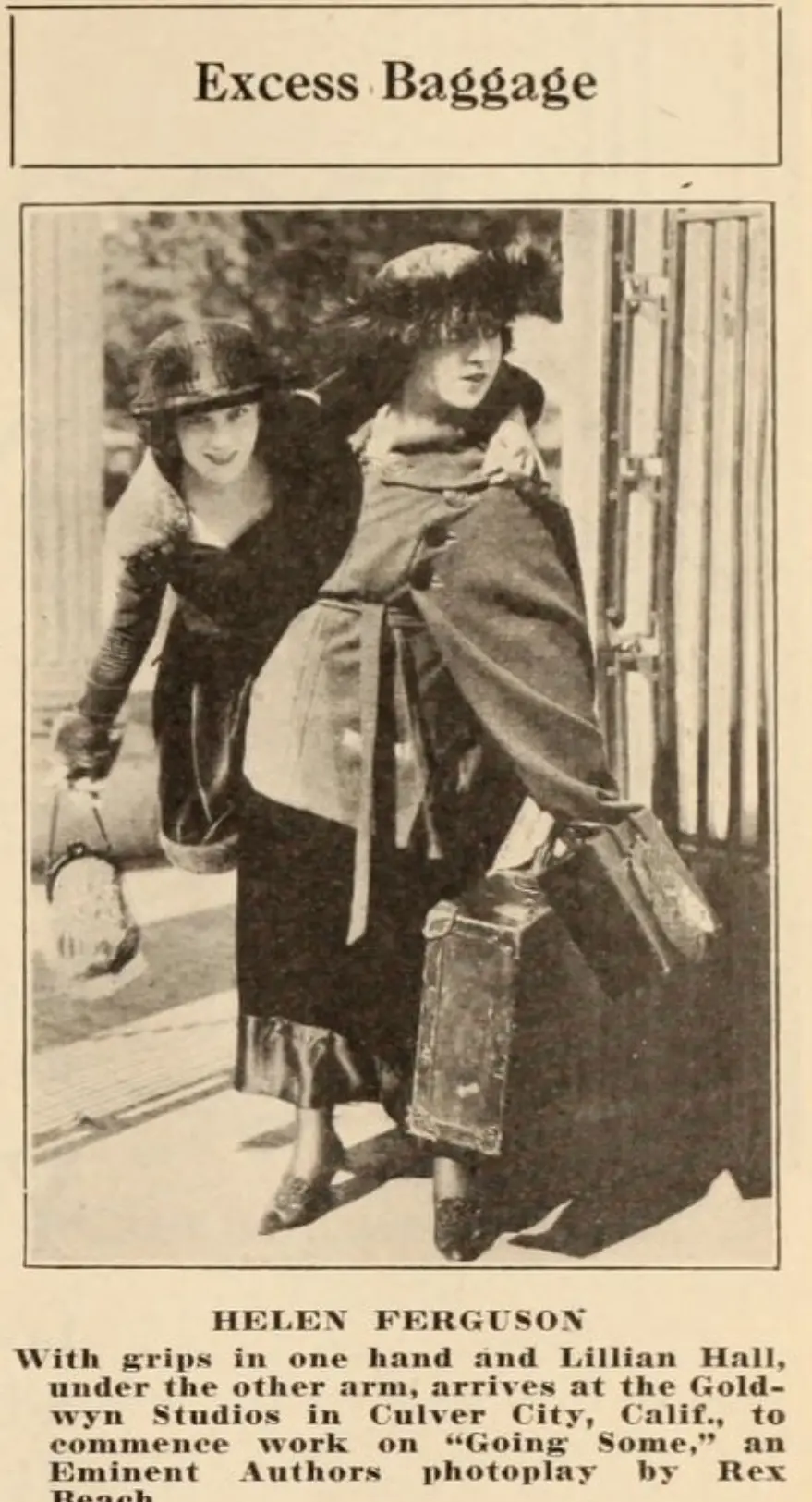
Viewed today, Going Some operates as both artifact and oracle. It anticipates the modern rom-com’s obsession with public spectacle as proof of intimacy (think Notting Hill’s press conference or Love Actually’s cue-card confession) yet grounds that spectacle in land, the most ancient of currencies. Its gender politics, though mired in 1920s paternalism, allow women like Helen and Roberta to manipulate the levers of narrative as deftly as any studio mogul. They wager, seduce, retract, forgive—activities that require more stamina than any footrace.
Comparative lenses enrich the experience. Against The Double Standard’s punitive moralism, Going Some posits that identity forgery can be redemptive. Beside the biblical grandeur of Life and Passion of Christ, Trimble’s film finds transcendence not in miracles but in muscle fibers. And measured against the flamboyant nihilism of Vivo ou Morto, this silent ode to locomotion argues that running—absurd, brutal, and brief—beats standing still in someone else’s chains.
Archivists estimate that 70 % of American silent cinema is lost; every surviving print is therefore a secular relic. The 35 mm copy preserved by the Library of Congress—tinted amber for daylight, cyan for dusk—retains hairline scratches that resemble desert wind patterns. When projected at the correct 22 fps, these imperfections feel like meteorological events inside the narrative itself, as though the film were sweating its own history.
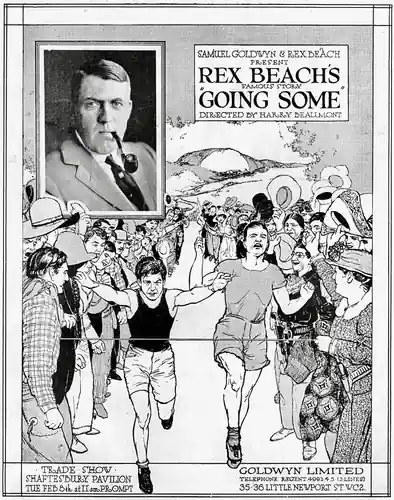
Performances oscillate between naturalistic and operatic. Flynn’s Covington swaggers with Mack Sennett athleticism, while Harlan’s Donald embodies the wounded dignity of a man learning that possession and stewardship are antonyms. Terry’s Roberta, eyes ringed with kohl like silent-era Cleopatra, suggests steel lacquered in silk. Among the ensemble, Walter Hiers as the comedic sidekick “Gabby” Gallagher provides rubber-faced relief without derailing tonal cohesion—a tightrope walk in silents where pratfalls could metastasize into narrative tumors.
Yet the film’s MVP is arguably the landscape itself. Each mesa, gulch, and dust devil functions as Greek chorus, mocking human pretensions of permanence. Braidwood’s camera drinks in the panorama until characters shrink to footnotes on geology, a perspective that makes their emotional stakes feel simultaneously futile and heroic. In 2024, when climate anxiety colors every frame of visual media, such shots resonate with eco-elegiac undertones: the land we race upon is patient, inanimate, and utterly indifferent—yet it remembers footprints longer than memory retains names.
Revisiting Going Some in the streaming epoch is akin to finding a sweat-stained telegram inside a gilt envelope: urgent, tactile, slightly embarrassing in its candor. It reminds us that speed—athletic, emotional, narrative—is not escape but compression, a way of squeezing consequence into the brief spasms where we feel most alive. Trimble’s film may not outrun modern editing rhythms, but it outlasts them in marrow. Long after CGI cities collapse in digital rubble, the image of a lone runner dissolving into solar flare will persist, an aching metaphor for every human who ever tried to outrace inadequacy on legs made of doubt and starlight.
Verdict: a sun-scorched valentine to velocity, vanity, and the vertiginous hope that love might yet be a prize we can chase, grab, and breathlessly clutch against our thundering chests.
IMDb 5.8
1936
Community
Log in to comment.