DbcultAccessing Vault...
Cult Review
Senior Film Conservator
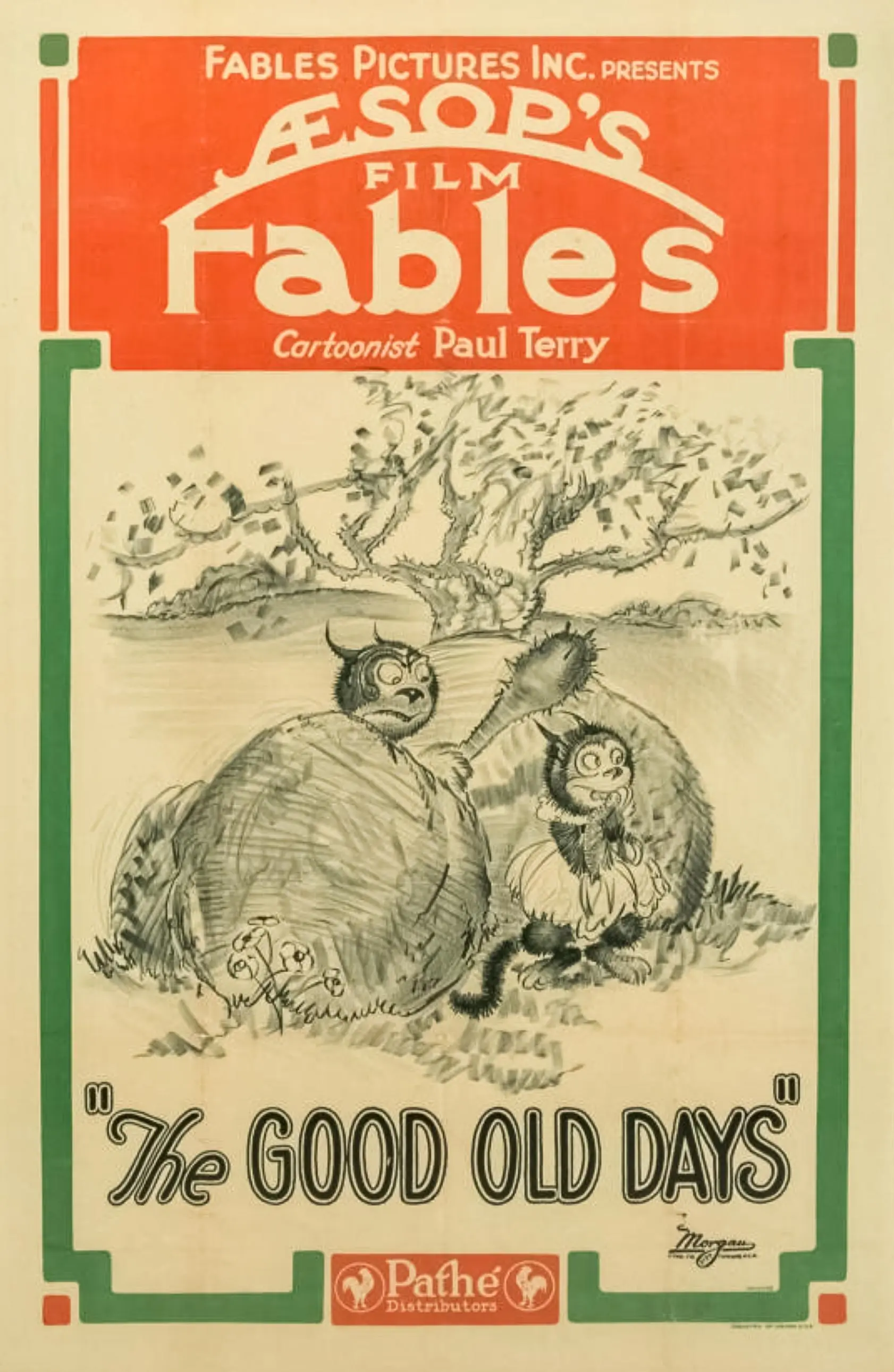
To gaze upon the celluloid remains of The Good Old Days is to participate in a séance with a vanished world. It is not merely a film; it is a temporal artifact that vibrates with the anxieties and aspirations of an era caught in the throes of radical transformation.
While many contemporary critics might dismiss such works as quaint relics, a closer inspection reveals a sophisticated architectural design in its narrative structure. Paul Terry, often overshadowed by the larger-than-life personas of the era, delivers a performance that is remarkably understated, eschewing the histrionics common in the early 1920s for a nuanced portrayal of a man adrift in the currents of change. The film’s aesthetic choices—the stark contrasts, the deliberate framing, and the rhythmic editing—suggest a level of intentionality that rivals the avant-garde movements of Europe.
The brilliance of Paul Terry in this particular role lies in his mastery of the silent vernacular. Unlike the frantic energy found in A Pair of Kings, Terry’s movement here is measured, almost funereal. He moves through the set pieces like a ghost inhabiting his own memories. Every gesture, from the slight tilt of his hat to the hesitant reach of a hand toward a fading photograph, carries the weight of a thousand unspoken words. This is a performance that anticipates the psychological depth of later sound cinema, proving that the absence of dialogue was never a limitation but a liberation for actors of Terry’s caliber.
In one particularly striking sequence, Terry stands alone in a derelict ballroom, the dust motes dancing in the shafts of light like the ghosts of former revelers. The camera lingers on his face for an agonizingly long duration, capturing the subtle shift from nostalgic warmth to a chilling realization of solitude. It is a moment of pure cinematic empathy that anchors the film’s more abstract philosophical inquiries.
To understand the significance of The Good Old Days, one must view it within the broader landscape of its contemporaries. While The Girl in the Taxi explored the frivolous social mores of the urban elite, and Marc'Antonio e Cleopatra sought to recreate the grandeur of antiquity, Terry’s film turns its lens inward. It shares a thematic kinship with The Unblazed Trail, specifically in its fascination with the untamed frontiers of the human psyche.
However, where Tongues of Flame utilized melodrama to spark moral outrage, The Good Old Days employs a more subversive approach. It lulls the audience into a false sense of security with its idyllic depictions of the past, only to shatter that illusion with the intrusion of industrial reality. This juxtaposition is handled with far more grace than the blunt symbolism found in The Boss or the rugged fatalism of Desperate Trails.
Visually, the film is a masterclass in the use of limited resources. The lighting designer—uncredited but clearly a visionary—uses the interplay of deep oranges and cold, oceanic blues to signify the internal conflict of the protagonist. The warmth of the hearth (represented by a rich, amber glow) is constantly threatened by the encroaching shadows of the outside world, rendered in a stark, unforgiving palette that evokes the chilling atmosphere of Der Eid des Stephan Huller.
The editing is equally noteworthy. Transitions between the past and present are not marked by crude dissolves but by clever match-cuts that emphasize the continuity of suffering across time. When Terry looks into a mirror, the reflection he sees is not his own, but a distorted image of his younger self, a technique that feels remarkably modern. This visual trickery serves a deeper purpose, illustrating the protagonist's inability to reconcile his current state with the idealized version of his history. It evokes a sense of domestic claustrophobia similar to that seen in Bed Time, yet it expands that feeling to encompass an entire societal malaise.
One cannot ignore the political subtext that bubbles beneath the surface of this production. Released in a period of intense social upheaval, the film acts as a cautionary tale against the seductive nature of reactionary thought. While the title suggests a yearning for the past, the narrative ultimately reveals that those 'good old days' were fraught with their own injustices and hidden cruelties. In this regard, it functions as a spiritual successor to Man vs. Woman, dissecting the power dynamics of a bygone era with a critical, almost surgical precision.
The film’s portrayal of the working class, though romanticized at times, possesses a grit that is often missing from the fantastical adventures of Sinbad, the Sailor. There is a tangible sense of sweat and soil here, a connection to the earth that feels authentic. This groundedness provides a necessary counterweight to the film’s more ethereal, dreamlike sequences, ensuring that the emotional stakes remain firmly rooted in the human experience.
In the absence of a synchronized score, the silence of The Good Old Days becomes a character in its own right. It is a heavy, expectant silence that forces the viewer to confront the images with an intensity that sound often dilutes. The rhythmic quality of the film—its ebbs and flows, its crescendos of action and its quiet lulls—creates its own internal music. It is a symphony of light and shadow, a dance of pixels (or rather, silver halides) that speaks directly to the subconscious.
Comparing this to the energetic, almost musical pacing of Hot and Cold or the theatrical staging of A Rosa do Adro, one realizes that The Good Old Days is pioneering a new form of visual literacy. It trusts the audience to interpret the complex emotional landscape without the guiding hand of a bombastic orchestra. This trust is what makes the film so enduringly powerful; it treats the viewer as an active participant in the creation of meaning.
Ultimately, The Good Old Days is a work of profound melancholy and startling beauty. It captures the essence of the human condition—the perpetual struggle to find meaning in a world that is constantly slipping through our fingers. Paul Terry’s performance remains one of the high-water marks of early cinema, a testament to the power of the human face to convey the deepest of truths.
Whether it is the haunting imagery of the shoreline, reminiscent of The Harbour Lights, or the satirical bite that echoes An Overall Hero, the film is a rich tapestry of influences and innovations. It is a reminder that the 'good old days' of cinema were not just about the birth of a new medium, but about the discovery of a new way of seeing the world. To watch this film today is to rediscover that sense of wonder, to feel the pulse of history beating against the screen, and to realize that some stories are truly timeless.
The legacy of this film continues to resonate, challenging us to look back not with blind nostalgia, but with a critical eye and an open heart. It is a masterpiece of the silent era that deserves a prominent place in the pantheon of cinematic history.
IMDb 6.6
1914
Community
Log in to comment.