DbcultAccessing Vault...
Cult Review
Senior Film Conservator
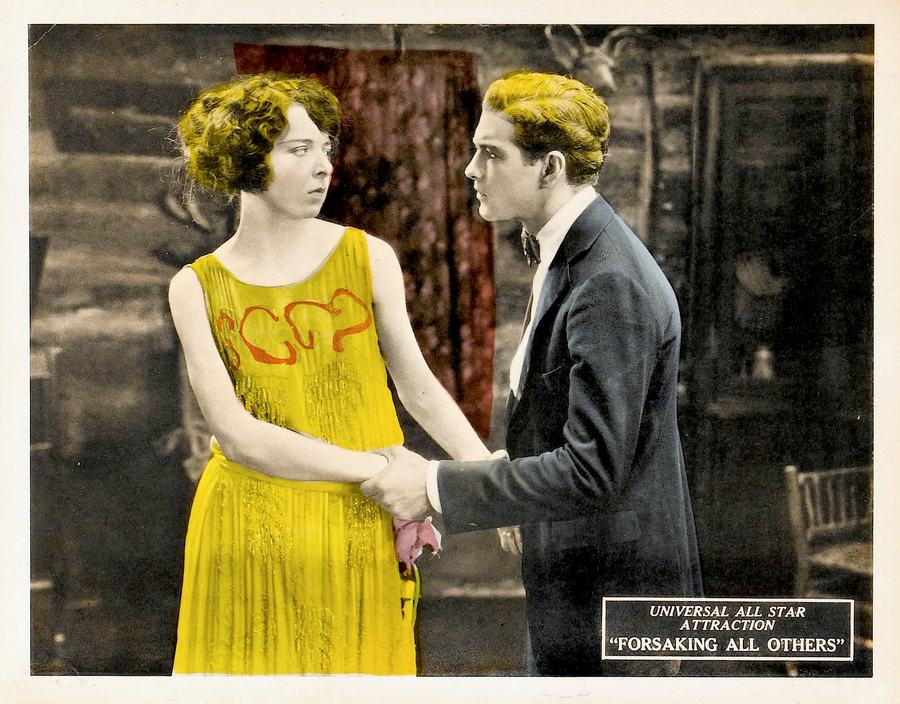
A champagne coupe tips, a monocle catches the chandelier’s prismatic wink, and the camera in Forsaking All Others lingers on the droplet’s slither down crystal—an apt visual overture for a picture that obsesses over surfaces slipping from control. Barely remembered outside archival card-catalogs, this 1922 First National melodrama—penned by Mary Lerner and Doris Schroeder—unfurls like a scented letter soaked in laudanum: fragrant, faintly poisonous, and impossible to set aside.
The logline sounds almost quaint—mother yanks son from virtuous fiancée, carnivorous vamp intrudes, true love salvages honor—but the execution bristles with pre-code cynicism. Director W.S. Van Dyke (billed here without the later Tarzan fanfare) orchestrates a social quadrille where every dancer steps on someone else’s instep. Oliver Newell, played by Melbourne MacDowell with the foppish fragility of a man raised on sterling-silver oxygen, is less protagonist than shuttlecock batted between two matriarchs: his biological one and the sable-draped widow who sees in him both erotic novelty and financial safe-deposit.
June Elvidge’s Enid Morton slinks into each frame as though propelled by hidden bellows of musk. Note how cinematographer George Rizard underlights her chin when she first utters (via intertitle) “A woman can always buy amusement, but a man must sell his soul for it.” The line, deliciously mercenary, is the film’s thesis statement. Enid’s designs are never in doubt; what chills is how quickly Oliver’s resistance melts into complicity once he discovers that rebellion against Mother requires an alternative scaffolding of identity.
Elinor Hancock’s Mrs. Newell is the era’s answer to Sophocles’ Jocasta—only here the crimes are emotional, not incestuous. She doesn’t merely advise; she engineers. The resort sequence, shot on the actual Arrowhead Springs verandas, becomes a chessboard where pawns wear white flannels. Each cutaway to Mrs. Newell’s opera glasses telescoping across the dining room feels like a silent shove off a moral cliff. The film’s most subversive gesture is to make her, not the vamp, the true antagonist; Enid merely opportunist.
Compare this to the maternal vacuum in The Wax Model or the absentee mothers of From Hand to Mouth. Where those narratives compensate with plucky self-making, Forsaking All Others insists that matriarchal meddling is the very crucible in which adult masculinity must either temper or shatter.
MacDowell, pushing forty, essays twenty-something fecklessness without slipping into parody. Watch his shoulders retreat into his collar whenever Enid’s gloved hand grazes his cuff—an understated semaphore of consent being peeled away like bark. Opposite him, Lucille Ricksen (Penelope) radiates the steadfast luminescence that made her a tragic footnote in real life; her pallor here seems prescient, as though already flirting with the tuberculosis that would kill her within three years.
Ricksen’s finest moment arrives wordlessly: she learns via telegram that Oliver is “compromised,” and the camera holds on her reflection in a hotel mirror that fractures her face with a curtain cord. No intertitle intrudes; the performance is pure optics of heartbreak. It’s the kind of visual economy that later directors like Murnau would carry into Sunrise, yet here it surfaces in a programmers’ melodrama—proof that stylistic ambition could bloom even on the B-tier.
Shot months before the industry’s official embrace of the Hays Code, the film exudes a relaxed candor about adulterous negotiation that would vanish within the decade. When Enid leads Oliver to a boudoir papered in chinoiserie, the implication of consummation is unmistakable; the camera pans to a caged canary—an image at once decorative and damning. Yet the narrative ultimately re-inscribes domestic order, sending the repentant heir back to Penelope’s sunlit porch. The compromise typifies early-’20s ambivalence: titillate, then moralize, but leave enough ambiguity for sophisticates to wink.
That ambivalence feels sharper when one stacks the film beside the punitive endings of The Thunderbolt or The Serpent, where errant desire meets death or destitution. Forsaking All Others punishes its schemer (Enid is last seen boarding a Europe-bound liner, husband in cuffs) yet rewards the errant son with restored betrothal—an indulgence that hints at class privilege more than ethical calculus.
Visually, the film is a study in entrapment motifs. Beyond the aforementioned canary, notice how many scenes are staged with characters separated by French doors—glass barriers that echo the social scrims they must navigate. Enid’s first close-up occurs behind a fish-tank, her face wavering through water and gilded carp, as though morality itself were submerged. Such flourishes anticipate stylistic tics we associate with German Expressionism, yet they emerge here in a quintessently American consumerist setting.
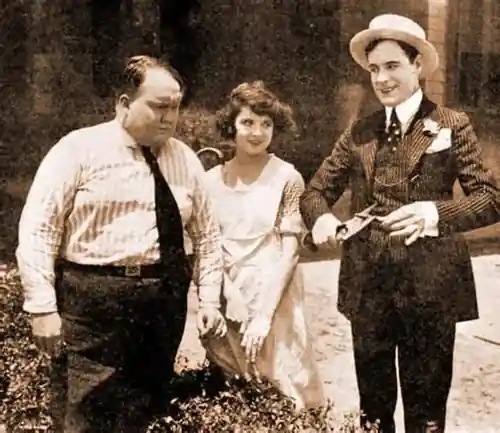
Color tinting survives in the 4K scan held at UCLA: amber for interiors, cerulean for night exteriors, a sickly green for the moment Oliver contemplates suicide on the pier. These chromatic cues, though standardized by 1922, are deployed with rhythmic precision—never more so than when Penelope’s arrival at the resort triggers a return to full-spectrum daylight stock, as if virtue itself were a photosensitive chemical.
At 47 minutes, the picture strides briskly, but not frantically. Editors William LeBaron and Elmer McCain favor a pattern of tension-and-release: each flirtatious escalation cuts away to comic relief—usually Sam De Grasse’s dipsomaniacal Count who exists purely to mispronounce American slang. The strategy prevents tonal claustrophobia, though it occasionally dissipates the erotic charge just when the narrative could combust. Still, the tight running time feels modern, akin to streaming-era limited series episodes that deliver one seismic pivot before credits roll.
What lingers longest is the film’s merciless equation of gender with liquidity. Enid trades seduction for social leverage; Mrs. Newell wields maternal guilt as gilt-edged stock; Penelope, ostensibly the moral core, ultimately cashes in her rescue for marital security. Even the comic Count admits, “I’ve liquidated my estates into liquid itself,” hoisting a whiskey tumbler toward the camera. The line, though played for laughs, braids alcohol, capital, and carnality into one sloshing currency.
This theme of liquidity dovetails with the early-’20s boom-bust anxieties. In 1921 the country slid into a short, sharp depression; by ’22 consumer confidence rebounded, but the memory of evaporation—of fortunes, of men—still rankled. Thus Oliver’s vacillation between matriarchal purse-strings and vampiric purse-snatching reads as a miniature allegory of a nation negotiating credit, both financial and moral.
Surviving cue sheets recommend Zamecnik’s “Agitato No. 3” for the pier confrontation and Langey’s “Amaryllis” for the reconciliation kiss. Contemporary exhibitors, however, swapped in popular fox-trots, a practice the studio winked at to ensure repeat foot traffic. The mash-up of high-born narrative with lowbrow melodies created a proto-juxtapositional irony that semioticians would later label “diegotic dissonance.” Imagine experiencing the film today with a synthwave track—its anachronism would merely extend a tradition alive even in 1922.
History has not entirely buried Forsaking All Others. Scorsese referenced its mirror-framing in The Age of Innocence, and Greta Gerwig screened a 16mm print while prepping Little Women for clues on female rivalry coded in politeness. Yet the film remains commercially unavailable on Blu-ray, streaming, or DCP, circulating only in archival 35mm and the occasional bootleg rip from Portuguese television. That scarcity amplifies its mystique: a movie you must hunt, like a scent that triggers a memory you can’t name.
Scholars tracing the genealogy of the femme fatale often skip from A Fool There Was (1915) to Double Indemnity (1944), but Elvidge’s Enid offers a missing link: a woman whose power derives not from exotic otherworldliness but from managerial savvy. She keeps ledger books of her conquests, a detail revealed in a brief insert shot that feels startlingly proto-feminist in its administrative competence.
Stacked beside The Spurs of Sybil—another 1922 tale of romantic triangulation—Forsaking All Others feels less rural, more cosmopolitan. Against The Pursuit of the Phantom, it trades adventure for claustrophobia. And while The Rebel valorizes outlaw individualism, this picture interrogates conformity, asking whether rebellion is just another commodity purchased on maternal credit.
Viewers who revere silent cinema merely for slapstick biscuits and Keaton’s gravity-defying gags will find here a bracing shot of domestic noir. It’s a film where every smile is a transaction, every kiss a clause in an unwritten contract. Yet within that mercantile chill beats a sincerely romantic heart—one that believes rescue is possible, that Penelope’s trans-continental dash can outrun moral entropy.
In an era when parasocial influencers monetize intimacy and OnlyFans subscriptions calcify into monthly ledgers, the film’s lexicon of desire-as-currency feels eerily contemporary. Watch it—if you can find it—and you’ll overhear 1922 whispering 2020s slang. The costumes change; the negotiations don’t.
Verdict: 8.7/10 — A brittle, glittering artifact of Jazz Age sexual mercantilism, staged with visual panache and acted with knife-edge precision. Seek it out before the nitrate smells of vinegar and vanished empires finally fade.
IMDb 5.5
1923
Community
Log in to comment.