DbcultAccessing Vault...
Cult Review
Senior Film Conservator
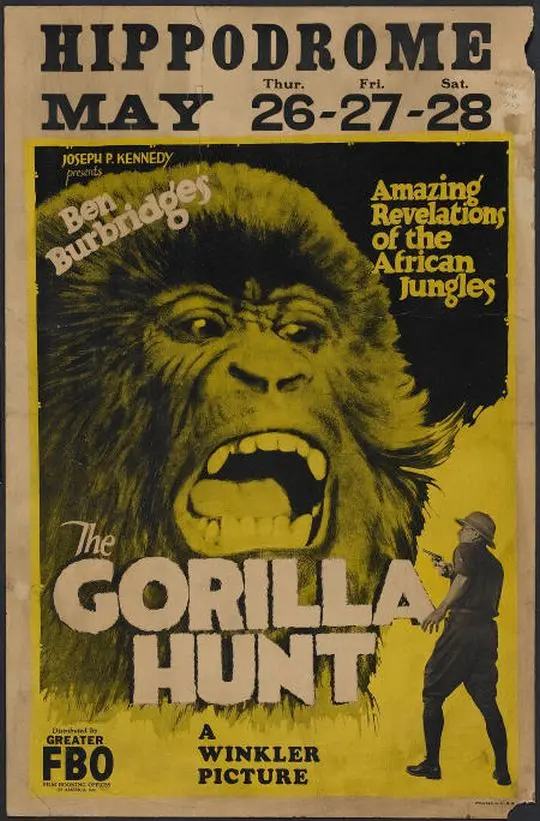
Is 'The Gorilla Hunt' worth watching today? Short answer: yes, but with significant, critical caveats. This film is primarily for film historians, anthropology students, and those fascinated by early 20th-century media ethics; it is decidedly NOT for viewers seeking genuine wildlife documentary, uncritical entertainment, or an uplifting cinematic experience. Its value lies almost entirely in its capacity as a historical artifact, a mirror reflecting the problematic sensibilities of its era.
This film works because it provides an unfiltered, if uncomfortable, look into a specific, now-discredited genre of filmmaking. It serves as an invaluable case study for understanding early documentary practices, the construction of narrative in non-fiction, and the pervasive colonial gaze. It fails because its central premise—the unvarnished reality of a man battling a wild gorilla—is so deeply compromised by evident staging, making it less a document of nature and more a performance of manufactured peril. You should watch it if you are prepared to engage with it critically, to dissect its inherent biases and ethical shortcomings, and to appreciate its place within the broader, often troubling, history of cinema.
The early 20th century saw a proliferation of films capitalizing on the mystique and perceived savagery of 'Darkest Africa.' These features, often purporting to be authentic documentaries, fed a Western appetite for exoticism, adventure, and the triumph of man over wild nature. 'The Gorilla Hunt' is a quintessential product of this era, embodying both its ambitions and its profound ethical flaws. It stands as a stark reminder of a time when the lines between fact and sensationalized fiction were not just blurred, but often intentionally obliterated for entertainment value.
Many films of this genre didn't even bother with authentic locations, instead opting for studio sets or North American wilderness doubling for the African continent. This film, however, proudly declares its genuine African setting, an assertion that, while potentially true, hardly absolves it of its other transgressions. The very act of framing Africa as 'dark' or 'exposed' reveals a colonial mindset, reducing a vast, diverse continent to a backdrop for Western exploits.
When viewed alongside other early cinematic ventures like Her Night of Romance or even the more fantastical The Monster and the Girl, 'The Gorilla Hunt' occupies a peculiar space. It strives for the gravitas of non-fiction but succumbs to the theatricality of fiction, a tension that defines its legacy. Its existence, regardless of its authenticity, speaks volumes about the popular imagination of the era and the nascent power of moving images to shape perception, for better or worse.
Ben Burbridge, credited as both the film's writer and its singular cast member, is not merely the subject of 'The Gorilla Hunt' but its primary architect. This dual role is crucial to understanding the film’s problematic nature. Burbridge isn't just documenting an adventure; he is actively crafting it, both on paper and in front of the camera. He is the 'Great White Hunter,' a figure steeped in colonial tropes, positioned as the heroic, conquering force against the wild.
This self-casting and self-direction immediately raise questions of bias and control. Every frame, every dramatic beat, every apparent moment of peril, is filtered through Burbridge’s singular vision and performance. It’s less a documentary exploration and more a self-aggrandizing spectacle, carefully engineered to elevate its protagonist to legendary status.
One could argue that Burbridge’s performance, even if staged, required a certain degree of physical commitment. Yet, this commitment is overshadowed by the inherent dishonesty. His portrayal of fear and bravery, particularly during the climactic encounter, becomes less about genuine emotion and more about theatrical execution, diminishing any potential for true empathy or engagement.
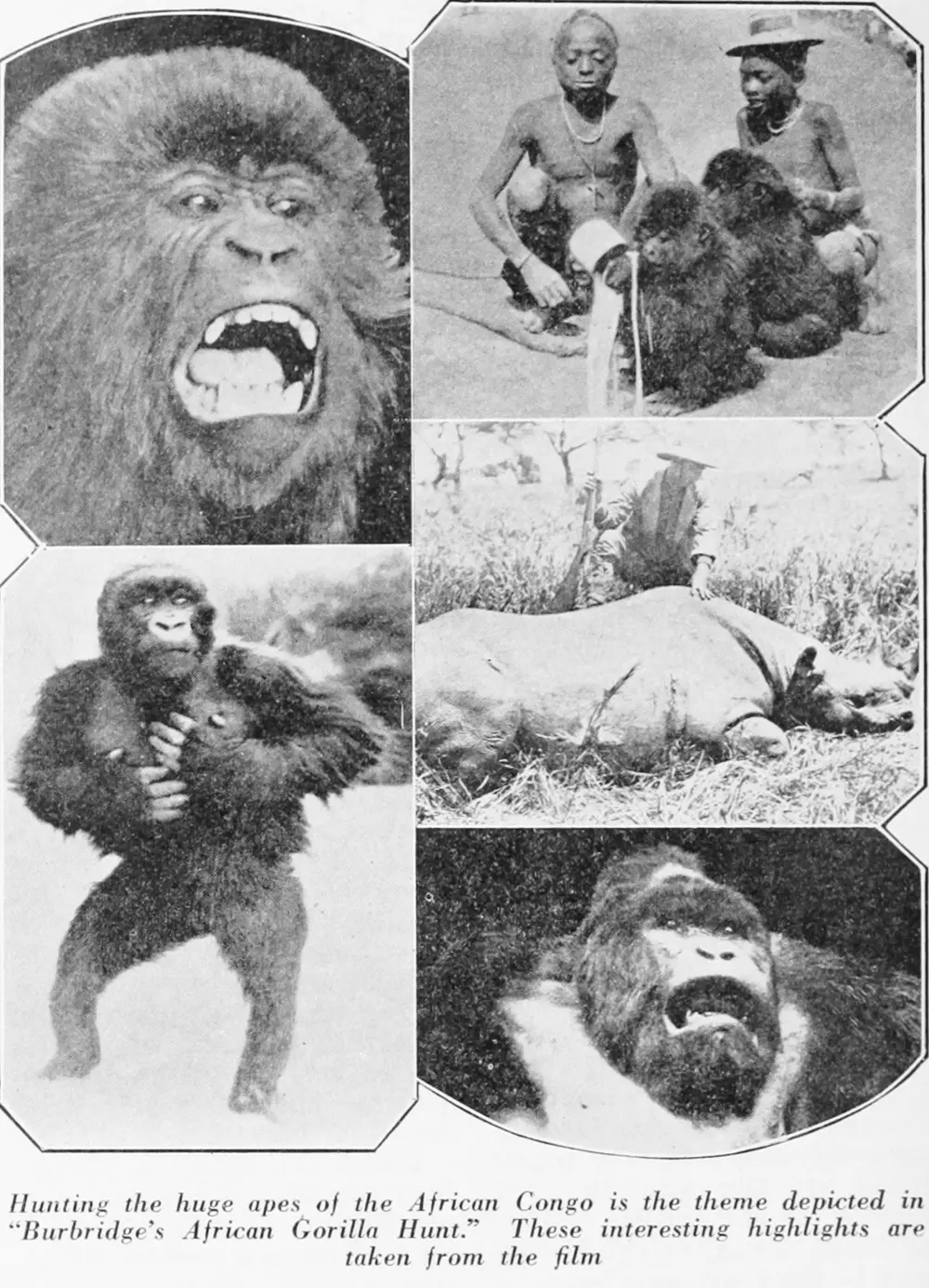
The film's most glaring point of contention, and indeed its defining characteristic, is the alleged hand-to-hand combat between Burbridge and the seven-foot gorilla. The very description – 'smacked of staging' – is damning. In an era before sophisticated special effects, achieving such a confrontation authentically with a truly wild, dangerous animal would have been extraordinarily difficult and ethically reprehensible.
The suspicion of fakery is not merely academic; it’s central to the film’s identity. One can imagine the techniques employed: a costumed performer, perhaps, or a heavily sedated animal in a controlled environment, edited to suggest ferocity. The choreography, the reactions, the very duration of the struggle would have been meticulously planned to maximize dramatic impact, rather than reflect spontaneous reality.
This staging fundamentally undermines the film's claim to be a 'documentary feature.' It transforms what should be a window into the natural world into a carefully constructed illusion. The ethical implications are profound: it misrepresents reality, exploits audience trust, and perpetuates harmful stereotypes about both the environment and the creatures within it. This isn't just bad filmmaking; it's deceptive filmmaking.
As the sole credited cast member, Ben Burbridge shoulders the entire dramatic weight of 'The Gorilla Hunt.' His performance, if one can call it that, is less about embodying a character and more about embodying an ideal: the fearless explorer, the conqueror of the wild. The film hinges on his ability to convince the audience of the extreme danger he faces, particularly in the aforementioned gorilla encounter.
Examining the footage through a modern lens, one might observe exaggerated movements, perhaps too-convenient camera angles that obscure crucial details, or reactions that feel more rehearsed than visceral. The 'seven-foot gorilla' itself, whether a person in a suit or a manipulated animal, would have demanded a specific kind of interaction from Burbridge to maintain the illusion.
His 'acting' is therefore a performance of manufactured heroism, designed to awe and thrill. This makes the film a fascinating study in early cinematic manipulation, a precursor to reality television in its deliberate blurring of lines between genuine experience and dramatic recreation. It’s a testament to the power of the moving image to create belief, even when the evidence is dubious.
The cinematography in 'The Gorilla Hunt,' while likely rudimentary by today's standards, played a crucial role in either sustaining or betraying the film's illusion. Given the period, cameras were bulky, and shooting in remote African locations would have presented immense technical challenges. This often meant static shots, limited takes, and a reliance on long shots to capture the vastness of the environment.
However, it's in the close-up, or rather, the deliberate *avoidance* of certain close-ups, where the staging might become most apparent. During the hand-to-hand combat sequence, one might expect quick cuts, obscured angles, or shots that strategically hide the artificiality of the gorilla or the safety measures in place. A sudden shift in lighting or film grain, or an inconsistent background, could also serve as subtle tells for a discerning viewer.
The visual language of the film, therefore, is not just about capturing images; it’s about constructing a narrative of authenticity. The wide shots of the African landscape might have been genuinely filmed there, lending a veneer of truth to the more questionable sequences. This juxtaposition—real environment, staged action—is a key element of its problematic charm. It's a fascinating study in how early filmmakers used the tools at their disposal to create a believable, albeit false, reality.
The pacing of 'The Gorilla Hunt' would likely follow the conventions of early adventure documentaries: a slow build-up establishing the exotic locale, followed by a gradual increase in tension leading to the climactic encounter. The narrative rhythm would be dictated by the perceived journey, punctuated by moments of 'discovery' and 'peril.' However, the underlying tone is where the film truly stumbles.
The tone is inherently colonial and exploitative. It positions indigenous people, if they are shown at all, as exotic background elements or as primitive foils to the Western adventurer. The animals are framed as dangerous beasts to be conquered, rather than subjects of ecological study. This 'us vs. them' mentality, coupled with the sensationalized drama, creates an uncomfortable viewing experience for contemporary audiences.
Even if one attempts to view it purely as a product of its time, the ethical issues are difficult to ignore. The film's very existence, and its likely popularity, speaks to a public hunger for narratives that reinforced preconceived notions about race, wilderness, and human dominance. It doesn't just present a story; it reinforces a worldview that is, by modern standards, deeply flawed and harmful.
Yes, but only for specific audiences. It is a historical curiosity, not a timeless piece of cinema. Its primary value lies in its historical context and its role as a subject for critical analysis. This film serves as a powerful example of early media manipulation. It highlights the ethical dilemmas inherent in so-called 'documentary' filmmaking. For those interested in the evolution of cinema or the history of colonialism, it offers a stark lesson.
Pros:
- Provides invaluable insight into early documentary filmmaking techniques and narrative construction.
- Serves as a critical case study for media ethics and the historical representation of non-Western cultures.
- Its 'staging' aspects are a fascinating, if problematic, look at cinematic illusion before advanced special effects.
- A rare glimpse into the popular entertainment sensibilities of the early 20th century.
Cons:
- The overt staging of the central conflict severely compromises its documentary integrity.
- Promotes a colonial, exploitative viewpoint towards Africa and its wildlife.
- May be difficult for modern audiences to engage with due to its dated ethical framework and questionable authenticity.
- Lacks genuine dramatic tension given the obvious fakery, reducing its entertainment value.
- The singular focus on Ben Burbridge feels self-serving rather than genuinely exploratory.
The ethical landscape surrounding 'The Gorilla Hunt' is perhaps its most compelling aspect for contemporary analysis. This isn't just a film that's 'bad' or 'boring'; it's a film that actively engages in deception. In an age where the concept of 'fake news' is hotly debated, examining early examples of media manipulation like this becomes incredibly pertinent. It forces us to confront the long history of constructed realities presented as truth.
The film's very title and premise are designed to evoke a sense of raw, untamed nature, promising an unvarnished encounter with the wild. The betrayal of that promise, through what is clearly implied as staging, is a significant breach of trust with the audience. While early cinema was often a wild west of experimentation and blurring genres, the deliberate misrepresentation of a 'documentary feature' holds a unique position.
Furthermore, the film's existence contributes to a broader, harmful narrative about Africa and its inhabitants. By portraying the continent as a place of primitive danger, requiring a 'Great White Hunter' to conquer its wildness, it reinforces colonial stereotypes that have had lasting, damaging effects. It’s a cultural artifact that, while historically significant, carries a heavy burden of problematic ideology. Its legacy is tied to this uncomfortable truth.
'The Gorilla Hunt' is not a film to be enjoyed in the conventional sense. It is a historical document, a problematic artifact from a bygone era of cinematic ethics that demands critical engagement rather than passive consumption. Its value is not in its artistry or its entertainment, but in its stark illustration of a particular genre's problematic nature and the nascent challenges of authenticity in early non-fiction filmmaking. It works. But it’s flawed. Deeply. For those willing to look beyond the surface and dissect its ethical and historical implications, it offers a surprisingly rich, albeit uncomfortable, learning experience. It’s a film that teaches more about the era it came from than the subject it purports to depict. Don't watch it for gorillas; watch it for the uncomfortable truth about early cinema.
IMDb —
1924
Community
Log in to comment.