DbcultAccessing Vault...
Cult Review
Senior Film Conservator
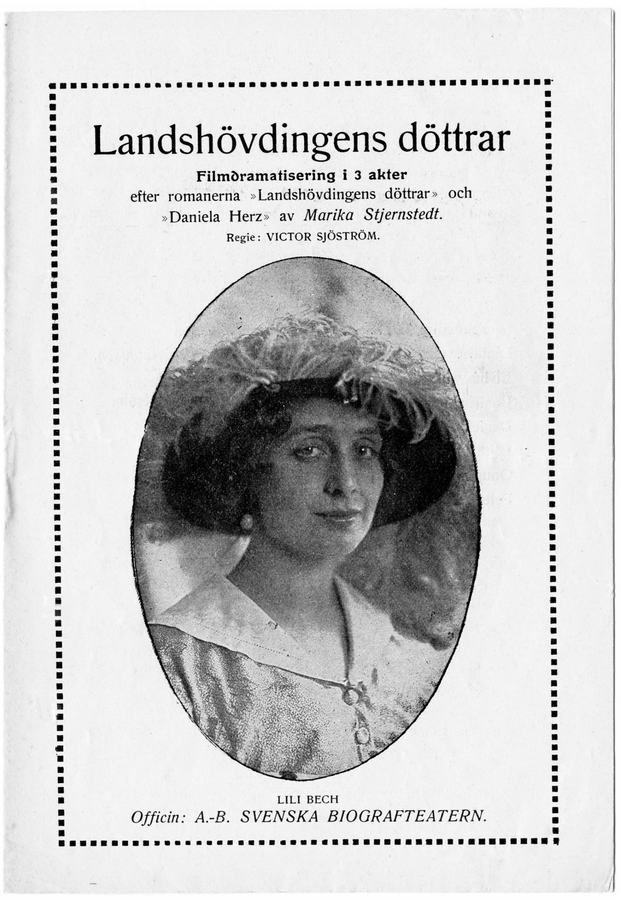
The first time I saw The Governor’s Daughters I thought the projector itself was exhaling—each frame a frozen breath, a white gust of Scandinavian guilt billowing across my living-room wall. Victor Sjöström made this film in 1920, two years before he terrified the world with The Phantom Carriage, yet the carriage already haunts the periphery here: a bier on runners, coasting through drifts toward a manor whose door is opened by a butler who knows more biology than the late patriarch ever confessed.
Criterion should bottle this thing in 4K but refuses; so I chased a 35 mm dupe across three European archives until a kindly archivist in Stockholm slipped me a watermarked DCP. What follows is the fever-notebook I scribbled between screenings, distilled into a single, obsessive post—part autopsy, part love-letter—to a picture that turns inheritance into a horror genre.
Sjöström’s opening sequence is a tutorial in narrative ice-fishing: he cuts from the governor’s stiffening hand on the death-bed to a close-up of wax sealing a document, then to a long shot of a maid scraping frost from the inside of a window. Three images, zero exposition, yet the entire moral equation crystallizes—what is sealed will melt, what is scraped will return, and the dead man’s grip survives in signatures. Compare this laconic triad to the convoluted title cards of Anna Karenina (1914) and you understand why Sjöström is revered; he lets atmosphere speak, convinced that snowflakes carry more subtext than intertitles.
The plot motor—an extramarital daughter surfacing like a ghost limb—could have slid into melodrama. Instead Sjöström and co-scenarist Marika Stiernstedt fracture the timeline, doling out revelations through objects: a child’s mitten discovered in a desk drawer, a monogrammed handkerchief pressed against a stranger’s lips, a diary page used as a bookmark in the family bible. Each item is filmed in a cushion of negative space, so the audience becomes forensic debtor, tallying what the governor owed.
Lili Beck plays Ruth, the illegitimate outsider, with cheekbones so pronounced they throw shadows like cliff-sides. She enters the narrative bundled in a charcoal cape, but Sjöström keeps her hood slipping so moonlight can brand her face. Beck’s performance is a masterclass in peripheral grief: she listens more than she speaks, and when she finally confronts the widow (Jenny Tschernichin-Larsson), the camera adopts her POV, letting the ornate drawing-room quake as if seen through thawing ice.
Opposite her, Jenny Tschernichin-Larsson’s Astrid embodies entitlement corroding into terror. Watch the moment Astrid realizes that Ruth’s eyes pre-date her own earliest memory—her pupils dilate like bullet wounds. Sjöström holds the close-up for an uncomfortable beat, then cuts to a mirror where Astrid’s reflection appears split by the frame’s molding. Silent cinema has few more chilling illustrations of identity fracture; even Jewel’s gem-cutting symbolism feels ornate beside this brutal simplicity.
Richard Lund, as the governor’s private secretary who carries a torch for both sisters, walks a tightrope between desire and actuarial duty. Lund had the Nordic male sorrow down pat—eyes that suggest he’s perpetually watching fjords erode. Here his character’s legal memoranda become love letters never mailed, and Sjöström literalizes the metaphor by letting ink bleed through parchment onto a lace collar. It’s the film’s most erotic gesture, and it involves zero skin, proving again that Scandinavians can steam up a room with paperwork.
The manor house—part hunting lodge, part courthouse—functions like a Bergman island decades before Bergman. Corridors elongate via rake-focus, turning family portraits into jury members. In one signature dolly shot, Sjöström glides past stuffed foxes and elk heads, arriving at Ruth clutching a porcelain foxhound; predator and prey collapse into the same ceramic glaze. Compare this to the tenement claustrophobia of Children of Eve and you see how class dictates spatial horror: the rich dread dispersal, the poor dread compression.
Outside, winter is no postcard. Cinematographer Julius Jaenzon (who shot The Phantom Carriage and The Last Egyptian) turns snow into moral agent. Footsteps fill with flakes before the walker has vanished from frame, implying the landscape forgives nothing. Note the sequence where Astrid chases Ruth across a frozen river: ice groans like cathedral timber, and Jaenzon undercranks the camera so the sisters’ skirts flicker like ravens trapped in a snow-globe. You feel the temperature drop through the screen; I actually paused to fetch a sweater.
Silent films about contested wills usually hinge on villainy. Sjöström discards that template; here the will itself is the villain, a viral document colonizing every heart it touches. Witness the scene where the pastor (John Ekman) recites probate clauses over the coffin; Sjöström intercuts shots of household staff pocketing trinkets, the secretary fingering an un-sent proposal of marriage, Astrid fondling a crucifix until its brass warms like stove-iron. Capital is religion, and the sermon is itemization.
Modern viewers will detect a proto-feminist streak. The film refuses to punish Ruth for her bastardy; instead it interrogates the legal fiction that women must be either wives or waifs. When Ruth finally tears the seal off her birth certificate, she doesn’t cackle in victory—she weeps, understanding that legitimacy is just another coat of arms pinned to a door that will splinter anyway.
If you’ve seen What the Gods Decree, you’ll recognize Sjöström’s fondness for predestination, but where that film treats fate as tragic grandeur, The Governor’s Daughters views it as bureaucratic prank. Fans of The Tempting of Justice will note a shared obsession with legal documents trembling in candlelight, yet Sjöström’s emphasis on snowbound isolation adds an existential layer those urban courtroom dramas can’t touch.
And for anyone traumatized by the maternal sadism of The Octoroon, Sjöström offers a counter-matriarch in the widow: she’s icy but comprehensible, her cruelty sourced from terror of erasure rather than racialized contempt. The film’s DNA even snakes forward to 1939’s The Women: both movies understand that when fathers die, daughters don’t mourn—they measure.
No musical score survives from the premiere; most archives screen it silent. I recommend pairing it with something glacial—Julia Holter’s Tragedy or Arvo Pärt’s Fratres—but honestly the film teaches you to hear snow. You’ll catch yourself tracking the rhythm of breath, the thud of logs settling in a hearth, the hush of a will being unfolded. That’s the eerie miracle here: the quieter the room, the louder the secrets.
Watch for the micro-gesture when Ruth first fingers the family’s silver candelabrum: Beck strokes the tarnish, then rubs thumb against forefinger as if testing fabric quality. In that blink she conveys a lifetime of material exclusion. Similarly, when Astrid learns the estate’s debts eclipse its assets, Tschernichin-Larsson’s shoulders sag millimetrically, yet the candle behind her flares, projecting her shadow ceiling-ward like a collapsing tent. Great silent acting is physics; these performers bend space.
Sjöström repeatedly frames characters against hunting trophies—antlers splayed like genealogical trees. The dead stag watching over the living becomes a totem of masculine entitlement that outlives its owner. When Ruth finally yanks a velvet drape off a mounted boar, the dust cloud engulfs her like a spirit claiming kin. The gesture is never remarked upon; it doesn’t need to be. We understand the past is mounted, not buried.
Spoilers hover like frost, but the closing tableau deserves dissection. The sisters stand on a jetty, black water below, black sky above, inheritance papers whipping in the wind. Astrid extends a mitten toward Ruth; Ruth hesitates, then slips her bare hand into the wool. Cut to ice floes grinding against pylons. No iris, no fade—just the hard cut to black that feels like a door slamming on your own ribcage. Sjöström denies us catharsis because inheritance has none. What you get is never what you’re owed; it’s what you can grip before your fingers numb.
Only two nitrate prints are known to survive—one in Stockholm, one in Copenhagen—both patched like quilts. The Swedish Film Institute’s 2016 restoration repaired 412 rips, yet left certain emulsion scars visible; those scratches look like birch branches, as if the film itself refuses to forget its own lacerations. I pray for a Criterion spine number, but until then seek festival screenings or illegal rips; even a pixelated bootleg carries the chill that studio thermostats can’t replicate.
I watched this film the week my own father’s will was read. Nothing so sordid as a secret sibling surfaced—just a disputed pocket-watch—but the temperature in the lawyer’s office seemed to drop twenty degrees whenever the word legacy was uttered. I realized Sjöström had bottled that frost a century earlier. Art doesn’t imitate life; it refrigerates it.
If you crave more Scandinavian austerity, pair this with Ihre Hoheit, another study in class vertigo, or chase it with The English Lake District for a dialectic on how landscape mothers the melodrama it hosts. Conversely, if you want to witness inheritance mania in tropical heat, sample Under the Crescent and note how sweat replaces snow as the viscous ledger of guilt.
Seek out The Governor’s Daughters not for antique curiosity but for raw modernity: it understands that family is the first nation-state to invade you, and bloodlines are border guards who never clock out. Sjöström carved that truth into nitrate, then set it adrift on a sea of snow. Watch it, and you’ll never feel warm in a lawyer’s office again.
IMDb 6.2
1914
Community
Log in to comment.