DbcultAccessing Vault...
7/10
Senior Film Conservator
A definitive 7/10 rating for a film that redefined the boundaries of cult cinema. The Gown of Destiny remains a cornerstone of transgressive art.
In the annals of cinematic history, certain films stand out not just for their narrative prowess or technical innovation, but for the sheer audacity of their central conceit. 'The Gown of Destiny' is one such rarity, a silent era gem that daringly posits a piece of haute couture as the unlikely catalyst for profound personal transformation and fervent national service amidst the crucible of World War I. This isn't merely a story of wartime heroism; it's a fascinating exploration of the subtle, often overlooked, ways in which inspiration can ripple through society, ignited by the most unexpected of sources. The film, a product of a time when the world grappled with unprecedented global conflict, manages to imbue a seemingly inanimate object with an almost sentient power, turning it into a silent, shimmering agent of change. It challenges our conventional notions of agency, suggesting that influence can emanate from beauty, design, and the symbolic weight we ascribe to objects, rather than solely from direct action. The sheer originality of this premise alone warrants a deeper look, inviting us to consider the profound impact of artistic expression even in the face of overwhelming adversity.
At the heart of this extraordinary narrative is Andre Leriche, a French dress designer whose spirit burns with a patriotism far exceeding his physical stature. Rejected from military service due to his diminutive size, Andre grapples with a profound sense of inadequacy, a burning desire to contribute to his embattled nation stifled by bureaucratic decree. It is from this crucible of frustration and unspent zeal that a remarkable idea takes root: if he cannot wield a rifle, he will wield a needle, creating a garment so imbued with the spirit of France, so exquisitely designed, that it will inspire others to act. This isn't merely a dress; it is Andre's manifest destiny, his personal declaration of war, a silent, elegant weapon against despair. The film masterfully portrays Andre's internal struggle, his initial despondency giving way to a fierce creative determination. His hands, deemed unfit for the trenches, become instruments of artistic combat, shaping fabric into a symbol of hope and national pride. The gown, in its nascent stages, represents Andre's sublimation of personal disappointment into a higher calling, a testament to the myriad forms patriotism can assume. It’s a powerful opening statement about finding one's purpose, even when conventional paths are closed. This initial act of creation sets the stage for the gown's incredible journey, transforming it from a mere article of clothing into a powerful emblem of a nation's collective will.
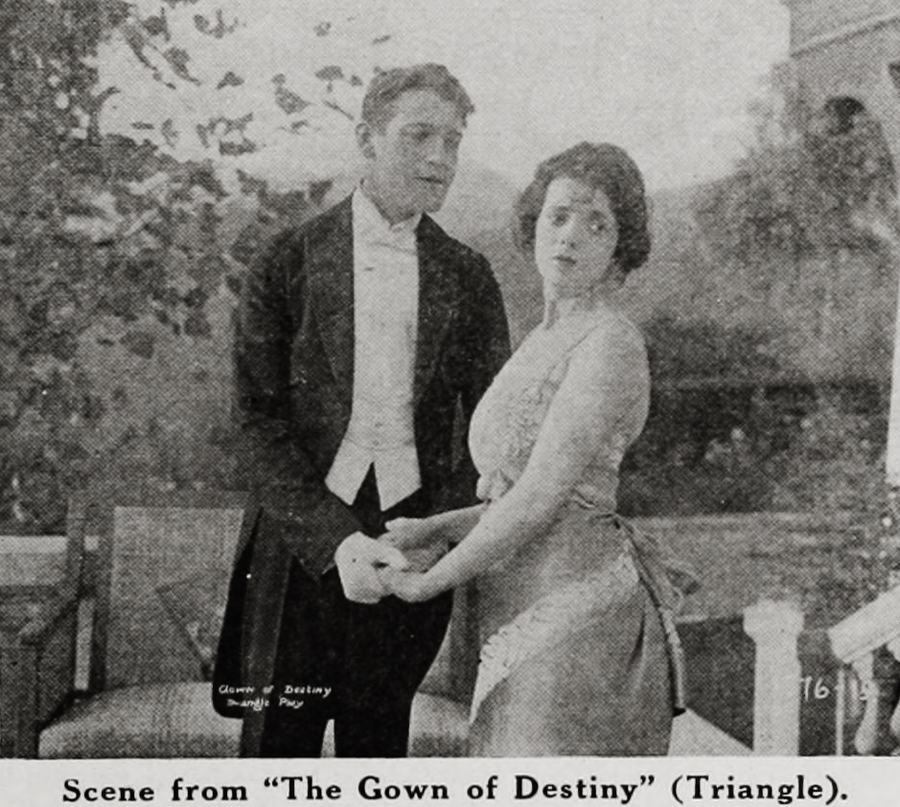
The gown's first significant impact unfolds in the life of Mrs. Mortimer Reyton, portrayed with a nuanced vulnerability by the luminous Alma Rubens. Mrs. Reyton is introduced as a woman teetering on the precipice of marital disillusionment, her husband's affection gradually eroding, leaving her feeling unseen and uncherished. The arrival of Andre's meticulously crafted gown, acquired through Madame Felice, marks a pivotal turning point. It is more than just a beautiful dress; it is a transformative agent, a psychological catalyst that reawakens Mrs. Reyton's inner radiance and confidence. Rubens's performance here is particularly compelling, conveying the subtle shifts in her character's demeanor – from quiet despair to a renewed sense of self-worth – through expression and posture, a true testament to silent film acting. The gown, in its exquisite design and undeniable allure, serves as a mirror, reflecting back to Mrs. Reyton a vibrant image of herself that had been obscured by neglect. This newfound self-assurance radiates outward, captivating her husband anew. His rekindled love isn't merely sentimental; it manifests in a tangible, patriotic act. In honor of their wedding anniversary, a gesture now imbued with fresh significance, Mr. Reyton purchases three ambulances for France. This development elegantly intertwines personal redemption with national service, demonstrating how individual happiness can inspire collective good. The gown, initially a symbol of personal vanity, elevates itself to an instrument of humanitarian aid, proving that beauty can indeed serve a higher purpose. This segment of the film beautifully illustrates the ripple effect of a single, inspired creation, touching lives in ways Andre Leriche could only have dreamed.
Having fulfilled its initial purpose, the gown embarks on its second transformative journey, dispatched by Mrs. Reyton to her cousin, Natalie. Here, the garment's influence shifts from marital restoration to romantic inspiration and, ultimately, military enlistment. Natalie, a character whose life is undoubtedly touched by the gown's elegance, finds herself at the center of a new narrative arc. It is in this context that the Englishman Neil Cunningham, portrayed by Allan Sears, enters the scene. Cunningham, captivated by Natalie's charm and, implicitly, by the aura of sophistication and spirit that the gown projects, finds his affections stirred. The gown, in a subtle yet powerful way, becomes an extension of Natalie's allure, an almost mythical object that embodies the ideals of beauty, grace, and perhaps even the courage of the nation it was designed to aid. To win Natalie's love, Cunningham makes a monumental decision: he returns home to enlist in the war effort. This is where the film makes a fascinating leap, connecting personal romantic ambition with the larger canvas of national duty. The gown, therefore, doesn't just inspire aesthetic appreciation; it ignites a sense of purpose, a desire for valor and recognition that transcends personal gain. It suggests that even the most intimate desires can be channeled into acts of profound public service. The narrative deftly weaves these threads together, showing how a single object can inspire disparate motivations — from a husband's renewed love to a suitor's martial resolve — all contributing to the greater cause. The gown, in essence, becomes a silent recruiter, a symbol of the ideals worth fighting for, both personal and national. This segment highlights the film's unique ability to explore the multifaceted nature of inspiration, proving that a catalyst for change can emerge from the most unexpected corners of life. It’s a testament to the film’s narrative ambition, moving beyond simple romance to encompass a broader commentary on duty and sacrifice.
Neil Cunningham's journey from enamored suitor to valiant soldier culminates on the brutal battlefields of France, bringing the film's various narrative threads to a poignant and heroic climax. Having been inspired by the gown and his love for Natalie, Neil proves his mettle, distinguishing himself through acts of courage and leadership. His transformation is complete, from a man seeking love to a man embodying selfless sacrifice. The film, while focusing on the gown's influence, does not shy away from depicting the grim realities of war, albeit through the lens of early cinema. It is during a fierce assault on a German stronghold that Neil's heroism reaches its zenith. In a dramatic turn of events, he encounters Andre's father, the venerable mayor of the besieged town, caught in the throes of danger. Neil, without hesitation, risks his own life to save the mayor from certain death. This act of profound bravery not only solidifies Neil's status as a true hero but also brings the narrative full circle, providing a powerful vindication for Andre Leriche's initial, seemingly modest, ambition. Andre, unable to fight directly, had poured his patriotic spirit into the gown. Now, through its indirect influence, his own father has been saved by a man inspired by his creation. This is the ultimate fulfillment of Andre's dream: to serve his country, even if through a proxy, even if through the elegant folds of a dress. The film thus underscores a powerful message: that service takes many forms, and that the impact of a single creative act can resonate far beyond its immediate sphere, influencing lives and shaping destinies on both the personal and national stage. It's a deeply satisfying resolution that elevates the gown from a mere plot device to a symbol of interconnectedness and purpose.
'The Gown of Destiny' is far more than a simple wartime melodrama; it is a rich tapestry woven with compelling thematic threads that probe the very nature of patriotism, individual agency, and the unexpected manifestations of heroism. At its core, the film offers a refreshingly unconventional perspective on wartime contribution. Andre Leriche, the physically slight designer, embodies a form of heroism often overlooked: the quiet, creative defiance against personal limitations to serve a greater cause. His gown becomes a potent symbol of indirect influence, challenging the narrow definition of what constitutes 'service' during conflict. It suggests that inspiration, art, and even beauty can be as vital to national morale and effort as direct military engagement. The film deftly explores the concept of agency, demonstrating how a single object, imbued with intent and artistry, can become a powerful catalyst for human action. The gown doesn't force anyone; rather, it unlocks latent desires, rekindles dormant affections, and ignites a sense of duty in those who encounter it. This subtle power speaks volumes about the human capacity for inspiration and the profound impact of symbolic gestures. Furthermore, the film subtly critiques societal expectations, particularly concerning gender roles during wartime. While men are expected to fight, the gown, a traditionally feminine object, becomes an instrument of masculine heroism. It empowers women, like Mrs. Reyton and Natalie, by making them central to the narrative of national contribution, not just as passive recipients of male protection, but as active participants in inspiring action. The film resonates with a timeless message that heroism isn't confined to the battlefield, nor is it exclusive to those wielding weapons. It can be found in the quiet resolve of an artist, the renewed commitment of a spouse, or the inspired courage of a lover. This layered thematic exploration elevates 'The Gown of Destiny' beyond a simple period piece, rendering it a thought-provoking meditation on the multifaceted nature of human purpose and the enduring power of inspiration. It stands as a testament to the belief that every individual, regardless of their perceived limitations, possesses the capacity to contribute meaningfully to their community and nation, often in ways unforeseen and deeply impactful.
As a product of the silent era, 'The Gown of Destiny' relies heavily on the evocative power of visual storytelling and the expressive capabilities of its cast to convey its intricate narrative and emotional depth. The performances are a masterclass in silent film acting, where every gesture, every facial expression, and every movement carries significant weight, replacing spoken dialogue with a rich lexicon of visual cues. Alma Rubens, as Mrs. Mortimer Reyton, delivers a particularly memorable performance. Her portrayal of a woman experiencing both marital ennui and subsequent resurgence is remarkably nuanced. Rubens conveys Mrs. Reyton's initial quiet desperation and later her renewed vigor with an elegance and sincerity that captivates the viewer, making her transformation utterly believable. Her eyes, often the most potent tool for silent actors, speak volumes about her character's internal journey. Allan Sears, as Neil Cunningham, similarly embodies the heroic archetype with a compelling blend of romantic yearning and courageous resolve. His transition from a suitor to a soldier is depicted with a believable earnestness, demonstrating the power of inspiration to galvanize action. The supporting cast, including Herrera Tejedde and Lillian West, contribute significantly to the film's texture, each actor adding layers to the unfolding drama through their carefully choreographed movements and poignant expressions. The direction, while perhaps not groundbreaking in its cinematography by today's standards, is effective in its ability to maintain narrative clarity and emotional resonance. The use of intertitles is judicious, providing necessary exposition without interrupting the flow of the visual narrative. The costume design, naturally, plays a pivotal role, with the titular gown serving as a character in itself. Its visual appeal and symbolic weight are consistently emphasized, making it a tangible representation of Andre's dream and its far-reaching consequences. The film's visual style, typical of its period, effectively uses composition and staging to highlight key emotional beats and narrative developments. The stark contrast between the domestic scenes and the later war sequences, though perhaps limited by the technical constraints of the time, effectively conveys the shift in the characters' worlds. In its silent artistry, 'The Gown of Destiny' manages to communicate complex ideas and profound emotions, proving the enduring power of non-verbal cinema to tell a compelling story. It reminds us that sometimes, the loudest messages are conveyed through the most subtle of visual cues. For those interested in the craft of silent cinema, this film offers a fascinating study in performance and visual narrative, much like the compelling historical drama Nurse Cavell, which similarly relies on strong visual performances to convey the gravitas of its wartime setting, albeit with a different focus on individual sacrifice.
'The Gown of Destiny' is not merely a cinematic artifact; it is a valuable historical document, offering a unique glimpse into the cultural zeitgeist of the World War I era. Released during or shortly after the conflict, the film reflects the pervasive sense of patriotism, the collective desire for contribution, and the myriad ways individuals sought to engage with the war effort, even from afar. It speaks to a time when national service was not solely defined by military enlistment but encompassed a broader spectrum of actions, from charitable donations to the morale-boosting power of art and inspiration. The film's narrative, with its emphasis on indirect contribution and the ripple effect of individual actions, would have resonated deeply with audiences grappling with the immense scale of the war and their own roles within it. It offered a comforting and empowering message: that even seemingly small or unconventional gestures could have significant national impact. Furthermore, the film's portrayal of female characters, particularly Mrs. Reyton and Natalie, is noteworthy. While their initial motivations are tied to romantic or domestic spheres, their actions ultimately lead to tangible contributions to the war, subtly challenging the era's rigid gender roles by demonstrating women's indirect yet powerful agency. In an era when films like The Hand That Rocks the Cradle explored the profound influence of women within the domestic sphere, 'The Gown of Destiny' expands this notion to the national stage. The enduring legacy of 'The Gown of Destiny' lies in its bold originality and its capacity to transcend its immediate historical context. It remains a compelling study in how art, even in its most seemingly frivolous forms, can become a conduit for profound human emotions and national aspirations. It reminds us that inspiration can spring from unexpected places, and that the desire to serve one's country can manifest in countless, often beautiful, ways. This film, therefore, is not just a piece of entertainment but a testament to the intricate relationship between culture, conflict, and the human spirit.
A truly unique cinematic offering, 'The Gown of Destiny' continues to charm and provoke thought, proving that even a silent film from a bygone era can speak volumes about the timeless themes of purpose, love, and patriotic devotion.
IMDb 5.2
1927
Community
Log in to comment.