DbcultAccessing Vault...
Cult Review
Senior Film Conservator
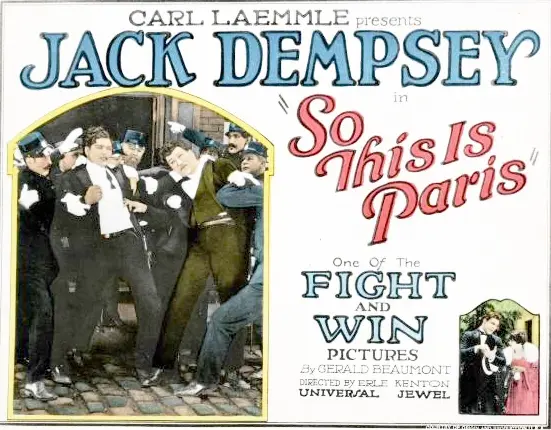
Ah, the roaring twenties! A time of flappers, jazz, and the nascent art of cinema finding its voice, even when that voice was entirely silent. Amidst this vibrant backdrop arrives a gem like So This Is Paris (1926), a film that might not be as universally celebrated as some of its contemporaries, yet offers a delightful romp through physical comedy and misunderstanding. Penned by the imaginative Gerald Beaumont and featuring an intriguing ensemble including the legendary pugilist Jack Dempsey, Charles Reisner, and Ethel Shannon, this picture is a testament to the era's boundless creativity and its penchant for pure, unadulterated entertainment. It’s a film that, despite its age, still possesses a certain kinetic charm, a joyous, almost reckless abandon that sweeps you into its whirlwind narrative. When we talk about the power of a film to transport, to evoke genuine laughter through purely visual means, So This Is Paris stands as a compelling example.
The premise itself is a masterclass in setting up comedic potential. Our protagonist, Jack, a man seemingly accustomed to a certain level of notoriety, arrives in France with his party. Immediately, they're thrust into a situation demanding ingenuity: a swarm of eager reporters. Their solution? A rather theatrical disguise involving false beards. This opening gambit immediately signals the film's playful tone, suggesting that conventional solutions are for other stories. It's a delightful, almost whimsical start that grounds the ensuing chaos in a world where the absurd is simply accepted. This isn't a high-minded drama; it's a film that winks at its audience, inviting them to suspend disbelief and embrace the escalating silliness. The initial escape sets the stage for a series of misadventures that only intensify as the narrative progresses, hinting at the delightful, if predictable, trajectory of silent-era comedies.
But the true heart of So This Is Paris beats with a misunderstanding so profoundly French, so inherently cinematic, it could only occur in a silent film. Jack stumbles upon what appears to be a violent street attack. The reality, of course, is an Apache dance – a dramatic, often aggressive, form of Parisian street performance that mimics a violent lovers' quarrel. Jack, ever the knight in shining armor (or perhaps just a man prone to impetuous action), intervenes, rescuing the 'victim' from their 'assailant.' This moment is pivotal, igniting a feud with a man who, unbeknownst to Jack, is destined to become his opponent in the boxing ring. The irony is delicious, a classic comedic setup where good intentions pave the road to utter mayhem. It's a brilliant example of how a simple cultural clash can be leveraged for maximum comedic impact, a trope that, while common, is executed with genuine verve here. The physical comedy that erupts from this initial blunder is both precise and broad, a characteristic blend of the era's best comedic stylings.
From this single spark, the film explodes into a continuous, escalating brawl that spans multiple locales. We witness fisticuffs in the refined setting of a hotel lobby, the bustling anonymity of the sidewalk, and the chaotic expanse of the street itself. The fight is relentless, a testament to the physical endurance of the actors and the comedic vision of the filmmakers. This sustained conflict isn't just about violence; it's about the sheer absurdity of two men, driven by a misunderstanding, unable to cease their quarrel. It speaks to a primal, almost childlike stubbornness that resonates with the audience. When the two belligerents are finally arrested, the film doesn't offer respite. Instead, it doubles down on the chaos. Confined to a joint cell, their animosity proves stronger than the bars separating them, leading to the hilarious spectacle of them tearing down a wall to continue their impromptu pugilistic ballet. This sequence is a highlight, showcasing a commitment to comedic escalation that few films, even today, manage to achieve with such effortless charm. It's a reminder of the raw, unpolished energy that defined so much of early cinema, a quality that feels refreshingly authentic.
Jack’s subsequent escape is another stroke of comedic genius. Overpowering the gendarmes, he dons one of their uniforms, a classic silent film trope that always delivers a chuckle. This moment of clever improvisation not only propels the plot forward but also reinforces Jack’s character as a resourceful, if slightly reckless, individual. It's a brief respite from the direct combat, allowing for a different kind of tension and humor to unfold. The stage is then perfectly set for the grand finale: the boxing match. The reveal, that night in the ring, as the two fighters finally recognize each other, is the ultimate payoff. The audience, privy to the true nature of their feud, can revel in the dramatic irony. What follows is not just a boxing match, but a 'grudge battle' of epic proportions, fueled by personal animosity and a series of hilarious misunderstandings. Jack’s eventual victory not only resolves the conflict but also, somewhat surprisingly, restores harmony, a fittingly neat conclusion to a whirlwind of chaos.
One cannot discuss So This Is Paris without acknowledging the magnetic presence of Jack Dempsey. As a boxing legend, Dempsey brought a unique physicality and star power to the screen. His performance here is less about nuanced acting and more about embodying a larger-than-life persona, a man whose very presence suggests strength and action. His movements are precise, powerful, and perfectly suited to the demands of physical comedy. It’s fascinating to watch how his boxing background translates into the exaggerated movements required for silent film, especially in the numerous fight sequences. He doesn't just throw punches; he embodies the struggle, the frustration, and the comedic absurdity of the situation. This isn't the dramatic intensity one might find in a film like The Price of Her Soul, nor the intricate character study of Tess of the D'Urbervilles, but rather a robust, energetic display of comedic prowess. Dempsey’s natural athleticism is a huge asset, lending credibility to the extended brawls and his character’s escape, making the outlandish believable within the film's comedic framework.
The supporting cast, including Charles Reisner and Ethel Shannon, ably complements Dempsey's raw energy. Reisner, a seasoned actor and director himself, understands the rhythms of silent comedy, providing a perfect foil to Dempsey’s more direct approach. Shannon, in her role, adds a touch of grace and often serves as the bewildered catalyst for much of the action, her reactions grounding the more outlandish moments in a semblance of relatable human experience. The chemistry among the principal players, while not deeply explored in a dramatic sense, is palpable in their comedic timing and physical interactions. This ensemble work is crucial in maintaining the film's breakneck pace and ensuring that the humor consistently lands. Without a strong supporting cast to react to Dempsey's actions, the film might have felt more like a series of stunts rather than a cohesive comedic narrative.
From a technical perspective, So This Is Paris embodies the best practices of silent-era filmmaking. The cinematography, while perhaps not groundbreaking, is effective in capturing the fast-paced action and the expressive faces of the actors. The editing is crisp, driving the narrative forward with an urgency that prevents any scene from overstaying its welcome. The use of intertitles is judicious, providing just enough exposition to clarify plot points without bogging down the visual storytelling. This balance is critical in silent cinema, where too many intertitles can disrupt the flow, and too few can leave the audience confused. The film strikes this balance admirably, allowing the physical comedy and visual gags to speak for themselves. The set design and location shooting, particularly in the Parisian street scenes, contribute significantly to the film’s atmosphere, immersing the viewer in a vibrant, if slightly exaggerated, version of the French capital.
Comparing So This Is Paris to other films of its era, one can see its place within the broader tapestry of silent comedy. While it lacks the intricate narrative depth of some dramas or the overt social commentary found in certain films, its strength lies in its commitment to pure entertainment. Its episodic nature, moving from one chaotic encounter to the next, might remind some of the relentless pace of action-comedies like Double Speed, though with a distinct comedic rather than purely adventurous focus. The sheer volume of physical gags and misunderstandings also echoes the slapstick traditions of the time, aligning it with the likes of other boisterous pictures. However, the unique blend of a boxing legend's star power with a distinctly European setting gives it a flavor all its own. It's not trying to be Capitan Groog and Other Strange Creatures with its fantastical elements, nor does it aim for the intense thrills of The Tiger; instead, it carves out its niche as an accessible, high-energy comedy.
The film’s thematic undercurrents, while light, are worth noting. It playfully explores themes of cultural misunderstanding, the absurdity of pride, and the often-unintended consequences of impulsive actions. Jack’s initial 'heroic' intervention is born of a failure to grasp local customs, leading to a cascade of events that could have been easily avoided with a moment of observation. This subtle commentary on cultural differences, presented through a comedic lens, adds a layer of depth to what could otherwise be perceived as a straightforward slapstick affair. It's a testament to the script's underlying intelligence, even if its primary goal is to elicit laughter. The resolution, where harmony is restored after the grudge match, suggests a belief in the eventual triumph of understanding, even if it requires a few rounds in the boxing ring to get there. This optimistic outlook is characteristic of many films from the era, reflecting a desire for resolution and order after the chaos.
In conclusion, So This Is Paris is a delightful journey back to the golden age of silent comedy. It may not reinvent the wheel, but it polishes it to a brilliant shine, delivering a consistently entertaining experience. The film's strength lies in its relentless pacing, its clever use of misunderstanding as a comedic engine, and the sheer physical prowess of its star, Jack Dempsey. It's a film that reminds us of the universal language of laughter, transcending spoken dialogue through exaggerated expressions and dynamic action. For aficionados of silent cinema, or even those curious about the genre, it offers a window into a period of filmmaking that relied on ingenuity and visual storytelling to captivate audiences. Its enduring charm is a testament to the timeless appeal of a well-executed comedic romp, a narrative that proves some things, like a good laugh, never truly go out of style. The film's legacy, though perhaps not as prominent as some, is solidified by its ability to still bring a smile to faces nearly a century later, a true mark of cinematic success. It's a vibrant, boisterous, and thoroughly enjoyable piece of film history that deserves to be rediscovered and appreciated.
IMDb 5.7
1915
Community
Log in to comment.