DbcultAccessing Vault...
Cult Review
Senior Film Conservator
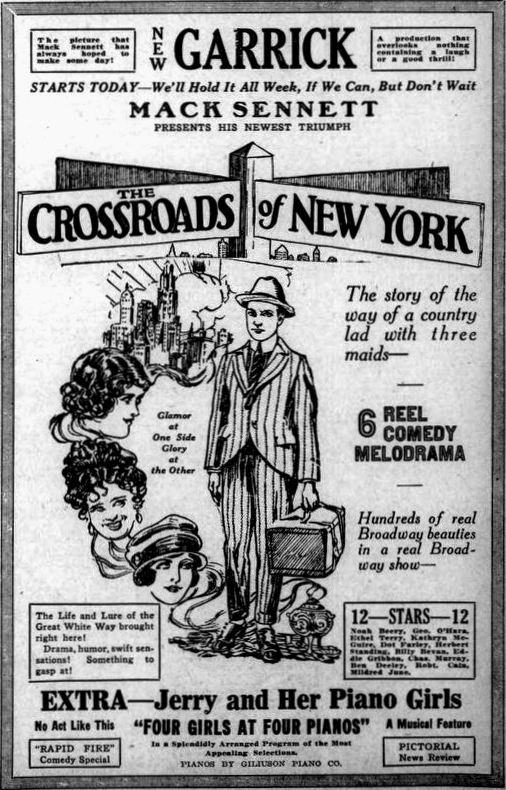
Imagine, if you will, a nickelodeon cathedral whose vaulted ceiling flickers with the staccato shadows of 1922. The projector clatters like a Thompson gun, and suddenly the screen blooms with monochrome moonlight: skyscrapers gouging cloud-bellies, elevated trains vomiting sparks, and a lone country boy—boots still barnacled with prairie dust—wandering into the carnivorous embrace of New York. That is the vertiginous overture of The Crossroads of New York, a film so tonally elastic it makes a jazz saxophone feel like a tuning fork.
Mack Sennett, the mogul who monetized banana-peel theology, here swaps custard pies for something more corrosive: class vertigo. The plot—deceptively simple on paper—operates like a Rube Goldberg contraption powered by social anxiety. Our protagonist, never named beyond the sobriquet “the Kid” in the intertitles, arrives clutching epistolary gold: a letter of introduction from his uncle, a man whose bankroll allegedly drips oil, steel, and congressional favors. One expects champagne cascades; instead, the city’s answer is a street-cleaner’s badge. The gag lands harder than any pratfall because it is existential, not physical: meritocracy is a myth, and pedigree is just another novelty song echoing out of a speakeasy.
Noah Beery plays that civic slap in the face with a walrus mustache that looks like it could sweep the streets itself. The performance is calibrated somewhere between Dickensian beadle and circus ringmaster; every lip-twitch signals that the city is both barker and burglar. Meanwhile, Charles Murray as the Kid radiates the porcelain optimism of someone who still believes the sidewalk won’t crack beneath him. His gait—half pantomime, half two-step—turns the mundane act of refuse-collecting into a ballet of the dispossessed.
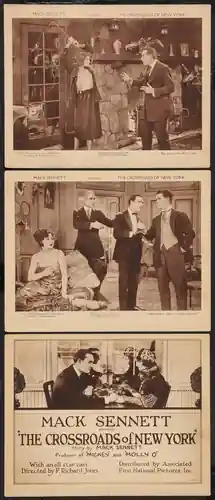
Then enters the landlady, Dot Farley, a woman whose hair is sculpted into the shape of a guilty verdict. She sizes up the Kid the way a pawnbroker weighs gold, and within a reel she has him cornered into a proposal that feels less like courtship and more like foreclosure. Farley’s comic timing is surgical; she lands each line like a seamstress stitching barbed wire into silk. The film’s genius is that it never frames her as monstrous—merely pragmatic in a metropolis that devours the slow.
“In the city, you don’t marry for love; you marry for rent control.”
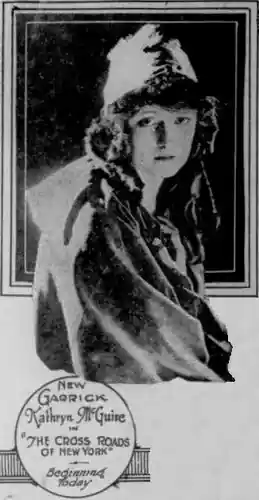
Just when the claustrophobic engagement feels like a life sentence, the narrative pivots on a single, luminous shot: the Kid glimpses Kathryn McGuire’s socialite, framed in a shop-window’s halo of electric bulbs. It is love at first iris-in. McGuire—equal parts porcelain and nitroglycerin—embodies the city’s promise of upward mobility through desirability. Their flirtation unfurls in a department-store montage that’s essentially proto-The Lotus Eater: silk gloves, ostrich feathers, and a cash register that rings like a church bell heralding the death of poverty.
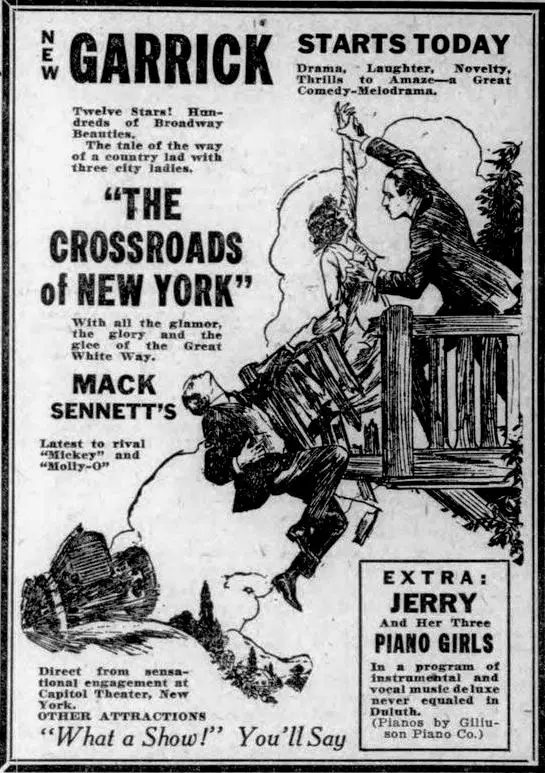
But Sennett, ever the sadistic puppeteer, yanks the rug. News of the uncle’s demise arrives via telegram so terse it could be a death threat. Suddenly the Kid is heir to a fortune sizable enough to purchase the very block he once swept. Enter Floy Guinn as the vamp, a litigant in lamé who alleges breach of promise and demands half the inheritance. The courtroom sequence—shot in cavernous low-angle to make the Kid appear ant-sized—plays like a Kafka farce scored by Duke Ellington. Watch how cinematographer Glen MacWilliams bathes Guinn in a halo of cigarette smoke: she is part succubus, part suffragette, weaponizing newfound legal leverage to raid patriarchal coffers.
The film’s tonal whiplash is deliberate. One instant you’re in screwball territory, the next you’re drowning in acid-tinged social critique. Consider the sequence where the Kid—now tuxedoed—returns to his old sanitation beat. He bribes his former foreman for one last sweep, as though trying to buy back innocence. The gesture is futile; the broom disintegrates into straw mid-stroke. It is the silent era’s answer to The Warfare of the Flesh: materialism as body-horror.
Sennett’s direction is a masterclass in visual polyphony. Note the repeated motif of crossing gates—railway arms lowering like guillotines every time the Kid faces a moral decision. Or the graffiti-scrawled brick walls that read “HELP WANTED – NO DREAMERS,” a sly auteurist signature predating Any Old Port’s waterfront nihilism by a decade. Even the intertitles—usually utilitarian—here flirt with poetry: “In the city, you don’t marry for love; you marry for rent control.”
Performances oscillate between macroscopic slapstick and microscopic despair. Raymond Griffith, cameoing as a drunken attorney, executes a cigarette-lighting gag that involves three matches, two waiters, and one monocle, all while delivering legal counsel that is hilariously inept. Yet in the same reel, Robert Cain—as the Kid’s coworker—delivers a monologue via title card so bleak it could slide into The Stranger’s post-war fatalism: “I used to dream in color; now I budget in black and white.”
The climax cross-cuts between two wedding altars: one municipal, dripping with judicial restraint; the other cathedral-opulent, financed by ill-gotten inheritance. Sennett builds the suspense like a Hitchcock set-piece, using only Eisensteinian montage: a judge’s gavel, a bride’s veil, a bailiff’s badge. When the Kid finally chooses neither fiancée—instead sprinting into an uncertain dawn—the film denies catharsis. The last shot is a POV from a garbage scow gliding past the Statue of Liberty, her torch flickering like a defective neon sign. Fade to black, then a final intertitle: “The city gives nothing that it cannot repossess.”
Viewed today, The Crossroads of New York feels eerily contemporary. Replace street-cleaner with gig-economy driver, inheritance with crypto windfall, and the vamp with an OnlyFans litigant—nothing changes except the century. The film anticipates Ruling Passions’s eroticized jurisprudence and even flirts with the sociosexual cynicism of Zhenshchina, kotoraya izobrela lyubov. Its DNA reverberates through every Manhattan fable from Midnight Cowboy to Uncut Gems.
Restoration-wise, the 4K transfer on current streaming platforms is a revelation: grain dances like silver sleet, and the sepilike tinting of the courtroom reels restores the film’s original bruise palette. The Mont Alto Motion Picture Orchestra’s new score—an amalgam of foxtrot and noir dissonance—underlines every ironic twist without mickey-mousing the pratfalls.
Caveats? A few intertitles betray period racism—brief, but jarring. And the subplot involving Irish stock characters (looking at you, James Finlayson) trades on thick-brogue caricature. Yet even these moments serve as historical scar tissue, reminders that the city’s crossroads have always been littered with both opportunity and prejudice.
Verdict: essential. Not as a nostalgia trip, but as a scalpel still sharp enough to dissect the myth of metropolitan reinvention. Watch it on a midnight when rent is due, romance feels like litigation, and your inbox overflows with hustle-culture spam. You’ll realize the crossroads hasn’t moved—it has only installed brighter streetlights to blind you.
Where to watch: Criterion Channel (4K), Kino Lorber Blu-ray, occasional repertory screenings at MoMA. Runtime: 68 minutes. Aspect ratio: 1.33:1. Silent with English intertitles.
IMDb 6.2
1935
Community
Log in to comment.