DbcultAccessing Vault...
6.8/10
Senior Film Conservator
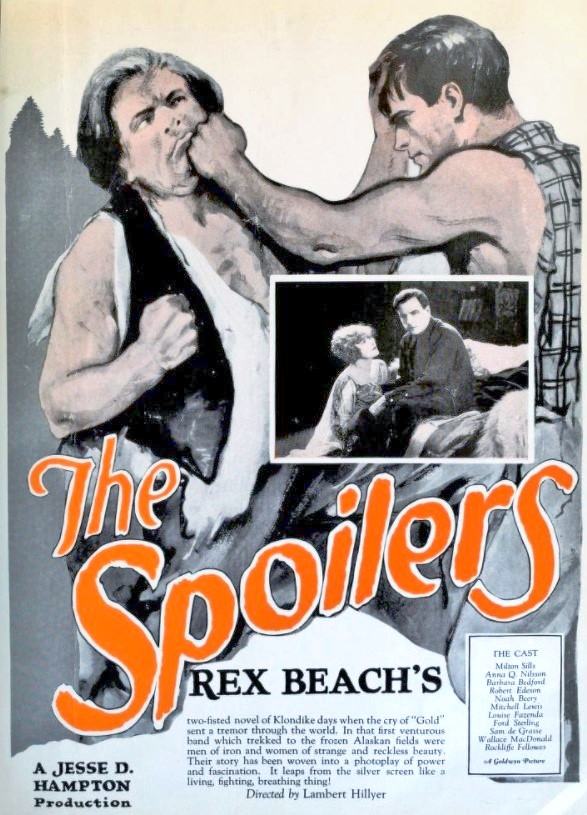
A definitive 6.8/10 rating for a film that redefined the boundaries of cult cinema. The Spoilers remains a cornerstone of transgressive art.
The annals of silent cinema are littered with ghosts, but few haunt the collective memory of film historians quite like Lambert Hillyer’s 1923 rendition of The Spoilers. While the 1914 version broke ground and the 1942 iteration offered the polish of Hollywood’s Golden Age, the 1923 film—now tragically lost to the ravages of nitrate decomposition—represented a pivotal moment where the raw energy of the frontier met the burgeoning sophistication of narrative editing. This wasn't merely another Western; it was an exercise in kinetic storytelling that utilized the rugged Alaskan landscape as a crucible for human morality.
In the early 1920s, Milton Sills occupied a unique space in the cinematic firmament. He possessed a ruggedness that felt authentic, a far cry from the dandyish leading men of the previous decade. As Roy Glennister, Sills embodied the quintessential prospector—a man whose wealth was earned through sweat and blood, only to be threatened by the ink and seals of corrupt bureaucrats. His performance, by all contemporary accounts, was a masterclass in escalating frustration. Unlike the supernatural undertones found in The Ghost Breaker, Sills’ struggle was rooted in the dirt and the law.
The supporting cast reads like a who’s who of silent-era stalwarts. Noah Beery, playing the antagonist Alexander McNamara, provided a foil of serpentine elegance. Beery didn't just play a villain; he played a system. He represented the encroaching 'civilization' that sought to domesticate the wild North by looting it under the guise of receivership. This thematic weight—the individual versus the corrupt institution—elevated the film beyond the simple tropes of the genre, echoing the social anxieties found in films like Tainted Money.
Visually, the 1923 production was a significant leap forward. The cinematography sought to capture the oppressive scale of the Yukon. The 'spoilers' of the title aren't just the claim-jumpers; they are the spiritual rot that follows the discovery of gold. The film’s pacing, directed by Hillyer, was reportedly relentless. It shared a certain adventurous DNA with The Hell Ship, focusing on the endurance of the human spirit against both nature and man's darker impulses. The set design for Nome was not the clean, sanitized version of the North we often see today, but a muddy, claustrophobic hive of desperation.
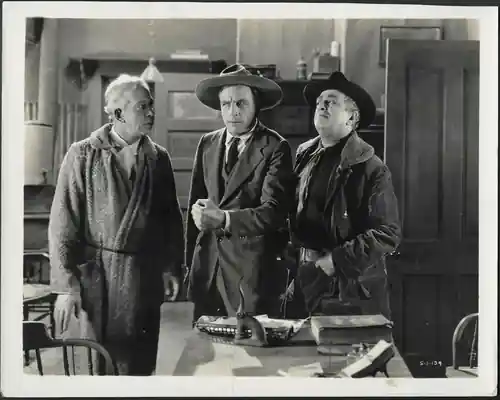
The narrative structure, penned by a formidable team including Elliott J. Clawson and Hope Loring, meticulously built the tension. They understood that for the final brawl to resonate, the legal and emotional stakes had to be insurmountable. The audience needed to feel the claustrophobia of the 'legal' trap closing in on Glennister. This sense of impending doom and the struggle for agency is a recurring motif in the era's more serious dramas, such as The Wager or the existential dread of Gólyakalifa.
One cannot discuss The Spoilers without centering on the fight between Glennister and McNamara. In 1923, this was the equivalent of a modern blockbuster’s climactic CGI battle, but with real stakes and real bruises. Sills and Beery reportedly performed much of the sequence themselves, resulting in a visceral, unchoreographed quality that modern cinema struggles to replicate. It was a primal release of all the narrative tension built through the corrupt court proceedings. This wasn't the stylized action of The Blue Fox; it was a desperate, ugly, and ultimately cathartic explosion of masculine energy.
The fight serves as a metaphor for the entire Gold Rush experience—a brutal struggle for dominance where the winner takes all and the loser is buried in the slush. It’s this raw honesty that made the 1923 version stand out from other contemporary adventures like Via Radio. While other films were experimenting with the novelty of technology, The Spoilers stayed grounded in the ancient conflict of territory and pride.
While the men fought over dirt and gold, the women of The Spoilers—played by Anna Q. Nilsson and Barbara Bedford—provided the film's moral and strategic backbone. Cherry Malotte is one of the most fascinating characters in Western literature, and Nilsson’s portrayal gave her a weary intelligence. She wasn't a damsel in distress; she was a power player who understood the mechanics of the town better than Glennister ever could. Her character arc, involving a complex web of jealousy and redemption, mirrors the thematic depth seen in The Young Diana, where female agency is tested against societal expectations.
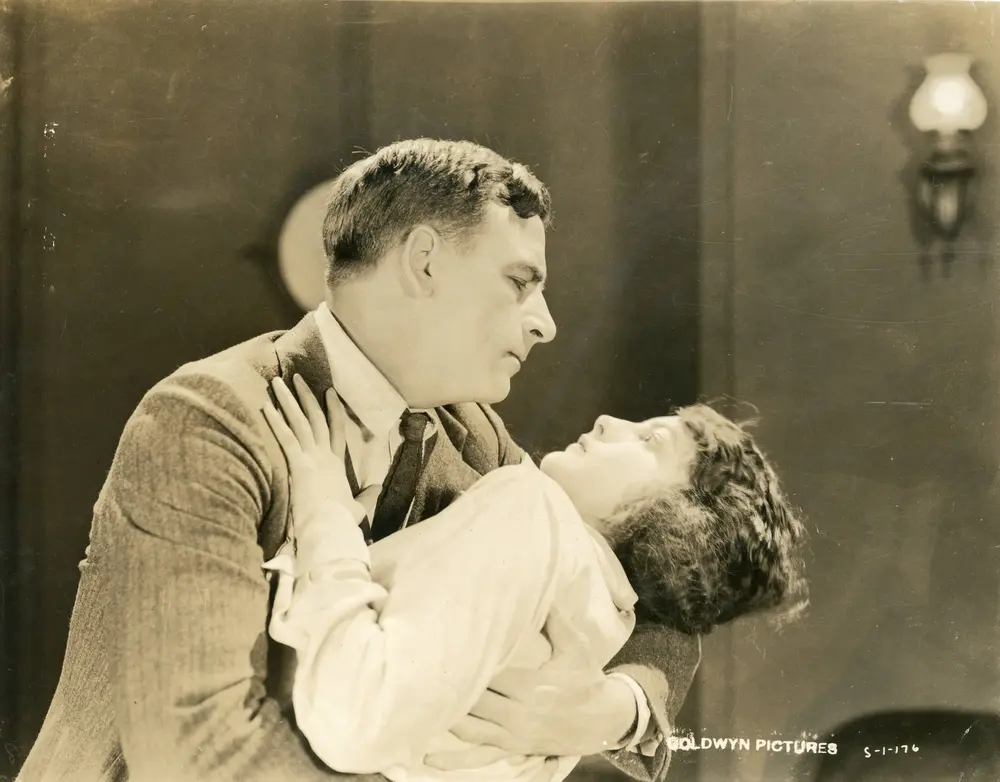
The interplay between Cherry and Helen Chester (Bedford) created a narrative friction that balanced the exterior action. It added a layer of psychological complexity that was often missing from more straightforward 'oaters.' This nuance is perhaps why the film was so highly regarded upon its release—it appealed to both the thrill-seeker and the drama enthusiast, much like the multifaceted Miss Mischief Maker.
It is a profound irony that a film about the struggle to preserve one’s legacy and property has itself been lost to time. We are left with only production stills, contemporary reviews, and the echoes of its influence on later Westerns. The 1923 version of The Spoilers was a bridge between the primitive shorts of the 1910s and the epic Westerns of the 1930s. It lacked the cynicism of later noir-inflected Westerns but possessed a grit that was far removed from the romanticized visions of the frontier. It felt as dangerous as Flirting with Death and as morally complex as Högre ändamål.
The film’s exploration of 'God's Gold'—the idea that the earth’s riches bring out the worst in humanity—is a theme that remains timeless. While we might look to God's Gold for a literal interpretation of this, The Spoilers provided the definitive dramatic statement on the subject. The corrupt judge, the opportunistic lawyer, the violent enforcer—these are archetypes that Rex Beach helped solidify and that Lambert Hillyer brought to life with a ferocity that leaped off the screen.
To watch The Spoilers (if one could) would be to witness the birth of the American action epic. It contained all the ingredients: a charismatic lead, a despicable villain, a high-stakes setting, and a climax that satisfied the audience’s most primal urges for justice. It didn't need the overt moralizing of The Temptations of Satan; its morality was written in the bruises on Milton Sills’ face. It was a story of men and women pushed to the edge of the world, only to find that they had brought their demons with them.
As we look back at the films of 1923, from the lighthearted Pals First to the experimental Les gaz mortels, The Spoilers stands as a monolith of traditional storytelling executed with exceptional craft. Its absence from our archives is a reminder of the fragility of our cultural heritage. Yet, through the descriptions of those who saw it, and the influence it exerted on every Gold Rush film that followed, Roy Glennister still fights on, defending his claim against the spoilers of the world, forever locked in that magnificent, silent brawl in the heart of the frozen North.
A testament to the power of the silent image, 'The Spoilers' remains a towering achievement of 1920s cinema, even in its spectral, lost form.
IMDb 5
1932
Community
Log in to comment.