DbcultAccessing Vault...
5.7/10
Senior Film Conservator
A definitive 5.7/10 rating for a film that redefined the boundaries of cult cinema. Rhythmus 21 remains a cornerstone of transgressive art.
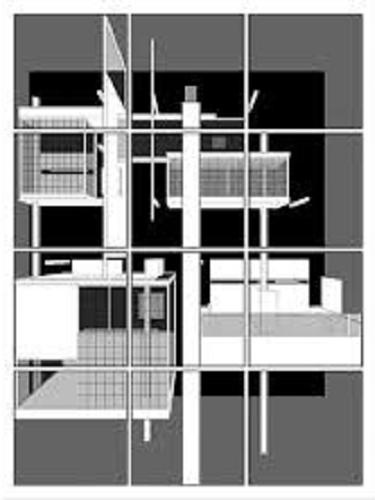
In the pantheon of cinematic avant-garde, few works are as audacious in their minimalism as Hans Richter’s Rhythmus 21. This 1921 silent film, a cornerstone of Dadaist experimentation, strips away all narrative pretense to focus on the purest expression of motion and form. By framing the screen as a chessboard of black and white rectangles—sometimes static, often in flux—Richter crafts a visual dialectic that interrogates the boundaries of perception. The rectangles themselves become both subject and medium, their dance across the screen a metaphor for the mechanized age’s dissonance and harmony.
What elevates Rhythmus 21 beyond mere visual trickery is its structural rigor. The film’s rhythm is neither random nor mechanical; it is a choreography of contrasts. Rectangles shift positions, layer over one another, and invert foreground and background, creating an illusion of depth in a strictly two-dimensional space. These transitions are abrupt yet fluid, echoing the staccato cadences of early 20th-century industrial life. The effect is hypnotic, a visual haiku that demands the viewer’s full attention to decipher its hidden logic.
To watch Rhythmus 21 is to witness the birth of a new cinematic grammar. Unlike the narrative-driven works of its era—such as the propagandistic Famous Battles of Napoleon—Richter’s film operates in the realm of pure abstraction. There are no characters, no dialogue, no plot. Instead, the film becomes an object of study, a living puzzle where the audience must construct meaning from the interplay of shapes. This approach aligns it with contemporaneous movements in fine art, from Constructivism to De Stijl, yet its medium—the moving image—grants it a dynamism that static works could never achieve.
The film’s genius lies in its ability to evoke emotion through absence. By removing all recognizable imagery, Richter forces the viewer to confront their own cognitive processes. A black rectangle sliding into the foreground might suggest a door opening, a shadow advancing, or a void swallowing light. These interpretations are entirely subjective, yet they emerge with startling clarity. This participatory engagement transforms Rhythmus 21 into an interactive experience, where each frame is a prompt for the viewer’s imagination to fill in the gaps.
This abstraction is not without precedent. Richter’s contemporaries, such as Viking Eggeling with Skinner’s Bubble, similarly explored geometric abstraction. Yet Rhythmus 21 distinguishes itself through its relentless focus on the interplay of negative and positive space. Where The Bird of Prey uses visual metaphors to convey psychological tension, Richter’s work is devoid of such symbolism. Here, the rectangles are what they are: pure visual elements in a purely visual experiment.
Released in 1921, Rhythmus 21 emerged during a period of radical artistic experimentation. The aftermath of World War I saw many artists rejecting traditional forms in favor of abstraction as a way to process societal upheaval. Richter, a key figure in Berlin’s Dada scene, was part of this collective search for new modes of expression. His work prefigured later movements such as Futurism and Bauhaus, while also influencing the development of structural film in the mid-20th century.
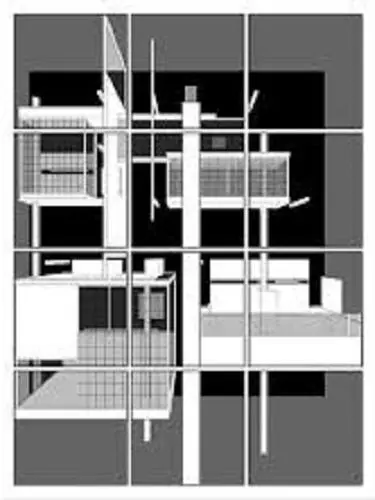
The film’s legacy is particularly evident in later works that embrace non-narrative structures. Consider the stark, geometric sequences in The Third Woman, where shadows and spatial arrangements create an uncanny, dreamlike atmosphere. While vastly different in tone and context, both films share a fascination with how visual elements can evoke mood and meaning without relying on conventional storytelling. Similarly, the minimalist pacing of Her Nearly Husband owes a debt to the rhythmic precision of Rhythmus 21, even as it serves a narrative purpose.
One of the most striking aspects of Rhythmus 21 is its paradoxical simplicity. With no actors, no dialogue, and no plot, the film could be dismissed as a gimmick. Yet in its constraints, Richter found a canvas for profound innovation. The work’s lack of representational content allows it to transcend cultural and temporal boundaries. A 21st-century viewer, unfamiliar with Dadaist philosophy, can still grasp the film’s visual logic. This universality is a testament to Richter’s understanding of cinema as a language of form rather than a tool for storytelling.
However, Rhythmus 21 is not without its challenges. The film’s abstract nature demands active engagement from the audience, which may alienate those seeking traditional cinematic experiences. Unlike the emotionally charged melodrama of Prudence on Broadway, Richter’s work is cerebral, requiring patience and curiosity. This divide in audience reception underscores the tension between avant-garde experimentation and popular appeal—a conflict that persists in modern cinema.
At its core, Rhythmus 21 is a film about absence. The void between the black and white rectangles becomes as significant as the shapes themselves. This interplay of presence and emptiness mirrors the existential uncertainties of the post-war world, yet the film never explicitly addresses these themes. Instead, it invites reflection through silence. The viewer is left to ponder what the film might symbolize: the chaos and order of the universe, the structure of human thought, or the limits of perception itself.
In this sense, Rhythmus 21 is a mirror held up to the audience. Its unadorned simplicity forces viewers to confront their own assumptions about what cinema can be. While later filmmakers would add sound, color, and complex narratives to their works, Richter’s film remains a pure distillation of cinema’s essential elements. It is a reminder that meaning can arise from the most unlikely of sources—a series of rectangles dancing in the dark.
To encounter Rhythmus 21 is to step into a world where the rules of storytelling dissolve, replaced by the raw, unfiltered power of visual rhythm. It is a film that defies easy classification, yet its influence is undeniable. From the kinetic abstractions of modern music videos to the minimalist aesthetics of contemporary art films, Richter’s vision continues to resonate. In an age obsessed with visual overload, Rhythmus 21 stands as a quiet manifesto: proof that sometimes, less is not only more—it is everything.
IMDb —
1915
Community
Log in to comment.