DbcultAccessing Vault...
Cult Review
Senior Film Conservator
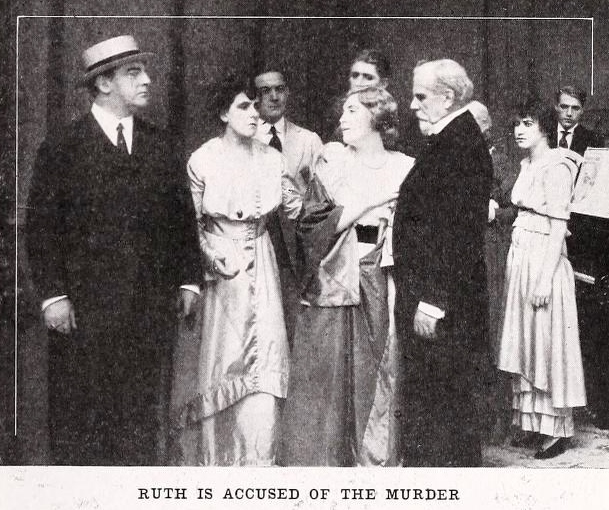
Step into the shadowy, gaslit corridors of early 20th-century cinema, where melodrama and mystery intertwined to craft narratives of profound human complexity. The Green Cloak, a cinematic artifact from an era when storytelling was often delivered through the eloquent silence of expressions and gestures, emerges as a particularly potent example of its genre. This 1915 production, derived from the narrative prowess of Henry Kitchell Webster and adapted by Owen Davis, plunges its audience into a domestic sphere violently disrupted by secrets and a sudden, brutal death. It’s a film that, even through the prism of time, resonates with a certain psychological depth, challenging viewers to peer beyond the surface of polite society into the turbulent undercurrents of hidden pasts and desperate measures.
The narrative commences with the return of Ruth McAllister, portrayed with captivating ambiguity by Blanche Aimee, from a sojourn in the American West. Her re-entry into the familiar comforts of her father’s elegant home is not one of unblemished joy, but rather of a profound, almost palpable transformation. The vivacious spirit once known to her devoted suitor, John Gilbert (Richie Ling), has been eclipsed by an enigmatic reserve. Gilbert, with Ling's characteristic earnestness, finds himself adrift in a sea of unspoken pain, his affections rebuffed not out of indifference, but for reasons Ruth, with a disquieting resolve, refuses to disclose. This initial setup masterfully establishes a pervasive sense of unease, hinting at a narrative riddled with suppressed truths and unaddressed traumas. The film, from its very opening frames, suggests that the West, often depicted as a frontier of untamed freedom, has instead forged an unbreakable chain around Ruth’s very soul.
The domestic tranquility, already fractured by Ruth’s altered demeanor, shatters completely with the unceremonious arrival of a stranger, Gerald, whose sudden appearance is as jarring as a thunderclap in a quiet room. Portrayed by Frank Belcher with a blend of desperation and audacity, Gerald bursts past the maid, his breath catching, his eyes fixed on Ruth. The immediate, visceral reaction from Ruth—a sudden, dramatic fainting spell—sends shockwaves through the scene, leaving Gilbert utterly bewildered. His attempts to comprehend the intrusion are met with Gerald’s cryptic directive: "Ask Ruth." This refusal to divulge information directly to Gilbert, the man who clearly holds a significant place in Ruth's life, instantly elevates the stakes and deepens the mystery. It’s a classic silent film trope, executed here with potent effect, where a single gesture or collapse conveys volumes of unspoken dread and complicated history.
Ruth, regaining her composure, offers a perfunctory introduction of Gerald as a mere acquaintance from her travels, a flimsy veil over a truth far more intricate and perilous. Professor McAllister (Roland Bottomley), Ruth's father, enters the scene, his presence momentarily diffusing the tension, allowing Ruth to retreat while the men engage in superficial pleasantries. Yet, the air remains thick with unspoken questions. It is during this seemingly innocuous interlude that the film injects another subtle, yet critical, detail: the entrance of Wilkins, the butler, played by John Davidson. Gilbert, ever observant, catches a fleeting expression of terror on Gerald's face, mirrored by a chillingly knowing "half smile" that curves the servant's lips. This momentary exchange, a silent ballet of recognition and foreboding, is a masterclass in early cinematic suggestion, implying a conspiracy or a shared, dark secret that binds Gerald and the seemingly innocuous household staff. One might draw parallels to the subtle class dynamics and hidden agendas often explored in films like The Rogues of London, where seemingly peripheral characters often hold keys to central mysteries.
Gerald, citing urgent correspondence, attempts to make a hasty exit, but the Professor, his geniality now tempered by burgeoning suspicion, insists he utilize the library for his writing. This pivotal moment traps Gerald within the very confines of the home he so desperately wished to escape, setting the stage for the film's tragic denouement. The library, a traditional sanctuary of knowledge and quiet contemplation, transforms into a crucible of escalating tension. It is here that Ruth, confronting Gerald in a private, desperate exchange, learns the true extent of his peril. His life, he confesses, hangs by a thread, and he implores her assistance in his escape. Her promise to call a taxicab, a seemingly mundane act, becomes laden with the weight of life and death, a desperate gamble against an unseen, encroaching threat.
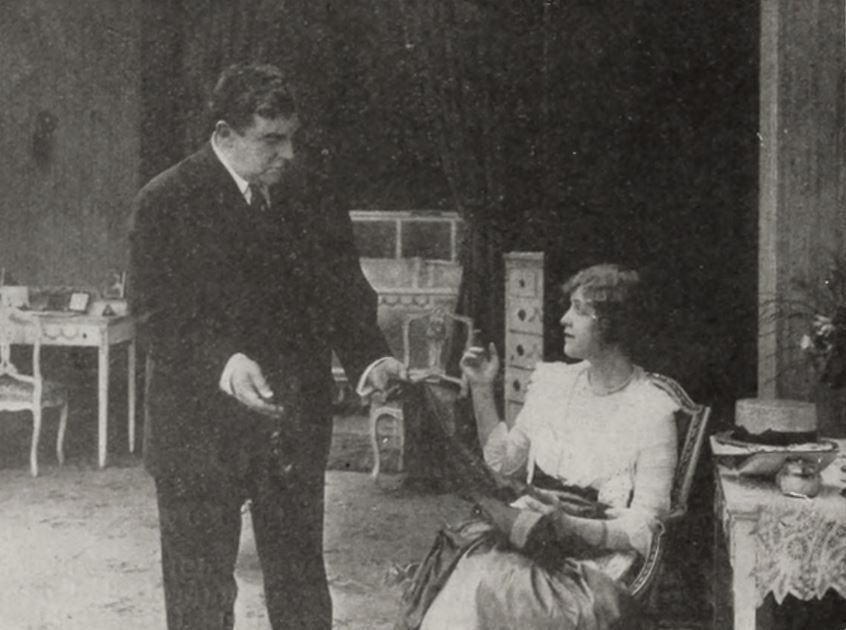
Dinner is announced, a stark contrast to the unfolding drama within the library walls. The Professor, opening the library door to summon Gerald, is met not with his guest, but with a scene of horror: Gerald lies dead, and clutched tightly in his lifeless hand is a green silken tassel, an unmistakable twin to those adorning Ruth's own cloak. The image is stark, immediate, and damning. This visual evidence, so simple yet so powerful, forms the cornerstone of the circumstantial case against Ruth, a testament to the efficient narrative economy of early cinema. The green cloak itself, a titular object, transcends mere attire to become a symbol of hidden identity, clandestine affairs, and ultimately, fatal entanglement.
The arrival of the police, with their methodical and dispassionate investigation, marks a shift in the film's tone from domestic melodrama to a full-blown murder mystery. It is against this backdrop of official scrutiny that Ruth makes her return, arriving in the very taxicab she had summoned for Gerald's escape. Her entrance into the house, however, is not one of shock or grief, but of a chilling, almost primal outburst: a "shriek of laughter." This isn't the hysteria of a distraught woman, but, as the narrative explicitly states, a "laugh of savage joy" upon beholding the dead man. Blanche Aimee's performance here must have been truly arresting, conveying a complex cocktail of relief, vengeance, or perhaps a terrifying liberation. This single, shocking moment redefines Ruth's character entirely, transforming her from a sympathetic figure burdened by secrets into a potentially malevolent force. It's a bold narrative choice, one that immediately casts suspicion upon her in the eyes of the audience, aligning our perception with that of the authorities.
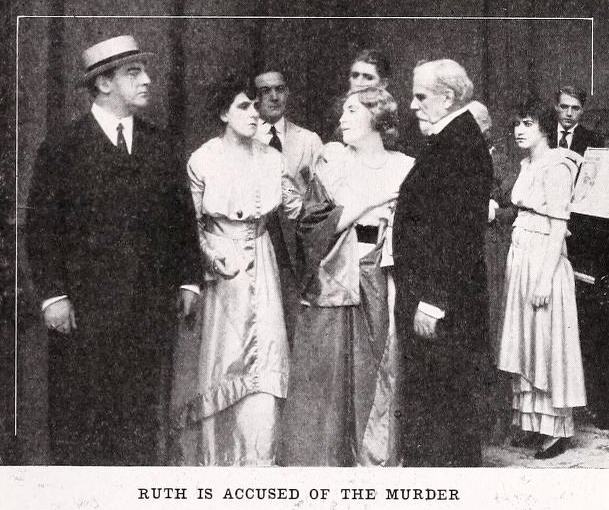
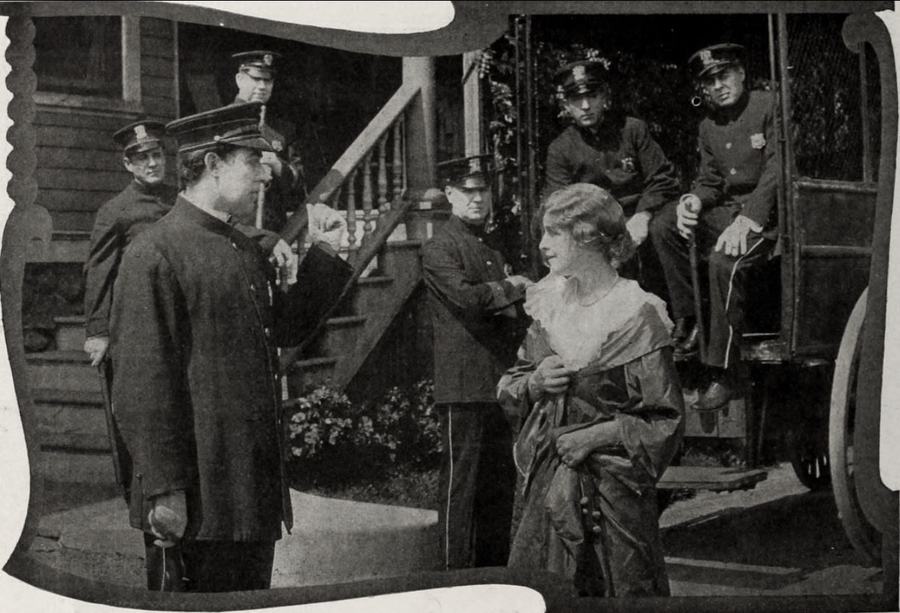
Questioned relentlessly about the deceased man's identity, Ruth initially maintains her stoic silence, her refusal to cooperate only hardening the resolve of the investigators. But the weight of the evidence, coupled with the relentless pressure, eventually breaks her. She confesses, with a revelation that reshapes the entire preceding narrative: Gerald was her husband, whom she had married while in the West. This admission, delivered with what must have been stark emotional impact, explains her transformation, her rejection of Gilbert, Gerald's intrusion, and her desperate attempts to aid him. It also provides a motive, albeit an ambiguous one, for the "savage joy" at his death. Was it the joy of a woman freed from an oppressive union, or something far more sinister? With a seemingly insurmountable case of circumstantial evidence against her, Ruth is arrested and charged with murder, setting the stage for the dramatic unraveling of "who Gerald really was and how the tangled skeins of destiny were finally unraveled." The film, like The Broken Law, delves deep into the complexities of legal justice and personal morality when faced with the harsh realities of societal judgment.
The performances are, as expected for the era, largely theatrical, relying on exaggerated gestures and facial expressions to convey emotion without the benefit of spoken dialogue. Blanche Aimee, as Ruth McAllister, carries the psychological weight of the film. Her initial melancholia, conveyed through subtle downturned lips and a distant gaze, her dramatic faint that speaks volumes of shock and recognition, and especially that chilling laugh of "savage joy" at the sight of the deceased, all demand a nuanced yet overtly expressive portrayal that defines her character's enigmatic nature. Aimee navigates this complex emotional landscape with a compelling intensity, ensuring that Ruth remains both a victim of circumstance and a figure of unsettling ambiguity. Ling's John Gilbert, in contrast, serves as the emotional anchor for the audience, representing our initial confusion and eventual heartbreak. His earnestness, communicated through his pleading eyes and distraught posture, provides a stark, sympathetic contrast to the web of deceit and tragedy surrounding Ruth, allowing the audience to experience the unfolding drama through a lens of genuine concern. Frank Belcher's Gerald, though present for a relatively short duration, leaves an indelible impression through his frantic energy, his furtive glances, and palpable fear, which effectively propels the plot forward with a sense of urgent peril. His desperate pleas to Ruth, though silent, would have been conveyed with a physicality that underscores his mortal dread. The supporting cast, including Anna Reader, Roland Bottomley (as the Professor whose initial warmth gives way to a paternal suspicion), John Davidson (whose Wilkins offers that unsettling, almost conspiratorial half-smile, a fleeting yet potent moment of characterization), Della Connor, William Anker, Kathryn Brook, and Irene Fenwick, each contribute to the intricate social fabric of the film. Their interactions, however brief, help to build the atmosphere of a respectable world teetering on the brink of scandal and violence, where every glance and gesture carries potential meaning. The directorial choices, though not explicitly credited in the provided synopsis, effectively utilize the visual language of silent film to its fullest potential. The strategic use of close-ups on expressions, particularly Aimee's, allows for an intimate connection with the characters' inner turmoil. The dramatic staging of confrontations, such as Gerald's initial intrusion or Ruth's later encounter in the library, is carefully choreographed to maximize tension. The symbolic use of objects, most notably the green tassel, transcends mere prop status to become a crucial narrative device, a silent accuser. The film's pacing, likely deliberate and measured in its exposition, builds to a crescendo of revelation and suspense, typical of the well-crafted mysteries of the period, demonstrating an acute understanding of how to sustain audience engagement without dialogue.
At its heart, The Green Cloak is a profound exploration of deception and the crushing weight of a hidden past. Ruth's journey from a seemingly innocent woman to a murder suspect, and then to a woman with a secret marriage, speaks volumes about the societal pressures and personal choices that can lead individuals down perilous paths. The film deftly navigates themes of identity, betrayal, and the elusive nature of truth. The Western setting of Ruth's secret marriage adds another layer of intrigue, hinting at a life lived outside the strictures of polite Eastern society, a wilder existence that has now come back to haunt her. This juxtaposition of the untamed West and the refined East is a recurring motif in early American cinema, often used to symbolize a clash of values or a source of disruptive elements, much like the challenging environment depicted in The Girl from Outback, where rugged landscapes often mirror the ruggedness of human spirit and circumstance.
The film’s central mystery, rather than being a mere simplistic whodunit, quickly evolves into a profound "whydunit" and a "who-was-he." The focus shifts from merely identifying the killer (though that remains central to the legal proceedings) to understanding the complex motivations, the intricate web of relationships, and the deep-seated grievances that ultimately led to Gerald’s demise. The "tangled skeins of destiny" mentioned in the plot summary promise a resolution that is not merely forensic but deeply personal and psychologically revealing, exploring the consequences of choices made under duress and the indelible marks left by past lives. The film, in its silent eloquence, manages to convey a sense of moral ambiguity that transcends simple good versus evil, leaving the audience to ponder the true nature of justice, culpability, and the sometimes-justified acts of desperation. This moral complexity is a hallmark of more sophisticated early narratives, moving beyond simplistic portrayals to engage with the darker, more nuanced facets of human nature and the societal pressures that shape individual destinies. It asks uncomfortable questions about what constitutes freedom and what price one is willing to pay for it.
The writing by Henry Kitchell Webster and Owen Davis is particularly noteworthy for its intricate plotting and character development, even within the constraints of the silent film medium. Webster, known for his prolific literary output, brings a novelist's eye for detail and psychological nuance, while Davis, a celebrated playwright, ensures the dramatic pacing and structural integrity. Together, they construct a narrative that keeps the audience guessing, peeling back layers of deception with each new revelation. The film's ability to maintain suspense and deliver genuinely surprising twists, such as Ruth's "savage joy" and her confession of marriage, speaks to the strength of its underlying script.
In an era when cinema was still finding its voice, The Green Cloak stands as a compelling testament to the power of visual storytelling and the enduring appeal of a well-crafted mystery. It invites us not only to observe a dramatic sequence of events but to delve into the unspoken desires, fears, and desperate measures of its characters. The film, with its potent blend of melodrama, suspense, and psychological intrigue, remains a fascinating piece of cinematic history, offering a window into the narrative sophistication achievable even without synchronized sound. It is a reminder that the human capacity for secrets and the complex unraveling of truth have always been, and continue to be, fertile ground for compelling storytelling, much like the intense human drama found in films such as The Octoroon, which similarly grappled with societal secrets and profound personal revelations. The final resolution, promising the unraveling of Gerald's true identity and the resolution of Ruth's fate, assures a satisfying, if potentially tragic, conclusion to a truly captivating cinematic experience.
Ultimately, The Green Cloak serves as a powerful reminder of cinema's foundational strengths in narrative construction and emotional conveyance. Before the advent of spoken dialogue, filmmakers mastered the art of visual storytelling, using every available tool—from evocative performances and symbolic props to dramatic lighting and careful editing—to immerse audiences in worlds of intrigue and passion. This film is a prime example of that mastery, a captivating journey through a domestic tragedy that spirals into a gripping legal and personal mystery. Its ability to create such a profound impact, to provoke thought and stir emotions, solely through the language of images and intertitles, is a testament to the timeless power of its narrative and the skill of its creators. For aficionados of early cinema, or anyone interested in the genesis of the mystery genre on screen, The Green Cloak offers a rich, rewarding, and intensely interesting experience that continues to resonate with its intricate plot and compelling characters, solidifying its place as a significant contribution to the silent era's legacy of dramatic storytelling.
IMDb 5.2
1924
Community
Log in to comment.