DbcultAccessing Vault...
5.3/10
Senior Film Conservator
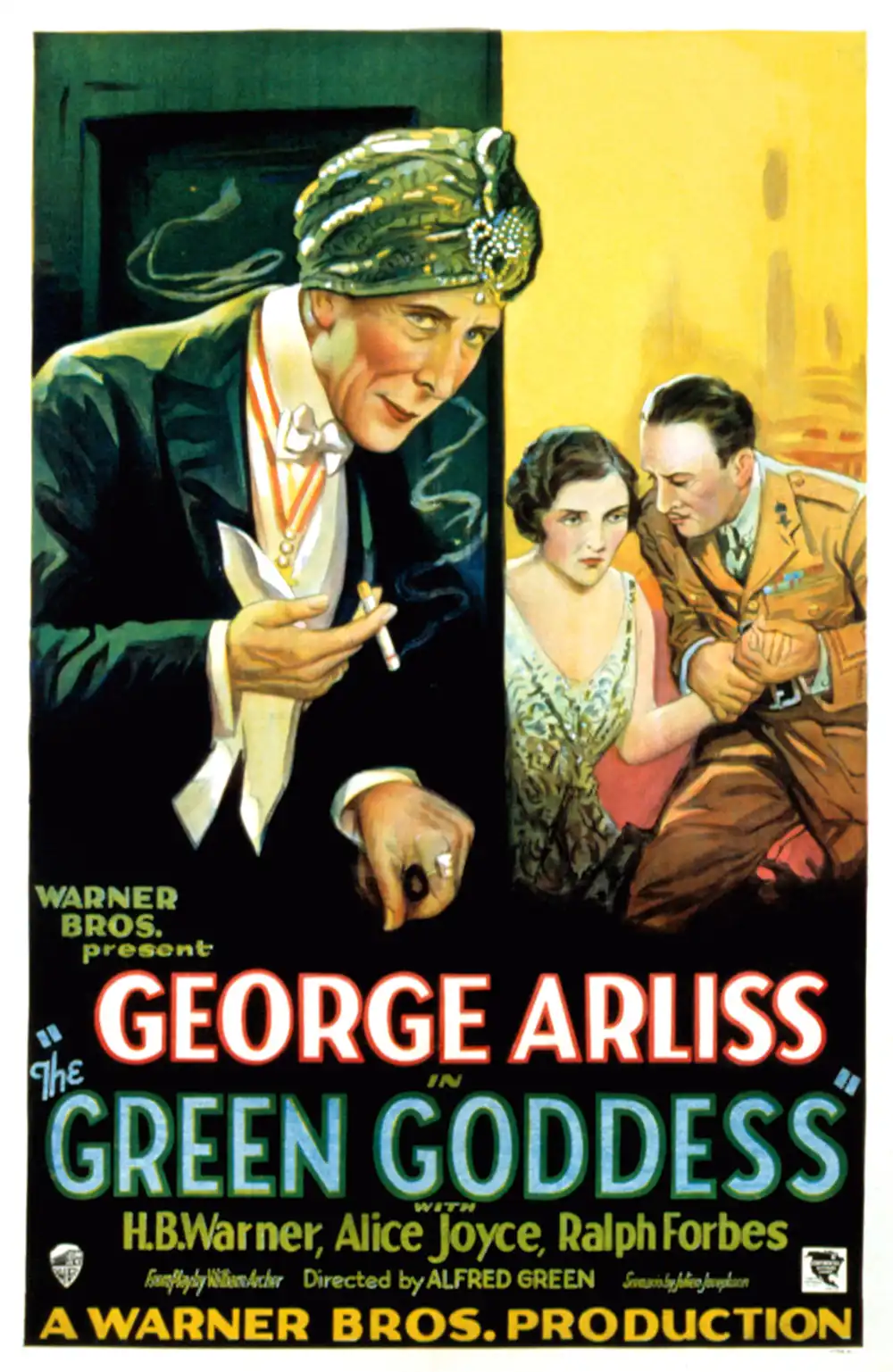
A definitive 5.3/10 rating for a film that redefined the boundaries of cult cinema. The Green Goddess remains a cornerstone of transgressive art.
If you have an hour and twenty minutes to spare and you don't mind movies that feel like they were filmed inside a very quiet cardboard box, The Green Goddess is actually kind of a hoot. You should watch it if you like villains who are way more educated and charming than the heroes. You will probably hate it if you can't stand early sound films where everyone stands perfectly still so they can speak directly into a hidden microphone.
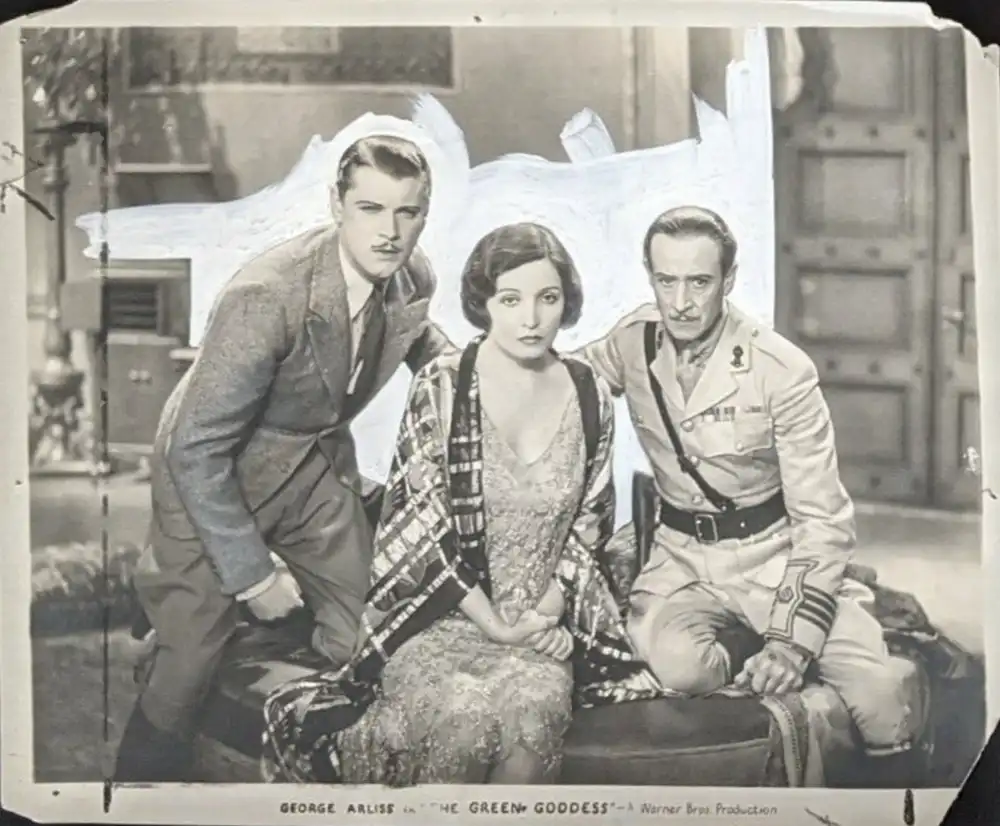
It starts with a plane crash, which in 1930 meant showing a shaky toy model dropping into some dirt. Our three main Brits—Major Crespin, his wife Lucille, and the doctor—end up in Rukh, a place that definitely doesn't exist but looks like a very expensive stage play set.
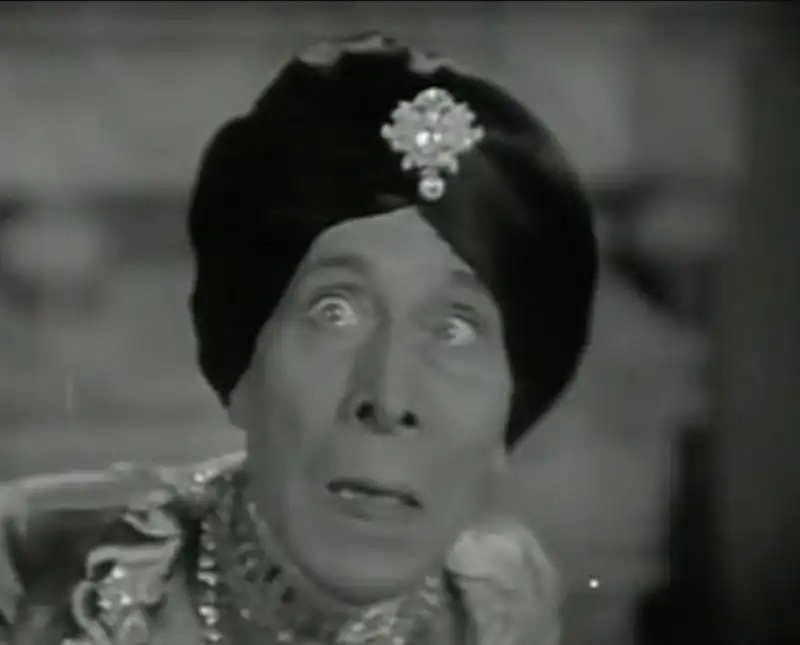
The Rajah of Rukh is played by George Arliss, and honestly, he is the only reason this movie didn't vanish into the basement of history. He wears these heavy robes and moves like a cat that's just found a very interesting mouse to play with.

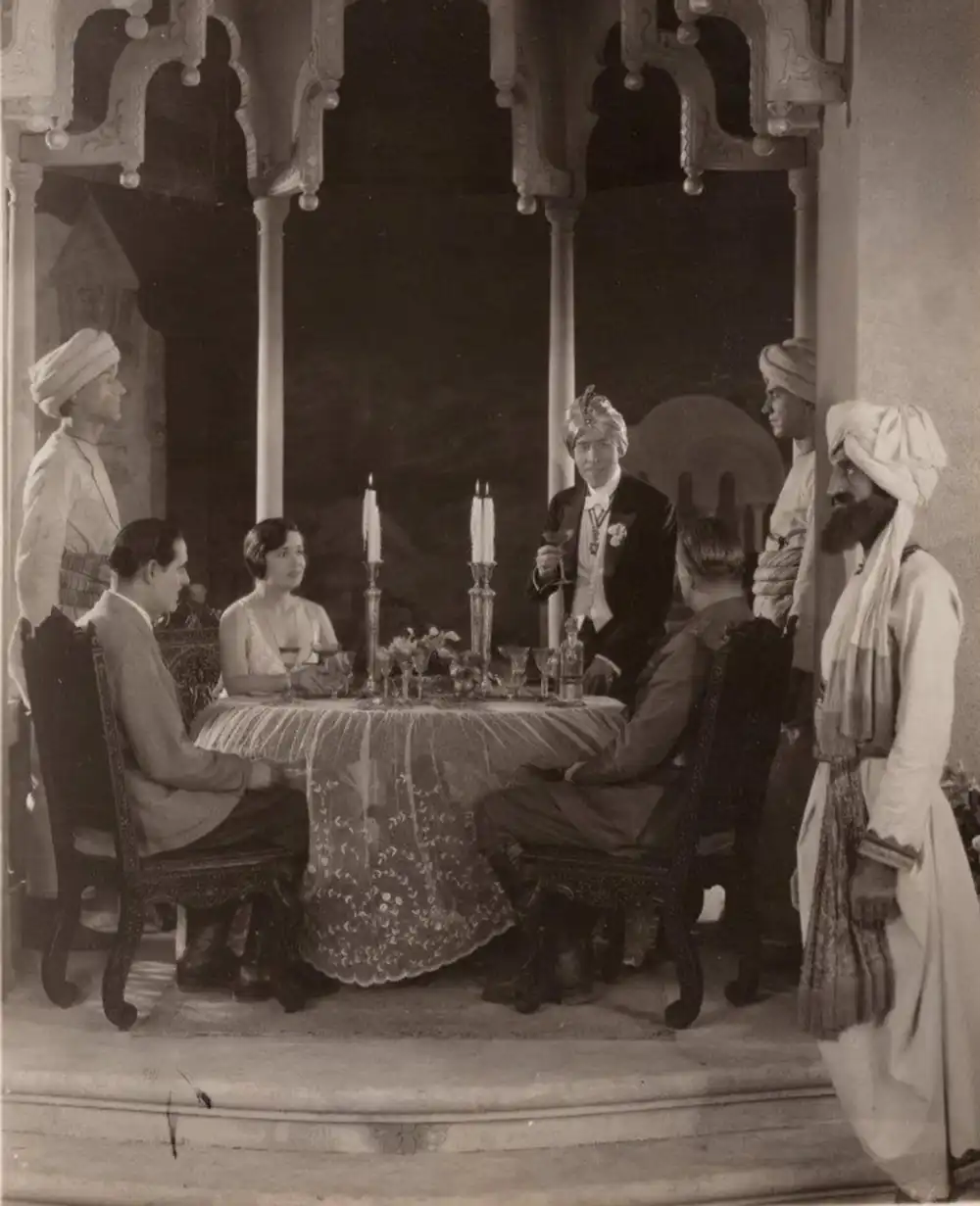
He's been to Oxford, he drinks fine wine, and he's perfectly happy to execute his guests because the British are about to hang his half-brothers in India. It's a weirdly polite hostage situation.
There is a scene where Arliss is just sitting there, looking at his fingernails while the Brits panic, and it’s better than any of the actual action. He has this way of saying "my dear doctor" that makes you feel like he’s already measuring the guy for a coffin.
The heroes are... fine, I guess? Alice Joyce as Lucille spends most of the movie looking like she’s trying to remember if she left the oven on back in London. She has that very specific 1920s-transitioning-to-30s acting style where every emotion is a very serious pose.
Major Crespin is the typical stiff-upper-lip type who is mostly there to be annoyed by things. He’s much less interesting than the Rajah’s servant, Watkins, who is a total traitor to his own people and seems to love every minute of it.
The whole middle of the movie is just these people trapped in a palace, waiting for a radio signal. It’s basically a "locked room" mystery but without the mystery. We know they want to leave, and we know the Rajah wants them dead.
The Green Goddess herself is just a big statue that the locals pray to, and the movie tries to make the local religion seem scary, but it just feels like theater. There’s a lot of chanting that sounds like the extras were told to just make noise until someone yelled cut.
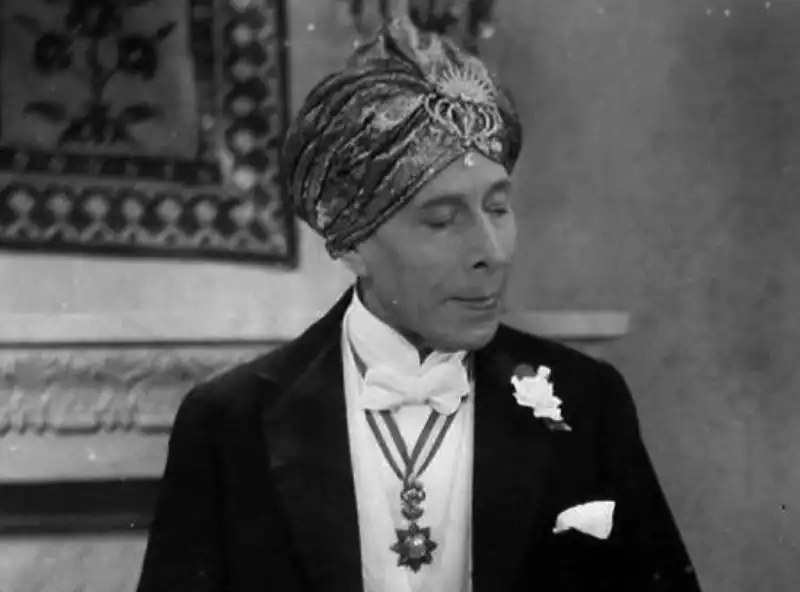
I noticed that the sound is really uneven. Sometimes a door closing sounds like a gunshot, and other times people are shouting and it sounds like they are underwater. It's that early talkie charm where the tech hadn't caught up to the ambition yet.
It reminded me a bit of the stiff pacing in Smilin' Through, though that one is much more of a tear-jerker than this. The Green Goddess is more of a "polite thriller" if that's even a thing.
One moment that actually worked was when they finally get to the radio. The tension of trying to tap out a message while the Rajah is probably just around the corner is genuine. You can almost feel the sweat on the characters, or maybe that was just the hot studio lights.
The ending is incredibly abrupt. It’s like the producers realized they were running out of film and just decided to wrap everything up in about three minutes.
Is it a masterpiece? No. But Arliss is doing something so specific and magnetic here that it’s hard to look away. He makes the British characters look like cardboard cutouts.
I've seen some other stuff from this era, like Three Women, which feels much more like a "real" movie in terms of how people move around. The Green Goddess feels like a captured performance, for better or worse.
If you're looking for something like Brigadier Gerard, this is a bit slower and much more focused on dialogue. It’s a talking picture in the truest, most literal sense of the word.
It's worth it for a rainy afternoon. Just don't expect it to change your life or anything. It’s just a fun, slightly dusty relic of a time when movies were still figuring out how to speak.
"I am not a savage, Major. I am merely a man who has learned the benefits of your civilization and decided to use them against you."
That line pretty much sums up the whole vibe. The Rajah is the smartest guy in the room, and he knows it. Even when the plane crashes, you get the feeling he planned the whole thing just so he'd have someone new to talk to.
Check it out if you can find a decent print. Some of the versions online are so grainy you can barely see the Goddess, let alone the actors.
IMDb 4.9
1929
Community
Log in to comment.