DbcultAccessing Vault...
4.9/10
Senior Film Conservator
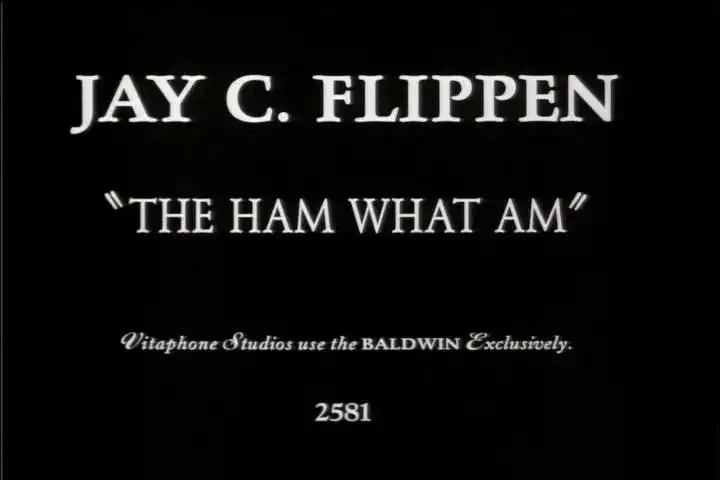
A definitive 4.9/10 rating for a film that redefined the boundaries of cult cinema. The Ham What Am remains a cornerstone of transgressive art.
If you have ever wondered what people actually laughed at in 1928, this is a pretty good place to start. It’s not a movie in the way we usually think of them. There is no plot, no action, and the set is just a plain curtain that looks like it hasn't been dusted since the Civil War. Is it worth watching? Honestly, only if you are a total nerd for film history or you have a weird obsession with early 20th-century stage humor. Most people will probably find it boring or just plain confusing, but for me, it felt like opening a time capsule that still smells like old cigars. 🕵️♂️
Jay C. Flippen is the star here. If you know him at all, it’s probably as a grumpy older guy in westerns or noir films from the 50s. Seeing him here as a young man is a bit of a shock. He has this high-energy, almost desperate vibe that performers had back then when they weren't sure if the camera was actually working. It’s a lot more raw than the polished stuff you see in It Must Be Love.
The sound is the first thing that hits you. It’s that Vitaphone style where everything has a layer of grit and static over it. Flippen’s voice is surprisingly deep, and it kind of rattles the speakers whenever he hits a punchline. He’s wearing a suit that looks about two sizes too big for him, especially around the shoulders. It makes him look like a kid playing dress-up, even though he’s clearly a pro.
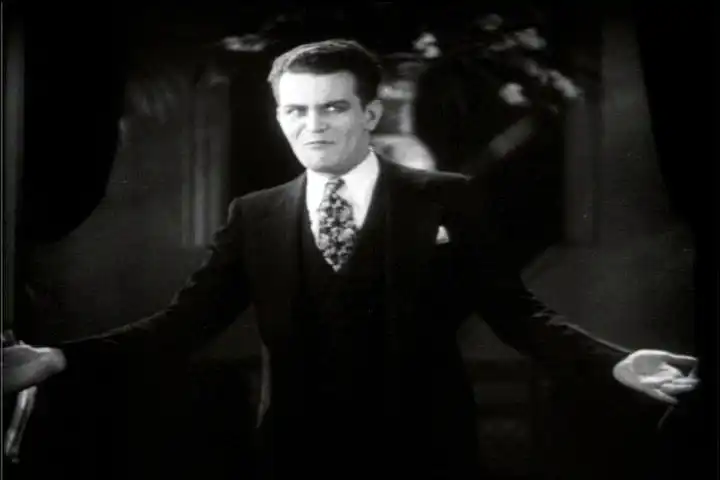
He starts talking about ham almost immediately. The title The Ham What Am isn't just a clever name; it’s the whole theme. He has this rhythmic way of speaking that almost sounds like he’s about to start rapping, but he never quite gets there. It’s all very vaudeville. The jokes are... well, they are from 1928. Some of them about his girlfriend or the food at a local diner are just okay, but his delivery is so confident you almost laugh anyway.
There is this one specific moment where he adjusts his tie and looks directly into the lens. It’s a bit unsettling because the camera doesn't move an inch for the entire nine minutes. He’s just there, trapped in a box of gray light. It feels way more personal than a big production like The Price of a Good Time because there’s nowhere for him to hide. If he bombs, he bombs right in your face.
I noticed that he keeps fiddling with the brim of his hat. It’s a small thing, but it’s the kind of physical tick that makes these old shorts feel human. You can tell he’s trying to keep his hands busy because there are no props. Just him and the microphone hidden somewhere off-screen. It reminds me a bit of the awkwardness in Flip Flops, where the silence between lines feels longer than it should.
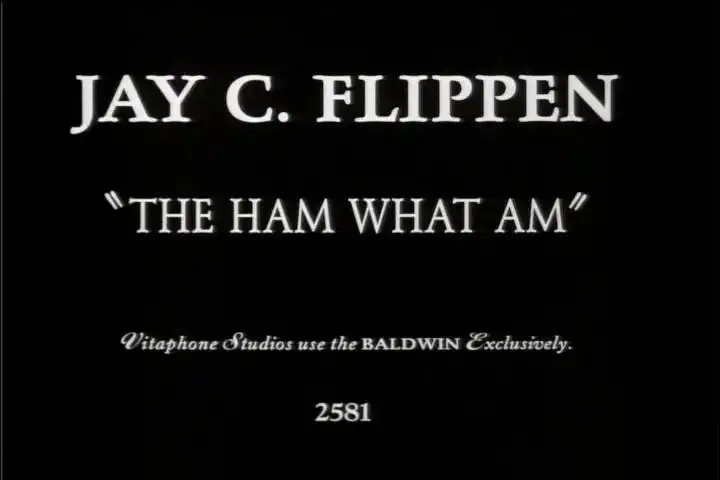
The "ham" joke goes on for a long time. Like, a really long time. He talks about the quality of the meat and the way it’s served. I’ll be honest, I didn't get half of the references. I think you had to be a regular at a specific kind of New York deli ninety years ago to really find it hysterical. But watching his facial expressions is enough to keep you interested.
At one point, there is a weird jump cut. Or maybe the film just snapped and they taped it back together. It happens right in the middle of a sentence. It’s those little imperfections that I love about these archival finds. It reminds you that this was a physical object that’s been sitting in a can for decades. It’s not like Baree, Son of Kazan which feels like a grand story; this just feels like a guy who was hired for a day and told to be funny.
The lighting is incredibly flat. It makes Flippen look like he has no depth, like a paper cutout standing in front of a sheet. But then he smiles, and you see his teeth are a little crooked, and he suddenly becomes a real person again. I found myself wondering what he was thinking while he was filming this. Did he think this new "sound film" thing was going to last? Or did he think he was just making a quick buck? 💰
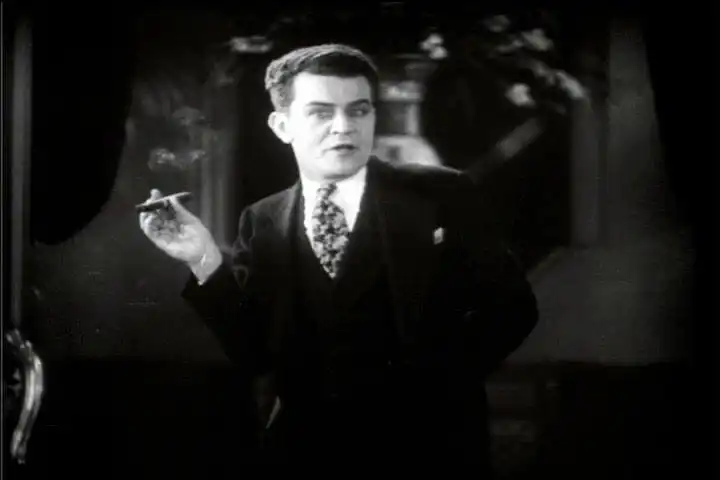
There is no music. None at all. Just the sound of his voice and that constant hiss of the background noise. It creates this weirdly lonely atmosphere. You’d expect a comedy short to feel light and airy, but this feels heavy. It’s like watching a ghost perform for an audience that hasn't been born yet. It’s a lot more atmospheric than something like Just Dogs.
One joke about a waiter really didn't land for me. He spends about thirty seconds setting it up and the punchline is just a word I didn't recognize. I had to Google it. Apparently, it was a slang term for a type of cheap shoe? I don't know. It’s fascinating how fast language changes. That’s the real value of stuff like this—it’s a linguistic museum.
I like how the movie just ends. There’s no big bow, no credits scrolling for five minutes. He finishes a joke, says thanks, and the screen goes black. It’s abrupt and a little jarring. It makes the whole experience feel like a fever dream you had after eating too much late-night pizza. 🍕
If you're looking for something with a narrative, go watch Oh, Baby! or something with a bit more meat on the bones. But if you want to see a master of a dead art form doing his thing, give it a look. It’s short, it’s scratchy, and it’s weirdly charming in a way that only a 1928 Vitaphone short can be. Just don't expect to actually understand all the jokes about the ham.
Actually, I think I liked the parts where he wasn't talking the most. Those tiny seconds where he's just breathing or looking for his next line. That's where the real movie is. It’s just a guy in a big suit, trying to make some people laugh in a dark room a century ago. Pretty cool if you think about it too much. 🎩
IMDb —
1923
Community
Log in to comment.