DbcultAccessing Vault...
6.8/10
Senior Film Conservator
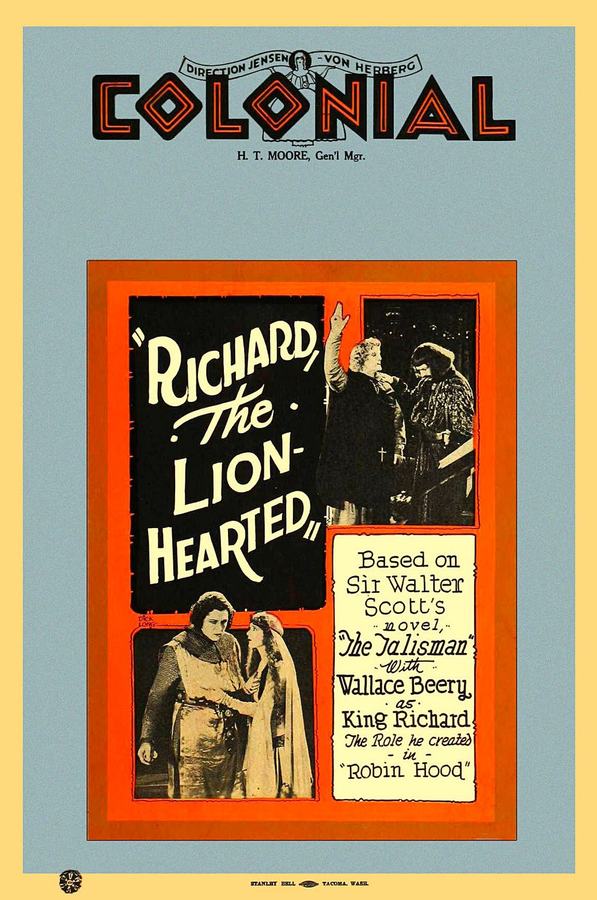
A definitive 6.8/10 rating for a film that redefined the boundaries of cult cinema. Richard the Lion-Hearted remains a cornerstone of transgressive art.
The year 1923 stands as a peculiar monolith in the history of the moving image, a time when the grammar of cinema was being written in real-time by pioneers who viewed the screen as both a canvas for high art and a pulpit for populist storytelling. Among the artifacts of this era, Richard the Lion-Hearted emerges not simply as a historical drama, but as a testament to the sheer audacity of the silent epic. Directed with a keen eye for pageantry by Chester Withey, this adaptation of Walter Scott’s The Talisman serves as a fascinating bridge between the Victorian literary tradition and the burgeoning visual language of Hollywood. It is a film that demands we look past its technical limitations to appreciate the raw, unadulterated ambition of its scope.
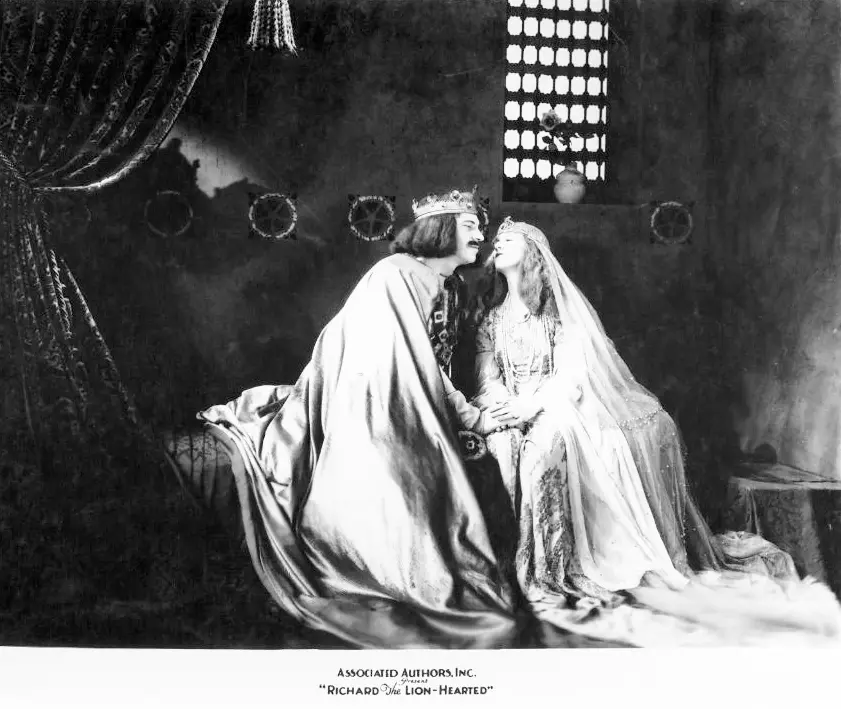
At the center of this whirlwind is Melbourne MacDowell’s Richard. In an era where acting often veered into the hyper-theatrical, MacDowell manages to convey a sense of weary majesty that feels surprisingly modern. His Richard is not a one-dimensional hero of the cross; he is a man possessed by a singular, often destructive, vision. One cannot help but compare this portrayal to the more delicate emotional nuances found in The Girl Without a Soul, where internal conflict is handled with a softer touch. In Richard the Lion-Hearted, the conflict is externalized through sweeping gestures and the physical presence of the King himself. He is the sun around which the rest of the court—including the luminous Marguerite De La Motte as Berengaria—orbits with varying degrees of loyalty and trepidation.
The casting of Wallace Beery as Richard in other productions often overshadows his role here, but the ensemble in this 1923 iteration provides a robust foundation for the narrative. Beery’s presence in the era’s cinema was ubiquitous, yet here, the focus remains squarely on the ideological clash. The film explores the friction between the European crusaders and the Saracen forces with a level of spectacle that was, at the time, unparalleled. Unlike the more intimate character studies like The Whirlpool, Withey’s work thrives on the wide shot, the mass of bodies moving in synchronized chaos across the desert floor.
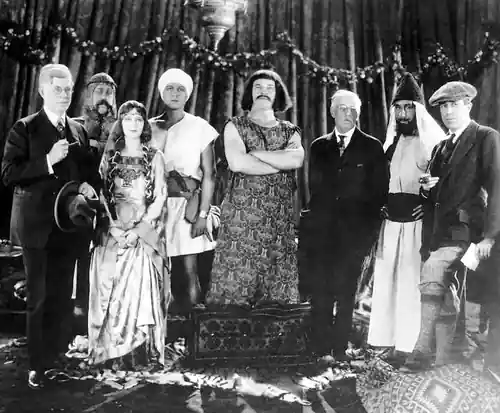
Visually, the film is a masterclass in the use of natural light and set construction. The recreation of the Holy Land, while undoubtedly filtered through a Western lens, possesses a tactile quality that modern CGI-heavy epics often lack. The dust feels real; the heat seems to shimmer off the celluloid. This aesthetic commitment brings to mind the experimental visual journeys seen in A Journey Through Filmland, where the camera itself is an explorer of new territories. In Richard the Lion-Hearted, the camera is an observer of a crusade that is as much about the internal struggle for the soul as it is about the conquest of Jerusalem.
The production design leverages the stark contrasts of the desert. The sea blue of the knights' heraldry (or what we imagine it to be in the tinting of the era) clashes with the sun-scorched earth, creating a visual rhythm that propels the story forward. There is a certain alchemy at work here—not unlike the thematic explorations in Der Alchimist—where the base elements of historical fact are transmuted into the gold of cinematic myth. The film doesn't just tell history; it invents a visual shorthand for how we perceive the Middle Ages.
Writing for the screen in 1923 was an exercise in translation. Frank E. Woods had the unenviable task of condensing Walter Scott’s dense prose into title cards and visual beats. The result is a narrative that moves with a surprising briskness, avoiding the lethargy that plagued many of its contemporaries. While a film like Sweethearts might focus on the lighthearted intricacies of romance, Richard the Lion-Hearted treats its romantic subplots with a heavy, almost somber importance. The relationship between Richard and Berengaria is framed not as a flight of fancy, but as a political and spiritual necessity.
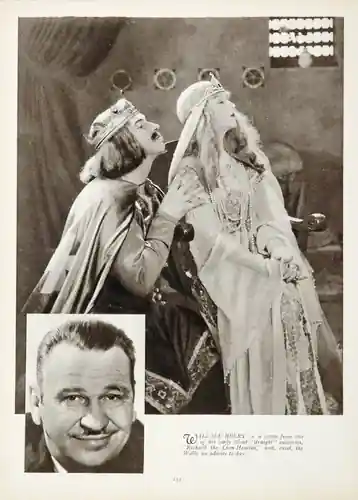
This structural rigidity is occasionally broken by moments of genuine human frailty. John Bowers and Tully Marshall provide supporting performances that ground the epic scale in something more relatable. We see the machinations of the court, the whispers in the tents, and the constant threat of mutiny. It reminds the viewer that even in a grand crusade, the smallest human ego can topple an empire. This thematic depth is something often missing in the more whimsical fare of the time, such as A One Cylinder Love Riot, which prioritized gag over gravity.
When we place Richard the Lion-Hearted alongside other works of the early 20s, its unique position becomes clearer. It lacks the surrealist dread of Die toten Augen, yet it possesses a similar fascination with the power of the gaze—specifically, the way the King looks upon his subjects and his enemies. There is a scene involving a parley with Saladin that is captured with such intensity that the lack of sound becomes an asset; the viewer is forced to read the tension in the furrowed brows and the stiffening of shoulders.
Furthermore, the film’s exploration of duty and sacrifice echoes the sentiments found in The Heart of a Girl, though on a much more global scale. Where The Wager might deal with personal stakes, Withey’s epic deals with the fate of Christendom. This sense of monumental responsibility is what separates the true 'epic' from the mere 'drama.' Even the lighter moments, which feel almost like the social maneuvering in The Four-Flusher, are tinged with the knowledge that a single misstep could lead to a massacre.
Technically, the film is a marvel of its time. The use of multiple cameras for the battle sequences allows for a sense of immersion that was rare for 1923. The editing, while rudimentary by today’s standards, shows a sophisticated understanding of pacing. There is a rhythmic quality to the charge of the crusaders, a build-up of tension that finds its release in the clash of swords. This is not the static, stage-bound filmmaking of the previous decade; this is cinema finding its muscles. It shares a certain DNA with the adventurous spirit of Toby's Bow or the rugged individualism of Jaffery, but it applies those traits to a historical canvas of massive proportions.
The film also touches upon the mystical, a common trope in silent cinema. The reverence for the Holy Land and the almost supernatural aura surrounding the crusaders’ mission brings to mind the spiritual overtones of Mirakeltjeneren. There is a sense that these characters are moving through a world where the divine is a tangible presence, influencing the outcome of battles and the hearts of men. Even the antagonists are treated with a degree of respect and mystery, reminiscent of the exoticized 'other' found in Der Thug. Im Dienste der Todesgöttin, though here, Saladin is portrayed as a worthy and noble adversary rather than a mere caricature.
To watch Richard the Lion-Hearted in the 21st century is to engage in a form of cinematic archaeology. We are looking at the foundational stones of the historical epic. It is easy to scoff at the occasionally melodramatic title cards or the exaggerated makeup, but to do so is to miss the forest for the trees. This film represents a moment in time when anything seemed possible on screen. It has the grit of a survival story and the polish of a royal pageant. It doesn't shy away from the brutality of the Crusades, even if it wraps that brutality in the golden fleece of romanticism.
Ultimately, the film succeeds because it understands its protagonist. Richard is a man of contradictions—pious yet proud, a leader of men who is often a slave to his own impulses. Melbourne MacDowell captures this duality with a performance that anchors the entire production. Whether he is standing atop a sun-bleached dune or navigating the treacherous waters of his own court, he remains a compelling figure. The film is a reminder that while the technology of cinema changes, the human fascination with power, faith, and the legends we build around them remains constant. It is as much of a 'golden shower' of cinematic creativity as The Golden Shower was in its own niche, albeit with a far more serious and enduring legacy.
For those who appreciate the silent era, this is an essential piece of viewing. It provides a window into a world where the epic was being born, where every frame was a discovery, and where the story of a King could capture the imagination of a global audience. Richard the Lion-Hearted is not just a movie; it is a monument to the enduring power of the historical imagination, captured in the flicker of light and shadow over a century ago.
IMDb —
1920
Community
Log in to comment.