DbcultAccessing Vault...
Cult Review
Senior Film Conservator
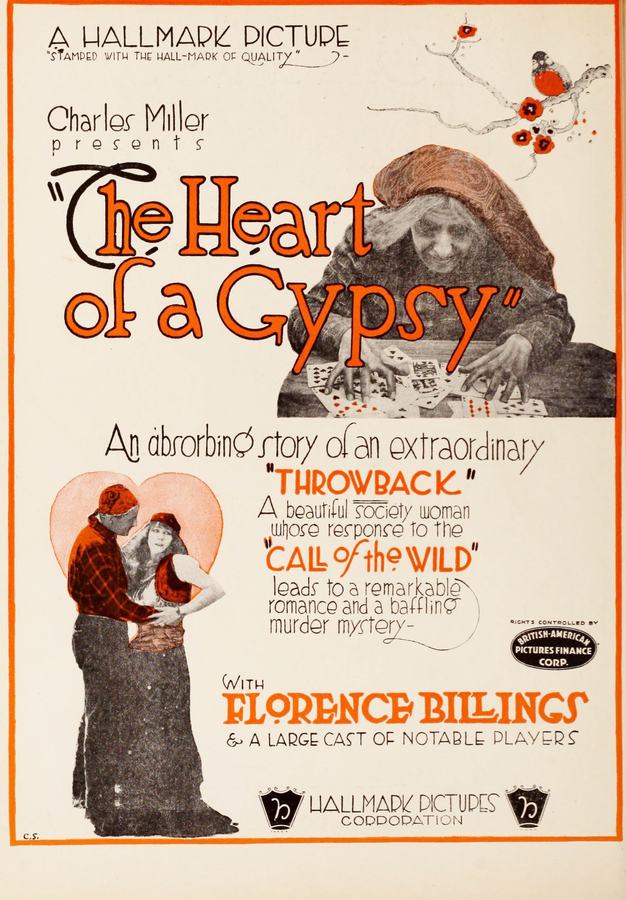
Ah, the silent film era! A time when narratives unfolded not through spoken dialogue, but through the visceral power of expression, gesture, and the evocative artistry of the intertitle. The Heart of a Gypsy, a cinematic artifact from this bygone age, plunges us into a world brimming with romantic melodrama, societal clashes, and unexpected political intrigue. It’s a compelling journey that challenges the rigid boundaries of class and identity, all wrapped in a dramatic tapestry that feels both deeply personal and sweepingly epic. As a critic, I find myself drawn to these early works not merely for their historical significance, but for their raw, untamed storytelling—a quality often diluted in the more polished, yet sometimes less daring, productions of later decades.
At its core, The Heart of a Gypsy is the tumultuous saga of Rosalind Dane, portrayed with a poignant vulnerability by Corliss Giles. She is an Englishwoman of means, her life meticulously structured around the upbringing of her young daughter, Patty, a responsibility she shoulders with a quiet dignity born from the presumed death of her husband, Ralph, on a perilous Allied mission to the tumultuous landscapes of revolutionary Russia. This initial premise sets a tone of genteel sorrow, a life lived within the confines of societal expectation and widowhood. However, the narrative masterfully introduces a disruptive force: a Romani band. Their arrival on Rosalind's sprawling estate isn't merely a picturesque interlude; it’s a seismic shift, an awakening. Rosalind finds herself inexplicably drawn to their vibrant, unburdened existence, a stark contrast to her own staid reality. This attraction isn't just curiosity; it's a pull towards something primal, something forgotten, a resonance that hints at deeper, as-yet-unrevealed truths.
Her burgeoning infatuation with Ben Galli, one of the Romani travelers, played with compelling intensity by Gaston Bell, becomes the central axis around which the drama spins. This isn't a mere dalliance; it's a profound connection that transcends class distinctions, a forbidden romance that threatens to unravel the very fabric of her carefully constructed world. The film, in its depiction of this blossoming affection, deftly explores the societal prejudices prevalent at the time, painting the Romani people not as mere caricatures, but as individuals possessing a captivating allure and a profound sense of community. The tension between Rosalind’s aristocratic background and her magnetic pull towards Ben’s free-spirited world is palpable, a silent battle waged within her own heart and against the scrutinizing gaze of society.
The narrative escalates dramatically during a seemingly innocuous lawn fete, an event intended to celebrate, yet destined to unravel. Here, Rowena, a Romani fortune-teller whose enigmatic presence is imbued with an ancient wisdom, delivers a chilling prophecy: a tragic death is imminent within Rosalind's family, and she herself is fated to depart with the Romani band. This moment, steeped in mystical foreboding, sets the stage for the narrative’s most shocking turn. The festivities are then brutally interrupted by the unexpected, almost spectral, return of Rosalind’s presumed-dead husband, Ralph, a character whose reappearance is less a joyous reunion and more a harbinger of chaos. Played with a menacing complexity by Bradley Barker, Ralph is not the heroic figure Rosalind mourned; he is a man entangled in the murky world of post-war espionage, accompanied by a sinister Soviet secret agent, a role chillingly embodied by Franklyn George. The film cleverly taps into the widespread anxieties of the era, where the specter of Bolshevism loomed large, injecting a layer of political thriller into the romantic drama. This unexpected twist immediately elevates the stakes, transforming a personal love story into a dangerous game of international intrigue.
Ralph, upon discovering Rosalind’s devotion to Ben, unleashes a torrent of threats, vowing to divorce her and seize custody of Patty, weaponizing societal norms against her burgeoning happiness. His return is not for love, but for control and the maintenance of his own clandestine operations. However, the tables are turned when Rosalind, through a fateful eavesdropping, uncovers Ralph’s insidious connection to the Bolsheviks, realizing he is not a victim of circumstance but a mercenary in their pay. This revelation transforms her from a vulnerable woman into a fierce protectress. Her subsequent, desperate threat to kill Ralph before allowing him to take their daughter is a pivotal moment, showcasing Corliss Giles’s capacity for powerful, raw emotion. This is a woman pushed to her absolute limit, willing to defy every societal convention to safeguard her child. The script, penned by Ethel Donoher, demonstrates a keen understanding of dramatic tension, building towards a climax that feels both inevitable and profoundly shocking. The murder of Ralph by his own Soviet accomplice, a cold, calculated act stemming from his refusal to follow instructions, is a brutal yet logical consequence of his dangerous affiliations.
The aftermath is a whirlwind of suspicion and legal peril for Rosalind. Her impassioned threat, combined with the circumstantial evidence, paints her as the prime suspect, leading her perilously close to a murder conviction. The courtroom scenes, a staple of silent drama, are imbued with a palpable tension, relying heavily on the actors' facial expressions and the judicious use of intertitles to convey the gravity of the situation. It’s a classic cinematic setup, one that still resonates today, reminding me of the dramatic legal battles in films like Vengeance Is Mine, where justice hangs by a thread. The film’s resolution to this seemingly intractable predicament arrives in the form of Mario, another member of the Romani band, whose appearance at the trial, orchestrated by the steadfast Ben, provides the crucial testimony needed to exonerate Rosalind and expose the true killer. This plot device not only resolves the immediate crisis but also underscores the loyalty and communal strength within the Romani family, contrasting sharply with the betrayals and deceits of Rosalind's former world.
But the revelations don't stop there. In a stunning denouement that ties together the film's disparate threads, Rosalind learns from Rowena that the fortune-teller is, in fact, her own grandmother, and that her mother was also Romani. This astonishing disclosure recontextualizes Rosalind’s inexplicable attraction to the Romani way of life; it wasn't merely infatuation, but an ancestral calling, a recognition of her own inherent heritage. This twist is a powerful narrative device, providing a satisfying sense of closure and destiny. It transforms Rosalind’s journey from one of forbidden love into one of self-discovery and reclaiming her true identity. With the shackles of her past life shattered—both literally through the murder of Ralph and figuratively through the revelation of her lineage—Rosalind makes the ultimate choice. She forsakes the superficial comforts and societal constraints of her English aristocratic existence to embrace a life of freedom, love, and belonging with Ben and the Romani band. It’s a powerful statement on authenticity and the courage to follow one’s heart, regardless of societal dictates.
The success of a silent film hinges almost entirely on the expressiveness of its cast, and The Heart of a Gypsy is fortunate to boast a lineup capable of conveying immense emotional depth without uttering a single word. Corliss Giles, as Rosalind Dane, delivers a performance that is both delicate and fiercely resolute. Her transformation from a demure widow to a woman fiercely protecting her child and ultimately embracing her true self is utterly convincing. She navigates the complex emotional landscape with remarkable grace, her eyes conveying volumes of unspoken grief, passion, and determination. Gaston Bell, as Ben Galli, is the embodiment of the romantic hero, his presence exuding a quiet strength and an undeniable charisma that makes Rosalind’s attraction entirely believable. Their chemistry, though silent, crackles with an intensity that transcends the screen.
Bradley Barker, in the role of the treacherous Ralph, masterfully portrays a character consumed by greed and deceit. His return is not just a plot point, but a dramatic shift in the film's emotional tenor, and Barker handles this transition with chilling effectiveness. Mathilde Brundage and Sara Biala, as Rowena and other Romani characters, lend an authentic gravitas to the nomadic community, their performances adding layers of mystery and wisdom. Franklyn George, as the Soviet agent, is suitably menacing, a silent but potent threat that underscores the political undercurrents of the narrative. Even supporting players like Aida Horton, Josephine Wehn, Fay Evelyn, Florence Billings, and Herbert Wilkie contribute to the rich tapestry of the film, ensuring that every character, no matter how brief their appearance, serves a purpose in advancing the intricate plot. The ensemble works in harmony, a testament to the directorial guidance in extracting such nuanced, non-verbal performances.
Ethel Donoher's screenplay for The Heart of a Gypsy is a fascinating exploration of several potent themes that resonate even today. Foremost among them is the theme of identity. Rosalind’s journey is one of shedding an imposed identity—that of the wealthy English widow—to embrace her true self, a woman with Romani heritage. This struggle for self-discovery is beautifully depicted, highlighting the tension between societal expectations and personal truth. Her initial attraction to the Romani band is not just a fleeting fancy, but an instinctual pull towards a part of herself that has long been suppressed or unknown. This exploration of heritage and belonging is particularly compelling, differentiating it from a simple "rich girl falls for poor boy" narrative. It's a quest for authenticity, a desire to live a life aligned with one's intrinsic nature.
The film also delves deeply into class distinctions and the prejudices that accompany them. The Romani are initially viewed with suspicion and curiosity by Rosalind’s aristocratic circle, yet it is within their community that she finds genuine connection, loyalty, and unconditional love. The contrast between the cold, calculating world of Ralph and the warm, communal spirit of the Romani is stark and intentional. This juxtaposition serves to critique the superficiality and hypocrisy often found within the upper echelons of society, suggesting that true wealth lies not in material possessions but in human connection and freedom. This thematic thread echoes in other films of the era that challenged social norms, perhaps even in a more dramatic sense, like God's Crucible.
Freedom, both personal and political, is another cornerstone of the narrative. Rosalind's eventual decision to leave her estate and join the Romani band is a powerful act of liberation, a rejection of the gilded cage she once inhabited. This personal freedom is juxtaposed with the political machinations involving Ralph and the Soviet agent, hinting at a broader struggle for freedom on a global scale. The film, released in a period following the Russian Revolution, subtly taps into anxieties about political ideologies and their potential to corrupt individuals and societies. It reminds us that freedom isn't just about escaping physical confinement, but about liberating oneself from psychological and societal chains. The story doesn't shy away from the darker aspects of human nature, from betrayal to murder, making it a robust and thought-provoking piece of early cinema.
While specific details on cinematography from this era can be elusive without direct access to the film itself, one can infer much about its visual storytelling from the narrative structure. Silent films relied heavily on evocative imagery, striking compositions, and the careful staging of actors to convey emotion and advance plot. The contrast between the opulent, perhaps rigid, settings of Rosalind’s estate and the natural, open landscapes favored by the Romani would have been a powerful visual metaphor, reinforcing the thematic tension between constraint and freedom. The use of close-ups on actors' faces would have been crucial for conveying the intense emotional shifts and unspoken dialogues that drive the story forward. One can imagine the visual impact of Rowena's fortune-telling, perhaps with dramatic lighting and symbolic gestures, creating a truly memorable scene.
Ethel Donoher's writing, even without the benefit of sound, constructs a surprisingly intricate plot, weaving together romance, mystery, and political intrigue with considerable skill. The pacing, though likely slower by modern standards, would have allowed audiences to fully absorb the emotional weight of each scene and the implications of each twist. The narrative's ability to introduce such disparate elements—a presumed dead husband, a gypsy romance, Soviet spies, a murder mystery, and a grand familial revelation—and coalesce them into a coherent, compelling whole is a testament to the strength of the screenplay. It's this kind of ambitious storytelling that sets certain silent films apart, demonstrating that even in the absence of dialogue, complex human dramas could be portrayed with remarkable depth.
Compared to other films of its time, The Heart of a Gypsy likely stood out for its bold narrative choices and its willingness to tackle themes that might have been considered provocative. While films like The Lure of Millions might have focused solely on material greed, and A Wife's Sacrifice on marital strife, The Heart of a Gypsy synthesizes these elements into a much broader tapestry. It's less a straightforward genre piece and more a rich amalgam, reminiscent in its narrative ambition of something like Satana likuyushchiy, though with a distinct romantic core. The film's enduring appeal lies in its exploration of universal human experiences: the search for love, the yearning for belonging, and the courage to forge one's own path despite societal pressures. It's a powerful reminder that the human heart, indeed, beats to its own rhythm, often finding its true home in the most unexpected of places. This film, though a product of its time, offers timeless insights into the complexities of identity and the pursuit of a life lived authentically. For anyone interested in the rich history of cinema, and particularly the silent era's capacity for intricate storytelling, The Heart of a Gypsy is a compelling, emotionally resonant experience that truly captures the spirit of its title.
IMDb 7.3
1936
Community
Log in to comment.