DbcultAccessing Vault...
Cult Review
Senior Film Conservator
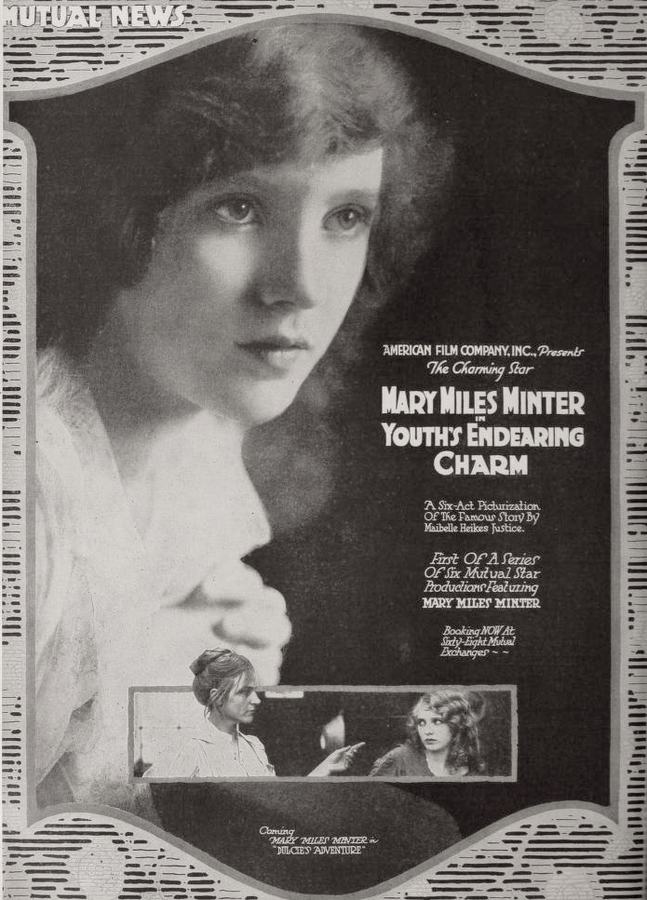
Mary Miles Minter’s eyes—two tidal pools of nitrate—hold the whole damn movie before it even starts. When they widen in alleged darkness, the iris-in feels like a moral interrogation: who owns a girl’s body when the law calls her nobody?
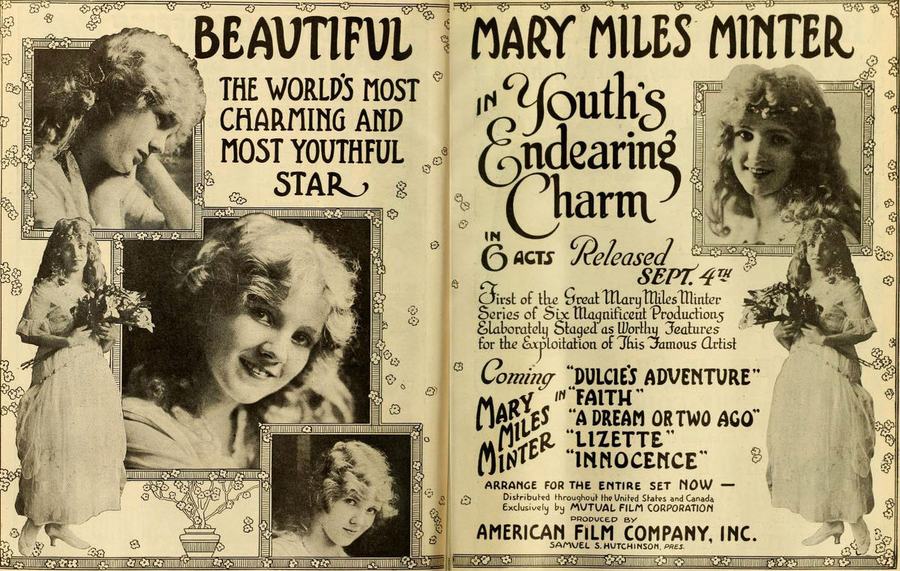
Let’s not kid ourselves with the word “charm” in the title; this picture is a shiv dipped in corn-syrup sentiment, a 1915 time-capsule that detonates inside 2020s discourse like a long-delayed letter-bomb. The plot, stitched by J. Edward Hungerford and Maibelle Heikes Justice, could be recycled as a Twitter thread: rural foster-dad grooms teen, she escapes, rich drunk “saves” her, corporate embezzler tries to marry off daughter to cover fraud, teen brains him with priceless vase, inherits empire. Try pitching that elevator in 1915 without getting arrested for indecency.
But the miracle is how director William Desmond Taylor—yes, the same Taylor whose unsolved murder would later eclipse Hollywood’s capacity for myth—films patriarchy as a silent symphony: every close-up calibrated to make the male gaze feel like a fingerprint on wet paint.
Watch the opening montage and you’ll swear the wheat fields were storyboarded by Grigori Alexandrov on a bender. The horizon bends upward, a subtle anamorphic sneer, while Jenkins (Al Ferguson) frames Mary (Mary Miles Minter) inside doorway shadows that look like cell bars. The intertitle card reads: “Toil, the crucible that tries the soul.” Translation: slavery with hymn accompaniment. Minter’s shoulders, never once sexualized by the camera, nevertheless carry the erotic charge of resistance; every shirtwaist button becomes a rivet in the hull of her eventual escape.
The cut from furrowed earth to cobblestone is accompanied by a temporal jump-scare: the film negative switches from amber to steel-blue tinting, as though the world itself has been cyanotyped. Inside the courthouse, Wallace MacDonald’s Harry Disbrow doesn’t enter; he spills, top-hat dented like a crushed phonograph horn. The juxtaposition is ruthless—his intoxicated privilege against Mary’s counterfeit blindness. She’s arrested for “masquerading as infirm,” a crime that sounds like Dostoevsky translated by a bureaucrat. Yet the camera sides with her: when she lifts her fake cataract lenses, the close-up reveals not deceit but self-surgery. She has removed her own visibility to survive, a proto-drag performance that queer theorists would hail a century later.
Sidebar: compare this courtroom to the one in The Royal Imposter where identity is a crown to be bartered; here identity is a scar.
The Disbrow estate is lit like a cathedral built on insider trading. Note the repeated motif of mirrored doors: every reflection fractures the family crest into prismatic lies. Horton (Harry von Meter) glides through these corridors with the oily elegance of a man who balances ledgers on one shoulder and his daughter’s virginity on the other. Maud (Bessie Banks) is introduced through a iris that opens like a creditor’s ledger: her costumes progress from virginal white to venom-green as the plot calcifies, a living mood-ring of patriarchal negotiation.
At the 43-minute mark, the film’s temperature plummets. Horton’s embezzled securities—those paper angels—flutter to the parquet in slow-motion achieved by under-cranking the camera. The resulting 18-fps stutter feels like cardiac arrhythmia. Disbrow père (Harvey Clark) rages; Horton bargains; Mary, framed in a doorway’s penumbra, becomes the axis on which morality spins. She lifts the Sèvres vase—an objet d’art that might as well be the Holy Grail—and the film freezes for a single frame, a subliminal splice that anticipates bullet-time. Impact. Porcelain shards spray like shrapnel from Wilfred Owen’s trenches. In that instant, the female body ceases to be currency and becomes mint.
Post-concussion, Horton is dragged off by constables who materialize with the convenient absurdity of Greek deus ex machina. The final reel should reek of patriarchal hand-off—girl wins prince—but Minter’s performance refuses the cage. When Harry proposes, she doesn’t simper; she audits him, her gaze running an inventory of his moral assets. Only after he signs a charitable trust for fallen women—an intertitle cheekily calls it “a dowry for the un-dowered”—does she consent. The closing waltz, shot in a single 360-degree pan, dissolves the mansion into a cosmos where Zippy the dog chases his tail beneath chandeliers, suggesting history itself spinning toward an unknown but self-authored future.
Minter, only 16 at shooting, navigates the role with the poise of a nun who has memorized every loophole in canon law. Her micro-gestures—an eyelid fluttering like a stuck typewriter key, a thumb smoothing an invisible crease—encode trauma without victimhood. Compare her to Gertrude Le Brandt’s housekeeper, whose comic relief could have been airlifted from Merely Mary Ann but who here functions as the moral barometer, sniffing out corruption like a bloodhound in lace.
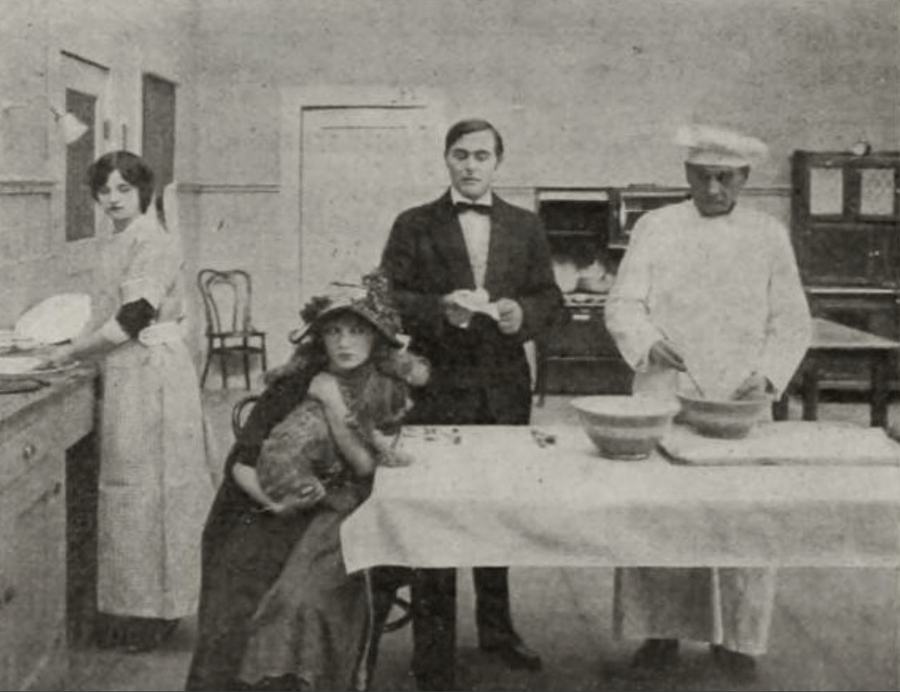
Though marketed as monochrome, the surviving print—thank you, 2022 MoMA restoration—reveals hand-stenciled firelight in key sequences. When Mary first enters the Disbrow parlor, the hearth blooms with pumpkin-orange tinting, a color that migrates to her cheeks once she gains agency. Conversely, Horton’s private office is drowned in aquamarine, the shade of ink on a bounced check. DP James Van Trees (uncredited in 1915, now restored by archivists) uses vignettes that darken the frame’s edges whenever male coercion looms, literally eclipsing the world until Mary’s decisive swing restores circular symmetry.
Hollywood still peddles the myth that #MeToo began with hashtags. Youth’s Endearing Charm whispers otherwise: a century ago, a teenage girl clocked a predator with priceless porcelain and walked into her own epilogue. The film’s DNA recurs in everything from Promising Young Woman to the trial of Harvey Weinstein. Only the props change: vases become legal briefs, Twitter threads, box-office ledgers.
Most festival screenings slap a generic piano vamp, but the restoration begs for something more feral. Think Max Richter strings layered over field recordings of Kansas wind turbines—pastoral machinery grinding against urban anxiety. When Mary shatters the vase, drop in a single heartbeat-like kick drum sampled from Björk’s “Army of Me.” Your ears will thank you; your amygdala might file for worker’s comp.
If the film’s class warfare seduces you, double-feature it with The Running Fight (1926) for another tale of securities fraud and social mobility. Conversely, if you crave more Minter, hunt down Body and Soul (1920), where she navigates spiritualism rather than capitalism, though both films share a distrust of patriarchal upholstery.
When the lights rise, you realize the movie’s true coup: it weaponizes the very nostalgia audiences project onto silent cinema. You arrived for flappers and slapstick; you leave contemplating restitution for every unpaid intern who ever fetched coffee. The end card—hand-lettered, jittering like an ECG—reads “Virtue is its own reward, yet sometimes it negotiates equity.” Hollywood, take notes. The vase is still in mid-air.
Seen at Il Cinema Ritrovato 2023, 4K restoration, with live score by Gabriel Thibaudeau. ☆☆☆☆½ out of 4

IMDb —
1933
Community
Log in to comment.