DbcultAccessing Vault...
Cult Review
Senior Film Conservator
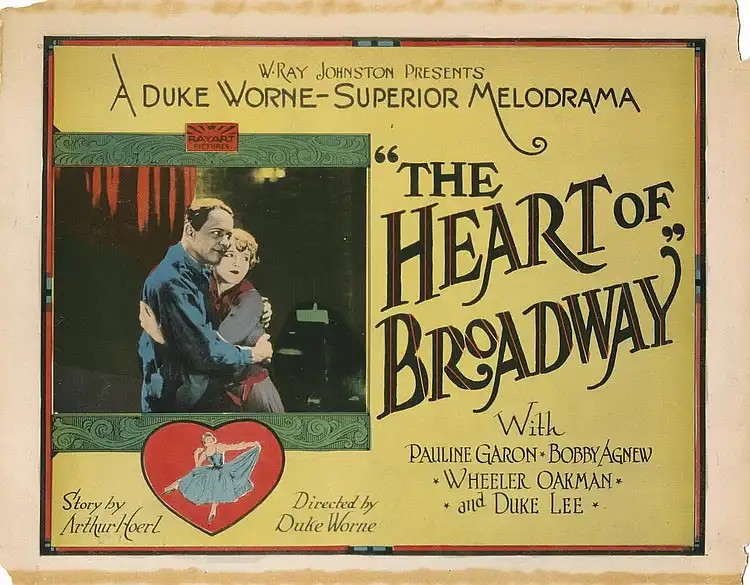
“The Heart of Broadway” is one of those old films you might stumble upon, and honestly, for most folks, it’s a bit of a tough sell today. If you're into early cinema, maybe a silent film fan, or just really curious about how stories were told back in 1929, then yeah, give it a shot. Otherwise, if you need fast pacing and crystal-clear sound, you’ll probably find this one a bit of a slog. 🎬
It's your classic small-town girl, Mary, played by Pauline Garon, who dreams big. She bumps into this hoofer, Larry (Robert Agnew), and off they go to the big city, Broadway calling. They get a gig in a cabaret, which feels more like a fancy speakeasy vibe, all smoky and crowded. The sets, you know, they're not exactly grand, but they do the job.
Then there’s the stage backer, played by Wheeler Oakman, a real piece of work. He makes Mary’s life pretty miserable, always hovering, making uncomfortable demands. You can almost see the tension in Garon's eyes during some of those scenes, even without dialogue. It’s all very heavy melodrama.
Things get really wild when this backer guy gets shot. And Larry, bless his heart, he immediately takes the blame. He just *assumes* Mary did it, or maybe he’s protecting her, it's not super clear in the moment. That scene, where he just accepts his fate, it hangs a little long, feeling a bit forced perhaps. 🤔
Turns out, of course, it wasn't Mary. Some henchman of the backer's did it, which, okay, kinda predictable. The reveal feels a little rushed, like they just wanted to tie up the loose ends fast. But hey, it means Larry gets off the hook! And they get married. *Roll credits.*
Pauline Garon, she's got this earnestness that really shines through. Her character's journey from wide-eyed hope to weary resignation, then back to joy, it's pretty clear even with the acting style of the time. Robert Agnew, he's charming enough as the hoofer, a good dancer too, but his dramatic chops sometimes feel a bit... well, *stagey*.
There’s a moment in the cabaret, a dance number, where the background extras look totally bored. Like, they're just waiting for their next cue, not really enjoying the show. It's a small thing, but it kinda pulls you out of it. And the way some of the close-ups are framed, sometimes people are just slightly off-center. Definitely not perfect.
The film's pacing is what you’d expect from this era. It slows down for dramatic stares, then speeds up during action. One minute you're watching a long, lingering shot of a note being read, the next it’s a quick montage. It’s an interesting rhythm, if you're patient with it.
I did notice the music, for an early sound film, it’s mostly just there, kinda generic. Doesn’t really *add* much emotion until the very end. The intertitles, if you're watching a silent version, they’re pretty standard. Nothing too fancy.
The whole "henchman" thing? It felt like a bit of a narrative cheat, honestly. Like they just needed a quick way to resolve the murder without making our leads actual murderers. It’s a bit of a deus ex machina moment, even for 1929. But I guess audiences probably loved the happy ending.
So, is "The Heart of Broadway" a lost gem? Nah, probably not. But it’s a solid example of the kind of melodrama that was popular. It’s got heart, sure, even if it’s a bit rough around the edges. If you're a student of early cinema, or maybe just curious about Pauline Garon, it's worth a look. Otherwise, you might wanna pick something a little more... *modern*. 🤷♀️
IMDb 6.1
1917
Community
Log in to comment.