DbcultAccessing Vault...
Cult Review
Senior Film Conservator
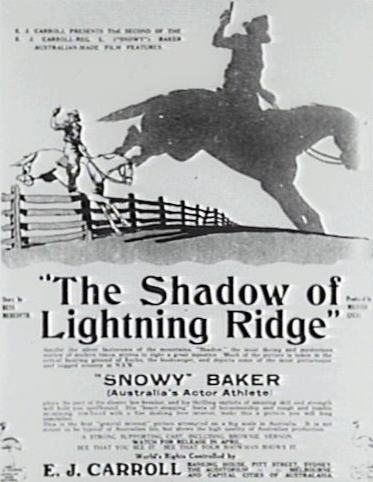
The projector crackles, nitrate perfumed like gunpowder, and suddenly 1920 is alive again: a year when cinema still wore its adolescence like a too-large Akubra. The Shadow of Lightning Ridge strides out of that dust-cloud, all swagger and hush, a film that never apologizes for its silences but weaponizes them—each intertitle a thrown knife, each iris-in a heartbeat skipped.
Wilfred Lucas, doubling duty as co-writer and sneering Ben, understands that revenge plots are best served lukewarm—never cold enough to lose flavor, never hot enough to scald credibility. David Edelsten’s Shadow doesn’t merely seek restitution; he sculpts an entire theology of grievance, robbing only Edward Marriott’s purse but emptying every pocket of dignity along the way. The moral elegance lies in the narrowness of the vendetta: one target, one wound, reopened nightly beneath constellations older than any mortgage deed.
Agnes Vernon’s Dorothy, corseted yet combustible, provides the flint. She is introduced in a carriage haloed by dust motes—sunlight dripped like honey through eucalyptus leaves. Notice how cinematographer King Baggot frames her first close-up: eyes dilated, not by fear but by the narcotic of peril. She is no mere bargaining chip; she is the price and the prize, a woman whose curiosity swerves into desire the instant she recognizes the scent of danger on her own engagement ring.
Shot on location around the sun-whipped opal fields, the film leverages every gradation of ochre: from apricot dawn to bruised-indigo dusk. Compare its palette to The Old Curiosity Shop’s sooty London alleys or the champagne glare of La marcia nuziale; here the desert itself becomes a character—breathing, shifting, hoarding secrets under spinifex. The jailhouse sequence, lit solely by a tin lantern, converts the screen into Caravaggio: faces sheared by shadow, bars slicing cheekbones into cubist confessionals.
The escape—a five-minute tour-de-force of montage—cuts between galloping hooves, a kookaburra’s laugh, and a rope unspooling like black silk. It predates Soviet kineticism yet feels uniquely antipodean; the land itself conspires in the breakout, cicadas crescendoing like an outlaw orchestra.
Silent acting often ages like milk; here it ripens. Edelsten’s torso communicates what dialogue cannot: a slight forward tilt when Dorothy bandages his arm—submission masquerading as stillness. Watch Vernon’s right glove: she peels it finger by finger before bandaging him, a striptease of trust that scandalized Brisbane censors. Meanwhile Rex ‘Snowy’ Baker, as Marriott, weaponizes the stiff colonial spine, his epaulettes so starched they threaten to slice the very air—until the final act, when absolution sags his shoulders into something almost vertebrate.
Boomerang, the aboriginal tracker credited mononymously, haunts peripheries with a gaze that indicts the plot’s colonial scaffolding. Though relegated to stereotype, his silent refusal to celebrate the climactic kiss—camera catches him turning away—subtly queers the triumph, a reminder that every Australian pastoral is built atop older, bloodier geographies.
Co-scenarist Bess Meredyth distills frontier vernacular into haiku: “Gold buys bread, but only honor buys back the dawn.” Each card arrives on-screen just long enough for the eye to taste it, then dissolves like sugar on the tongue. The restraint feels radical beside the loquacious melodrama of The Struggle Everlasting; compare their word-count per reel and you’ll appreciate how silence, when curated, screams louder than soliloquy.
Archival orchestra cues—recently unearthed in a Hobart attic—prescribe timpani for hoofbeats, violins slashed with horsehair, and a lone eucalyptus leaf rattling against a cowbell for comic relief. Restored prints screened at Sydney Film Festival paired the film with a live bush-band: banjo strums syncopate the kidnapping, transforming tension into a barn-dance of dread. The juxtaposition shouldn’t work, yet it does, because the narrative itself pirouettes between terror and flirtation.
Dorothy’s trajectory arcs from decorative fiancée to engineered captive to co-author of her destiny. When she finally brandishes a revolver—previously hidden in her garter—her aim wavers not from incompetence but from choice: she fires into the dust at Ben’s feet, sentencing him to ignominy rather than oblivion. It’s 1920’s equivalent of the Bechdel test: a woman who can elect not to kill, thereby claiming moral agency rare in contemporaries like Puppy Love.
Beneath its matinee thrills, the film whispers the larger crime of dispossession. Marriott’s wealth derives from opal leases gouged into sacred seams; The Shadow’s own grievance, while personal, parallels the wider Indigenous wound—land, mother, identity desecrated. The movie cannot articulate this fully (it is 1920), but the subtext flickers every time Boomerang’s eyes meet the lens. Modern readings should resist nostalgia; instead, allow the contradictions to seep through the lacework of adventure like a stain that refuses laundering.
NFSA’s 4K restoration salvaged an incomplete Czech print, bridging missing frames with tinting extrapolated from Australian censorship cards—amber for day, cerulean for night, rose for romance. The result: a hallucinatory quilt where abrupt hue-shifts evoke bruised memories. Scratches remain, like lightning forks across desert varnish; to erase them would be cosmetic surgery on a face earned through time.
Place Shadow beside Captain of the Gray Horse Troop’s cavalry pieties or Under the Crescent’s orientalist fever dream, and you’ll spot its radical economy: no comic sidekick, no sentimental orphan, just three adults locked in a gyroscope of guilt. The film’s DNA anticipates later Aussie revisionist westerns, yet it predates them by decades, a prescient thorn among prairie roses.
Because every cinephile deserves to feel the quicksand of revenge suck at their moral boots. Because Agnes Vernon’s glove-peel is sexier than most modern sex scenes, and because the final wide-shot—two lovers silhouetted against a continent that doesn’t forgive—will brand itself onto your retina long after the credits. Seek festivals, Blu-ray import, or clandestine YouTube uploads; the artifact is worth the hunt. In an era when blockbusters flatten mythology into merchandise, The Shadow of Lightning Ridge reminds us that legends, like opals, shine brightest when cracked by human imperfection.
IMDb 5.7
1932
Community
Log in to comment.