DbcultAccessing Vault...
Cult Review
Senior Film Conservator
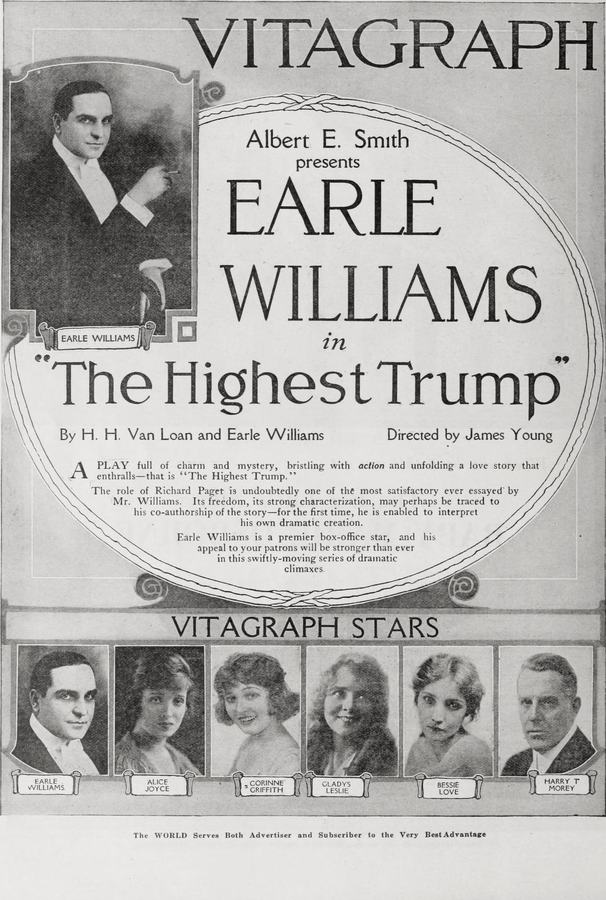
From the shadowy depths of early 20th-century cinema emerges The Highest Trump (the-highest-trump), a film that, even a century later, retains a fascinating grip on the viewer with its intricate web of espionage, fraternal sacrifice, and the blurred lines of identity in a world plunged into the chaos of global conflict. It's a narrative that dares to delve into the psychological complexities of wartime heroism, eschewing simplistic portrayals for a more nuanced exploration of duty's cost. This isn't merely a war film; it's a testament to the era's capacity for sophisticated storytelling, weaving together elements of thriller, romance, and psychological drama with remarkable dexterity.
At its core, the film presents a premise as audacious as it is tragic: the self-inflicted demise of John Paget, a man driven to such desperation by his unwitting entanglement with German saboteurs that he sees no recourse but to offer his identity as a shield for his twin brother, Richard. This isn't a simple act of suicide; it's a calculated, harrowing transfer of a deadly baton, an imploration for Richard, a Secret Service officer, to assume his likeness and thwart the insidious plot to supply the United States military with defective aircraft. The stakes are immediately, horrifyingly clear: the lives of countless American soldiers depend on Richard's ability to convincingly become his deceased sibling, to infiltrate the enemy's inner circle, and to dismantle their operations from within. This initial setup establishes a moral and emotional weight that underpins every subsequent twist and turn, setting a standard for narrative intensity that few films of its time, save perhaps for the sheer thrill of something like The Flashlight, could truly match.
Earle Williams, in a dual role that must have been a tour de force for its time, embodies Richard with a quiet intensity that speaks volumes. His transformation from the stoic Secret Service agent to the seemingly compromised John is a masterclass in subtle performance. We witness his calculated immersion into John's world, his enlistment in the aviation corps, and his subsequent deployment to the European front. The narrative, however, refuses to allow Richard an easy path. The specter of John's past manifests in the form of Lois Graham, John's fiancée, portrayed with compelling vulnerability and strength by Grace Darmond. Her appearance as a Red Cross nurse on the same battle-scarred continent is a stroke of narrative genius, adding a layer of poignant personal drama to the high-stakes espionage. Lois becomes an unwitting participant in Richard's elaborate masquerade, her presence a constant, palpable threat to his carefully constructed deception, yet simultaneously, an anchor to the humanity he risks losing in his dangerous charade.
The film's plot then spirals into a series of increasingly perilous maneuvers. Richard, adhering to his brother's original, albeit now repurposed, plan, orchestrates his capture behind German lines. This act of deliberate self-betrayal, a calculated plunge into the heart of the enemy, is fraught with immense psychological and physical peril. His subsequent receipt of the Iron Cross, a symbol of valor from the very adversary he seeks to undermine, is a moment of profound dramatic irony. It's a badge of honor that simultaneously marks him as a traitor in the eyes of his own country, a testament to the depths of his commitment to the mission. Yet, this perceived collaboration is merely a smokescreen for his true objective: to feed the enemy false intelligence, a strategic deception that ultimately culminates in a crucial Allied victory. This intricate dance of misinformation and counter-intelligence highlights the intelligence and daring inherent in Richard's character, a man willing to sacrifice his reputation, and indeed his life, for the greater good.
The narrative's climax, however, shifts from the grand theater of war to the intimate confines of a wedding night. Richard and Lois, seemingly united in love, find their nascent bond shattered by the discovery of the Iron Cross. It's a moment of devastating revelation for Lois, a sudden, brutal unmasking of the man she believes she has married. Darmond’s portrayal of Lois's shock, betrayal, and subsequent rage is particularly affecting. Her inability to carry out the act of vengeance, to kill the man she loves despite his apparent treachery, speaks to the profound conflict within her. Instead, she has him arrested, a public denunciation that threatens to unravel everything Richard has fought for. This dramatic confrontation is a masterclass in tension, demonstrating the film's ability to pivot from large-scale military strategy to deeply personal stakes, echoing the domestic turmoil found in other dramas of the period, though perhaps with a more immediate, life-or-death intensity.
The ensuing explanation, Richard's desperate unveiling of his true mission and the German secrets he has amassed, serves as the film's cathartic release. It’s a moment of truth, where the audience, along with Lois, finally sees the full scope of his sacrifice and the patriotism that fueled his dangerous double-life. The resolution, with Richard and Lois embarking on an aerial honeymoon, is not merely a happy ending; it's a symbolic flight into a future where their love, forged in the crucible of war and deception, can finally take wing, unburdened by secrets. It signifies a triumph not just of military strategy, but of personal integrity and enduring affection.
Thematically, The Highest Trump is a rich tapestry. The most prominent theme is, undoubtedly, identity. Richard's assumption of John's persona forces him to confront not only the physical demands of impersonation but also the psychological toll of living a lie. He must inhabit a grief-stricken fiancée's beloved, a man whose choices led him to a tragic end, while simultaneously executing a mission of national importance. This duality is brilliantly explored, raising questions about who we are when stripped of our names and roles, and whether the ends truly justify such an extreme form of means. The film posits that true heroism often requires a complete effacement of self, a willingness to become a ghost for a cause greater than individual recognition.
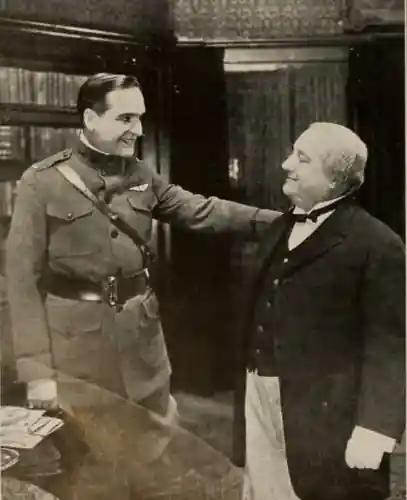
Another compelling theme is duty versus personal happiness. Richard's commitment to his country is absolute, compelling him to make choices that directly imperil his personal life, his love, and his very future. The film showcases the immense sacrifice demanded by wartime service, illustrating that the battlefront extends far beyond the trenches, into the hearts and homes of those involved. Lois, too, faces a profound dilemma: her loyalty to the man she loves versus her country's security. Her initial reaction to the Iron Cross is not just personal hurt but a patriotic outrage, underscoring the era's heightened sense of national allegiance. This conflict between personal desire and national obligation is a recurring motif in cinema, but few early films explore it with such raw, immediate consequence.
The portrayal of espionage and deception is remarkably sophisticated for its time. The plot doesn't rely on simplistic villainy but rather on a complex interplay of trust, betrayal, and calculated risk. The German spies are not caricatures but a credible threat, and Richard's methods are shown to be ingenious and daring. This film serves as an interesting precursor to later, more elaborate spy thrillers, demonstrating that the genre's foundational elements – the double agent, the hidden motive, the shocking reveal – were already firmly established and effectively utilized in early cinematic narratives. The subtle art of planting false information, the dangers of operating behind enemy lines, and the psychological fortitude required for such a mission are all handled with a degree of realism that transcends mere melodrama.
Grace Darmond’s performance as Lois Graham is particularly noteworthy. She is not merely a damsel in distress but a woman of agency and conviction. Her journey from grieving fiancée to loving wife, and then to a woman scorned and ultimately, an understanding partner, is a significant arc. She embodies the emotional turbulence of wartime romance, where love is tested not just by separation but by profound, shocking deception. Lois's initial suspicion and subsequent actions are entirely justified, making her eventual understanding and forgiveness all the more powerful. Her character grounds the film's more fantastical elements of espionage in a very human, relatable emotional reality, much like other strong female leads of the era, such as those seen in The Shuttle or The Delicious Little Devil, who navigate complex social landscapes.
Earle Williams, as Richard/John, carries the film with an impressive gravitas. The challenge of portraying two distinct personalities, or rather, one man trying desperately to be another, is met with skill. His expressions convey the constant vigilance and internal conflict of a man living a dangerous lie. The subtle differences in his demeanor when he is 'John' versus when he is Richard calculating his next move, are a testament to his acting prowess. He manages to make Richard's stoicism compelling rather than cold, allowing the audience to empathize with the burden he carries.
The direction, while certainly constrained by the technological limitations of the era, effectively builds suspense and maintains a brisk pace. The use of intertitles is judicious, providing necessary exposition without bogging down the visual storytelling. The choice of locations, from the homefront to the war-torn landscapes of France, adds to the film's authenticity and scope. The aerial sequences, even if rudimentary by today's standards, would have been thrilling for contemporary audiences, adding a sense of modernity and danger to the narrative. The climax, with its intense emotional confrontation, is staged with a keen eye for dramatic impact, demonstrating an understanding of how to maximize tension within a confined space.
From a historical perspective, The Highest Trump offers a fascinating glimpse into how World War I was perceived and portrayed in early American cinema. It reflects the prevailing anxieties about foreign espionage and sabotage, the fervent patriotism, and the glorification of self-sacrifice for the national cause. The film's message is clear: vigilance is paramount, and heroes come in many forms, sometimes even disguised as traitors. It also highlights the public's appetite for stories of daring intelligence operations, a fascination that would only grow in subsequent decades. While it doesn't delve into the grim realities of trench warfare in the way some later films might, it captures the spirit of a nation united against a perceived enemy, and the individual acts of heroism that contributed to the war effort.
In comparing it to other works of its time, The Highest Trump stands out for its intricate plotting and psychological depth. While films like Cheerful Givers might have offered heartwarming social commentary, and The Ghost Breaker delivered supernatural thrills, The Highest Trump ventured into the more complex, morally ambiguous territory of wartime espionage. It eschews the broader, more documentary-style approach seen in something like The Kineto Coronation Series: Royal Progress Through London, instead focusing on a tightly woven personal drama set against a global backdrop. Its narrative ambition and willingness to explore themes of identity and deception make it a significant piece of cinematic history, demonstrating that early films were capable of more than just simple morality tales or slapstick comedies.
Ultimately, The Highest Trump is a compelling artifact, a film that speaks volumes about the power of storytelling in a nascent medium. It's a reminder that even in an era of silent films and limited special effects, filmmakers were able to craft narratives that resonated deeply with audiences, exploring complex human emotions and geopolitical tensions. Its legacy lies not just in its historical context but in its enduring ability to thrill, to provoke thought, and to remind us of the profound sacrifices made in times of war. It's a testament to the ingenuity of early cinema and a fascinating watch for anyone interested in the evolution of the spy genre and the portrayal of WWI on screen. The film’s intricate plot, compelling performances, and exploration of moral ambiguities ensure its place as a noteworthy entry in the annals of cinematic history, proving that the highest trump in any game is often played with the most cunning and personal sacrifice.
IMDb —
1918
Community
Log in to comment.