DbcultAccessing Vault...
Cult Review
Senior Film Conservator
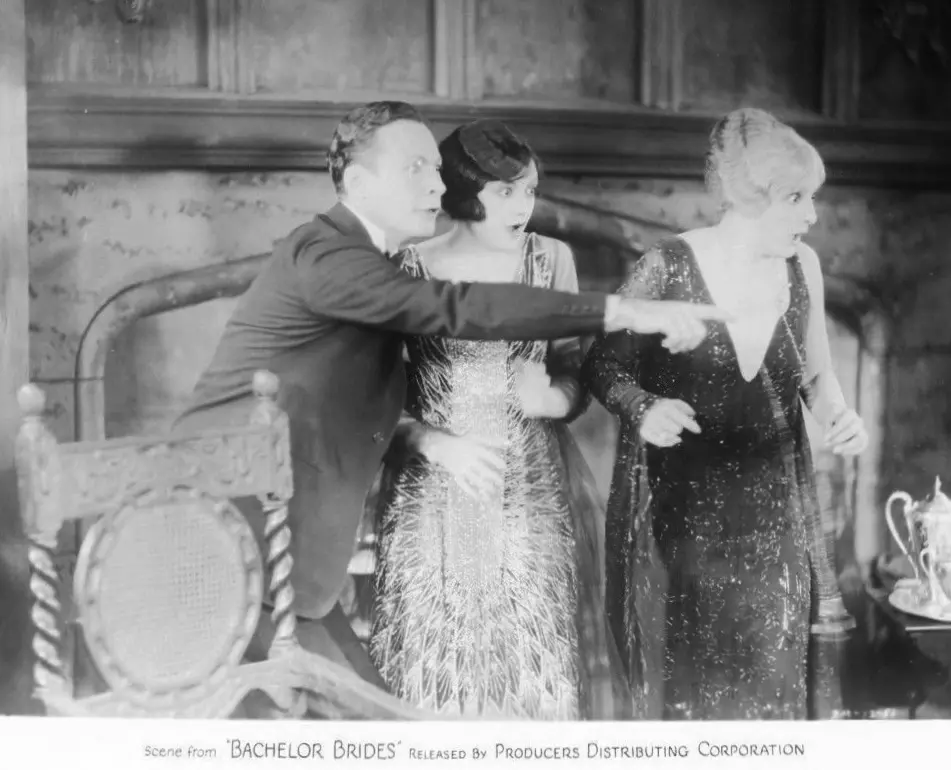
Is Bachelor Brides a silent film worth unearthing in the modern age? Short answer: yes, but with significant caveats that demand a particular kind of cinephile. This film, a curious relic from an era long past, is undeniably for those with a deep appreciation for silent cinema's unique storytelling conventions, its exaggerated performances, and its often-unpredictable narrative turns. It is absolutely not for viewers seeking modern pacing, subtle character development, or high-definition visual polish. If your cinematic diet consists solely of contemporary blockbusters, then Bachelor Brides will likely feel like an alien artifact, intriguing perhaps, but ultimately frustrating.
This film works because of its sheer narrative audacity and the way it embraces the inherent theatricality of silent-era storytelling, creating a genuinely bizarre and memorable central mystery.
This film fails because its comedic timing, if that was the intent, is largely lost to time, and its abrupt, almost nonsensical plot developments may alienate all but the most dedicated silent film enthusiasts.
You should watch it if you are a student of early cinema, fascinated by unconventional plots, or simply curious to witness a narrative that defies easy categorization.
Bachelor Brides, even on paper, promises a narrative that veers wildly from the conventional. The premise alone – a wedding, a sudden paternity claim, a 'deranged' woman, and then the inexplicable disappearance of all three key disruptors along with the wedding pearls – reads like a fever dream. This isn't just a plot; it's a series of escalating absurdities designed, one assumes, to keep the audience utterly disoriented. In an era where many silent films relied on clear-cut melodrama or slapstick, Bachelor Brides dares to dabble in something far more opaque, a blend of mystery, farce, and perhaps a touch of psychological drama, albeit one delivered with the blunt force of early cinema.
The strength of such a narrative lies not in its logical consistency, but in its ability to provoke a reaction. The sudden entrance of the girl with the baby, followed by the doctor’s bizarre explanation, is a masterclass in narrative disruption. It immediately shatters any expectation of a gentle romantic comedy or a family drama. Instead, the film plunges the audience, much like its characters, into a state of bewildered speculation. Who is this girl? Is she truly deranged, or is the doctor part of an elaborate scheme? And why, for the love of all that is sensible, do they all vanish with the pearls?
This kind of storytelling, while perhaps accidental, foreshadows later cinematic techniques where ambiguity and unanswered questions are central to the experience. It forces the viewer to engage, to fill in the gaps, and to grapple with the sheer strangeness of it all. It’s a narrative that refuses to hold your hand, which, in 1923, must have been either exhilarating or utterly perplexing for audiences accustomed to more straightforward tales. This isn't the carefully constructed mystery of The Crowned Prince, nor the simple charm of A Flivver Wedding; it's a beast of its own making.
The cast of Bachelor Brides, featuring names like Eulalie Jensen, Eddie Gribbon, and Rod La Rocque, were stalwarts of the silent screen, masters of a performance style that often prioritized grand gesture over subtle nuance. In a film like this, where plot points arrive with the force of a train wreck, the acting must match the narrative's intensity. One can imagine Eulalie Jensen, known for her strong dramatic presence, delivering a portrayal of Mary Bowman's father's objection with a palpable, almost operatic indignation, her expressions a window into the character's shock and disapproval.
Eddie Gribbon, often cast in comedic roles, likely brought a bewildered, almost slapstick quality to Percy Ashfield's initial reaction to the paternity claim. The sheer absurdity of the situation demands a performance that can convey utter disbelief without uttering a single word. His wide eyes, perhaps a hand clapped to his head, would have been the primary tools for communicating Percy’s profound confusion. The challenge for these actors, and indeed for any silent performer, was to convey complex emotions and reactions within the constraints of the medium, relying heavily on facial expressions, body language, and the rhythm of their movements.
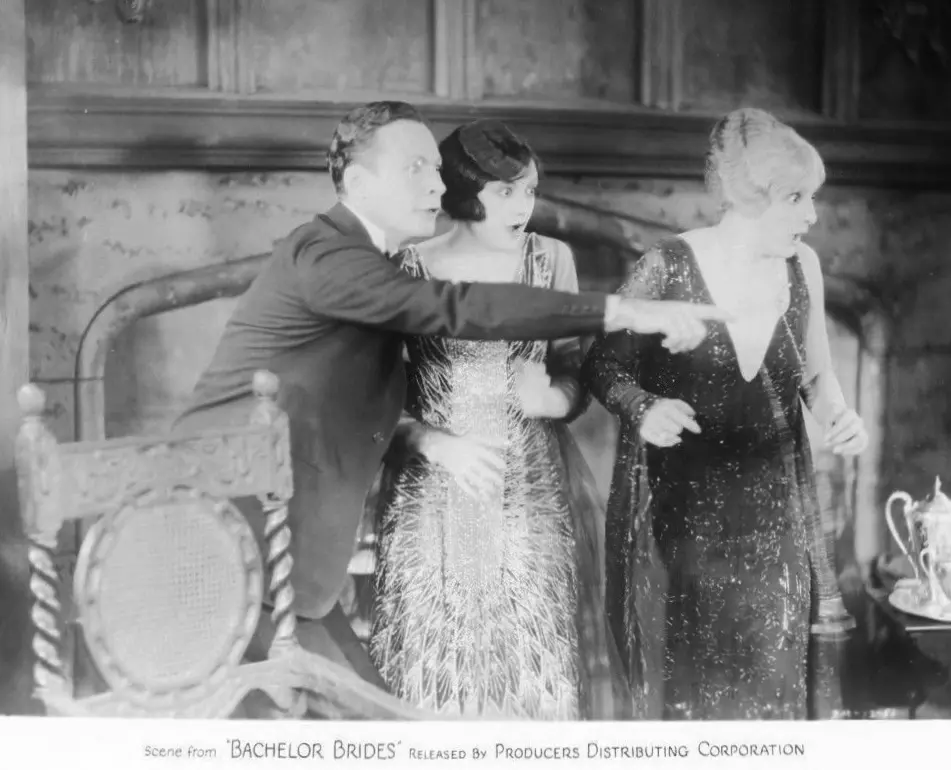
The supporting cast, including Lucien Littlefield and John George, would have contributed to the tableau of shock and dismay. Silent film acting, by its very nature, is an acquired taste for modern audiences. It’s often perceived as 'over-the-top' or 'melodramatic,' but this is a misinterpretation of its function. These actors were not merely performing; they were translating emotions and dialogue into a visual language. Without spoken words, every gesture, every tilt of the head, every rapid blink of the eye had to carry the weight of entire sentences. To truly appreciate their craft, one must adjust their lens, understanding that the 'exaggeration' was a necessary tool for communication, not a flaw in performance.
Without specific directorial credits or detailed notes on the visual style, one can only infer the general approach to cinematography and direction prevalent in 1923. Silent films of this era often relied on straightforward shot compositions, clear framing to capture the full breadth of the actors' performances, and functional lighting. The scene of the pearls being admired, for instance, would likely have been composed to highlight the opulence and significance of the jewels, perhaps with close-ups to emphasize their sparkle, drawing the audience's attention to their eventual disappearance.
The sudden entrance of the girl and baby would have been a moment for dynamic staging, perhaps a quick cut or a dramatic pan to emphasize her disruptive arrival. The director would have needed to carefully choreograph the reactions of the assembled guests, ensuring that each actor's expression of shock and surprise was legible to the audience. The inexplicable vanishing act, however, presents a fascinating challenge. Was it achieved through clever editing, a theatrical stage trick, or simply an abrupt cut that leaves the audience as bewildered as Percy? This kind of ambiguity, whether intentional or a byproduct of early filmmaking techniques, is a hallmark of many silent films, lending them an almost dreamlike quality.
The direction of Bachelor Brides, as inferred from its plot, seems to prioritize narrative propulsion over visual artistry in the contemporary sense. It’s about getting the story, however outlandish, across. While it might not boast the groundbreaking camera work of a Murnau or the intricate sets of a Lang, it likely embraces the efficient, direct visual storytelling that defined much of early Hollywood. The film’s visual language would have been designed to serve the dramatic (or comedic) intent, using intertitles to bridge gaps and guide understanding, and relying on the actors' physicality to carry the emotional weight.
The pacing of Bachelor Brides, judging by the rapid succession of its central events, appears to be surprisingly brisk for its era. The transition from a joyous pre-wedding gathering to a shocking paternity claim, and then to an outright inexplicable disappearance, suggests a narrative that wastes little time on exposition or slow build-up. This rapid-fire succession of bizarre occurrences is a testament to a storytelling approach that values immediate impact and continuous surprise. It’s a relentless assault on narrative normalcy, forcing the audience to constantly re-evaluate what they're watching.
The tone is perhaps the most intriguing and debatable aspect. Is Bachelor Brides intended as a comedy, a mystery, or a proto-surrealist drama? The description of the girl being 'mentally deranged' over Percy’s 'faithfulness' (or lack thereof) hints at a darker, more melodramatic undercurrent. Yet, the absurdity of the doctor's explanation and the subsequent triple disappearance leans heavily into farce. It's possible the film attempts to juggle multiple tones simultaneously, a common characteristic of early cinema where genre boundaries were often more fluid and less rigidly defined than today. This tonal ambiguity is, in my opinion, a significant strength.
It refuses to be easily categorized, much like the equally perplexing Paradise Garden. This keeps the viewer on edge, uncertain whether to laugh at the unfolding chaos or to be genuinely intrigued by the mystery. The film's ability to maintain this sense of uncertainty, this deliberate lack of a clear tonal anchor, is what makes it stand out. It’s a bold choice, whether intentional or not, that grants Bachelor Brides a unique, almost experimental flavor, distinguishing it from more straightforward comedies like His Bitter Half.
What truly makes Bachelor Brides compelling is its sheer oddity. It refuses to conform to expectations, even those of its own time. The plot is a series of narrative hand grenades thrown into an otherwise conventional setting. This isn't just a story with twists; it's a story that seems to delight in actively defying narrative logic. The abruptness of the 'deranged' woman's appearance, and then the utterly baffling disappearance of her, the doctor, and the pearls, speaks to a willingness to embrace the utterly nonsensical. It works. But it’s flawed. This unconventional approach is, arguably, its most enduring quality.
It serves as a fascinating snapshot of a period when cinematic language was still being invented, where filmmakers were experimenting with what they could get away with. There’s a raw, untamed energy to such a plot. It’s less concerned with realism and more with impact. For a modern audience, this can be a jarring experience, but for those willing to lean into the strangeness, it offers a window into a different kind of storytelling, one where the boundaries of belief are constantly tested. It’s a film that demands you suspend disbelief, then snatches that disbelief away, only to return it with a shrug.
Bachelor Brides is not a film that will appeal to everyone, nor should it. It is a peculiar, almost whimsical piece of early cinema that defies easy classification and certainly defies conventional logic. Its central plot device—the sudden, inexplicable appearance and disappearance of characters and crucial items—is audacious, bordering on the surreal. This isn't a film to be passively consumed; it demands engagement, a willingness to embrace its eccentricities, and a deep appreciation for the historical context of its creation. It’s a film that, despite its potential flaws in modern eyes, leaves a lasting impression precisely because it’s so utterly bizarre. For the dedicated silent film enthusiast or the adventurous cinephile looking for something truly different, Bachelor Brides is an experience worth seeking out. It’s not a masterpiece in the traditional sense, but it is a fascinating, almost accidental, work of art that challenges perceptions of what cinema can be. Its audacity alone makes it worthy of rediscovery.
IMDb —
1920
Community
Log in to comment.