DbcultAccessing Vault...
Cult Review
Senior Film Conservator
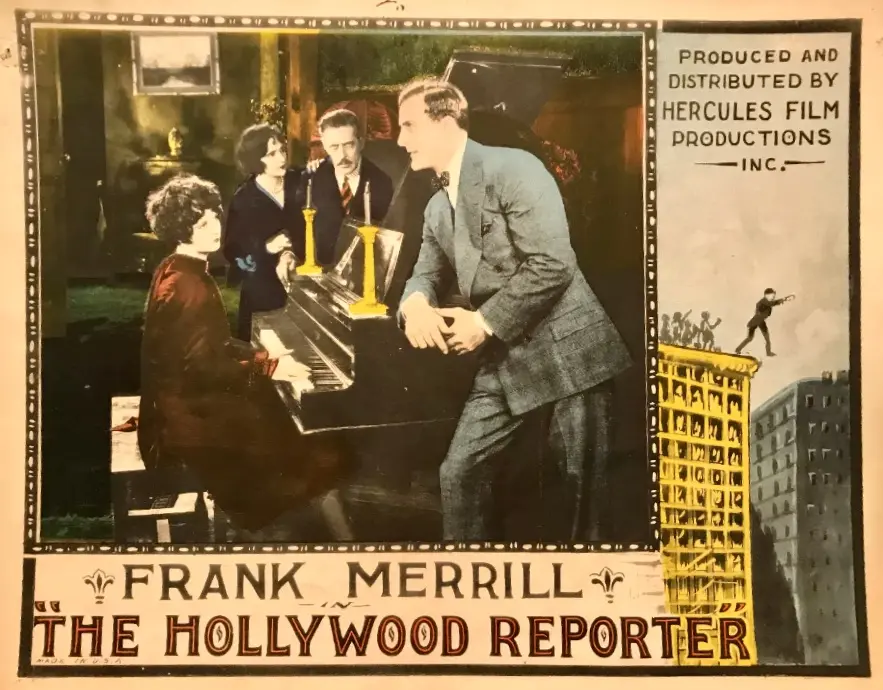
Short answer: Only if you have a deep-seated obsession with the history of stunt work and silent-era physical acting. For the casual viewer, this film is likely a chore, but for the cinema historian, it offers a fascinating look at Frank Merrill before he became a household name in the jungle.
This film is for the archivists and those who appreciate the raw, unpolished energy of 1920s independent productions. It is absolutely not for anyone who requires snappy dialogue, complex character arcs, or high-definition visual clarity to remain engaged.
1) This film works because Frank Merrill brings an undeniable physical presence that bridges the gap between traditional acting and pure circus-style athleticism, making even the most mundane scenes feel slightly dangerous.
2) This film fails because the narrative structure is almost non-existent, relying on a series of loosely connected incidents rather than a cohesive, driving plot that builds genuine tension.
3) You should watch it if you want to witness the specific moment in film history where the 'action hero' started to evolve out of the slapstick tradition and into something more grounded and gritty.
Frank Merrill was not a traditional leading man. He didn't have the soft, expressive features of a Valentino or the comedic timing of a Keaton. What he had was a body built for impact. In The Hollywood Reporter, every time he enters a room, the energy shifts from a static drama to something more kinetic. There is a specific scene mid-way through the film where Merrill has to navigate a narrow ledge to escape a confrontation. In modern cinema, this would be a green-screen afterthought. Here, you can see the wind whipping his clothes and the genuine tension in his forearms. It is real. It is visceral. And it is the only reason the film remains watchable today.
Compared to his work in The Fear Fighter, Merrill seems more restrained here, perhaps trying to lean into the 'reporter' persona, but his natural tendency toward movement eventually wins out. The camera, often static and uninspired, struggles to keep up with him. It is a classic case of a performer being too big for the frame they’ve been put in. The directing by the uncredited hand behind this production (though often attributed to the writing of Grover Jones) feels like it’s trying to catch lightning in a very small, very cheap bottle.
The writing by Grover Jones is, to put it bluntly, a mess of convenience. In silent cinema, you often expect a certain level of coincidence, but The Hollywood Reporter pushes it to the breaking point. Characters appear exactly when needed to explain a plot point, and then vanish into the ether. For instance, the character played by Violet Schram exists almost entirely as a catalyst for a single chase sequence, lacking any internal motivation that survives more than five minutes of screen time. It’s a far cry from the more nuanced character work seen in films like The Moral Sinner.
The dialogue cards are sparse and often redundant. They don't provide subtext; they provide a play-by-play of what we just saw. If Merrill punches a man, the card tells us he is angry. It’s an amateurish touch that suggests the filmmakers didn't quite trust the audience—or their own visual storytelling—to convey the stakes. However, there is a certain charm to this simplicity. It’s a brawler of a movie. It doesn't want to discuss the ethics of journalism; it wants to show a journalist who can take a punch and give one back.
Jack Richardson was a staple of the silent era, often playing the heavy with a calculated, cold-eyed stare. In this film, he is the perfect foil for Merrill. While Merrill is all muscle and forward motion, Richardson is all stillness and shadow. He represents the 'old' way of doing things—corruption behind closed doors. Their scenes together are the highlight of the film, creating a contrast between the working-class grit of the reporter and the polished, lethal arrogance of the antagonist. It’s a dynamic that would be perfected decades later in noir, but here it is in its most primitive, skeletal form.
One particular moment stands out: Richardson lighting a cigar while Merrill is being threatened in the background. The casual nature of his cruelty is more effective than any of the over-the-top gesticulating found in other films of the period, such as The Dream Cheater. It’s a small bit of character acting that elevates the film, even if only for a few minutes. It makes you wish the rest of the production had that level of intentionality.
The pacing of The Hollywood Reporter is its greatest enemy. It drags in the first act, spends too much time on unnecessary title cards, and then rushes through a climax that feels like it was filmed in a single afternoon. The cinematography is functional at best. There are no artistic flourishes here, no experimental lighting that you might find in The Island of the Lost. It is a 'meat and potatoes' production, likely shot on a shoestring budget with the goal of filling a slot in a Saturday afternoon double feature.
The film lacks the atmospheric depth of Just Off Broadway, often feeling more like a filmed stage play than a piece of cinema. The sets are sparse, the costumes are generic, and the overall aesthetic is one of utility. But there is a strange honesty in that grime. It doesn't pretend to be high art. It is a product, and as a product of 1926, it serves as a fascinating yardstick for how far the medium had to go—and how much it relied on the sheer charisma of its stars to bridge the gap.
When held up against other films of the era like The Human Tornado, this film feels slightly more grounded, but less exciting. It lacks the flamboyant energy of the more 'exotic' silent adventures. Instead, it tries to be a gritty urban drama, a precursor to the crime films of the 1930s. It doesn't quite succeed because it can't decide if it wants to be a serious expose on corruption or a showcase for Merrill's biceps. This tonal inconsistency is a common trait in mid-20s independent cinema, but it’s particularly glaring here.
If you look at something like The Battle of Hearts, you see a much better handle on emotional stakes. The Hollywood Reporter, by contrast, feels emotionally hollow. You don't care if the reporter gets the girl or if the newspaper stays afloat; you only care about whether the next stunt is going to look cool. That’s a failure of the script, but perhaps a victory for the stunt coordinator.
Pros:
- Frank Merrill’s impressive physical performance.
- Jack Richardson’s nuanced villainy.
- A rare look at the 'reporter' trope in its infancy.
- Short runtime makes it a painless historical curiosity.
Cons:
- Paper-thin characters with no clear motivations.
- Static, uninspired cinematography.
- Repetitive and redundant title cards.
- Lack of any real emotional or thematic resonance.
The Hollywood Reporter is a skeleton of a movie. It has the bones of a thriller, the muscles of an action star, but no heart and very little brain. It is a fascinating artifact for those who want to study the transition of silent cinema into more aggressive, physical genres. However, as a standalone piece of entertainment, it fails to leave a lasting impression. It works as a showcase for Merrill. But it’s flawed in every other department. If you’ve already exhausted the greats of the era and are looking for something obscure like His Father's Son or Lucky Stars, give it a look. Otherwise, let this one stay in the archives.
IMDb 7.5
1921
Community
Log in to comment.