DbcultAccessing Vault...
6.7/10
Senior Film Conservator
A definitive 6.7/10 rating for a film that redefined the boundaries of cult cinema. The House of Hate remains a cornerstone of transgressive art.
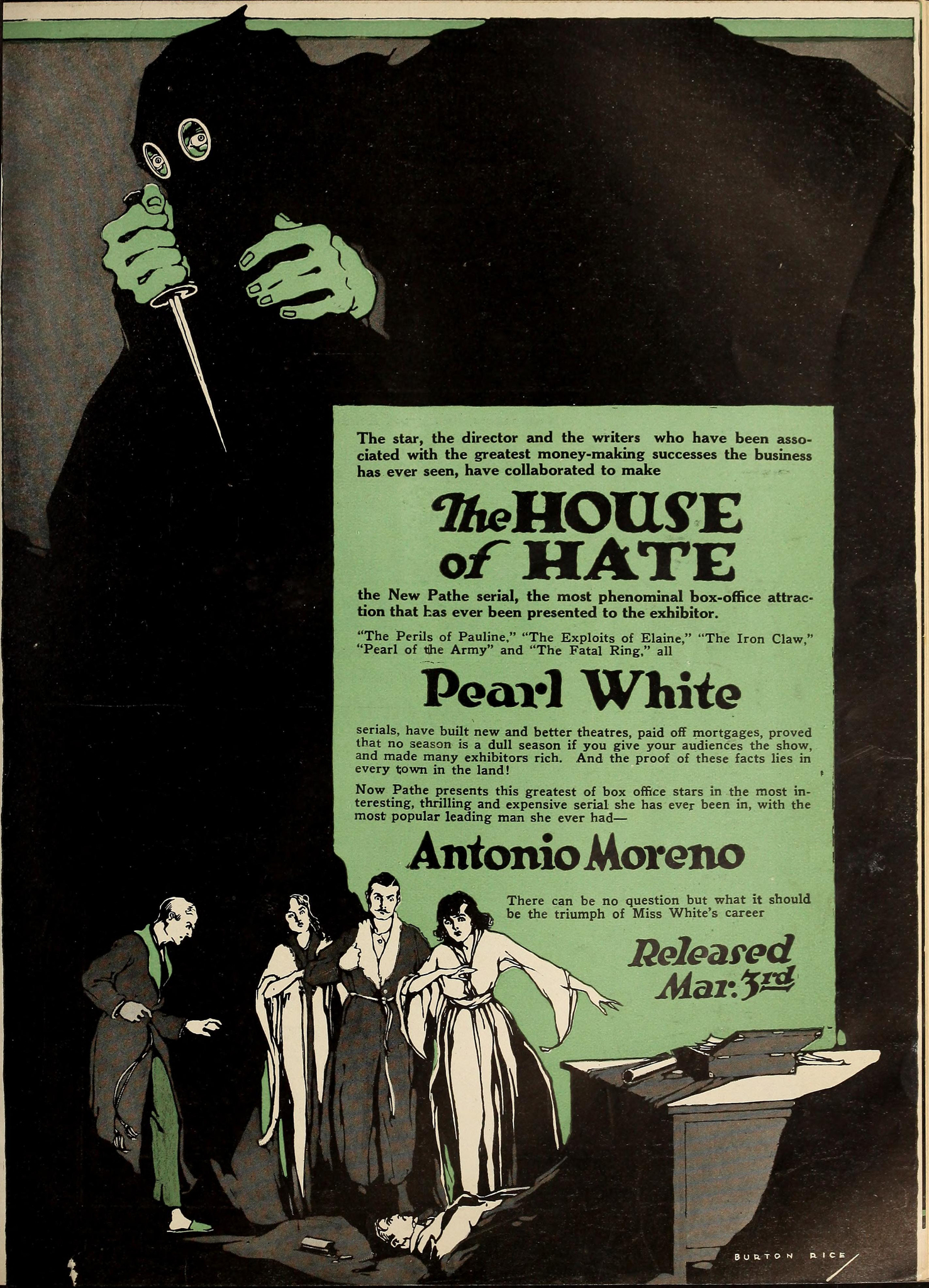
Every so often, a film saunters out of the catacombs of cinema prehistory, brushes the grave-dust from its lapels, and demands we recalibrate the very circuitry of what we flatter ourselves to call “modern suspense.” The House of Hate—that 1918 cocaine-dusted, trench-coat-clad, serial-pulse of a movie—does precisely that, only it performs the feat with the nonchalance of a magician snapping a silk handkerchief into a cloud of crows.
Allow me to dispense with the polite throat-clearing. This is not a quaint curiosity to be filed alongside lantern-slide stereopticons; it is a molotov cocktail hurled into the drawing-room of Edwardian propriety. The plot, at first whiff, smells of stock intrigue: an heiress to a munitions dynasty, her father’s bullet-riddled body cooling on the parquet, a masked prowler slipping notes under her boudoir door like some demented Valentine. Yet within this chassis of pulp, screenwriters Bertram Millhauser, Arthur B. Reeve, and Charles Logue detonate a kaleidoscope of anxieties—xenophobia, filial distrust, the erotic undertow of industrial power—until the narrative resembles a hall of warped mirrors rather than a linear corridor.
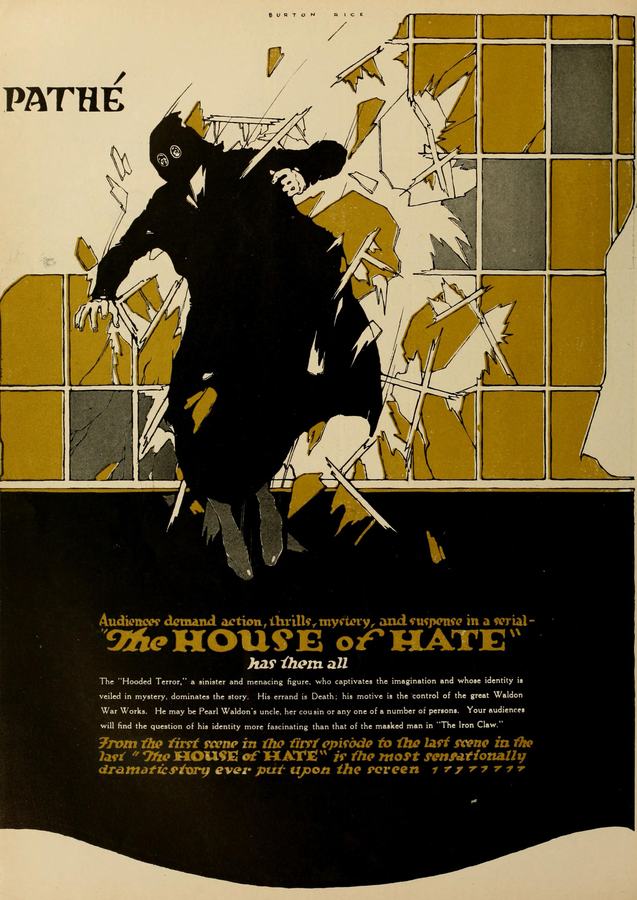
Forget the binge-era comfort blanket; The House of Hate was engineered for the cliff-edge. Released in twenty electrified installments, it weaponized the week-long interlude between episodes, turning every storefront poster into a scab you couldn’t stop picking. Pearl White—already canonized via The Perils of Pauline—strides into this gunpowder ballroom with the poise of a woman who knows the camera adores the tremulous half-second before the stunt double shoves her off the parapet. Her character, Erice (the name itself a palindrome of unease), is heir not merely to stock dividends but to the colossal churn of America’s military-industrial awakening. Each time she balances on a gantry above vats of incandescent iron, the film whispers: this is what it feels like when capital itself learns to sweat.
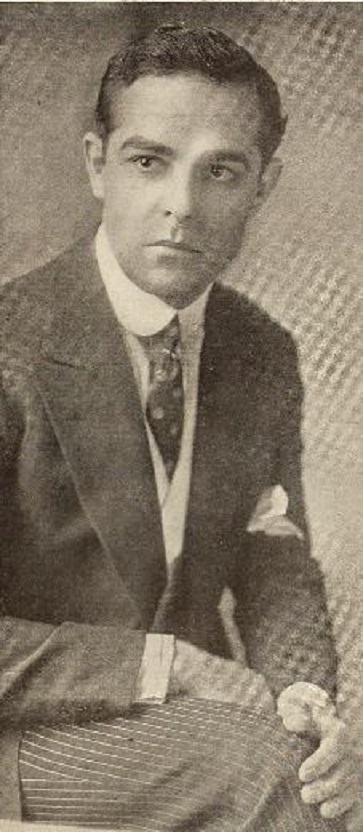
Antonio Moreno, playing the engineer-cum-reluctant-gallant, supplies a counter-rhythm of smoldering restraint. His eyes perform a private dialectic: half blueprint-calculations, half swoon. Together, White and Moreno constitute a voltaic circuit—the voltage of peril sparking against the resistance of romance. It is courtship as industrial sabotage.
Central to the film’s uncanny aftertaste is its refusal to unmask the villain with the cathartic flourish we have been conditioned to expect. The intruder—known only as The Hooded Terror—wears a visage as featureless as a federal indictment. Each time he evaporates into the fog, the film seems to murmur: what if conspiracy is not a snake you can behead but a hydra that learns to thrive on its own missing heads? Historians of silent cinema love to cite German Expressionism’s jagged shadows; yet here, the very absence of a stable identity breeds a deeper vertigo. The Hooded Terror might be the heiress’s decadent cousin, embittered by primogeniture; might be a German saboteur scheming to ferry schematics across the Atlantic; might, in the film’s most audacious feint, be both. The narrative declines to arbitrate, thus staging an epistemological crisis that feels postmodern avant la lettre.
The directors—whom surviving records list as George B. Seitz and W. J. Humphrey, though authorship in serials was often a nomadic signature—wield Eisensteinian montage before Eisenstein had minted the term. Witness the cross-cutting between Erice’s gloved hand on a factory switchboard and a trench in France where soldiers await the next artillery salvo. The splice is intellectual: it argues, without subtitle, that the distance between Park Avenue and no-man’s-land is the width of a single celluloid frame. Or consider the stroboscopic alternation of candle-lit confessionals with locomotive pistons hammering like metronomes of doom—the film’s way of saying that intimacy itself has been mechanized.
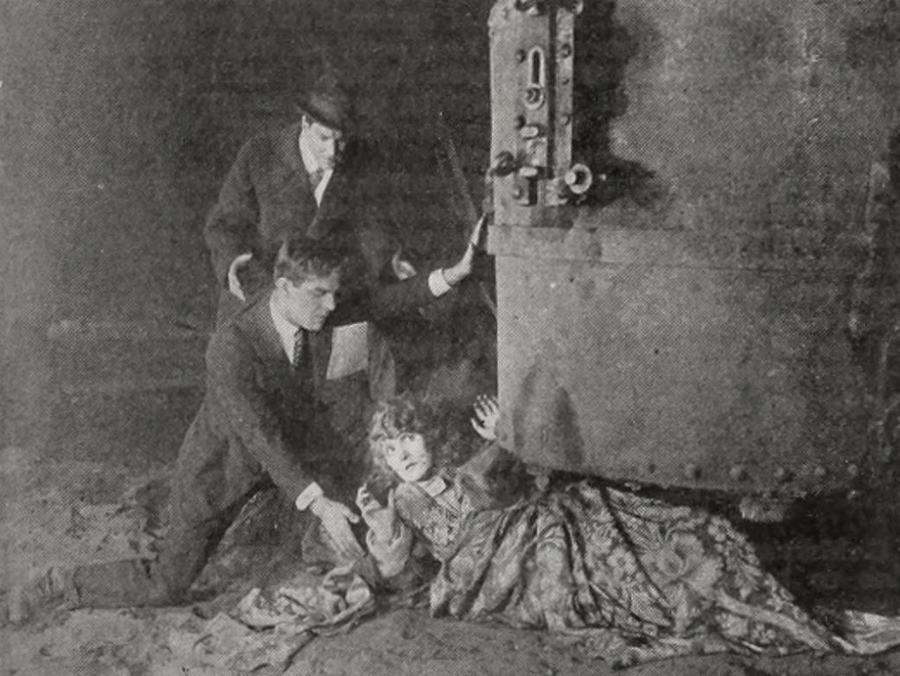
It is impossible to discuss The House of Hate without confronting its somatic politics. Pearl White performs her own perilous acrobatics—no CGI, no hidden trampolines beneath a soundstage marshmallow floor. Each leap across a rooftop chasm is a negotiation of gravity that doubles as a negotiation of gendered expectation. The camera lingers on her calves coiling like tensile springs, then dollies back to reveal the abyss yawning below. In that interval, the spectator’s adrenal glands become a proxy battlefield, and the heroine’s body—its sprains, its bruises, its gasping lungs—emerges as the real theater of war. The munitions plant merely supplies the metaphor.
Yet the film complicates any facile reading of “empowerment.” Erice’s agency is tethered to patrimony: every time she outwits a captor, she simultaneously preserves the family arsenal. Her victories safeguard the very engines that will, months later, ship rifles to the Marne. Thus the serial stages feminism and militarism as conjoined twins—a dialectic it refuses to resolve, leaving the viewer complicit in every shrapnel burst.
Some cinephiles dismiss silent film as a monochrome cul-de-sac, a mere warm-up reel for the talkie revolution. Let them confront the sonic phantom that haunts The House of Hate: the clatter of a telegraph key rendered through visual staccato; the hush before an explosion conveyed by a held breath, a frozen frame, a title card that simply reads: “AND THEN—”. The absence of audible gunfire paradoxically magnifies the impact; our imagination fills the deficit with a resonance Dolby could never patent.
Viewed through the lens of 1918, the film’s paranoia feels prophetic. America, newly yoked to global conflict, had begun sniffing out sedition in every beer hall and trade-union meeting. The Hooded Terror embodies this national fever dream: the alien who walks among us, the cousin whose loyalty skews polyglot. In the same year, the Espionage Act clamped iron fingers around dissenting throats; The House of Hate stages that anxiety as domestic pageant, converting political hysteria into thrill-circuitry.
Flip the coin, and you’ll find Pamela Congreve—a melodrama where virtue pirouettes inside a drawing-room snow-globe, untainted by the metallic tang of cordite. The House of Hate drags that snow-globe to the precipice of a howitzer and shatters it. Similarly, The Firefly of Tough Luck trades in rustic sentiment; our serial, by contrast, electrifies luck itself, turning good fortune into a relay switch that might detonate at any splice.
Even European parallels resonate. Tsar Ivan Vasilevich Groznyy exults in tyrannical spectacle, yet locates evil in a single crown. The House of Hate disperses autocracy into every silk-lined pocket of a family boardroom, arguing that tyranny, like smoke, seeps through keyholes.
Though originally shot in black-and-white, many archival prints were tinted—amber for interiors, cerulean for night exteriors. In that spirit, allow me to chromatically decode the film’s emotional circuitry. The dark orange glow of forge scenes evokes molten capital, the liquefaction of ethics into profit. Splashes of yellow—in gaslight halos, in Pearl White’s hazard-striped gown—function like caution tape around the heroine’s body, reminding us that visibility itself is a risk. Meanwhile, the sea-blue intertitles, rare but deliberate, suggest depths beneath the narrative keel: unconscious drives, submarine allegiances, the chill of betrayal.
Paul Panzer, who plays the murdered patriarch, compresses an entire robber-baron aria into a single close-up: the pupils dilating as recognition of filial treachery dawns. Floyd Buckley’s turn as the family attorney is a masterclass in duplicitous obsequiousness—every bow of his head a cobra’s coil. And Louis Wolheim, years before becoming the brutish icon of All Quiet on the Western Front, slips in as a stevedore with a sidelong glance that could strip paint. Watch for the micro-moment when he fingers a rivet as if it were a rosary bead: industrial alienation sanctified.
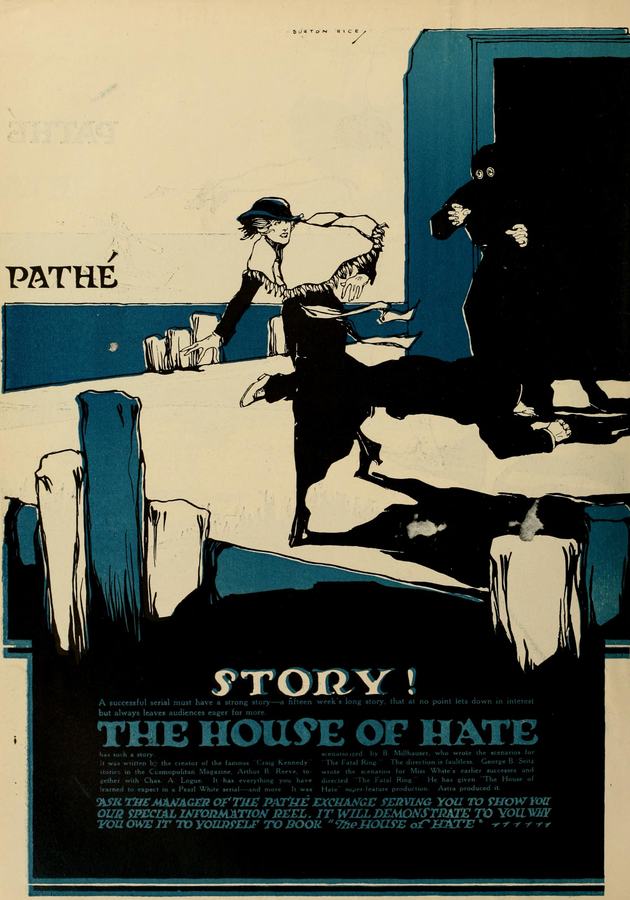
Each episode ends on a temporal precipice: a lit fuse crawling toward a powder barrel, a rope fraying above a vat of acid. Yet the genius lies in delay without dilution. Rather than spinning wheels, the writers escalate via nested stakes. Episode seven, for instance, strands Erice on a runaway freight car; episode eight doesn’t merely repeat the peril—it compounds it by revealing the car is also rigged to decouple above a dynamited gorge. The narrative thus obeys a diabolical variant of Zeno’s paradox: every halfway point invents a fresh abyss.
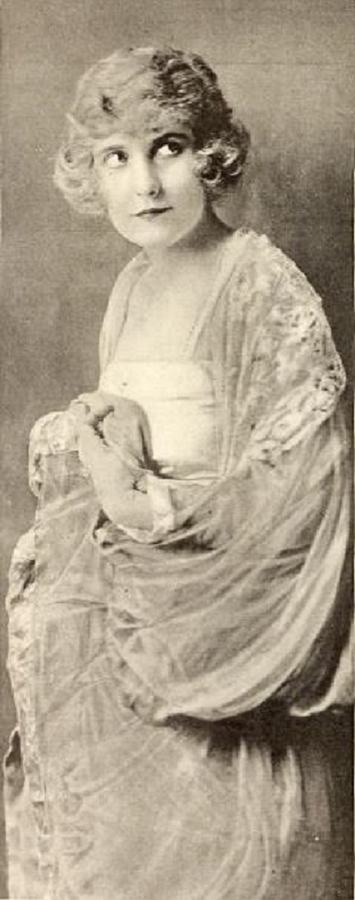
Like many serials, The House of Hate survives only in fragmented totality: roughly three-quarters of the chapters have been salvaged, some in 9-mm show-at-home abridgments. The lacunae only amplify the legend. Imagine reading a detective novel with every third chapter torn out; the voids become negative space where speculation breeds like bacteria in warm agar. Archivists at MoMA’s silent collection posit that the missing reel thirteen—rumored to contain a ballroom scene shot entirely via mirrors—might have influenced the hall-of-mirrors climax in Lady from Shanghai. We cannot verify, yet the myth lingers like gun-smoke.
Today’s multiplexes glut us with interconnected “universes,” each installment prefaced by a recap montage that infantilizes memory. The House of Hate trusts the spectator to carry the torch across a week-long chasm. The result is a communion of anxiety that algorithms can’t replicate. Streaming platforms hawk instant gratification; this serial proffers delayed detonation—and thereby teaches that suspense is less a narrative device than a moral posture: the willingness to wait while danger festers.
Does the film creak? Of course. Some performances telescope into histrionics; the intertitles occasionally belabor exposition; the politics of Germanophobia haven’t aged into nuance. Yet these wrinkles feel like patina on a switchblade—they authenticate the artifact, remind us it was forged in a crucible of genuine uncertainty. Its imperfections are the stretch marks
“To watch The House of Hate is to feel the vertebrae of cinema click into place, each episode a cervical bone in the spine of modern thriller syntax.”
Compared to House of Cards—a latter-day political snake-pit—our 1918 progenitor offers cardiac vertigo rather than cerebral cool. Where Kevin Spacey’s Underwood breaks the fourth wall with laconic cynicism, Pearl White’s Erice shatters the proscenium with her pulse. One seduces; the other survives.
As the curtain falls on the surviving final reel, Erice and the engineer share a clinch silhouetted against a sunrise that could either herald peace or merely reload the horizon. The Hooded Terror has vanished into the mist, leaving behind only a charred calling card. We never learn if the factory will retool for plowshares or artillery; we never know if the villain was blood, or nation, or the capitalist death-drive itself. And that—that exquisite deferral—is why the film still hums like a live wire. It denies us catharsis, forcing us to carry the unexploded shell of ambiguity out of the theater and into the munitions plant of our own conscience.
Rewatch tip: Screen it at midnight with the lights off and the radiator clanking like distant artillery. Between episodes, pace the room while the projector fan whirs—feel the gap where anticipation pools. Only then will you approximate the 1918 experience, when time itself seemed to cock the hammer of a colossal pistol pointed at civilization’s heart.
Availability: Restored 2K DCP is touring cinematheques; select reels stream via Library of Congress’s National Screening Room. For the adventurous, a 35-mm print occasionally flickers to life at Brooklyn’s Spectacle Theater—often with a live analog synth score that converts every flicker into neural shrapnel.
Go. Watch. Then spend the next week glancing over your shoulder whenever the radiator hisses. That is the gift The House of Hate keeps on giving—an ammunition box of doubt buried just beneath the floorboards of your certainty.
IMDb 6.8
1926
Community
Log in to comment.