DbcultAccessing Vault...
Cult Review
Senior Film Conservator
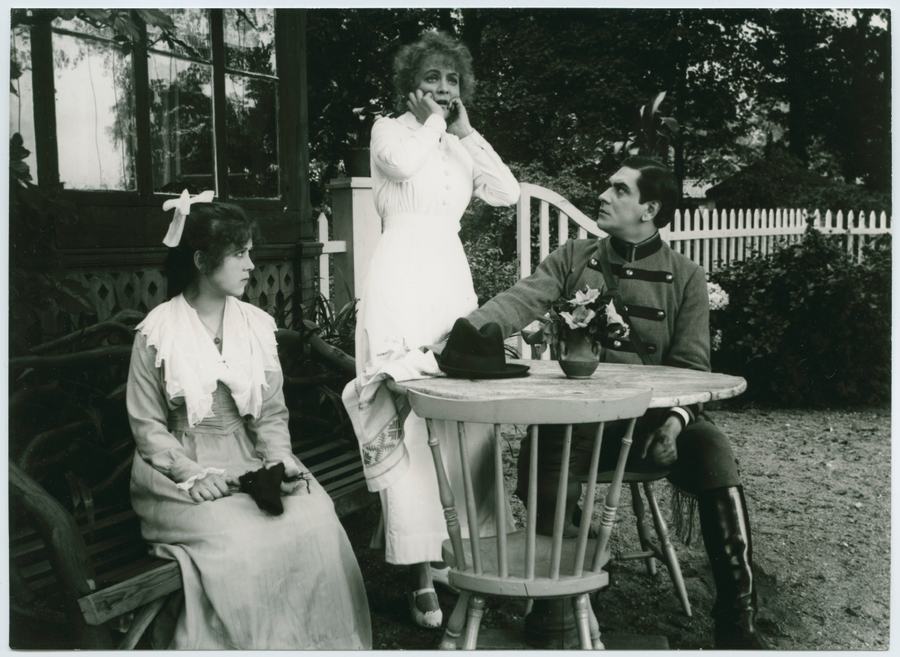
Stepping back into the nascent years of cinematic storytelling, before the roar of the Jazz Age, before the Great War had fully reshaped the global consciousness, we find ourselves in the silent, yet profoundly expressive, world of Vem sköt? (Who Shot?). This 1914 Swedish production, a compelling early example of Nordic narrative cinema, offers far more than a simple whodunit. It's a meticulously crafted study of familial legacy, moral decay, and the corrosive power of avarice, all presented through the evocative lens of a burgeoning art form. To truly appreciate its depth, one must peel back the layers of its seemingly straightforward plot to reveal the intricate character dynamics and societal commentaries that Mogens Falck's screenplay so astutely weaves.
At the heart of Vem sköt? lies the venerable Count Eric von Ure, portrayed with a dignified gravitas by Erland Colliander. His Uresholm estate is not merely land and brick; it is a meticulously cultivated testament to his life’s work, an exemplary farm that stands as a beacon of agricultural innovation and prosperity. The Count's dedication to this patrimony is palpable, a silent character in itself, embodying the ideals of stewardship and foresight. However, as the twilight years approach, a gnawing anxiety begins to plague him. The future of Uresholm, this carefully constructed empire, hangs precariously in the balance, jeopardized by the very heir destined to receive it: his son, Kuno.
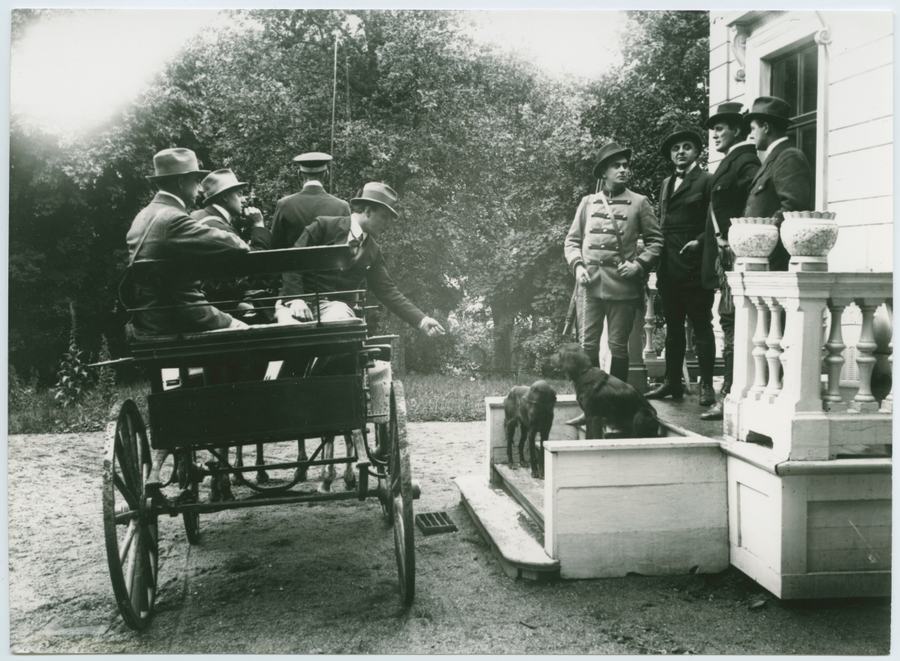
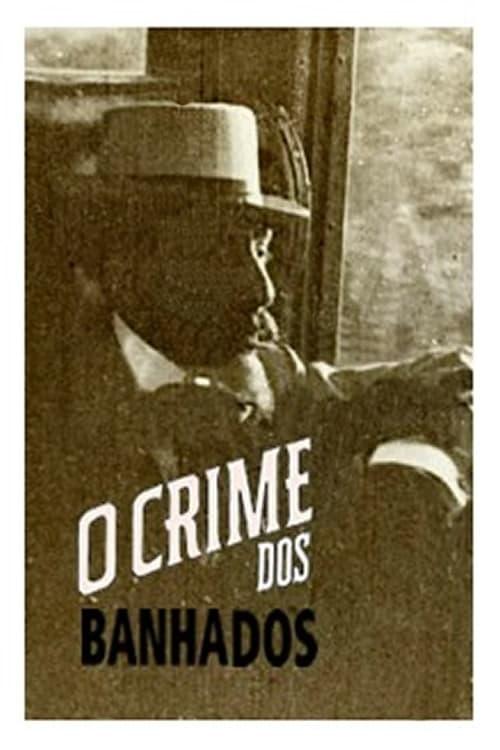
Kuno, brought to life by Richard Lund, is depicted as a figure of distressing immaturity and susceptibility. He lacks the gravitas, the work ethic, the very moral fiber that defines his father. This inherent weakness makes him a prime target for the machinations of his cousin, Fritz. John Ekman's portrayal of Fritz is a masterclass in silent villainy; he embodies the 'Lebemann' – a term that, even without a direct translation, conveys a sense of dissolute living, questionable morality, and an utter disregard for financial prudence. Fritz is a parasite, a charming viper whose influence slowly poisons Kuno's already fragile character. The stark contrast between Count Eric's virtuous legacy and Kuno's feckless nature, amplified by Fritz's insidious presence, forms the foundational conflict of the film. It's a timeless struggle between responsibility and recklessness, a theme that resonates deeply and can be observed in other narratives of the era focusing on societal decline, such as Blandt Samfundets Fjender, which often explored the dark underbelly of societal structures.
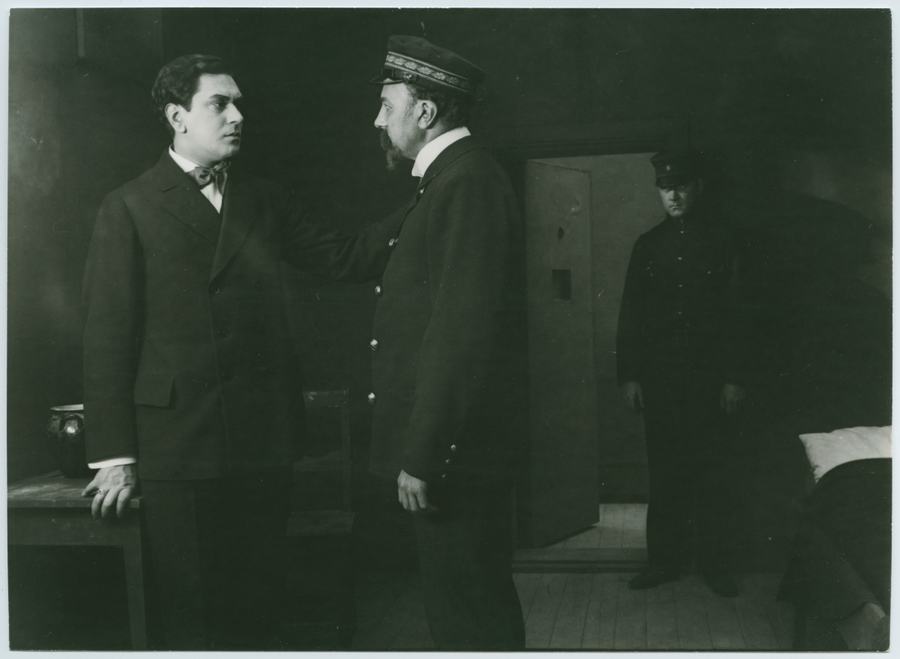
Recognizing the impending catastrophe, Count Eric makes a fateful decision: he appoints Jörgen Ager, a man of unimpeachable integrity and competence, as the trustee to manage Uresholm. Alfred Lundberg imbues Ager with a quiet strength and unwavering sense of duty, making him the moral anchor in a narrative increasingly adrift in moral ambiguity. Ager represents the Count's last, desperate hope to preserve his life's work from the encroaching shadows of Kuno's poor judgment and Fritz's malevolent intentions. This appointment, however, serves only to inflame Fritz's already festering resentment and avarice. The stage is thus set for a confrontation, not just of individuals, but of diametrically opposed ethical frameworks: Ager's probity against Fritz's perfidy.
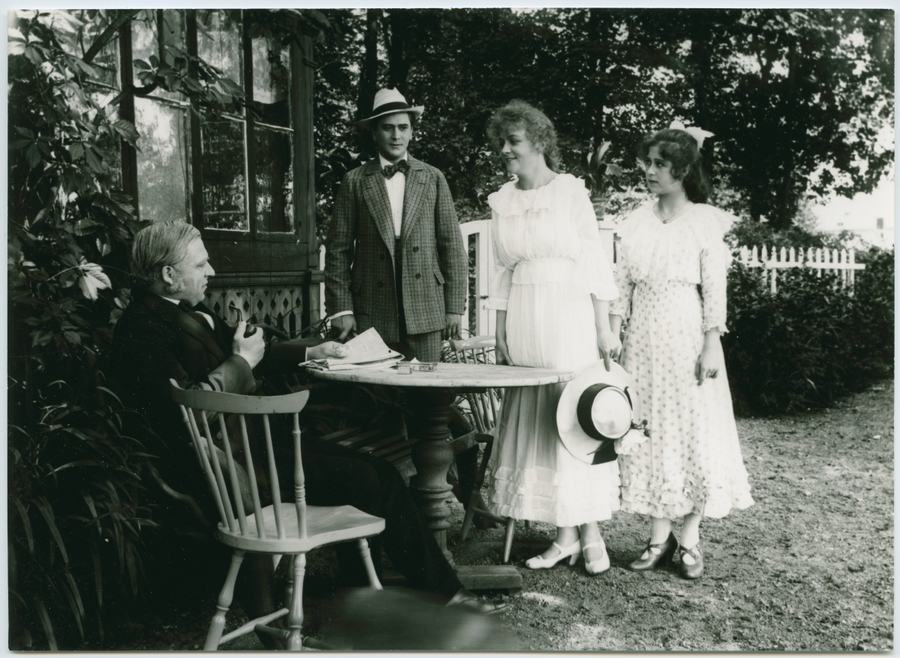
The narrative pivots dramatically during a hunting expedition, a seemingly innocuous pastime that quickly devolves into tragedy. The bucolic setting, usually associated with leisure and sport, becomes the backdrop for a sudden, shocking act of violence. Kuno is shot dead. The precise staging of this scene, a hallmark of early silent cinema, would have relied heavily on visual cues, the reactions of the surrounding cast – Mathias Taube, Karin Molander, Nanny Westerlund, Konrad Tallroth, and Albert Ståhl, whose presence would have amplified the shock and confusion – and strategically placed intertitles to convey the gravity of the moment. It is in this crucible of chaos that Fritz reveals his true, chilling genius for manipulation. With Kuno’s lifeless body barely cold, Fritz springs into action, not with grief, but with calculation. His immediate objective: to deflect suspicion and, more importantly, to frame Ager for the murder.
The swiftness and cunning with which Fritz executes his plan underscore the depth of his depravity. This isn't merely a crime of passion; it's a meticulously designed act of opportunism, a calculated move to eliminate obstacles and seize control. The tension here is palpable, a silent suspense that would have gripped audiences of the era. The portrayal of a wrongfully accused individual, struggling against a tide of circumstantial evidence and malicious framing, is a powerful motif, one that has been explored across cinematic history, often with profound psychological depth, mirroring some of the dramatic intensity found in films like The Great Diamond Robbery, where an innocent party is often caught in a web of criminal intrigue.
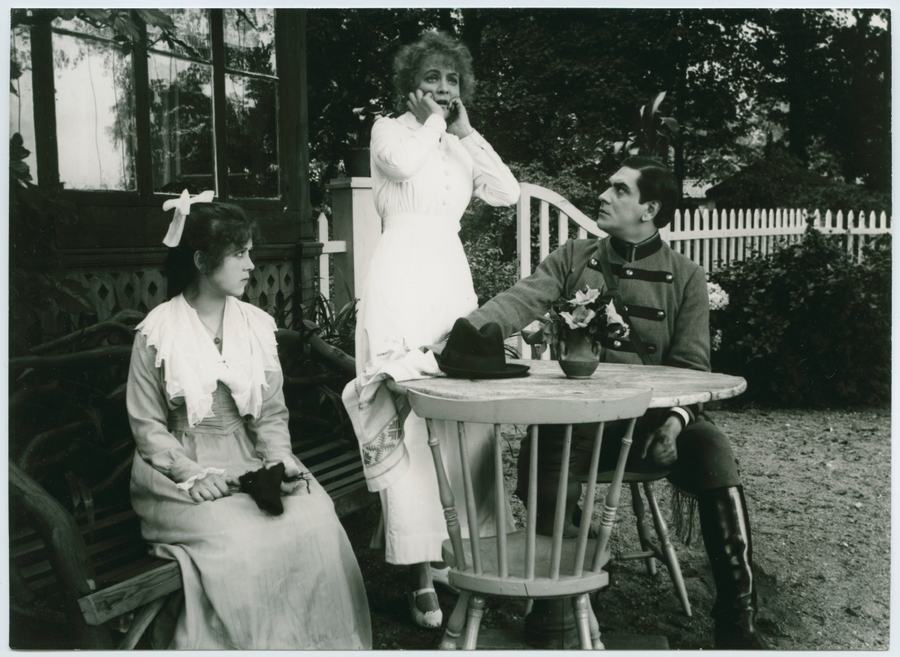
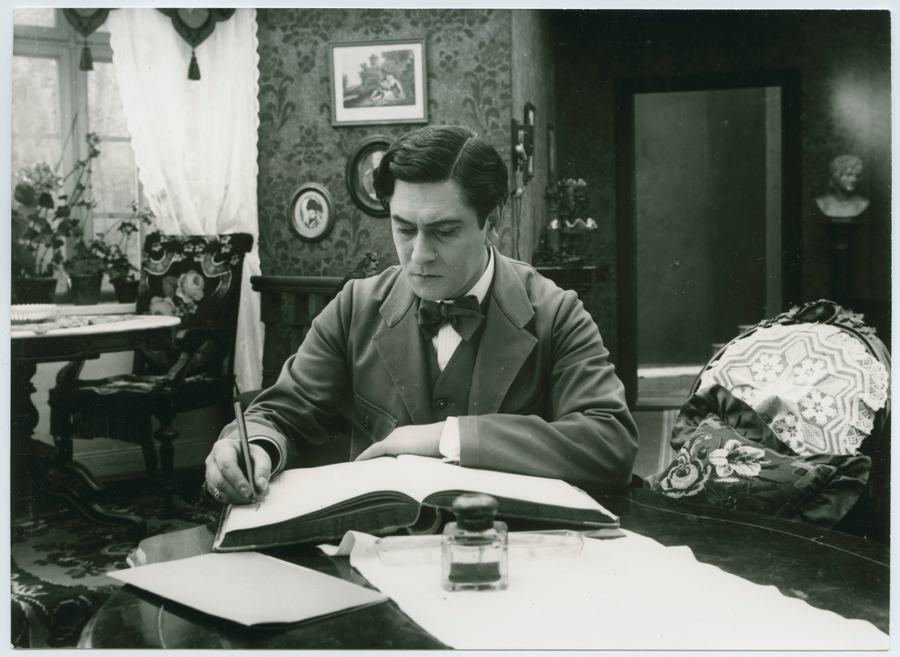
In an age before synchronized sound, the burden of conveying complex emotions, intricate plot points, and psychological depth fell squarely on the shoulders of the actors and the visual language of the film. Vem sköt? excels in this regard. The cast, led by Colliander, Lund, Ekman, and Lundberg, must communicate through exaggerated facial expressions, precise gestures, and body language that, to modern eyes, might seem melodramatic, but was essential for clarity in the silent era. Erland Colliander's Count Eric conveys weariness and wisdom through subtle shifts in posture and a haunted gaze. Richard Lund's Kuno projects his immaturity through restless movements and easily swayed expressions. John Ekman's Fritz, however, is the standout – his villainy is conveyed with a chilling smirk, furtive glances, and an almost predatory stillness that speaks volumes without a single uttered word. These performances are a testament to the unique demands and artistic possibilities of silent cinema, where every movement and every glance held amplified significance.
Mogens Falck's screenplay, while not explicitly detailing directorial choices, must be credited for crafting a narrative that lends itself so well to visual interpretation. The setting of Uresholm itself, presumably depicted with a blend of studio sets and on-location shooting, would have been crucial. The contrast between the stately, ordered interiors of the Count's home and the wilder, more unpredictable environs of the hunting grounds would have underscored the thematic struggle between civilization and primal instinct, order and chaos. The use of natural light, the framing of shots to emphasize isolation or confrontation, and the strategic deployment of intertitles would have guided the audience through the labyrinthine plot. The visual grammar of films like The Call of the North, which often used expansive landscapes to reflect internal struggles, finds a more contained, yet equally effective, parallel in Vem sköt?'s use of its estate as a microcosm of human drama.
Beyond the immediate thrill of a murder mystery, Vem sköt? delves into profound themes that resonate with the very essence of human nature. The betrayal by a family member, the manipulation of justice, and the struggle of an innocent man against overwhelming odds are universal narratives. The film's exploration of these darker aspects of humanity, coupled with its Northern European setting, positions it as an intriguing precursor to what would much later be termed 'Nordic Noir.' While lacking the gritty realism and psychological complexity of its modern descendants, the seeds of a bleak, morally ambiguous world, where family ties can be deadly and justice is a fragile concept, are clearly sown here.
The film's dramatic tension is not just about who committed the crime, but about the systemic vulnerability of truth in the face of cunning deceit. Ager, as the wrongly accused, becomes a symbol of the individual's struggle against a corrupt system or, in this case, a corrupt individual with the power to manipulate perceptions. This narrative arc, where an honorable character is unjustly persecuted, is a powerful one, often seen in dramas of social injustice or personal redemption, much like the thematic undercurrents that might be found in films such as The Rebel, which often pits an individual against established norms or powerful adversaries.
Vem sköt? stands as a significant artifact in the annals of Swedish cinema. It showcases the foundational elements of storytelling that would evolve into the rich and diverse filmography of the nation. For cinephiles and historians alike, it offers a window into the narrative sophistication and technical ingenuity that characterized early 20th-century filmmaking. The film's ability to construct a compelling mystery, develop nuanced characters (even within the constraints of the silent medium), and explore weighty themes speaks volumes about the talent involved in its creation. It demonstrates that even in its infancy, cinema was capable of more than mere spectacle; it could delve into the depths of human morality and societal structures.
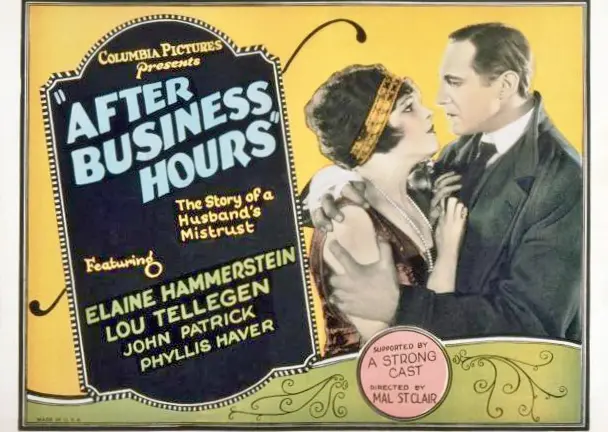
Comparing it to other films of its time, such as A Mormon Maid or Polly Ann, one can appreciate the distinct cultural and narrative approaches emerging across different cinematic landscapes. While American films often focused on melodrama or adventure, Vem sköt? leans into a more somber, psychological drama, hinting at the introspective qualities that would become a hallmark of European cinema. It's a reminder that even in its nascent form, cinema was a global language, spoken with diverse accents and inflections.
The film, though perhaps not widely known to contemporary audiences, holds an important place in understanding the evolution of cinematic narrative. Its meticulous plot, driven by character flaws and moral failings, laid groundwork for future thrillers and dramas. The way it tackles themes of inheritance, greed, and the pursuit of justice is timeless, proving that even a century ago, filmmakers were grappling with the same fundamental questions about human nature that continue to captivate us today. It encourages us to look beyond the technological limitations of the past and appreciate the enduring power of a well-told story, delivered with skill and conviction by a pioneering generation of cinematic artists.
In conclusion, Vem sköt? is more than just an early silent film; it's a testament to the early mastery of cinematic storytelling. It's a gripping murder mystery, a poignant family drama, and a fascinating historical document all rolled into one. For anyone interested in the roots of European cinema or the development of the crime genre, this film offers a rich and rewarding experience, demonstrating that the power of a compelling narrative transcends the spoken word, echoing through the silent frames of history.

IMDb 7.6
1918
Community
Log in to comment.