DbcultAccessing Vault...
Cult Review
Senior Film Conservator
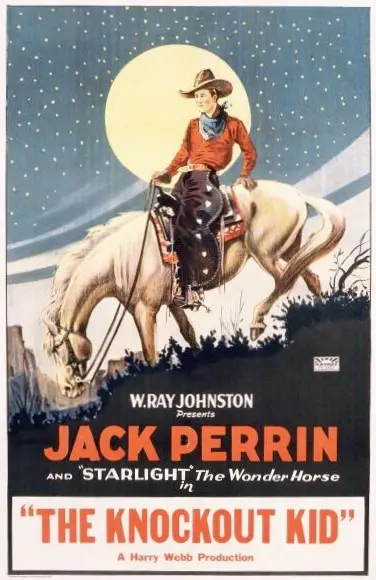
Is The Knockout Kid a hidden treasure of the silent era? Short answer: only if you appreciate the specific, unvarnished charm of 1920s Poverty Row Westerns. This film is for completionists of Jack Perrin’s filmography and those who enjoy the bizarre intersection of prize-fighting and ranching; it is not for anyone expecting the sophisticated cinematography or narrative depth of contemporary epics.
To understand where this film sits in the pantheon of early cinema, one must look at its conflicting identities. It attempts to be two movies at once, and while it doesn't always succeed, it remains a fascinating specimen of early Hollywood experimentation.
The 1920s was a decade of transition, and The Knockout Kid reflects this through its protagonist, Jack Lanning. Unlike the protagonists in Big Dan, who often felt rooted in their environments, Jack Perrin’s character is a literal outsider. The opening sequences in the boxing ring are surprisingly gritty for 1925. The sweat is visible, the hits look heavy, and Perrin moves with the grace of a genuine athlete. It is a refreshing departure from the staged, theatrical fighting often seen in silent films like The Third Degree.
Perrin’s performance is built on physicality rather than facial nuance. When he is exiled to Texas, his discomfort is palpable. He doesn't look like a man who belongs on a horse; he looks like a man who wants to punch the horse. This tension drives the first third of the film. It works. But it’s flawed. The transition from the city to the ranch is abrupt, lacking the psychological bridge that modern audiences might expect. However, in the context of 1920s storytelling, this speed was a virtue, not a vice.
For the average modern viewer, the answer is likely no. The pacing is inconsistent and the plot relies heavily on coincidences that feel dated. However, for the cinema historian or the Western enthusiast, it is a resounding yes. It offers a unique look at how studios tried to market 'city stars' to 'country audiences.' By making the hero a boxer, they appealed to the urban fascination with sports, while the Texas setting satisfied the perennial hunger for frontier justice.
The film lacks the visual polish of Two Moons, but it makes up for it with a raw, almost documentary-like feel in its outdoor sequences. The Texas landscape isn't romanticized here; it’s dusty, harsh, and indifferent to Jack’s plight. This groundedness is the film’s greatest asset. It doesn't try to be a grand epic. It is a lean, mean B-movie that knows exactly what it is.
One of the most surprising elements of The Knockout Kid is the romantic subplot involving the widowed aunt. In many Westerns of this era, like Stop That Wedding, romance is straightforward and idealistic. Here, it is awkward and bordering on the uncomfortable. The aunt’s infatuation with Jack creates a domestic barrier that is more difficult for him to navigate than any outlaw's bullet.
The aunt is the most tragic figure in the film. While the narrative treats her affection as a plot obstacle, there is a lingering sadness in her character that feels accidentally profound. She isn't a villain; she is a lonely woman in a lonely land.
This creates a tonal dissonance. One moment we are watching a heist recovery, and the next, we are in a drawing-room comedy of errors. I would argue that this is actually the film’s boldest choice. It subverts the 'hero gets the girl' trope by making 'getting the girl' a logistical nightmare involving family politics and social etiquette. It’s a surprising observation for a film that marketed itself on fisticuffs.
Director Forrest Sheldon was a journeyman of the silent era, and his work here is efficient if uninspired. He knows how to shoot a chase, and the recovery of the ranch payroll is a masterclass in 1920s action editing. The camera stays close to the action, capturing the thundering hooves and the chaotic dust clouds. It lacks the experimental flair of something like The Nervous Reporter, but it gets the job done.
Then there is Starlight the Horse. In the 1920s, animal stars were often as big as their human counterparts. Starlight has more emotional range than half the supporting cast. In the scene where Jack is tracking the outlaws through the scrubland, the bond between man and beast is the only thing that feels truly authentic. The horse isn't just a prop; it’s Jack’s guide to becoming a 'real' Westerner. Without Starlight, Jack is just a guy in a funny hat. With Starlight, he’s a cowboy.
No Western is complete without a formidable antagonist, and Bud Osborne delivers a reliable, if somewhat stock, performance. The theft of the ranch payroll is the catalyst that finally forces Jack to integrate his boxing skills with his new environment. There is a specific scene in the final act where Jack corners one of the outlaws in a narrow canyon. Instead of a shootout, we get a glimpse of the 'Knockout Kid.'
He drops his gun and uses his fists. It is a moment of pure fan service for the 1925 audience, but it serves a narrative purpose. It is the moment Jack Lanning accepts that he cannot escape who he is, even in Texas. He is a fighter. The way Sheldon shoots this—using low angles to emphasize Jack’s stature—makes it the most memorable sequence in the film. It is simple. It is effective. It is the reason the movie exists.
Pros:
Cons:
The Knockout Kid is a fascinating, if slightly disjointed, relic of 1920s cinema. It captures a moment when Hollywood was still figuring out how to categorize its stars and its stories. Jack Perrin is a capable lead who brings a unique energy to the Western genre, even if the script occasionally fails him. The film works best when it leans into its action roots and falters when it tries to navigate the complexities of a romantic triangle.
Is it a classic? No. Is it an entertaining 60 minutes of silent cinema? Absolutely. It represents the blue-collar heart of early filmmaking—unpretentious, physical, and determined to give the audience a good show. It’s a film about a man finding his place in the world by realizing he doesn't have to change who he is; he just has to change his scenery. It’s flawed, but its heart is in the right place. And sometimes, that’s enough to earn a win in the final round.
IMDb —
1927
Community
Log in to comment.