DbcultAccessing Vault...
5.6/10
Senior Film Conservator
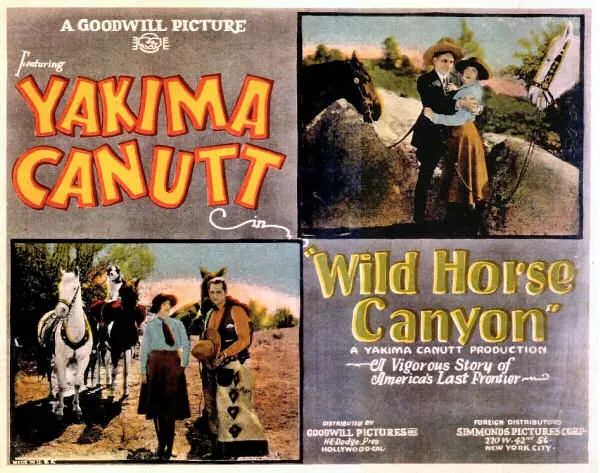
A definitive 5.6/10 rating for a film that redefined the boundaries of cult cinema. Wild Horse Canyon remains a cornerstone of transgressive art.
Is 'Wild Horse Canyon' a forgotten gem, or a relic best left in the dust? Short answer: For a specific niche of vintage Western aficionados and those fascinated by the history of cinematic stunt work, absolutely, but for modern audiences expecting contemporary pacing and complex character arcs, perhaps not without a hefty dose of historical context. This film is a foundational piece for understanding early Westerns, a raw showcase of practical action, and a testament to the grit of its era. It is unequivocally for viewers who appreciate the unvarnished charm of early Hollywood, the thrill of real horse wrangling, and the foundational elements that shaped the genre. Conversely, it is decidedly not for those seeking intricate narratives, deep psychological character studies, or a break from the often-simplistic morality of early cinema.
Before diving deeper, let's lay out the groundwork for what makes 'Wild Horse Canyon' tick and where it falters. It works. But it’s flawed. Its strengths are as clear as a desert sky, and its weaknesses, as vast as the plains it depicts.
This film works because: It delivers authentic, visceral action sequences involving horses and cowboys, largely thanks to the legendary Yakima Canutt, setting a standard for practical stunts that few films of its time could match. Its straightforward narrative taps directly into the primal appeal of the American frontier, offering a clear-cut conflict between good and perceived evil.
This film fails because: Its character development is minimal, often relying on archetypes rather than individuals. The pacing, while typical for its era, can feel sluggish to contemporary viewers, and the plot, though functional, lacks the nuanced twists and turns that define more sophisticated storytelling.
You should watch it if: You have a keen interest in the evolution of the Western genre, appreciate groundbreaking stunt work, or simply enjoy the nostalgic charm of a classic, unpretentious cowboy picture where the landscape and the animals are as much characters as the humans.
'Wild Horse Canyon' presents a narrative that, on paper, is as elemental as the landscape it inhabits. We are introduced to a ranch, overseen by a young woman whose financial or personal stake in the land is implied rather than explicitly detailed. Her foreman, a character painted with broad strokes of ambition and perhaps a touch of avarice, initiates a grand scheme to capture a herd of wild horses. This act, while seemingly a pragmatic business decision, immediately establishes a conflict between man and nature, freedom and captivity.
The heart of this initial conflict lies not just in the capture, but in the subsequent escape. The film smartly elevates the lead horse, a magnificent stallion, to a near-mythic status, portraying it as an emblem of untamed spirit. Its cunning and strength in breaking free, liberating its herd, is a moment of genuine excitement, a primal victory against human imposition. This sequence, even decades later, retains a raw, unchoreographed energy that speaks volumes about the practical filmmaking of the era.
The plot thickens with the introduction of Yak, a drifting cowboy who becomes the convenient scapegoat for the foreman's failure. What might otherwise be a simple misunderstanding quickly morphs into something more profound. Yak's deliberate provocations, his seemingly irrational desire to instigate conflict with the foreman, transform him from a mere suspect into an active agent, suggesting a history, a secret motivation that underpins his every action. This subtle undercurrent of a hidden agenda is where the film finds its most compelling dramatic tension, promising a payoff that transcends the immediate incident of the escaped horses.
The simplicity of this setup is both a strength and a limitation. It allows for clear character motivations and a straightforward progression of events, making it accessible even to those unfamiliar with the conventions of early cinema. However, it also means that the narrative rarely ventures into complex moral ambiguities or psychological depths, preferring to operate within the established good-versus-evil framework so prevalent in Westerns of its time. Its narrative simplicity might remind some of the straightforward morality plays seen in films like The House Built Upon Sand, though with a distinct frontier flavor.
The performances in 'Wild Horse Canyon' are less about nuanced character portrayals and more about embodying archetypes. This is not a criticism, but an observation on the stylistic demands of early Westerns, where characters often served as symbols rather than complex individuals. Edward Cecil, likely playing the foreman, embodies the antagonist with a straightforward villainy that leaves little room for ambiguity. His motivations are clear: control, perhaps greed. There's no deep dive into his past, just his present actions defining his role.
Helene Rosson, as the ranch owner, represents the feminine presence in a masculine world. Her role, while pivotal to the ranch's ownership, often serves as a focal point for the conflict, a prize or a point of contention between the male characters. She exudes a quiet resilience, a common trait for women in these frontier narratives, but her agency is largely reactive rather than proactive. This is typical of the era, where female characters, even strong ones, often existed to be protected or to provide motivation for the male leads.
The true standout, and arguably the most compelling 'performance' in the film, comes from Yakima Canutt as Yak. Canutt, a legendary figure in Hollywood stunt work, brings an unparalleled physicality to the role. His presence is magnetic, not through dialogue – which would have been sparse or absent in many early versions – but through his sheer command of the horse and his body. Every jump, every fall, every interaction with the animals feels authentic, lived-in. When Yak provokes the foreman, it’s not just an acting choice; it’s a physical challenge, a subtle dance of dominance and defiance.
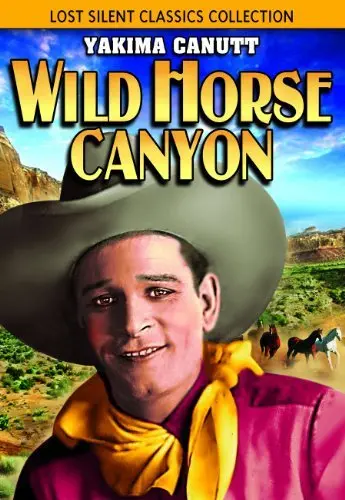
Canutt’s contribution to 'Wild Horse Canyon' transcends mere acting; it's a masterclass in practical stunt coordination and execution. He wasn't just playing a cowboy; he was *the* cowboy, defining the look and feel of action in Westerns for decades to come. His work here, whether it's a daring horse fall or a precise maneuver to control a stampede, is a testament to the raw courage and ingenuity of early stunt professionals. It's a surprising observation for modern viewers that the most dynamic 'acting' comes from the one who is often considered a background player in the broader industry sense.
The supporting cast, including Slim Talbot and Cliff Lyons, fill out the world with reliable, if unflashy, portrayals of ranch hands and sidekicks. They contribute to the atmosphere, providing grounding elements to the often-larger-than-life central conflict. Their roles reinforce the communal, yet rugged, existence of frontier life, a stark contrast to the more isolated struggles depicted in films like A Man and His Money.
The direction in 'Wild Horse Canyon,' likely from an uncredited or less prominent director, focuses squarely on efficiency and impact. The primary goal was to capture the action clearly and convey the story effectively, without much room for stylistic flourishes. This pragmatic approach results in a film that is direct and functional, serving the genre's demands for spectacle and narrative progression. The camera is largely observational, preferring wide shots to capture the vastness of the Western landscape and the scale of the horse action.
Cinematography is, by necessity, a key player here. The film relies heavily on natural light, which lends an inherent authenticity to the outdoor scenes. The sun-drenched plains, the dusty trails, and the rugged canyon walls are not just backdrops; they are integral to the film's character. The use of long shots during the horse captures and escapes allows the audience to fully appreciate the scope of the event, the sheer number of animals, and the daring of the cowboys. There’s a palpable sense of danger and excitement precisely because these are real horses, real stunts, filmed in real environments.
One specific example of the direction and cinematography working in tandem is during the herd's breakout. The camera is positioned to capture the chaos and power of the stampede, often from a slightly elevated vantage point, emphasizing the horses' unstoppable momentum. The cuts are functional, designed to maintain narrative clarity and heighten the sense of urgency. There are no fancy camera movements or experimental angles; it’s all about getting the shot that tells the story most effectively and thrillingly. This raw, documentary-like approach to action filmmaking is a hallmark of early cinema and gives 'Wild Horse Canyon' a timeless, almost visceral appeal.
The pacing of 'Wild Horse Canyon' is a fascinating study in cinematic evolution. By modern standards, it might feel like a slow trot for significant stretches, punctuated by bursts of intense, almost frenetic, action. The exposition is delivered with a deliberate rhythm, allowing scenes to unfold without the rapid-fire editing we've grown accustomed to. This slower build-up can be a challenge for contemporary viewers, who are used to narratives that get straight to the point.
However, for its era, this pacing was likely considered brisk, especially during the action sequences. The moments involving the wild horses, the chase scenes, and the confrontations between Yak and the foreman inject a powerful energy into the film. These sequences are edited with a sense of urgency, using quick cuts and dynamic camera placements (for the time) to convey speed and danger. The film understands that its primary draw is the spectacle of man and beast in conflict, and it delivers on that promise with unwavering commitment.
The tone of 'Wild Horse Canyon' is largely one of straightforward adventure and frontier justice. There’s a clear moral compass, a sense of right and wrong that guides the characters' actions. The presence of the 'pretty young girl' adds a touch of romantic potential or vulnerability, a classic Western trope that grounds the rugged action in human stakes. There's a certain earnestness to the film, an unpretentious quality that makes it endearing despite its narrative simplicity. It doesn't try to be anything more than what it is: a solid, action-packed Western of its time. This tonal consistency is a strength, ensuring the audience knows exactly what to expect, much like the clear-cut narratives of films such as The City of Silent Men.
So, is 'Wild Horse Canyon' worth your time in an age of streaming and CGI spectacles? For a select audience, absolutely. If you are a student of film history, particularly the Western genre, this movie offers invaluable insight into the foundational elements of early cinematic action. It’s a tangible piece of history, showcasing the origins of practical stunt work and the archetypal narratives that would influence countless films to come. Its raw, unpolished charm is a refreshing antidote to today's often over-produced blockbusters.
However, if your palate demands complex characters, intricate plots, and rapid-fire dialogue, 'Wild Horse Canyon' will likely fall short. Its pacing can feel archaic, its characterizations broad, and its narrative resolution predictable by contemporary standards. It requires a willingness to engage with cinema on its own historical terms, to appreciate its strengths within the context of its production era. It is not a film for passive viewing; it demands a certain level of active engagement and an appreciation for what it represents.
Ultimately, 'Wild Horse Canyon' is a niche watch. It's for those who find beauty in the unadorned, excitement in the genuine, and value in understanding where modern cinema came from. It's a testament to the fact that even with minimal resources and straightforward storytelling, a film can still deliver thrills and leave a lasting impression on the evolution of a genre. It works. But it’s flawed. Its legacy is more about its influence and raw spectacle than its narrative sophistication.
'Wild Horse Canyon' is not a film that will redefine your understanding of cinema, nor is it a hidden masterpiece waiting to be discovered by the masses. Instead, it is a sturdy, unpretentious artifact of early Western filmmaking, a film whose true value lies less in its narrative sophistication and more in its visceral action and historical significance. It’s a testament to the raw energy of practical stunts and the enduring appeal of the man-versus-nature conflict on the American frontier. The film, for all its simplicity, possesses an undeniable charm, a rugged honesty that connects directly to the heart of the Western mythos.
Its greatest strength is undoubtedly the physical prowess on display, particularly the contributions of Yakima Canutt, who elevates the action beyond mere spectacle into a foundational blueprint for cinematic stunt work. This alone makes it a worthwhile watch for those with a keen interest in film history or the genre's evolution. However, for a casual viewer seeking a compelling story or deep character engagement, the film's dated pacing and archetypal cast might prove challenging. It requires an audience willing to meet it on its own terms, to appreciate its strengths as a product of its time. Ultimately, 'Wild Horse Canyon' earns its place as an important, if imperfect, piece of cinematic heritage, a dusty but valuable snapshot of a bygone era in Hollywood.
IMDb —
1922
Community
Log in to comment.