DbcultAccessing Vault...
5.3/10
Senior Film Conservator
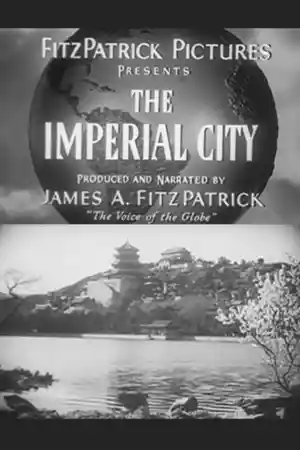
A definitive 5.3/10 rating for a film that redefined the boundaries of cult cinema. The Imperial City remains a cornerstone of transgressive art.
Is it worth watching today? Honestly, yes, but only if you’re the kind of person who likes looking at old photos in an attic. If you want a fast-paced documentary or deep political insight, you are going to be bored out of your mind. It’s for the history nerds and the people who like to see how much the world has changed while they drink their morning coffee.
I stumbled on The Imperial City while looking for something short to kill time. It is one of those old "Traveltalks" shorts by James A. FitzPatrick. You might know his voice—it’s that very specific, 1930s radio voice that sounds like he’s wearing a tuxedo while he speaks. He’s the "Voice of the Globe," or so he says.
The first thing that hits you is the color. It’s early Technicolor, so everything has this weird, painterly shimmer. The sky isn't quite blue; it’s more like a pale teal or a faded robin’s egg. It makes the whole movie feel like a dream rather than a historical record.
He calls Beijing "Peiping." That’s the first sign that you’re in a different era. He walks us through the districts, but the camera stays pretty still. It’s not like modern travel vlogs where the camera is shaking everywhere. Here, the camera just sits there and lets you look.
The shots of the Forbidden City are what stuck with me. If you go there now, it’s packed with thousands of tourists with selfie sticks. In 1930, it looks almost deserted. There’s a quietness to it that feels a bit eerie. You can see the weeds growing between some of the stones.
It’s a lot different than the vibes in something like The Silent Battle, which has that heavy dramatic weight. This is just... observation. There’s no plot. No conflict. Just a guy telling you about marble bridges.
I kept getting distracted by the people in the background. There’s a man carrying two huge baskets on a pole across his shoulders. He looks at the camera for maybe half a second. He looks confused. Like, he’s just trying to get to work and there’s this guy with a giant tripod and a sun hat in his way.
I love those little moments. They aren't scripted. They’re just real life from nearly a hundred years ago accidentally caught on film. It’s way more interesting than the scripted stuff you see in The Victory of Virtue.
"The city of mystery and ancient legends..."
That’s the kind of stuff FitzPatrick says. He loves a good adjective. Sometimes he uses too many of them. The narration is a bit thick, but it fits the vibe of the time. People used to talk like that in movies back then. Very formal. Very "proper."
Then we get to the train trip. I’m a sucker for old trains. The steam coming off the engine looks incredible in that Technicolor palette. It’s thick and white and feels like you could reach out and touch it. It’s a very mechanical kind of beauty.
We see the Great Wall, and it looks a lot more rugged than the restored parts we see on TV now. It looks like a giant, sleeping stone dragon. It’s less of a tourist attraction and more of a ruin here. I think I prefer it that way.
Oh, and the camels. I didn't expect the camels. There’s a line of them walking along, and they look so incredibly bored. They have this expression like they’ve seen everything and aren't impressed by any of it. They have more personality than some of the actors in The Yellow Dog.
The music is pretty tinny. It’s that old orchestral stuff that sounds like it’s being played through a funnel. It’s a bit loud in the mix, too. Sometimes it drowns out what he’s saying, but you aren't really watching this for the facts anyway.
Is it colonialist? Yeah, probably. It’s a Western guy looking at an "exotic" land through a very specific lens. You have to keep that in mind. He doesn't really talk to anyone. He just observes from a distance.
It’s a bit like Louisiana in that sense—it’s more about the feeling of a place than the actual reality of the people living there. It’s a postcard, not a conversation.
There’s a scratch on the film during the bridge scene. It flickers for a few seconds. I actually liked that. It reminded me that I was watching a physical piece of history that survived. It’s not a perfect digital file. It’s got scars.
One reaction shot of a local child lingers just a bit too long. It starts to feel awkward. The kid just stares at the lens, and you realize how intrusive filmmaking must have felt back then. It’s a weird moment of tension in a movie that’s supposed to be relaxing.
If you like old-school detective vibes, check out Sherlock Sleuth, but if you just want to zone out and look at a world that doesn't exist anymore, this is your thing. It’s nine minutes of your life. You’ve wasted more time scrolling through worse things.
The ending is the best part. "And so, we say farewell to the Imperial City." He says it with so much finality. Like he’s closing a book. It’s oddly satisfying.
It’s not a masterpiece. It’s just a thing that exists. A little slice of 1930 preserved in amber. Or, well, preserved in Technicolor. 🎥
I think I’ll go watch another one of these. They’re addictive in a weird way. Like eating one potato chip. You can't just watch one Traveltalk. You end up watching five.
IMDb 6.2
1933
Community
Log in to comment.