DbcultAccessing Vault...
Cult Review
Senior Film Conservator
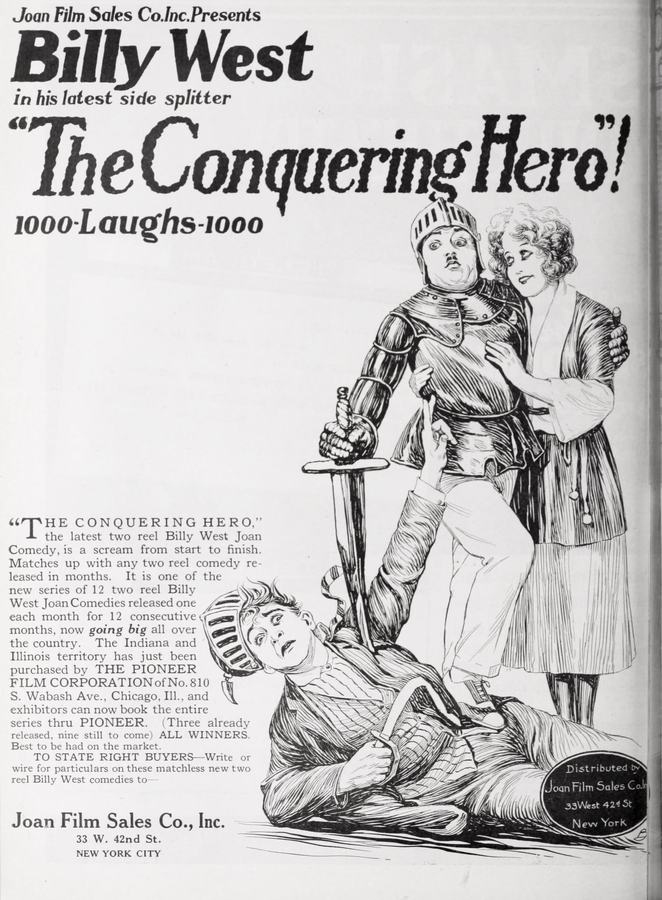
There is a moment—easy to miss if you blink—when the camera lingers on Ethelyn Gibson’s fingertips as they graze the frayed cuff of Billy West’s borrowed tunic. The gesture lasts maybe four seconds, yet it detonates entire mythologies about fabric, flesh, and fraud. The Conquering Hero, a 1919 release that sauntered into theaters while the Versailles negotiators were still arguing over commas, weaponizes that fleeting contact, turning it into a silent scream about national identity stitched together with stolen thread.
Director Arvid E. Gillstrom blocks his unnamed hamlet like a feverish operetta: diagonal shadows slice across porches, flags flap at Dutch-tilt angles, and every citizen seems to have rehearsed their awe in advance. Compare this civic choreography to the poker-faced realism of In Mizzoura or the expressionist gloom of Enhver; Gillstrom opts instead for a carnivalesque hyperbole that anticipates later works such as Crack Your Heels. The effect is both intoxicating and queasy, like sipping corn liquor that glows under a blacklight.
Billy West, best remembered for aping Chaplin’s mannerisms, here exfoliates his comic persona to expose raw nerve. His counterfeit soldier trembles on the cusp between burlesque and pathos; watch how he practices a salute in cracked window-glass, the reflection revealing eyes hollowed by self-loathing. Fred Lancaster’s blustery mayor supplies the bellows that fan every civic ember into full conflagration, while Ethelyn Gibson’s Prudence—note the Puritan name—navigates the narrow strait between romantic curiosity and moral vertigo with a nuanced economy of gesture that rivals Mary Pickford’s finest hours.
“He wore valor like a rented suit—return it by Monday or pay the late fee.”
Such intertitles, laced with flapper-era cynicism, slice the narrative like paper cuts. They recall the droll poison-pen dialogue of The Woman in 47 yet carry an additional tang of post-war disillusionment. Each card arrives slightly off-beat, forcing the viewer to re-calibrate the rhythm of expectation, a trick that Hitchcock would later elevate to symphonic complexity.
Cinematographer Frank Zucker, limited to a single carbon-arc and buckets of ingenuity, transforms night-for-night exteriors into pools of impenetrable ink. Note the sequence where the impostor slips through alleyways: no irises, no vignettes, just pure darkness nibbling at the edges of the frame until only the whites of West’s eyes hover, disembodied, like guilty moons. Decades later, noir thrillers would patent this chiaroscuro, but here it feels primal, almost medieval.
Contemporary press sheets bragged that The Conquering Hero shipped with a synchronized music cue sheet recommending Sousa marches counterpointed by moaning cellos. In today’s archival screenings, accompanists often pivot to Charles Ives–style dissonance, and the result is revelatory: every drumroll undercuts the rah-rah, exposing the terror of performative patriotism. Suddenly the film converses with its musical DNA rather than merely wearing it like wallpaper.
Prudence’s scrutiny operates as a proto-feminist X-ray. While the menfolk thump drums and swill cider, she combs through telegrams, service records, and the subtle tremor in the stranger’s left eyelid—a tell that betrays more than any stutter. The film quietly insists that women, denied the frontline, become expert cartographers of deception. Contrast this with the sacrinal maternalism of Mrs. Thompson or the ingenue bewilderment in The Girl Who Doesn’t Know; here, intellect is erotic, suspicion the true aphrodisiac.
Released months before radio networks stitched the nation into one synchronized heartbeat, the picture anticipates the age of manufactured celebrity. The town’s eagerness to graft its collective longing onto any available silhouette prefigures the parasocial addictions of Instagram avatars. When the mayor proclaims, “We need a hero—any will do,” he’s essentially drafting the blueprint for influencer culture, only without the velvet rope or algorithmic feed.
Most silent comedies deflate once the mask slips. Not here. Gillstrom stages the unmasking in a railway freight yard where steam, coal dust, and moral grime swirl into a biblical tempest. The impostor’s confession erupts not in florid gestures but in a single tear that carves a white streak through sooty cheek—a miniature river coursing toward redemption or damnation, we’re never sure which. The camera refuses to close-up; instead it cranes backward until the figure shrinks to puppet size against rails that stretch toward infinity. The implication: history will swallow this moment, digest it, and excrete fresh myths tomorrow.
Unlike The Heart of a Hero, which bandages its cynicism with patriotic gauze, or Those Who Pay, where retribution lands like a dull thud, The Conquering Hero ends on an unresolved chord. The real regiment parades down Main Street, the impostor merely another spectator, swallowed by confetti that looks suspiciously like shredded draft cards. No handcuffs, no moral sermon—just the echo of boots that could belong to either liberators or occupiers.
Restoration prints from Lobster Films reveal cigarette burns once hidden by dupe decay; each speck resembles a bullet hole in the firmament. Viewers at the 2023 Pordenone Silent Fest reported dreams of empty uniforms marching through their sleep, proof that the film’s subtextual virus still mutates inside contemporary bloodstreams. Its DNA threads through Lieutenant Danny, U.S.A. and even seeps, in diluted form, into the screwball cynicism of The Prince and Betty.
As of this writing, the best 2K scan streams via ReelRare (subscription) and plays magnificently on OLED panels—the inky blacks swallowing your living room until only faces shimmer like dying stars. If you can, attend a live screening with a percussion-heavy quartet; the vibrations massage the sternum, reminding you that propaganda is less a message than a pulse you absorb through bone.
The Conquering Hero survives not because it lectures, but because it confesses—without absolution—our thirst for idols whose halos arrive pre-tarnished. In 67 brisk minutes it skewers every mechanism that nations use to solder private insecurities into public spectacle. Watch it, then glance at today’s trending hashtags; the uniform may update to bomber jackets or lab coats, yet the rented valor still reeks of the same mothball melancholy. Grade: A–

IMDb —
1935
Community
Log in to comment.