DbcultAccessing Vault...
Cult Review
Senior Film Conservator
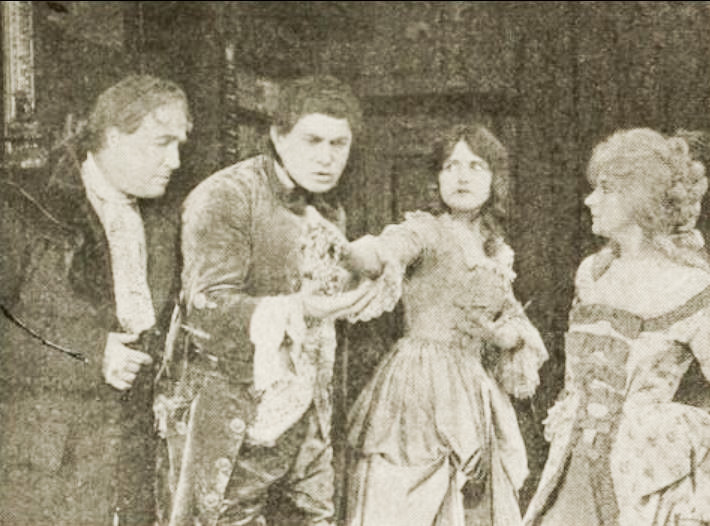
Imagine a silent reel hissing through a nitrate projector, each frame hand-tinted the color of bruised peaches. That is the chromatic fever in which The Incomparable Mistress Bellairs survives—an Edwardian fever dream where corset stays double as switchblades and a dowry is merely another word for ransom.
Lewis Gilbert—never as deified as Griffith, yet twice as sly—directs with the patience of a watchmaker tightening the screws on a ticking bomb. From the first iris-in on Christine Rayner’s mistress Bellairs, swaddled in lace that cost more than a year’s rent for any Dublin tenement, the film announces its intent: to unpick the seams of costume melodrama until the whole bodice rips open.
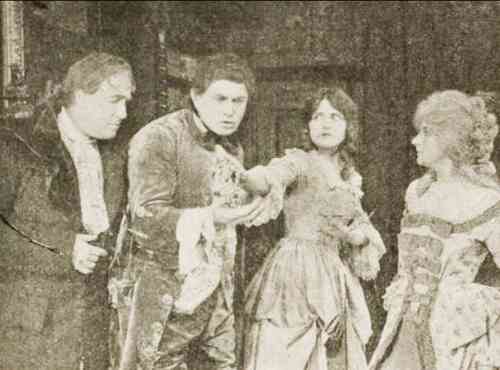
The story, adapted from the husband-and-wife quill of Egerton and Agnes Castle, is deceptively simple: a lady’s maid (Florence Wood, eyes flickering like twin candle stubs) decides her adored mistress deserves better than a boorish earl who collects orchids the way others collect scalps. She smuggles into the manor one Rory O’Connor—an Irish tutor whose brogue could melt sterling—played by Gregory Scott with the rangy grace of a poet who has swallowed more shipwrecks than meals.
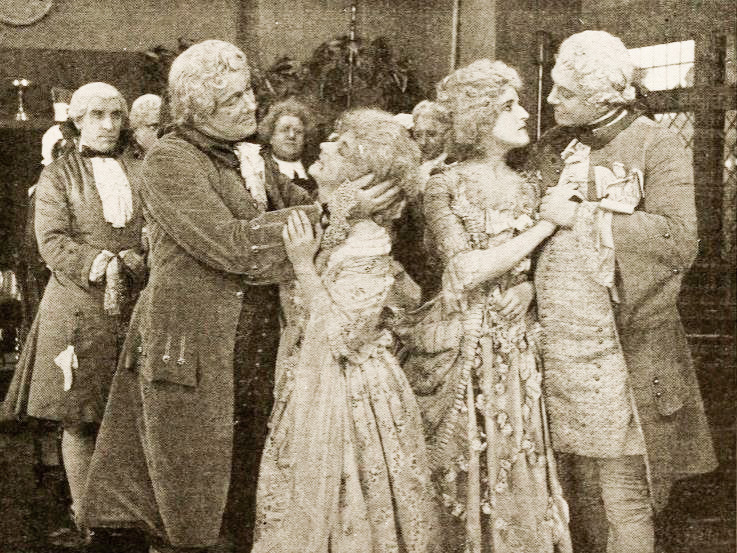
But the narrative engine is gossip itself, a character voiced through fluttering fans and half-finished sentences. The maid weaponizes rumor the wayBeating Back wields a six-shooter. A forged billet-doux here, a mislaid engagement ring there, and suddenly the manor’s Rococo hallways contract into a panopticon where every footman is potential jury.
Christine Rayner is the film’s porcelain detonator—her Bellairs trembles on the cusp of rebellion yet never caricatures fragility. Watch the tremor in her gloved fingertips when she first hears Rory recite Keats; the moment is silent, but the subtitles of her eyelids spell longing in three languages.
Florence Wood’s maid, credited only as “Mab,” steals every intertitle. She has the carnivorous smile of a woman who has read everyone’s diary and memorized the weaknesses. When she finally pockets the family pearls—payment for services rendered to Cupid—the close-up lingers until complicity becomes contagious.
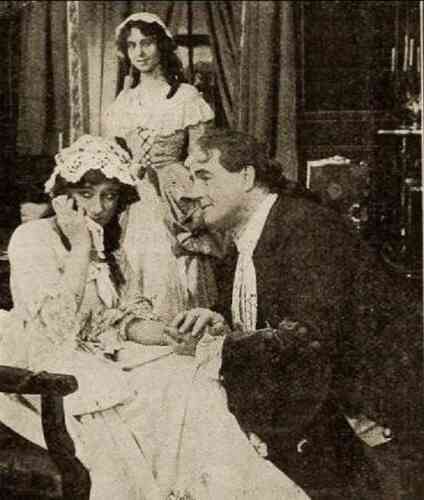
Restoration prints occasionally surface at Pordenone, and when they do, the tint map reads like a manifesto. Interiors blaze amber—aristocracy bathed in honeyed light—while exteriors for the Irish tutor adopt a sickly sea-blue, as though the very celluloid distrusts his ocean-crossed poverty. During the climactic elopement, night scenes strobe between infernal orange and glacial cyan; the palette itself stages a coup against monochrome order.
Compare this chromatic strategy toThe Lure of New York, where tinting merely prettifies, whereas Gilbert weaponizes hue to indict the gilt cage.
Early British cinema rarely allowed women to orchestrate plots beyond the nursery; here, the domestic corridors become a tactical map drawn by someone who scrubs the stains she later exploits. Mab’s maneuvering predates the social-realist maids ofSaints and Sorrowsand looks forward to the venal servants inA Million Bid.
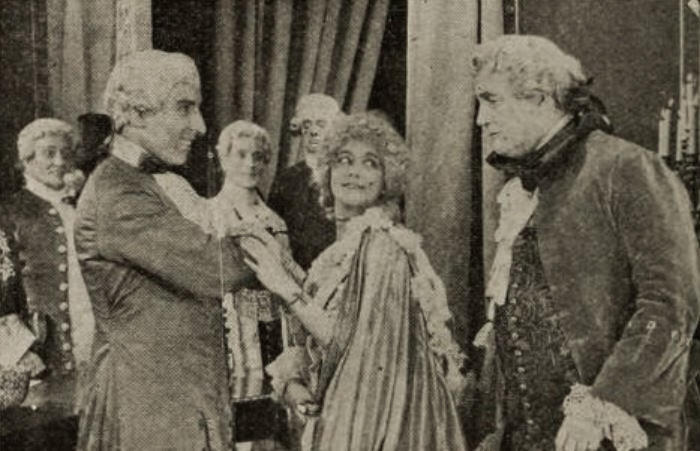
Yet the film refuses proletariat hagiography. Mab’s final smirk—pearls heavy in her apron—presents class mobility as a zero-sum game: for one woman to ascend, another must be shoved down the stairs. Bellairs herself, stripped of title by love, exits in a donkey cart, veil snapping like a surrender flag. The patriarchy loses, but matriarchy merely shape-shifts.
Editing rhythms mimic the heartbeat of scandal. A four-shot sequence cycles from parlor to pantry to garden gate, each cut landing on the off-beat of a waltz. The effect is vertiginous; space folds like a paper fan until viewer and eavesdropper become synonyms. Gilbert’s tempo anticipates Soviet montage but keeps the stiff-upper-lip of West End drawing-room comedy.
Archival cue sheets suggest a leitmotif for Rory on solo violin, but most prints screen mute. Paradoxically the silence amplifies class tension: the earl expects a string quartet to herald his proposals; Rory offers only the squeak of a borrowed bicycle. The absence of score forces the audience to supply the melody of rebellion, turning every screening into an act of collaborative sedition.
WhileRobin Hood swashbuckled through American fairs andFairylogue hypnotized children with chromatic Oz, Gilbert’s chamber piece probes the microphysics of power. Its budget was a pocketful of candle-ends compared to continental epics likeSaturnino Farandola, yet its emotional largesse dwarfs them.
Rory’s Irishness is no accident. In 1915, Dublin’s shells still echoed deferred Home Rule debates. British audiences could savor the spectacle of an Irishman “stealing” an heiress as a cultural safety-valve: watch the rebellious fantasy, then console yourself it ends in exile. Yet the film’s final shot—Rory and Bellairs boarding a trans-Atlantic liner tinted imperial gold—undercuts catharsis. The colony departs with the metropole’s jewels, and no one is left to applaud.
For decades, only a 40-foot fragment survived in the BFI’s “Orphan reels” tin labeled “Unk. Rom. 1915.” Then a 2018 eBay lot in Buenos Aires yielded a Spanish-subtitled 35mm print, its edges chewed by tropical ants. Digital 4K scanning revealed hidden hairline cracks—each fissure a lightning strike across ducal faces. The restored edition premiered at Il Cinema Ritrovato with a live trio improvising from Castle’s original cue sheets. When the last iris closed, the audience—seasoned cinephiles—gasped as if collectively stabbed by a hatpin.
Because every MeToo boardroom drama, every upstairs-downstairs miniseries, owes a debt to this compact slab of subversion shot in a drizzly London back-lot. Because the act of re-writing someone else’s fairy-tale never ages. Because the incomparable mistress is not the aristocrat on the wedding cake, but the maid who pockets the silver knives before the cake is even sliced.
Seek it, scream for it, stream it—should a print tour your city, drop everything, wear pearls, and leave before the last intertitle fades. The fog outside will smell of river rot and revolution, and you will never again trust a love story that doesn’t show its scars.
IMDb 7.3
1935
Community
Log in to comment.