DbcultAccessing Vault...
Cult Review
Senior Film Conservator
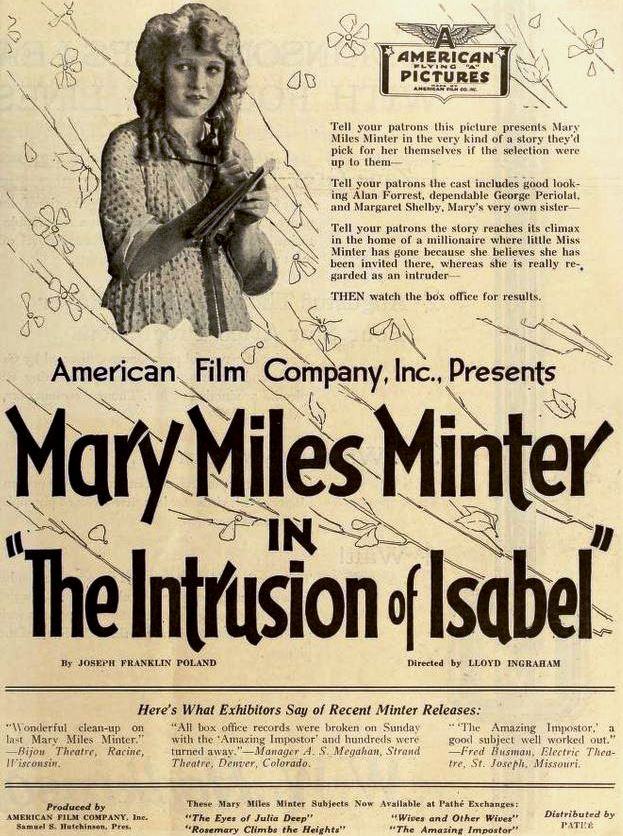
The 1919 cinematic landscape was a crucible of evolving social mores, and The Intrusion of Isabel stands as a fascinating artifact of this transitional period. Directed with a keen eye for domestic architecture and the subtle hierarchies of the American household, the film navigates the precarious boundary between Southern gentility and Northern industrial wealth. It is a work that refuses to settle for mere melodrama, instead opting for a nuanced interrogation of class performance and the inherent lies required to maintain one's dignity in the face of penury.
The initial sequences, depicting the Trevor family’s departure from their Southern estate, are imbued with a funereal quality. The loss of the home is not merely a financial transaction but a spiritual severance. Joseph F. Poland’s screenplay cleverly uses the move to New York as a catalyst for a radical identity shift. Unlike the overt social climbing seen in The Price of Happiness, where the struggle for status is portrayed with a certain heavy-handedness, The Intrusion of Isabel treats the Trevor siblings' plight with a delicate, almost ethereal touch. Mary Miles Minter, portraying Isabel, brings a luminous vulnerability to the screen, her presence acting as a soft-focus lens through which the harsh realities of urban poverty are filtered.
The narrative engine is fueled by Bert Trevor’s lie. His transition from a man of leisure to a valet is a profound commentary on the erosion of the Southern male ego. By convincing Isabel that he is Jack Craig’s partner rather than his servant, Bert creates a fictional space where their social standing remains intact. This deception is the film’s most compelling element, echoing the thematic concerns of Bought and Paid For, where the transactional nature of human relationships is laid bare. However, where that film leans into the cynical, The Intrusion of Isabel finds a strange, misplaced nobility in Bert’s protectiveness of his sister’s innocence.
When Bert flees to Montana after his moment of fiscal indiscretion, the film shifts its focus to the physical space of the Craig mansion. The 'intrusion' mentioned in the title is a multifaceted concept. It is not merely Isabel’s physical presence in Craig’s home, but the intrusion of Southern domesticity into the cold, rigid structures of New York high society. The inclusion of Mammy, played with a dignified warmth by Lucretia Harris, serves as a vestigial link to the old world, a reminder of the culture Isabel carries with her. Their occupation of the house, born of a misunderstanding, creates a surreal domestic vacuum where Craig—played with an understated charm by J. Parks Jones—becomes a spectator in his own life.
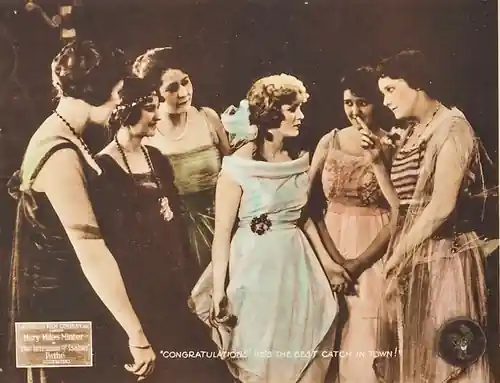
This dynamic is far more sophisticated than the typical romantic entanglements of the era. Craig’s decision to allow the women to remain is not merely a plot device; it is an act of class-transcending empathy. It stands in stark contrast to the rigid social boundaries explored in The Mirror, where reflections of self-worth are constantly distorted by societal expectations. Here, the 'intrusion' becomes a transformative force, softening Craig’s bachelor cynicism and exposing the hollow nature of his sister’s elitism.
The introduction of Lois Randall—later revealed as the notorious 'Marrying Mary'—introduces a layer of noir-adjacent intrigue that enriches the film’s final act. Margaret Shelby’s portrayal of the adventuress is a masterclass in calculated artifice. She represents the dark mirror to Isabel’s sincerity. While Isabel occupies a house she believes is hers through a brother’s success, Lois attempts to occupy a marriage through a legalistic ambush. The 'wine party' sequence, described as a site of moral dissolution, serves as a necessary critique of the burgeoning Jazz Age excesses. It is here that the film aligns itself with the cautionary tales found in The Red Circle, where past indiscretions inevitably return to haunt the present.
The resolution, involving a prosecuting attorney and the unmasking of Lois’s previous matrimonial schemes, provides a satisfying, if somewhat convenient, denouement. It allows the film to reconcile its disparate threads: the redemption of Bert, the validation of Isabel’s virtue, and the triumph of genuine romantic connection over predatory opportunism. The way Craig discreetly accepts Bert’s repayment and apologies is a testament to the film’s underlying belief in the possibility of moral restoration—a theme that resonates with the redemptive arcs found in The Matrimaniac.
One cannot discuss this film without centering the performance of Mary Miles Minter. Often unfairly compared to Mary Pickford, Minter possesses a distinct, more melancholic screen presence. In The Intrusion of Isabel, she navigates the transition from a grieving daughter to a confused squatter to a beloved wife with a grace that feels remarkably modern. Her ability to convey complex emotional states through subtle shifts in expression is what elevates the film above its contemporaries. Whether she is interacting with the stern J. Parks Jones or the protective Lucretia Harris, Minter remains the film's emotional anchor.
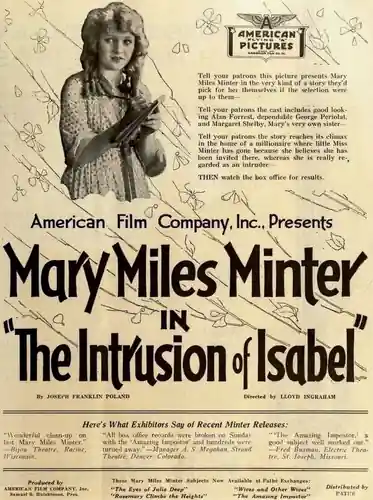
The technical aspects of the production, from the lavish sets of the Craig mansion to the dusty, expansive vistas of the Montana subplot, demonstrate the high production values of the American Film Company. The cinematography captures the contrast between the claustrophobic New York interiors and the liberating potential of the West. This duality is a recurring trope in early American cinema, yet here it feels specifically tied to the characters' internal journeys. Bert’s escape to Montana is not just a flight from the law; it is a return to a landscape where he can rebuild his identity away from the stifling expectations of his past.
Viewing The Intrusion of Isabel through a contemporary lens reveals the fascinating anxieties of the post-WWI era. The fear of the 'adventuress,' the instability of class status, and the yearning for a simplified moral code are all present. The film’s treatment of the Southern characters—while undeniably romanticized—offers a glimpse into how the North perceived the 'fallen' Southern aristocracy. It is a narrative of reconciliation, suggesting that the best of the Old South (virtue, loyalty) can find a place within the New North (capital, industry) if mediated by love.
In comparison to other films of the period, such as the more action-oriented The Girl from Beyond, The Intrusion of Isabel is a quiet, character-driven piece. It relies on the chemistry between its leads and the strength of its thematic underpinnings. The 'Marrying Mary' subplot, while adding a necessary tension, never overshadows the central relationship between Isabel and Craig. It is their mutual 'intrusion' into each other's worlds that provides the film's lasting impact.
As a blogger and a critic, I find myself drawn to these forgotten gems that offer more than just entertainment. They are windows into a world that was grappling with the same issues of identity and authenticity that we face today. The lie Bert tells is a universal one—the desire to be seen as more than we are, to protect those we love from the harshness of our own failures. Isabel’s 'intrusion' is ultimately an act of healing, bringing light into a house that was previously defined by its emptiness and the predatory intentions of those like Lois Randall.
Ultimately, The Intrusion of Isabel is a testament to the power of silent cinema to convey deep psychological truths through visual storytelling. It is a film that deserves a place in the conversation about the development of the American romantic comedy and the portrayal of class in early Hollywood. For those looking to understand the magnetism of Mary Miles Minter and the sophisticated writing of Joseph F. Poland, this film is an essential watch.
IMDb 6.3
1935
Community
Log in to comment.