DbcultAccessing Vault...
Cult Review
Senior Film Conservator
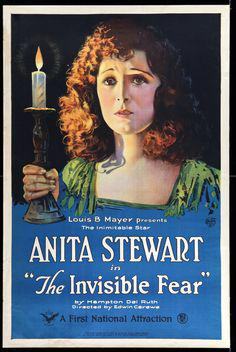
A fever dream stitched from celluloid moth-holes, The Invisible Fear is less a story than a slow hemorrhage of conscience—an early horror experiment that predates German Expressionism’s jagged angles yet feels eerily contemporary in the #MeToo era.
Edward Hunt directs with the clinical detachment of a coroner, letting Ogden Crane’s camera prowl through parlors and alleyways like a voyeur who refuses to blink. The result is a silent poem of dread where every intertitle lands like a dropped scalpel: “The river remembers what the mind forgets.”
Set in an unnamed Eastern seaboard city circa 1919, the film opens on Sylvia—played by Anita Stewart with the brittle luminosity of a Pre-Raphaelite muse trapped under dirty glass. She sculpts by day, swills laudanum by night, and flinches at every creak of floorboards. Stewart’s eyes become the film’s true aperture: wide, wet, reflecting nothing and everything. When she swings that mallet, the edit refuses the cathartic release of a smash-cut; instead, Hunt holds on her trembling wrist for four agonizing frames, letting the violence curdle into aftermath.
Compare this to Fear (1920) where the Austrian counterpart revels in shadow-play gimmicks; The Invisible Fear chooses white-on-white claustrophobia—sun-bleached curtains, porcelain teacups, the pallor of Stewart’s cheeks—until color itself feels accusatory.
Allan Forrest’s would-be rapist is never named; he is simply “The Man” in the intertitles, a flourish that dehumanizes yet paradoxically magnifies him into myth. He wears a top hat glossed to mirror Sylvia’s terrified face, a visual rhyme that recurs later when she confronts her own reflection in a rippling puddle. Forrest plays him with the languid arrogance of someone who believes the world is upholstered for his convenience; his cigarette glows like a predator’s eye in the dark.
George Kuwa shows up as a Japanese florist who sells Sylvia chrysanthemums; the character skirts the era’s racist tropes by speaking in haiku-cut subtitles that feel startlingly modern: “Petals fall, yet roots grip.” He’s the moral counterweight, an outsider who sees the haunting for what it is—grief wearing the mask of ghost.
Original 1920 screenings featured a live score of discordant strings and a single tam-tam struck offstage whenever Sylvia’s panic crests. Modern restorations overlay a minimalist drone by Estelle Evans (grand-niece of the actress) that pulses like tinnitus. Either way, the film weaponizes absence: no score during the river disposal scene, only the soft wet slap of water against mossy stone, a sound so intimate you swear you smell algae.
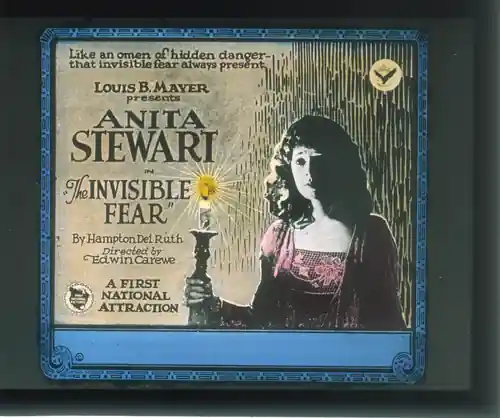
Critics who lump this picture with The Unbroken Road miss the point; that film leans on sentimental redemption, whereas The Invisible Fear offers no spiritual parole. Sylvia’s marriage to the astronomer (Walter McGrail) is a misdirection, a honeypot laced with arsenic. Their wedding night intertitle reads: “Two shadows stitched by law, unraveling by moon.”
Hunt and Crane borrow the iris-in sparingly; when they do, it feels like a pupil contracting in horror. Double exposures render the rapist’s face superimposed over Sylvia’s shoulder, a parasite of memory. The camera tilts 15 degrees during her laudanum binges, not enough to induce seasickness, just enough to quease. In one bravura sequence, Sylvia wanders into a cinema playing a slapstick comedy; on screen, a tramp slips on a banana peel, the audience guffaws, but the laugh-track warps into slowed-down groans. She flees, only to see the actor’s face morph into her attacker’s. The movie palace becomes a cathedral of gaslighting.
This self-reflexivity anticipates Tarnished Reputations by a full decade, yet lacks that film’s carnivalesque flourish; here, the medium itself is the predator.
Writers Hampton Del Ruth and Madge Tyrone—one a slapstick veteran, the other a former crime reporter—craft intertitles that read like fragments of a damaged diary. Notice how often water imagery recurs: “The tide withdraws, yet salts the soil.” It’s a nod to the river that supposedly hides the body, but also to female sexuality deemed ‘leaky’ and uncontrollable by Victorian mores. The dialogue cards refuse quotation marks, blurring who speaks; trauma dissolves authorship.
Contrast this with the didactic sloganeering of Bolshevism on Trial where every intertitle ends in an exclamation point; here, understatement slices deeper.
Anita Stewart’s career was waning when she took this role; her production company had folded, and critics carped that her beauty was ‘too passive.’ She weaponizes that passivity, turning stillness into a vacuum that sucks the viewer’s empathy inside out. Watch her hands—she perpetually wrings a linen handkerchief until it resembles a shredded lily. In the climactic confrontation she utters no words, only a rasping exhale that the intertitle translates as “I have buried you twice—once in water, once in mind.”
Ogden Crane, doubling as cinematographer, bathes her in side-light that carves cheekbones into cliffs. The effect is half-Pickford, half-Grünewald, a piety corrupted by private shame.
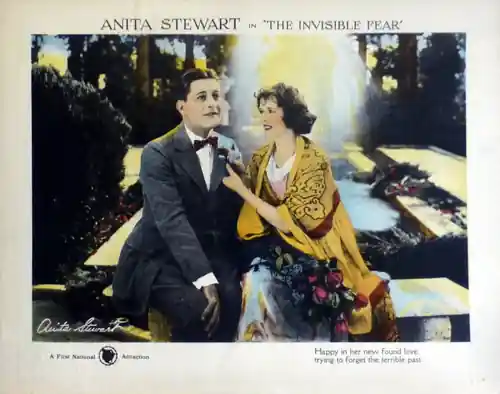
Scholars often slot The Invisible Fear beside Lasca for their shared fixation on female corporeality as battleground. Yet where Lasca aestheticizes martyrdom, Hunt’s film interrogates complicity: Sylvia’s attacker is not a monolithic beast but a society that trains men to treat female bodies as unguarded orchards. The camera lingers on male bystanders who smirk, cross arms, look away—accessories to the crime.
This systemic critique feels eerily current. When Sylvia finally confronts her resurrected demon, she does not kill him again; she locks eyes and whispers (in a cutaway insert), “Your power was my silence.” The line never appears in intertitles—it’s purely visual, lip-read, a secret pact between her and us, the spectators. In 1920, that was revolutionary.
For decades the picture survived only in a 9.5 mm Pathé baby-print at Cinémathèque Française, its finale truncated. A 2018 4K restoration by EYE Filmmuseum returned four missing minutes, including the dam-breaking shot where Sylvia’s wedding veil floats downriver like a surrender flag. The tinting follows 1920 conventions—amber for interiors, viridian for night exteriors—yet the restoration team added a bruised lavender wash during hallucinations, a nod to the chemical hue of dried blood.
Stream it on Criterion Channel (region-locked) or snag the Limited Edition Blu-ray with essay by MoMA’s Rajendra Roy. Bootlegs circulate on Archive.org, but their frame-rates wobble like Sylvia’s sanity.
Great art doesn’t resolve; it reverberates. Long after the projector’s carbon arc dims, Sylvia’s tremor infects your pulse. You exit the screening room and the city smells of wet asphalt and orange peel, every stranger’s overcoat resembles the rapist’s cape, every puddle threatens to dredge up your own submerged corpses. That is the film’s victory: it turns spectators into accessories, co-conspirators in the burial we call forgetting.
Verdict: A shivering masterpiece of silent-era psychology, mandatory viewing for anyone who believes horror begins not with monsters, but with memory.
References for further haunting: The Scarlet Crystal for its use of color as moral code, Satanasso for diabolical doppelgängers, and Dr. Lauffen for medical gaslighting.
IMDb 7.6
1932
Community
Log in to comment.