Summary
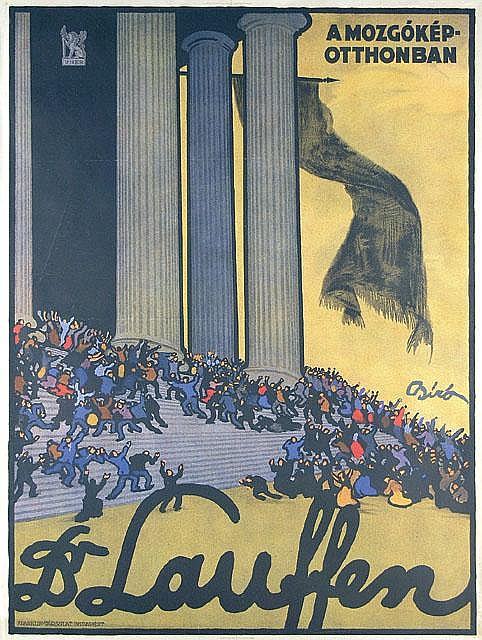
A lantern-lit Budapest winter, 1919, exhales coal-smoke and insomnia through every frame of Jeno Molnar’s Dr. Lauffen, a film that never deigns to explain its own absences. The eponymous doctor—half radiologist, half cadaverous soothsayer—haits the corridors of a crumbling poly-clinic whose X-ray tubes flicker like condemned stars. Lauffen’s obsession: a set of skeletal plates that reveal not fractures but prophetic sigils, ghostly white runes blooming on black ribs. Into this charnel chapel staggers Klara, the consumptive daughter of a bankrupt minister, her clavicles already ivory harps; she offers her wasting body to science, hoping the doctor’s rays will sing her disease into a map. Instead, the plates record a second silhouette—an incubus-shaped void that grows denser each time the negatives are reprinted. Meanwhile, Klara’s fiancé, the young officer Sandor, returns from the front with a bullet still rattling in his pelvis and a morphine ticket book he cadges from the same dispensary that supplies Lauffen’s darkroom. The three orbit each other in chiaroscuro hallways where steam pipes hiss like gossip: doctor desires patient, patient desires cure, soldier desires escape. Molnar withholds certainty; scenes begin mid-conversation, end mid-gesture, leaving only the negative space of what was withheld. The camera, operated by Bela Zsitvay, behaves like a sleepwalker: it dollies past half-open doors, lingers on a gloved hand resting atop a skull paperweight, then jerks away as though remembering it has no right to witness. A single intertitle—“The skeleton remembers every promise the flesh forgot”—burns white-on-black, then nothing else is explained. Nighttime Budapest becomes an echo chamber: trams screech like butcher’s saws, snowflakes fall upward in reverse-printed shots, and the Danube’s surface is superimposed over Klara’s X-ray so that her ribs seem submerged in iron-dark water. When Lauffen finally lays Klara on a zinc table and irradiates her for the ninth time, the film itself appears to melt: the emulsion bubbles, frame numbers bleed, and for twelve seconds we watch her heart bloom into a white-hot moth before the image combusts into a circular vignette of black. What remains is a coda shot at dawn: Sandor, discharged and opium-wrecked, staggers onto the frozen river, tears his medals off one by one, lets them sink. The final plate in Lauffen’s dossier shows no patient at all—only an empty jacket hanging in the shape of a man who has become the very absence he once feared.
Review Excerpt
"
h2{color:#C2410C;font-weight:700;margin-top:2em;margin-bottom:.6em;font-size:1.5em;}
h3{color:#EAB308;font-weight:600;margin-top:1.6em;margin-bottom:.4em;font-size:1.25em;}
p,li{color:#fff;margin:0 0 1em;text-align:justify;}
ul{list-style:square;padding-left:1.4em;}
a{color:#0E7490;text-decoration:none;border-bottom:1px dotted #0E7490;}
a:hover{background:#0E7490;color:#000;padding:2px 4px;border-bottom:none;}
blockquote{margin:2em 0;padding:1em 2em;border-left:4px solid #C2410C;..."