DbcultAccessing Vault...
4.2/10
Senior Film Conservator
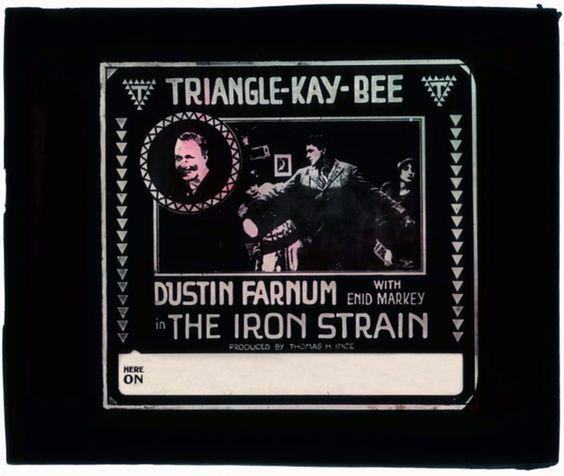
A definitive 4.2/10 rating for a film that redefined the boundaries of cult cinema. The Iron Strain remains a cornerstone of transgressive art.
Stepping back into the cinematic landscape of the early 20th century, one encounters 'The Iron Strain' (1915), a silent film that, even today, resonates with a certain audacious spirit. It's a narrative deeply entrenched in the prevailing cultural anxieties and romantic ideals of its era, painting a vivid, if sometimes jarring, picture of contrasting worlds: the delicate refinement of San Francisco society and the rugged, untamed frontier of Alaska. Directed with a keen eye for dramatic tension and character evolution, this feature offers more than mere entertainment; it functions as a compelling sociological artifact, reflecting societal perceptions of gender, class, and the transformative power of nature.
At its core, 'The Iron Strain' is a story of metamorphosis, driven by the compelling presence of Enid Markey as Octavia Van Ness. Octavia begins her journey as a quintessential San Francisco social butterfly, a creature of delicate constitution and, one might infer, equally delicate sensibilities. Her ailment, a vague malady often depicted in early cinema as a symptom of over-civilization or societal ennui, necessitates a drastic change of scenery. Her grandfather, Ezra Whitney, a mining king whose practical wisdom undoubtedly stems from a life of grappling with elemental forces, diagnoses not just a physical ailment but a spiritual one. His solution? A radical transplantation to the wild, unforgiving expanse of Alaska, a land he hopes will not only restore her health but also temper her spirit and, perhaps, provide a more 'suitable' mate than the preening, gilded youths of her Californian milieu. This initial premise immediately sets up a fascinating dichotomy, a collision of the cultured and the crude, the delicate and the durable, which promises a rich vein for dramatic exploration.
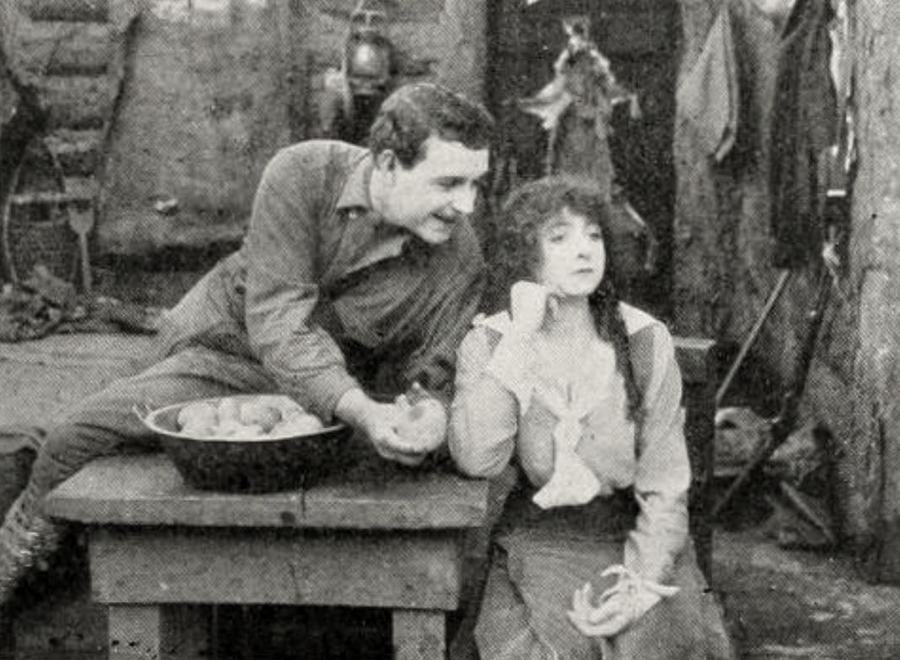
Upon their arrival in the frosty northern climes, the narrative introduces 'Chuck' Hemingway, portrayed by the formidable Dustin Farnum. Hemingway is a man whose exterior belies a more complex inner world. Octavia, with her urban-bred prejudices, dismisses him as a mere 'sourdough,' a rough-hewn product of the wilderness. However, Ezra Whitney, possessing a more discerning eye and perhaps a deeper understanding of human nature, recognizes Hemingway for what he truly is: a young collegian from the East, a man who has chosen the rugged life of the frontier, perhaps in search of something more authentic than the drawing-room dramas of polite society. This revelation adds a layer of intrigue to Hemingway's character, suggesting a deliberate choice rather than a lack of refinement. It also subtly critiques Octavia's superficial judgment, setting the stage for her eventual re-evaluation of worth.
The dynamic between Octavia and Hemingway is, to put it mildly, contentious. Her rejection of his advances, born from her entrenched class biases and perhaps a fear of the unfamiliar, awakens within him what the film's synopsis pointedly terms 'the caveman instinct.' This phrase, loaded with early 20th-century psychological and anthropological implications, speaks to a primal, pre-socialized drive, a desire to claim and possess. The culmination of this 'instinct' is a truly startling act: the day before Octavia is scheduled to return to civilization, Hemingway kidnaps her and forces her into a marriage. This plot point, viewed through a contemporary lens, is deeply problematic, even disturbing. Yet, within the context of its time, and indeed, within the film's own internal logic, it is presented as a catalyst for transformation, a drastic measure taken by a man convinced of his own suitability and the ultimate benefit to the woman he desires to 'tame' or 'save.' It's a narrative device that, while ethically dubious by modern standards, was not uncommon in melodramas of the era, where strong-willed men often resorted to extreme measures to win over resistant heroines, often with the implied justification that they knew what was 'best' for them. One might compare the audacity of such a premise to the sensationalism often found in serials like The Adventures of Kathlyn, though 'The Iron Strain' aims for a more dramatic, rather than purely adventurous, resolution of its central conflict.
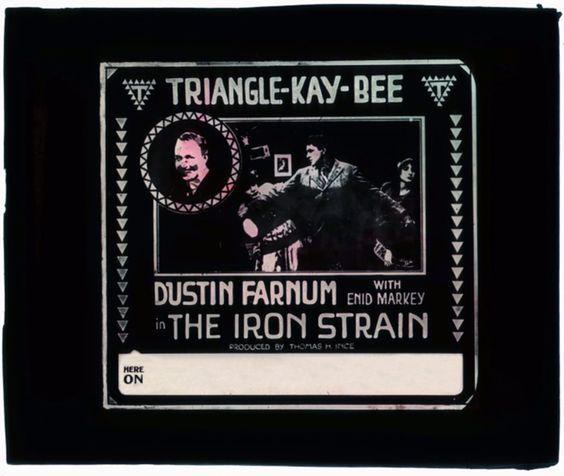
Hemingway installs Octavia in his cabin, and here the narrative takes another intriguing turn. Despite the coercive nature of their union, the film explicitly states that 'she suffers no more harm than if she were with her mother.' This line is crucial, for it attempts to soften the blow of the abduction and forced marriage, framing it not as an act of cruelty but as a protective, if unconventional, form of guardianship. It implies that Hemingway's intentions, though expressed in a brutal manner, are ultimately benign, aimed at her well-being. This domestic imprisonment, rather than breaking her spirit, begins a profound physical and psychological re-education. She is thrust into a life of self-sufficiency, away from the debilitating luxuries of her former existence.
Six months later, the transformation is complete. Octavia is no longer the wilting flower of San Francisco. She is robust, healthy, and, tellingly, 'rejoices in housework.' This detail is particularly revealing of the film's underlying ideology. The domestic sphere, often seen as a constraint for women in more progressive narratives, is here presented as a source of strength and fulfillment. Octavia finds purpose and physical vigor in the daily routines of frontier life, a stark contrast to the idleness that seemingly led to her initial decline. Yet, despite her newfound strength and competence, her antagonism towards Chuck persists. The forced nature of their bond, the violation of her autonomy, remains a barrier to genuine affection. It is a testament to the film's nuanced portrayal that her resentment isn't simply erased by her improved health; the psychological scars of the 'caveman instinct' linger.
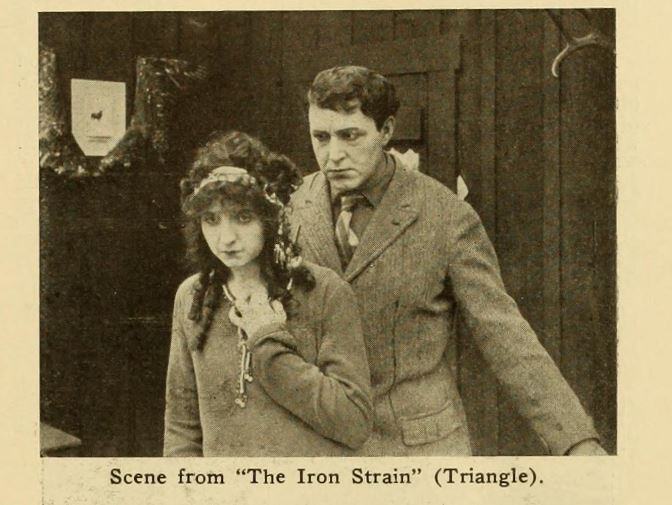
The catalyst for the final shift in Octavia's feelings arrives in the form of Kitty Malloy, the flamboyant 'queen of the Arctic Cabaret.' Kitty's sudden appearance injects a potent dose of jealousy into the narrative, a classic romantic trope. The threat of a rival, particularly one as vivacious and uninhibited as Kitty, forces Octavia to confront her true feelings. It is through the prism of potential loss that she finally sees Hemingway not as a captor, but as a man of 'true worth.' This realization, sparked by the green-eyed monster, is the turning point, leading her to finally embrace love for her husband. The irony is palpable: it takes another woman to make Octavia appreciate the man who forcibly took her, a narrative twist that, while reinforcing conservative notions of female rivalry, also speaks to a universal human tendency to value what might be lost. The emotional journey is complex, even if its ultimate resolution feels somewhat contrived by modern standards.
Dustin Farnum, a prominent star of the era, brings a rugged authenticity to Chuck Hemingway. His portrayal manages to convey both the brute force of his actions and an underlying sincerity, making his 'caveman instinct' feel less like pure villainy and more like a misguided, albeit intense, form of devotion. Farnum was known for his strong, masculine screen presence, often playing characters who embodied American ideals of self-reliance and frontier spirit, much like the broader themes often explored in Westerns or films depicting rural life such as The Pendleton, Oregon, Round-Up. Enid Markey, as Octavia, undergoes the most significant transformation, effectively conveying both the initial fragility and the eventual resilience of her character. Her journey from delicate socialite to robust frontierswoman is central to the film's success, and Markey navigates this arc with considerable skill, relying on the exaggerated expressions and body language characteristic of silent film acting to communicate Octavia's internal struggles and triumphs. The supporting cast, including Louise Glaum as the intriguing Kitty Malloy, adds depth to the narrative, providing foils and catalysts for the main characters' development.
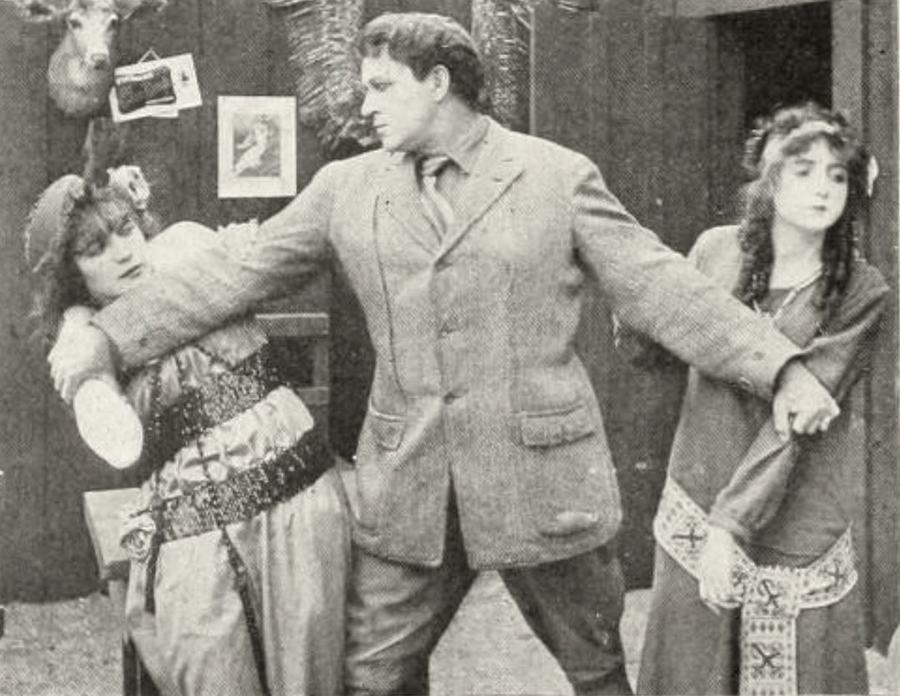
C. Gardner Sullivan's screenplay, while adhering to the melodramatic conventions of the time, explores themes that remain perennially fascinating: the tension between civilization and nature, the construction of masculinity and femininity, and the idea of love emerging from unexpected, even coercive, circumstances. The film suggests that true strength and happiness for Octavia could only be found by shedding the artificiality of urban life and embracing a more fundamental existence, guided by a man whose 'iron strain' matches the resilience of the land itself. This romanticization of the wilderness as a crucible for character development is a common motif in American literature and cinema, often presenting the frontier as a place where one's true self is revealed, stripped of societal pretense.
It is impossible to discuss 'The Iron Strain' without acknowledging its controversial elements, particularly the forced marriage. This plot device, while jarring to modern sensibilities, was a reflection of certain romantic fantasies prevalent in early 20th-century popular culture, where a woman's initial resistance to a strong, dominant male figure was often seen as a prelude to her eventual, passionate surrender. Films like Three Weeks, though likely more explicit in its depiction of unconventional relationships, also played with societal taboos and the allure of forbidden or passionate love that defied conventional morality. The idea that a woman needed a 'strong hand' or a 'primitive' experience to truly flourish was a pervasive, if problematic, trope. However, to dismiss the film solely on this basis would be to overlook its other qualities. As a historical document, it offers invaluable insight into the evolving social mores and narrative structures of silent cinema.
Visually, one can imagine 'The Iron Strain' leveraging the dramatic Alaskan landscapes to great effect. Silent films often relied heavily on visual storytelling, using expansive vistas to convey mood and scale. The stark beauty of the Alaskan wilderness would have provided a powerful backdrop to Octavia's personal drama, mirroring her internal struggle and eventual hardening. The contrast between the opulent, if sickly, interiors of San Francisco and the rugged, unadorned cabin in Alaska would have been visually striking, emphasizing the thematic journey from artificiality to authenticity. The cinematography, even without specific details, would have aimed to capture the grandeur and isolation of the setting, making it an active participant in the narrative rather than a mere backdrop.
The film's resolution, with Octavia and Hemingway's return to California and their reunion with her family, brings the narrative full circle. It signifies not just a physical return but a symbolic integration. Octavia returns not as the fragile socialite who left, but as a woman transformed, having embraced a strength forged in the crucible of the North. Her love for Hemingway, now freely given, validates his controversial methods within the film's own moral framework. The 'iron strain' of the title can be interpreted in multiple ways: the enduring strength of the Alaskan landscape, the unyielding will of Hemingway, and ultimately, the newfound resilience and moral fiber of Octavia herself. It’s a testament to the idea that true character is often forged not in comfort, but in adversity, a theme that resonates across many dramatic narratives, whether they are set in the wilderness or within the confines of societal struggle, much like the internal battles depicted in films such as The Juggernaut.
In conclusion, 'The Iron Strain' stands as a fascinating example of early cinematic storytelling, unafraid to tackle complex, even contentious, themes. It’s a melodrama par excellence, utilizing heightened emotions and dramatic scenarios to explore the boundaries of love, autonomy, and personal transformation. While its narrative choices regarding consent and 'caveman' romance are undeniably dated and require critical contextualization, the film’s exploration of character development, the allure of the wilderness, and the clash of social strata remains compelling. It’s a reminder of a time when cinema was still defining its language, experimenting with what stories could be told and how. For those interested in the evolution of film and the social history it reflects, 'The Iron Strain' offers a rich, if sometimes challenging, viewing experience, showcasing the bold, often unapologetic, narrative impulses of early 20th-century Hollywood. The film, like its protagonist, undergoes a journey, from a simple premise to a complex tapestry of human emotion and societal commentary, leaving an indelible mark on the landscape of silent era cinema.
The enduring power of films like 'The Iron Strain' lies not just in their ability to entertain but in their capacity to open windows into past eras, revealing the cultural anxieties, aspirations, and even the problematic tropes that shaped popular entertainment. It’s a robust piece of cinematic history, offering a glimpse into the 'iron strain' of both its characters and the industry itself, which was then, as now, constantly striving to capture the human condition in all its messy, magnificent glory.
IMDb 6.6
1915
Community
Log in to comment.