DbcultAccessing Vault...
Cult Review
Senior Film Conservator

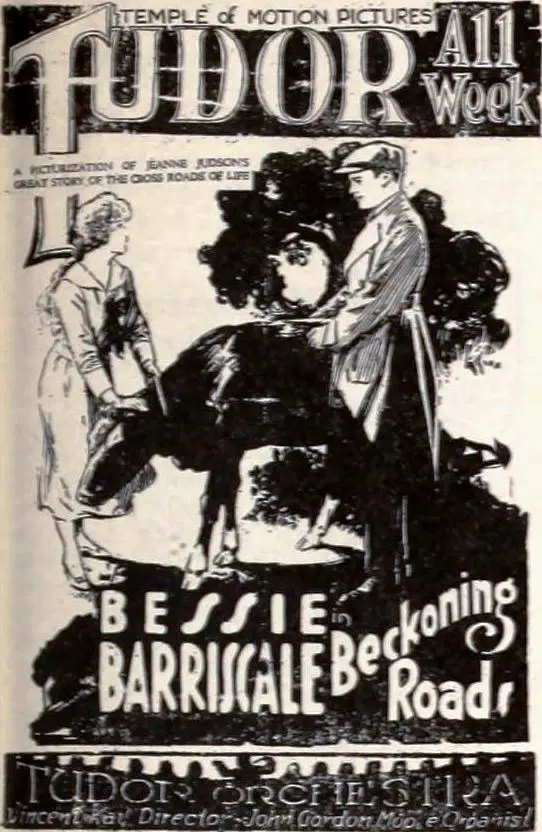
Few cinematic narratives capture the raw essence of human resilience and the relentless pursuit of justice quite like Beckoning Roads. This is not merely a story; it is a visceral journey through the landscape of betrayal, a testament to the indomitable spirit of a woman wronged, and a meticulously crafted exploration of societal stratification and the corrupting influence of unchecked power. Directed with a keen eye for dramatic tension and featuring a cast that imbues each character with palpable depth, this film remains a compelling artifact, resonating with themes that are, regrettably, as pertinent today as they were upon its release.
At its heart, Beckoning Roads is the odyssey of Marquita Shay, portrayed with a compelling blend of vulnerability and steely resolve by Bessie Barriscale. We first encounter Marquita as the cherished adopted daughter of John Grayson, a Canadian farmer whose simple, honest life provides a stark contrast to the labyrinthine deceit that will soon engulf her. Grayson, desiring a better future for Marquita, sends her to a St. Louis boarding school – a seemingly innocuous decision that acts as the very pivot upon which her fate turns. It is here, amidst the burgeoning social circles of the city, that she encounters Humphrey Wells, the scion of a powerful, affluent financier. Their romance, initially blossoming with all the promise of youthful love, swiftly leads to marriage, seemingly elevating Marquita into a world of privilege.
However, the gilded cage of the Wells household soon reveals its cruel bars. Treated not as a daughter-in-law but as a mere servant, Marquita endures the casual disdain and outright scorn of her new family. This initial phase of her suffering is crucial, establishing the profound emotional toll that societal prejudice and familial cruelty inflict. Barriscale's nuanced performance during these scenes conveys a quiet dignity, a woman absorbing blows but not yet broken. This period of subjugation is not merely a plot device; it is a foundational element that fuels her later transformation. It echoes the quiet struggles seen in films like Without Honor, where characters grapple with their place in rigid social hierarchies, or even the intense emotional journey of protagonists in The Nightingale, though their paths diverge dramatically in their ultimate responses.
Disillusioned and heartbroken, Marquita retreats to the only sanctuary she knows: her adopted father's farm. Yet, this return brings not solace, but a more profound tragedy. She discovers Grayson has committed suicide, a desperate act precipitated by a fraudulent stock deal orchestrated by none other than Wells senior, her father-in-law. This revelation transforms Marquita's personal pain into a righteous fury. The injustice of it all – her benefactor, a man of integrity, driven to despair by the avarice of the powerful – solidifies her resolve. It's a moment of profound awakening, shifting her from a reactive victim to a proactive agent of change. This pivotal turn resonates with the fierce determination of characters in narratives like Alias Mary Brown, where identities are reshaped by the pursuit of justice, or even the grander scale of vengeance seen in Madame Du Barry, albeit in different societal contexts.
The screenwriters, Harvey Gates and Jeanne Judson, masterfully pivot the narrative here, setting the stage for Marquita's calculated revenge. The plot, while melodramatic in its broad strokes, is grounded in a psychological realism concerning the genesis of vengeance. It’s not a sudden, irrational outburst, but a slow-burning fire ignited by successive layers of injustice. The choice of a stock swindle as the catalyst for Grayson's ruin is particularly poignant, highlighting the vulnerability of honest individuals to the machinations of unscrupulous financiers – a theme that, sadly, echoes through financial history and remains disturbingly relevant.
Time, the great healer and strategist, passes. Marquita, now a woman forged in the fires of adversity, reappears in the bustling, cutthroat world of New York. Her transformation is complete: no longer the naive country girl or the subservient wife, she is a woman of sharp intellect and unwavering purpose. She secures a position as secretary to Baron Brinker, a seemingly astute move that places her directly within the orbit of her enemies. It is soon revealed that Brinker was not merely an acquaintance, but a co-conspirator with Wells senior in the very scheme that destroyed Grayson. This intricate web of deceit, meticulously woven by Gates and Judson, elevates the narrative beyond simple revenge, turning it into a chess match of wits and wills.
Marquita's role as Brinker's secretary is not one of passive observation, but active infiltration. She uses her position to gather intelligence, to understand the inner workings of their corrupt empires, and to identify their vulnerabilities. This period showcases Marquita's remarkable intelligence and self-control. She maintains her composure, her identity as an avenging angel hidden beneath a veneer of professional competence. This intricate plotting, where the protagonist infiltrates the enemy's lair, brings to mind the calculated maneuvers seen in films like The Door Between, where hidden agendas drive the plot forward, or the patient, strategic dismantling of power structures in Veritas vincit.
With the precision of a master strategist, Marquita begins to dismantle the financial empires of Wells and Brinker. The film, while not delving into the minutiae of stock market manipulation, conveys the devastating impact of her actions. She leverages her inside knowledge, perhaps exposing their illicit dealings, manipulating their investments, or strategically undermining their credibility. The specifics are less important than the outcome: she systematically brings them to their knees, orchestrating their financial ruin with a satisfying, almost poetic justice. The visual storytelling, even in its silent film era context, would have conveyed the palpable tension and the slow, inevitable collapse of these powerful men.
This act of vengeance is not merely about personal satisfaction; it is a rectification of a profound wrong, a rebalancing of the scales of justice that had been so cruelly tipped. Marquita's actions serve as a powerful critique of the era's unchecked financial power and the impunity with which the wealthy often operated. Her triumph is a victory for the underdog, a resounding statement that even the most formidable fortresses of corruption can be breached by intelligence and unwavering will. This thematic resonance can be compared to the struggle against overwhelming odds in adventure narratives like The Captain Besley Expedition, where perseverance is key, or the fight for moral victory in The Law of Compensation.
Amidst the wreckage of her enemies' fortunes, Marquita finds an unexpected path to personal redemption and reconnection. Humphrey Wells, her estranged husband, witnesses his father's downfall and, in a moment of profound moral clarity, renounces his corrupt parentage. This is a crucial turn, preventing the narrative from devolving into pure, unadulterated vengeance. Humphrey's realization and subsequent disavowal of his father's actions allow for the possibility of reconciliation, adding a layer of emotional complexity to the story. It suggests that even within families steeped in corruption, individual moral compasses can eventually right themselves.
Their reunion is not a simple return to past bliss, but a forging of a new relationship, one built on a shared understanding of justice and a mutual rejection of the past's toxic influences. This element of forgiveness and the possibility of a new beginning elevates Beckoning Roads beyond a mere revenge tale. It speaks to the enduring power of love and the capacity for personal growth, even in the shadow of immense suffering. The film concludes not with a triumphant flourish of destruction, but with the quiet promise of a rebuilt future, a path forward chosen with clear eyes and mended hearts. This nuanced ending provides a satisfying emotional arc, reminiscent of the complex interpersonal dynamics in films like Ashes of Love or the journey of self-discovery in Casanova, though with entirely different narrative focuses.
The success of Beckoning Roads rests heavily on the shoulders of its cast, particularly Bessie Barriscale as Marquita Shay. Her performance is a masterclass in silent film acting, conveying a vast range of emotions – from innocent joy and profound sorrow to simmering rage and quiet determination – through expressive facial gestures and controlled physicality. She embodies the archetype of the strong female protagonist, a figure that was beginning to gain traction in early cinema, challenging traditional portrayals of women. Her journey from victim to avenger is utterly believable, making her a compelling figure for audiences then and now.
Joseph J. Dowling as Wells senior and George Periolat as Baron Brinker deliver suitably villainous performances, embodying the avarice and callousness required for their roles. Their portrayals provide the necessary foil for Marquita's heroism, painting them as truly despicable figures. Thomas Holding as Humphrey Wells navigates the difficult arc of a character caught between loyalty and morality, ultimately choosing the path of integrity. The supporting cast, including Niles Welch, Dorcas Matthews, Emmett King, and Gloria Holt, contribute to the rich tapestry of the film's world, creating a believable social environment against which the drama unfolds. The direction, while adhering to the conventions of its era, effectively builds tension and uses visual storytelling to convey the narrative's emotional beats and dramatic turning points. The editing, often a crucial but overlooked aspect of silent film, would have been instrumental in pacing Marquita's meticulous plan and the subsequent downfall of her adversaries.
Beckoning Roads, penned by Harvey Gates and Jeanne Judson, is more than just a captivating narrative; it is a profound social commentary. It critiques the stark class divisions of the era, the unchecked power of the wealthy elite, and the systemic injustices faced by those without influence. Marquita's story is a powerful affirmation of individual agency and the potential for one person to challenge and dismantle oppressive structures. It speaks to the universal human desire for fairness and the deep-seated need to see justice served, even when the odds seem insurmountable. This enduring appeal aligns it with other classics that explore grand themes, such as Carmen's exploration of passion and societal constraints, or the epic scale of A magyar föld ereje which often depicted struggles against larger forces.
The film's exploration of revenge is particularly nuanced. It's not presented as a base, destructive impulse, but as a carefully orchestrated act born out of profound grief and a desire to right a grievous wrong. Marquita's journey is one of personal growth, from a passive recipient of fate's cruelties to an active shaper of her own destiny and, by extension, the destinies of those who wronged her. This transformational arc is what makes Beckoning Roads so memorable and impactful. It's a testament to the power of cinema to reflect and critique society, while simultaneously offering a compelling and emotionally resonant story. Its echoes can be felt in later films that championed strong female protagonists or explored the dark underbelly of financial dealings, making it a significant, if perhaps understated, piece of cinematic history. The journey from innocence lost to a formidable force for justice is a narrative that continues to beckon audiences, ensuring that Marquita's roads, though long traveled, remain compelling.
IMDb —
1926
Community
Log in to comment.