DbcultAccessing Vault...
Cult Review
Senior Film Conservator
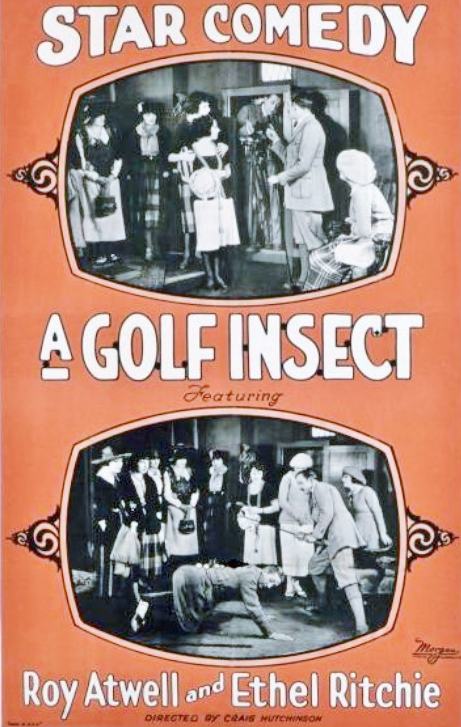
In the nascent years of the silent era, the trope of the imposter was a fertile ground for comedic exploration, yet few films capture the sheer anxiety of the 'fake it until you make it' ethos as vibrantly as A Golf Insect. Released in 1916, this Hal Conklin-penned narrative centers on Roy, played with a frantic, nervous energy by Roy Atwell. Atwell, a veteran of the stage known for his 'stuttering' comedic persona, translates that verbal hesitation into a physical performance of profound insecurity. The film functions not merely as a slapstick romp but as a scathing indictment of the burgeoning leisure class of the early 20th century, where identity was often a curated accessory rather than a reflection of genuine skill.
The premise is deceptively simple: Roy has lied his way into the upper echelons of a golfing community. He is the quintessential 'insect'—a pest buzzing around the ears of the elite, feeding on their admiration. Much like the characters found in Don't Tell Everything, the tension arises from the yawning chasm between the public mask and the private reality. When Roy is finally coerced into a match, the film shifts from a comedy of manners into a visceral display of mechanical incompetence. The golf club, an instrument of grace in the hands of a professional, becomes a weapon of self-destruction in Roy's uninitiated palms.
Visually, A Golf Insect utilizes the expansive greens of the country club to emphasize Roy's isolation. In many silent comedies of the era, such as Captain Kidd, Jr., the environment is a playground for adventure; here, the golf course is a panopticon. Every swing is scrutinized by a gallery of expectant onlookers, their judgmental gazes acting as a silent chorus to Roy's impending doom. The cinematography, while rudimentary by modern standards, effectively captures the spatial relationship between the golfer and the daunting distance of the hole—a distance that feels increasingly metaphysical as Roy's failures mount.
The editing rhythm accelerates as the match progresses, mirroring Roy’s escalating panic. We see the influence of early vaudevillian timing, where the joke is not just in the missed hit, but in the elaborate preparation and the subsequent, pathetic attempt to maintain dignity. This thematic thread of maintaining appearances at all costs is a recurring motif in the works of the time, often seen in domestic comedies like Scrambled Wives, where the architecture of a lie requires constant, exhausting maintenance.
Ethel Ritchie provides a necessary foil to Atwell’s neurosis. As the object of his affection and the primary reason for his elaborate deception, her presence raises the stakes from mere social embarrassment to romantic catastrophe. Ritchie’s performance is subtle, embodying the idealized expectations of the era’s debutantes. Her belief in Roy’s prowess is the engine that drives the plot toward its inevitable collision with truth. One cannot help but compare this dynamic to the high-stakes emotional maneuvering found in The Price of a Good Time, where the consequences of one's choices are weighed against the unforgiving standards of society.
Furthermore, the screenplay by Hal Conklin exhibits a sophisticated understanding of situational irony. Conklin avoids the easy out of a 'miracle win.' Instead, he leans into the discomfort. The humor is derived from the granular details of Roy’s ignorance—the way he holds the club like a shovel, his complete lack of understanding regarding the physics of the sport, and his desperate attempts to improvise a vocabulary of expertise. It is a masterclass in the 'comedy of the amateur,' a subgenre that would later be perfected by the likes of Buster Keaton, yet finds a raw, unpolished ancestor here.
To understand A Golf Insect, one must acknowledge the cultural zeitgeist of 1916. America was on the precipice of global engagement, a theme explored in documentaries like America Goes Over, yet the domestic focus remained largely on the aspirations of the middle class. Golf was transitioning from an esoteric Scottish import to a symbol of American success. By satirizing the 'golf insect'—a term then used to describe those obsessed with the sport—the film critiques the superficiality of these new status symbols.
The film’s exploration of the 'phantom' athlete—the man who exists only in the stories he tells—echoes the darker, more dramatic themes of identity found in The Pursuit of the Phantom. While Roy’s journey is played for laughs, there is an underlying pathos to his desperation. He is a man so alienated from his own reality that he must construct a secondary, more impressive self just to feel worthy of notice. This psychological depth, though buried under layers of 1910s slapstick, gives the film a resonance that outlasts its short runtime.
The technical aspects of the film, from the lighting of the outdoor scenes to the use of title cards, serve to highlight the absurdity of the situation. The title cards in A Golf Insect are particularly sharp, often using the pseudo-technical jargon of golf to mock Roy’s incompetence. There is a linguistic playfulness here that suggests Conklin was writing for an audience that was intimately familiar with the frustrations of the game. Unlike the more rugged, outdoor dramas like King Spruce, which utilize the landscape as a site of masculine conquest, A Golf Insect uses the landscape as a site of masculine failure.
Roy Atwell’s physicality is the film’s greatest asset. His movements are jagged, out of sync with the fluid environment of the golf course. When compared to the more poised and deliberate movements of characters in Sporting Life, Atwell’s Roy appears almost alien. He is a glitch in the social matrix, a variable that does not compute with the established rules of the 'sporting life.' This contrast is where the film’s heart lies—in the struggle of the individual to conform to a mold that is fundamentally ill-fitting.
Reflecting on the film through a modern lens, A Golf Insect remains a fascinating artifact of early cinematic comedy. It predates the more polished sports comedies of the 1920s but contains all the DNA of the genre. The themes of class anxiety and the fragility of reputation are timeless, finding echoes in later silent works like Her Private Husband or the social critiques of The Unpainted Woman. Even as the specific cultural markers of 1916 fade, the image of a man standing over a ball, paralyzed by the weight of his own lies, remains a potent and hilarious image.
In the broader scope of silent film history, this short stands as a testament to the versatility of its cast and the sharp wit of its writer. While it may not have the epic scale of Tsar Nikolay II or the gritty intensity of Calibre 38, its modest goals are achieved with precision and flair. It is a minor masterpiece of social observation, proving that the greatest hazards on a golf course are not the sand traps or the water, but the lies we tell to keep ourselves afloat in the eyes of others. It is a film that reminds us that while we may try to hide our true selves, the 'insect' of truth will always find a way to bite.
IMDb 5.7
1937
Community
Log in to comment.