DbcultAccessing Vault...
6.5/10
Senior Film Conservator
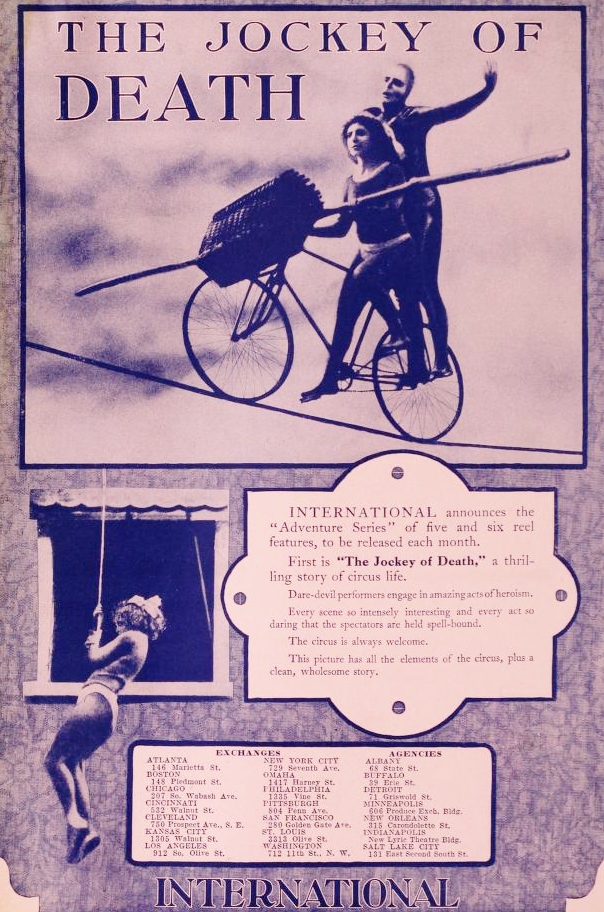
A definitive 6.5/10 rating for a film that redefined the boundaries of cult cinema. The Jockey of Death remains a cornerstone of transgressive art.
Stepping back into the nascent days of cinematic storytelling, before the advent of synchronized sound or even the full embrace of complex narrative conventions, we encounter films like "The Jockey of Death." This particular offering, emerging from the early 20th century, stands as a testament to the raw, visceral power of visual narration. It's a journey into a historical artifact, a flickering glimpse into a bygone era where emotions were writ large on faces, and stories unfolded through gesture and intertitle. Reviewing such a piece is less about dissecting modern filmmaking techniques and more about archaeological excavation – unearthing the foundations of our cinematic language and appreciating the artistry within its constraints. It demands a different lens, one that values historical context and the pioneering spirit of its creators. While many early films have faded into obscurity, or exist only in fragmented forms, the essence of their storytelling, their ability to captivate an audience with fundamental human dramas, remains potent.
At its core, "The Jockey of Death" unfurls a tale steeped in the profound sorrow and enduring mystery of a child's inexplicable disappearance. The narrative commences with a haunting void: a young girl, seemingly swallowed by thin air, leaving behind only the agonizing questions of her fate. This initial premise, simple yet universally resonant, immediately establishes a somber tone, drawing the audience into a world grappling with an unsolved tragedy. The passage of fifteen years, an eternity in human experience, serves not to diminish the memory of the lost child but to deepen the scar left by her absence. It is within this extended period of silence and unresolved grief that the true machinations of the plot begin to stir. The film meticulously, if somewhat broadly by today's standards, crafts a world where the past is not truly past, where secrets lie dormant, waiting for the opportune moment to erupt. The revelation that finally brings the 'true reason' for her vanishing into the unforgiving light of day is presented as a catalyst, a shattering of the long-held peace, or perhaps, the long-endured anguish. This moment transforms the passive suffering into an active quest. Henri, the girl's cousin, steps forward from the periphery of grief to become the central agent of change. His decision to take 'action' is not born of rash impulsiveness but rather a slow, simmering realization that the truth, however painful, demands reckoning. It implies a deeper understanding of the injustice, a commitment to righting a historical wrong that has festered for far too long. The narrative, therefore, evolves from a lament of loss to a determined pursuit of restorative justice, painting Henri as a figure of unwavering resolve against a backdrop of prolonged sorrow and deceit. His journey becomes a symbolic battle against the erosion of truth, a personal crusade to honor a memory that time could not erase.
In the realm of silent cinema, the burden of conveying complex emotions and driving narrative momentum rests squarely on the shoulders of its performers. Without the aid of spoken dialogue, actors must rely on a heightened expressiveness, a ballet of facial contortions, exaggerated gestures, and piercing gazes to communicate their characters' inner turmoil and motivations. "The Jockey of Death" features a cast led by Alfred Lind, Trude Nick, and Miss Evelyn, each contributing to the tapestry of this early drama. Alfred Lind, often remembered for his daring stunts and athletic prowess, brings a compelling physicality to his role as Henri. As the cousin stirred to action, Lind's performance would have relied on a powerful, resolute bearing, his determination evident in his posture and the intensity of his movements. He embodies the archetype of the righteous avenger, his every step imbued with purpose. One can imagine his eyes, even through the grainy film stock, conveying a deep-seated anguish transformed into unwavering resolve. His portrayal of Henri is not merely reactive but proactive, a testament to the character's internal journey from passive mourner to active seeker of justice. Trude Nick, a versatile actress of the era, likely brought a nuanced emotional depth to her character. In silent film, actresses often carried the weight of expressing profound sorrow, fear, or vulnerability. Nick's performance would have been critical in conveying the prolonged suffering and the emotional landscape of a community scarred by loss, perhaps embodying the mother, sister, or another close relative of the vanished girl. Her ability to project these internal states through subtle shifts in expression or poignant body language would have been paramount. Miss Evelyn, whose specific role isn't detailed in the synopsis, undoubtedly contributed to the ensemble, her presence helping to flesh out the world and its inhabitants. The challenge for these actors was immense; they had to project emotions legible to an audience in the furthest rows, yet avoid caricature. Their performances, while perhaps appearing melodramatic to modern eyes, were the very language of silent film, a sophisticated code understood by contemporary audiences. They were pioneers, forging the very grammar of screen acting, laying the groundwork for all who would follow. The success of "The Jockey of Death" in sustaining its emotional impact and narrative drive would have been inextricably linked to their ability to master this unique theatricality, to make the unseen dialogue resonate through their very beings. These early stars, through their dedication to expressive physicality and emotional transparency, breathed life into stories without uttering a single word, a remarkable feat that continues to fascinate and inspire even today.
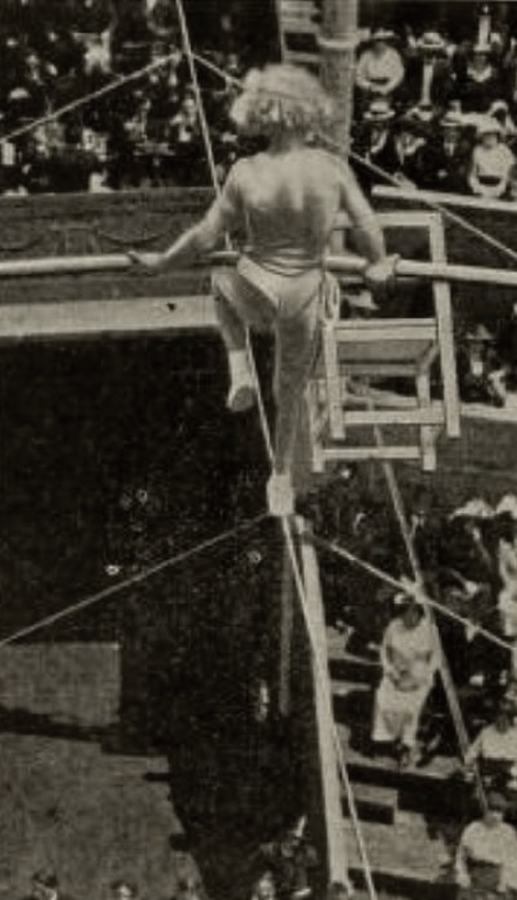
In the nascent years of cinema, the role of the director was often fluid, encompassing elements of writing, cinematography, and even acting. For "The Jockey of Death," the absence of an explicitly credited writer on record is not uncommon for this period, suggesting that the narrative might have been a collaborative effort, developed on set, or adapted from an uncredited source. This collaborative spirit, or the singular vision of an uncredited auteur, significantly shaped the film's aesthetic and narrative flow. The director, whose name is not explicitly provided in the details, would have been tasked with translating a compelling mystery into a visually coherent and emotionally resonant experience for an audience largely unaccustomed to the nuances of cinematic storytelling. This involved fundamental decisions regarding framing, editing, and the use of intertitles to bridge narrative gaps. Early cinematography, often static and stage-like, would have been employed to capture the performances and the unfolding drama. However, even within these technical limitations, a skilled director could employ innovative techniques to enhance the storytelling. Perhaps there were rudimentary close-ups to emphasize emotional states, or early experiments with parallel editing to build suspense, juxtaposing Henri's investigation with flashbacks to the girl's disappearance or the machinations of the culprits. The pacing, crucial for a silent film, would have dictated how quickly the mystery unraveled, how suspense was built, and how the emotional beats landed. A director's judicious use of intertitles, not merely as dialogue surrogates but as narrative signposts and emotional amplifiers, would have been vital in guiding the audience through the complex timeline of a fifteen-year-old mystery. The visual composition of each shot, though perhaps less sophisticated than later periods, would have been carefully considered to convey meaning – the stark emptiness of the place where the girl vanished, the determined stride of Henri, the shadowy figures of antagonists. The very act of staging and blocking actors to ensure their gestures and expressions were clear and impactful, even from a distance, was an art in itself. This early directorial approach, while seemingly primitive by today's standards, laid the groundwork for the sophisticated cinematic language we now take for granted. It was an era of experimentation, where every film was a step forward in understanding the unique grammar of the moving image. The director of "The Jockey of Death," through their choices in visual storytelling and performance guidance, contributed to this evolving art form, crafting a narrative that aimed to captivate and move its audience using the still-developing tools of the trade.
"The Jockey of Death" delves into universal themes that transcend the limitations of its silent medium, resonating with audiences then and, remarkably, now. Foremost among these is the inexorable passage of time and its complex relationship with memory and justice. The fifteen-year gap between the disappearance and the revelation is not merely a plot device; it's a profound statement on how time can both obscure truth and, paradoxically, bring it to light. It speaks to the enduring power of unresolved grief and the human yearning for closure. This extended period allows for the gradual decay of immediate evidence but also for the maturation of motives, the festering of guilt, or the quiet cultivation of a plan for retribution. The film implicitly asks: can justice truly be delayed for so long and still be meaningful? The pursuit of truth, an unwavering beacon in the narrative, is another central pillar. Henri's determination to uncover the 'true reason' for his cousin's vanishing speaks to a fundamental human desire for clarity and accountability. It's a testament to the belief that some truths, however deeply buried, demand to be unearthed, not just for personal solace but for the moral fabric of society. This theme is often explored in silent cinema, where the stark visual contrasts between innocence and guilt, light and shadow, serve to emphasize moral dilemmas. Finally, the theme of retribution forms the powerful engine of the latter half of the film. Once the truth is revealed, Henri's 'time for action' signifies a shift from passive suffering to active pursuit of justice. This isn't just about vengeance; it's about restoring balance, righting a wrong that has lingered for too long. In early cinema, justice was often portrayed with a clear, almost biblical certainty, reflecting societal values where good triumphed over evil, and villains received their just deserts. Henri's journey embodies this quest for moral equilibrium, making him a relatable figure for audiences who themselves grappled with questions of right and wrong in a rapidly changing world. The film, through its silent yet eloquent narrative, explores how these profound human experiences – the weight of time, the elusive nature of truth, and the burning desire for retribution – shape individual destinies and collective memory. It’s a powerful reminder that some stories, some quests, are timeless.
To fully appreciate "The Jockey of Death," one must situate it within the vibrant, experimental landscape of early 20th-century cinema. This was a period of rapid innovation, where filmmakers were still discovering the unique capabilities of the medium, moving beyond mere photographic documentation towards complex narrative artistry. "The Jockey of Death," with its focus on a prolonged mystery and a quest for justice, aligns with a burgeoning interest in dramatic storytelling that captivated audiences. In its exploration of suspense and the unraveling of a crime, it shares thematic DNA with films like A Suspicious Wife, where domestic intrigue and underlying tension drive the plot. While "The Jockey of Death" appears to lean into a more overt pursuit of justice, the element of hidden truths and their eventual exposure would have resonated strongly with audiences who enjoyed the thrill of unraveling a narrative puzzle. The film's dramatic intensity and the emotional weight of a long-lost child's story also draw parallels to the powerful melodramas of the era. One might find echoes of the profound emotional struggles seen in Rebecca the Jewess or Maria Magdalena, where characters grapple with societal prejudice and personal anguish. While the specific context differs, the heightened emotional stakes and the portrayal of individuals facing immense adversity are common threads. Furthermore, the film's narrative ambition to span fifteen years and explore a complex chain of events speaks to a growing sophistication in screenwriting, moving beyond simple vignettes towards more intricate plots. This ambition can be likened to the grand adventure narratives of the time, such as In Search of the Castaways, which also tackled extended journeys and the unearthing of long-held secrets. Even if the execution in "The Jockey of Death" might be more constrained by its dramatic focus, the underlying desire to tell a sweeping story is evident. The film also exists in a period where societal issues and moral dilemmas were increasingly being explored on screen. While not explicitly stated in the plot, if the 'true reason' for the disappearance touches upon social injustice or hidden transgressions, it could be seen in conversation with films like A Factory Magdalen or Hypocrites, which dared to critique societal norms and expose moral failings. The very act of Henri taking 'action' against a long-standing wrong could be interpreted through this lens of societal awakening and the demand for accountability. These early films, including "The Jockey of Death," were not merely entertainment; they were cultural touchstones, reflecting and shaping the values of their time, experimenting with what cinema could achieve as both an art form and a mirror to society. They laid the crucial groundwork for the entire cinematic tradition that followed, proving that compelling narratives could be woven from light and shadow, silence and gesture.
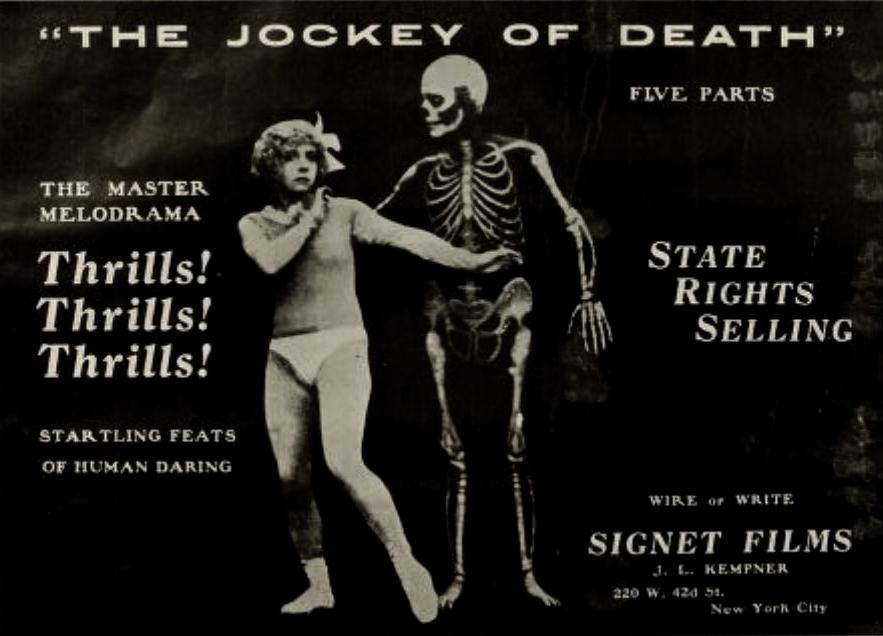
The very fact that we can discuss and analyze a film like "The Jockey of Death" today is a testament to the tireless efforts of film archivists and restorationists around the globe. Many films from this pioneering era are lost forever, victims of fragile nitrate film stock, neglect, or deliberate destruction. The silent era, in particular, suffered immense losses, with countless cinematic treasures vanishing into the ether. Therefore, every surviving print, every meticulously restored frame, is a victory. The preservation of "The Jockey of Death" – and indeed, any film from its time – is not merely about saving old movies; it's about safeguarding cultural heritage, preserving the very origins of a globally influential art form. These films offer invaluable insights into the social mores, technological capabilities, and artistic sensibilities of their period. They are historical documents, cultural artifacts, and crucial pieces in the puzzle of cinematic evolution. Restoration involves painstaking work: cleaning and repairing damaged prints, digitizing fragile negatives, and often, reconstructing narratives from incomplete reels, relying on production notes, stills, and contemporary reviews. The goal is to bring these films as close as possible to their original viewing experience, allowing new generations to appreciate the artistry and innovation that once captivated audiences. Without such dedicated efforts, the foundation of cinema would be incomplete, and our understanding of its development severely hampered. Films like "The Jockey of Death" are not just curiosities; they are foundational texts, offering lessons in visual storytelling, character development, and narrative construction that remain relevant even in the most technologically advanced productions of today. Their continued existence allows us to trace the lineage of cinematic techniques, to understand how early directors and actors communicated complex ideas without sound, and to marvel at the sheer ingenuity that defined the dawn of the moving image. Preservation ensures that the legacy of these silent pioneers endures, continually informing and inspiring future generations of filmmakers and cinephiles alike.
Does "The Jockey of Death" hold up for a contemporary audience? This is a complex question when dealing with films over a century old. Judged by modern standards of pacing, character depth, and technical sophistication, it might appear quaint or even slow. However, to evaluate it solely through a contemporary lens would be to miss its profound significance. Its enduring value lies not just in its historical context but in its testament to the timeless power of storytelling. The core narrative – a long-lost truth, a determined individual seeking justice, the echoes of a past wrong – remains universally compelling. While the acting style may seem overtly theatrical to our eyes, it was the nuanced language of its time, conveying emotions with a directness that modern realism sometimes shies away from. The film's place in cinematic history is secured by its contribution to the evolving grammar of film. Each early film, including this one, was a building block, an experiment in how to harness light, shadow, and movement to create narrative meaning. It demonstrates how early filmmakers tackled complex themes like memory, guilt, and retribution with the limited tools at their disposal, pushing the boundaries of what was thought possible for the new medium. Re-evaluating "The Jockey of Death" today means looking beyond its surface-level anachronisms and appreciating its pioneering spirit. It means recognizing the ingenuity of its creators in crafting suspense and emotional resonance without spoken words. It serves as a powerful reminder that the fundamental elements of compelling cinema – a captivating plot, engaging characters, and universal themes – existed long before the advent of sound, color, or digital effects. Its legacy is one of foundational importance, a silent echo that still speaks volumes about the enduring human fascination with mystery and the pursuit of justice. For cinephiles and historians alike, it offers a valuable opportunity to connect with the roots of an art form, to understand the journey cinema has taken, and to appreciate the timeless power of a well-told story, even one whispered from the silent past.
"The Jockey of Death" emerges from the archival depths not merely as an antique curiosity, but as a robust example of early narrative filmmaking. It is a film that, despite its age and the inherent stylistic differences of its era, manages to convey a powerful and resonant story of loss, lingering mystery, and the relentless pursuit of truth. Its significance extends beyond the confines of its plot, serving as a vital artifact in the grand tapestry of cinematic evolution. For those willing to engage with its unique language of gesture, intertitle, and evocative imagery, it offers a compelling glimpse into the foundational artistry that shaped the medium. It reminds us that the quest for justice, the weight of a long-held secret, and the determination of an individual to right a past wrong are themes that transcend technological advancements, speaking directly to the core of the human experience. In a world saturated with complex visual effects and intricate soundscapes, "The Jockey of Death" stands as a silent beacon, illuminating the enduring power of fundamental storytelling and the pioneering spirit of early cinema. It is a film that demands to be seen, not just as a historical document, but as a testament to the timeless allure of a gripping narrative, delivered with the unique eloquence of silence.
IMDb —
1927
Community
Log in to comment.