DbcultAccessing Vault...
Cult Review
Senior Film Conservator
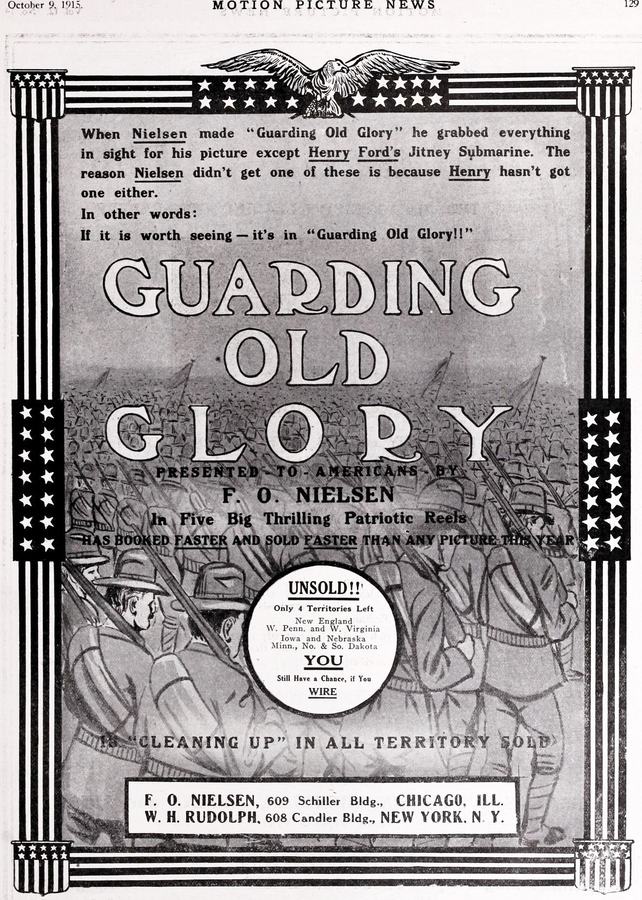
To truly appreciate the cinematic tapestry woven by Guarding Old Glory (1916), one must first shed the anachronistic lenses of modern film criticism and embrace the raw, visceral storytelling prevalent in the nascent years of the moving picture. This isn't merely a film; it's a testament, a silent sermon on duty, memory, and the indomitable spirit of a nation still grappling with its foundational scars. It plunges us headlong into a world where symbols held tangible weight, where a tattered flag wasn't just fabric but a pulsating heart of community identity, a repository of shared sacrifice.
The narrative, deceptively simple on its surface, unfolds with a profound emotional resonance. We are introduced to Elias Vance, portrayed with a remarkable, understated gravitas by F.O. Nielsen. Nielsen, whose career, though perhaps less extensively documented than some of his contemporaries, consistently demonstrated an innate understanding of the silent actor's craft, here delivers a performance that transcends mere pantomime. Vance is not a man of grand pronouncements or flamboyant gestures; rather, he is a man defined by his quiet steadfastness, a living embodiment of the very values the flag he guards represents. His eyes, even through the flickering monochrome, convey a lifetime of experience, a deep-seated commitment that requires no intertitle to articulate. The subtle trembling of his hand as he touches the flag, the almost imperceptible clenching of his jaw when its security is threatened – these are the brushstrokes of a master at work, painting a portrait of a soul deeply tethered to his past and his purpose.
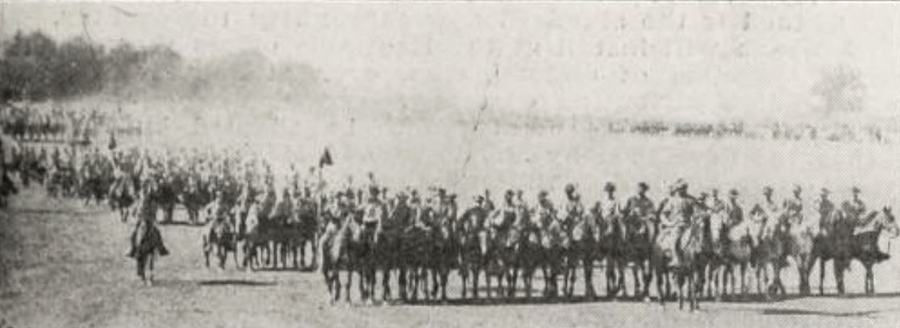
Nielsen's portrayal of Elias Vance is a masterclass in economy. In an era where over-the-top theatrics often dominated, Nielsen opts for a measured intensity that speaks volumes. His character's journey from a humble, almost invisible night watchman to a determined, relentless guardian is charted not through expository dialogue, but through a series of meticulously crafted visual cues. The slump of his shoulders initially, indicative of a life lived in the shadow of past glories, slowly gives way to a rigid posture, a renewed sense of purpose that radiates from within. This transformation is pivotal; it’s the emotional fulcrum upon which the entire film balances, lending credibility to Vance’s seemingly insurmountable task. One cannot help but draw parallels to the quiet dignity found in performances like those in Gambier's Advocate, where the interior lives of characters are laid bare through subtle expressions rather than verbose declarations. Nielsen understands that silent cinema’s power lies in suggestion, in the audience’s active participation in deciphering the unspoken.
The film’s central antagonist, the shadowy syndicate, while never fully personified by 'The Collector,' is a menacing presence, a faceless force of avarice that serves as a stark counterpoint to Vance’s selfless patriotism. This choice to keep the ultimate villain unseen amplifies the sense of an insidious, pervasive threat, making the struggle feel less like a personal vendetta and more like a battle against an abstract, corrupting evil. It’s a clever narrative device that broadens the film’s thematic scope, elevating it beyond a simple chase sequence. The agents, though minor characters, are rendered with a cold efficiency that underscores their mercenary motives, a stark contrast to the warmth and communal spirit of Vance's small town. This duality between the noble and the nefarious is a timeless cinematic trope, but here, it's infused with a distinctly American flavor, reflecting the nation's ongoing introspection about its identity and values.
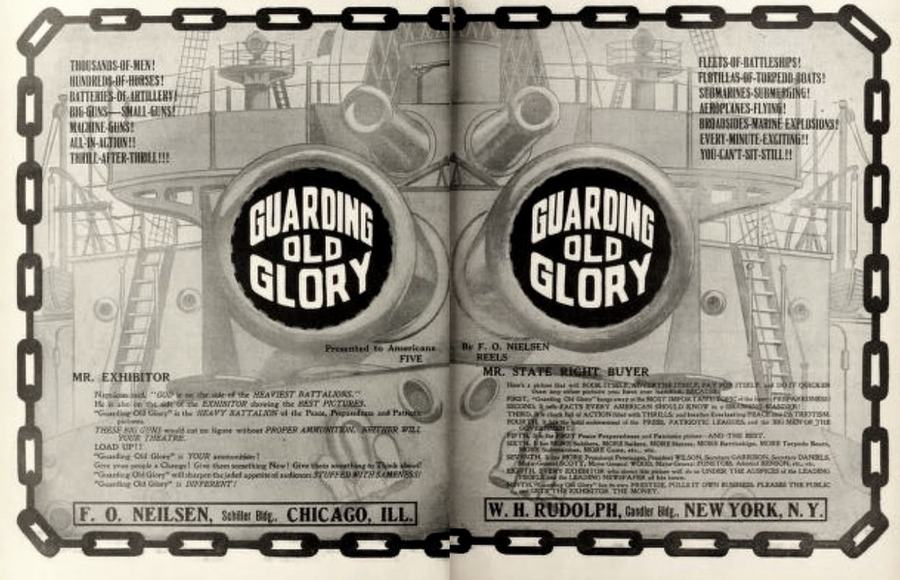
Visually, Guarding Old Glory demonstrates a burgeoning sophistication in cinematic technique for its time. The cinematography, though confined by the technological limitations of the era, effectively utilizes stark contrasts between light and shadow, particularly during Vance’s nocturnal pursuit. The moonlit alleys, the looming silhouettes of industrial structures, and the cavernous interior of the warehouse all contribute to an atmosphere of suspense and urgency. These visual elements are not merely decorative; they are integral to the storytelling, mirroring Vance's solitary journey into the moral murkiness of the urban landscape. The flickering gaslights and the deep shadows cast by the city's architecture become characters in themselves, amplifying the sense of isolation and danger that Vance confronts. This adept use of visual mood to convey narrative progress is something we also admire in the atmospheric tension of films like Skottet, which also understood the power of setting.
The film's pacing is another noteworthy aspect. It begins with a measured, almost contemplative rhythm, establishing Vance's routine and the flag's significance. Once the theft occurs, however, the tempo shifts dramatically, accelerating into a relentless chase that propels the narrative forward with an almost breathless urgency. This dynamic shift in pacing keeps the audience engaged, mirroring Vance’s own escalating desperation. The sequences of pursuit, while perhaps lacking the kineticism of later action films, are imbued with a psychological tension that is equally compelling. The director understands that suspense isn't just about speed, but about the stakes involved and the emotional investment in the protagonist's success. This methodical build-up and release of tension is a hallmark of effective storytelling, a lesson many contemporary filmmakers could still learn.
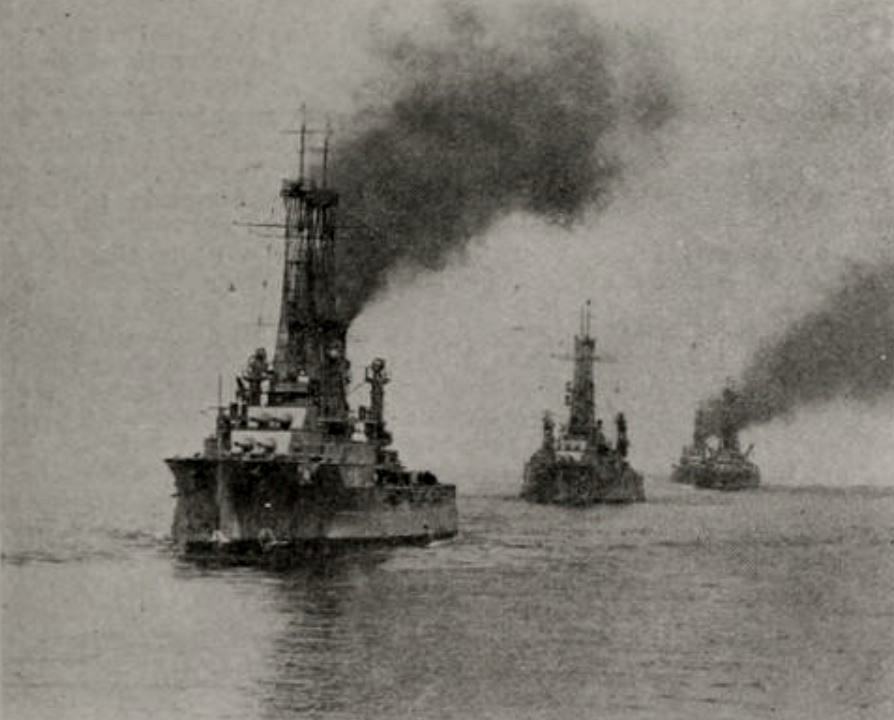
The introduction of the cynical journalist is a stroke of narrative genius. This character serves as an audience surrogate, initially skeptical of Vance's seemingly quixotic mission. His transformation from detached observer to active participant is a powerful subplot, illustrating the infectious nature of genuine conviction. Through his eyes, we come to appreciate the profound weight of Vance's patriotism, understanding that it stems not from blind jingoism, but from a deep-seated reverence for history and sacrifice. This character arc adds a layer of intellectual engagement to what could otherwise be a straightforward melodrama. It suggests that even the most jaded among us can be moved by authentic heroism, by a cause greater than individual gain. This kind of redemptive arc, where a cynical character finds meaning through noble action, resonates with the thematic depth explored in a film like The Regeneration, which also delves into the moral awakening of its protagonists.
The climax, set within the desolate warehouse, is a masterclass in silent film drama. The frantic, wordless struggle for the flag is imbued with a symbolic weight that transcends the physical confrontation. It is a battle for the soul of the nation, a desperate attempt to reclaim a piece of its identity from the clutches of those who would commodify history. The impending shipment overseas underscores the existential threat: the loss of the flag would be a severance from the past, a betrayal of those who fought and died for its ideals. The element of fire, consuming the warehouse, adds a dramatic flourish, purifying the space even as it threatens to destroy the very object of contention. It's a powerful visual metaphor for the purifying fire of patriotism, burning away corruption and cynicism.

Guarding Old Glory, in its quiet power, offers a poignant commentary on the nature of heroism. Elias Vance is not a cape-wearing saviour, but an ordinary man called to an extraordinary task, driven by an unwavering moral compass. His heroism is unheralded by grand parades, but deeply understood by those who witness his solitary crusade. This portrayal of the everyday hero, whose strength lies in conviction rather than physical prowess, is a refreshing departure from some of the more sensationalist narratives of the era. It speaks to a deeper, more enduring form of courage, one rooted in civic duty and personal integrity. This understated heroism can be seen, in a different context, in the dedicated pursuit of justice found in films like A Study in Scarlet, where intellectual prowess, rather than physical strength, defines the protagonist's effectiveness.
The film’s conclusion, with Old Glory returned to its rightful place and Vance resuming his silent vigil, reinforces the cyclical nature of guardianship. The battle may be won, but the responsibility remains. It's a powerful reminder that the preservation of national symbols, and the values they embody, is an ongoing commitment, not a one-time event. The flag, now more than ever, represents not just the past, but the enduring spirit of its dedicated guardian, a silent testament to the countless individuals who, in their own quiet ways, safeguard the ideals of their community and nation. This sense of continuous duty and the weight of historical legacy is a theme that resonates deeply, much like the generational struggles depicted in a narrative such as Uncle Tom's Cabin, albeit through a very different lens of social commentary.
In a cinematic landscape increasingly dominated by spectacle and overt messaging, Guarding Old Glory serves as a potent reminder of the power of understated storytelling and the enduring appeal of universal themes. It is a film that demands active engagement from its audience, inviting them to feel, to reflect, and to understand the profound emotional currents flowing beneath its silent surface. F.O. Nielsen’s performance anchors this emotional journey, transforming a patriotic short into a timeless meditation on duty, memory, and the vigilant spirit required to protect what is cherished. Its legacy lies not just in its historical value as an early American film, but in its continued ability to stir a sense of pride and a call to vigilance, reminding us that some battles, though fought in silence, echo through generations. The film's message, distilled to its purest essence, is that true patriotism is not a performative act, but a quiet, unwavering commitment to the ideals that bind a community, a nation, together. It’s a compelling argument for the preservation of heritage, a vibrant counterpoint to the forces of cynical commodification. This resonant plea for enduring values and the steadfast protection of cultural touchstones finds a thematic cousin in the historical reverence and dramatic tension found in films like The Red Circle, where the stakes are equally high, though the context differs significantly. The film, through its masterful use of silent narrative, demonstrates that the most powerful stories are often those told with the fewest words, relying instead on the universal language of human emotion and unwavering resolve.
The sheer dedication evinced by Nielsen's character, Elias Vance, is not merely a plot device; it is the philosophical core of Guarding Old Glory. His commitment isn't born of a grand, nationalistic fervor, but from a deeply personal connection to the flag's history, to the lives it represents, and to the future it promises. This nuanced understanding of patriotism, rooted in individual experience and collective memory, sets the film apart. It avoids the pitfalls of simplistic propaganda, instead crafting a narrative that explores the complexities of identity and allegiance. The film asks us to consider what we, as individuals, are willing to guard, and what symbols hold enough resonance to inspire such profound devotion. The answer, as elegantly presented by this silent masterpiece, lies in the heart of those who remember, who honor, and who are willing to stand vigilant. This intricate exploration of personal duty against a backdrop of national significance is a testament to the film's enduring artistry, cementing its place as a thought-provoking, emotionally rich piece of early American cinema. It’s a narrative that, despite its age, speaks with surprising clarity to contemporary concerns about heritage, identity, and the relentless march of progress that often threatens to erase the markers of our past. Its subtle power lies in its ability to transcend its historical context, making its message universally applicable to any generation grappling with the meaning of its own 'Old Glory'.
IMDb —
1921
Community
Log in to comment.