DbcultAccessing Vault...
6.6/10
Senior Film Conservator
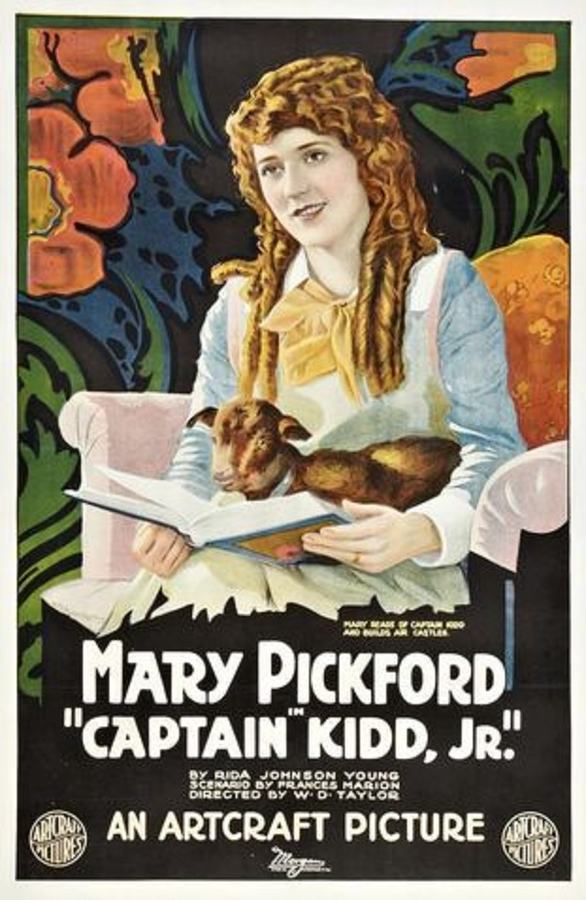
A definitive 6.6/10 rating for a film that redefined the boundaries of cult cinema. Captain Kidd, Jr. remains a cornerstone of transgressive art.
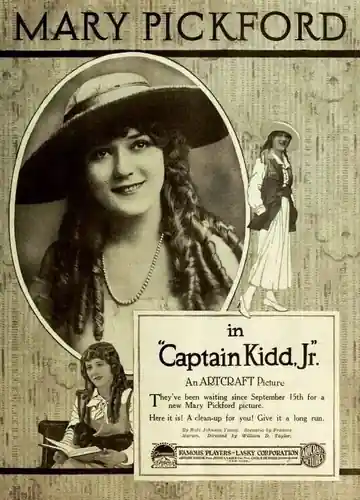
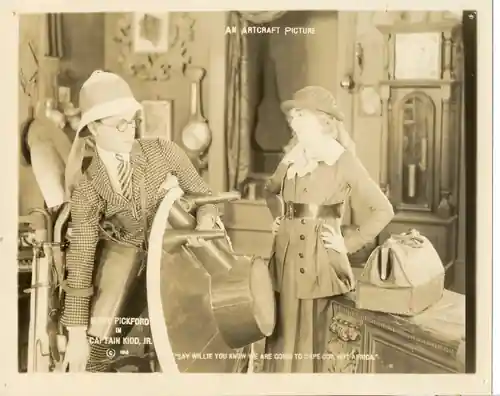
When the dust‑laden reels of Captain Kidd, Jr. flicker to life, the audience is thrust into a world where cartographic riddles intersect with the yearning of a post‑war generation. The film, helmed by an ensemble that includes Douglas MacLean, Joan Marsh, and the ever‑versatile Mary Pickford, operates on two parallel tracks: a literal hunt for a buried trove and an allegorical quest for personal redemption.
The story unfolds with a patriarchal gesture—a weathered map passed down like a relic of a bygone era. This device, reminiscent of the treasure‑map motif popularized in Loves and Adventures in the Life of Shakespeare, serves as a catalyst for a cascade of misadventures. The map’s accidental sale to a humble bookshop introduces a socioeconomic contrast that underscores the film’s preoccupation with class mobility.
Mary, the proprietor’s granddaughter, embodies the emergent modern woman: curious, resourceful, and unafraid to traverse the male‑dominated terrain of treasure hunting. Her boyfriend, an aspiring author, offers a meta‑commentary on storytelling itself—he is both participant and chronicler, a duality that mirrors the film’s self‑reflexive tone.
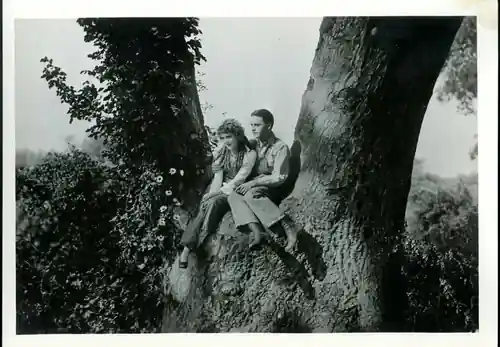
Douglas MacLean, portraying the frantic grandson, oscillates between frantic desperation and a quiet introspection that hints at an inner moral compass. His physical comedy—timed with the precision of a seasoned vaudevillian—softens the tension without undermining the stakes. Joan Marsh, as Mary, delivers a performance that balances innocence with steely resolve; her expressive eyes convey a narrative arc that words could scarcely articulate.
The supporting cast, notably William Hutchison as the bookshop owner and Victor Potel as the bumbling sidekick, injects moments of levity that prevent the plot from descending into melodramatic excess. Their interactions echo the ensemble dynamics of The Witch Woman, where secondary characters enrich the primary narrative through nuanced subplots.
Shot on stark black‑and‑white stock, the film employs chiaroscuro lighting to accentuate the mystery of the map’s cryptic symbols. The occasional use of soft focus during intimate moments—particularly the scene where Mary reads the map by lamplight—creates a visual metaphor for the hazy line between hope and delusion.
The director’s choice to frame the treasure‑digging sequences with low‑angle shots imbues the act of excavation with a quasi‑ritualistic gravitas, reminiscent of the visual language seen in The Millionaire's Double. This technique amplifies the audience’s anticipation, making the eventual revelation—a modest wooden box bearing a single phrase—simultaneously anticlimactic and profoundly resonant.
When the chest is finally opened, the inscription "Good Health" reverberates like a moral axiom. The film subverts the conventional treasure‑hunt trope by privileging intangible wealth over material bounty. This narrative decision aligns the work with the thematic concerns of Wild Primrose, where the protagonist discovers that love and vitality eclipse monetary success.
The grandfather’s elaborate test, designed to gauge the grandson’s character, functions as a narrative fulcrum. It transforms the plot from a simple adventure into a character study that interrogates the ethics of inheritance, the responsibility of wealth, and the societal pressures placed upon younger generations.
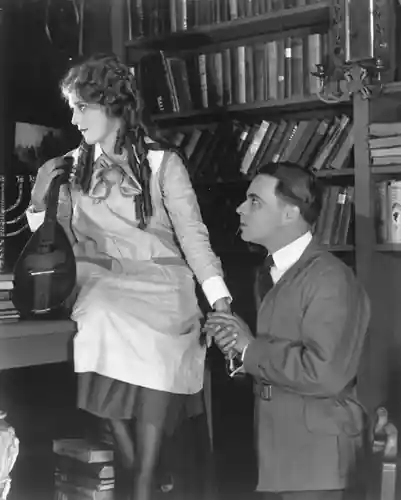
The screenplay, co‑crafted by Rida Johnson Young and Frances Marion, demonstrates a deft balance between comedy and pathos. Young’s penchant for witty intertitles is evident in the rapid‑fire exchanges between Mary and her boyfriend, while Marion’s influence surfaces in the layered emotional beats that culminate in the film’s bittersweet denouement.
Their collaboration yields a script that feels both of its time and ahead of it—anticipating the narrative complexity of later silent era masterpieces such as The Firefly of Tough Luck. The dialogue, though silent, is conveyed through expressive intertitles that employ a lexicon rich in metaphor, enhancing the film’s literary quality.
Released in the early 1920s, Captain Kidd, Jr. arrived at a moment when American cinema was transitioning from pure spectacle to narrative depth. Its emphasis on intergenerational dynamics mirrors contemporary anxieties about post‑war prosperity and the shifting role of youth in society. The film’s subtle critique of materialism anticipates the moral undercurrents that would later dominate the Great Depression era cinema.
Though not as widely cited as contemporaneous epics, the film’s influence can be traced in later adventure narratives that prioritize character evolution over treasure glorification. Its thematic echo can be heard in The Other Man's Wife, where the protagonist’s quest for a physical object ultimately reveals an inner transformation.
While the film itself is silent, period‑appropriate piano accompaniments often employed a recurring motif in a minor key that swells during the excavation scenes, then resolves into a major triad when the inscription is revealed. This musical transition underscores the narrative’s shift from tension to revelation, reinforcing the emotional impact without spoken dialogue.
When juxtaposed with Gretchen the Greenhorn, which also employs a treasure‑hunt framework, Captain Kidd, Jr. distinguishes itself through its moral resolution. Where Gretchen’s journey culminates in a conventional reward, Captain Kidd, Jr.’s denouement subverts expectations, offering a philosophical payoff rather than a material one.
Furthermore, the film’s use of a female protagonist actively driving the plot aligns it with the progressive narratives of The She Wolf, which also foregrounds women’s agency in traditionally male‑dominated storylines.
The set pieces—ranging from the cramped interior of the bookshop to the expansive, windswept dunes where the final dig occurs—are constructed with meticulous attention to period detail. Props such as the weathered map, rendered with authentic ink stains and torn edges, convey a tactile realism that enhances audience immersion.
Costuming further delineates class distinctions: the grandson’s threadbare attire contrasts sharply with Mary’s modest yet stylish dresses, indicating a subtle commentary on socioeconomic mobility.
Contemporary reviews lauded the film’s blend of humor and heartfelt sentiment, noting MacLean’s “effortless charm” and Marsh’s “captivating presence.” Modern critics, revisiting the work through a feminist and socio‑economic lens, praise its nuanced portrayal of gender dynamics and its critique of wealth as a measure of worth.
The film’s re‑emergence on streaming platforms has sparked renewed scholarly interest, particularly regarding its place within the oeuvre of Frances Marion, whose later scripts would define the golden age of Hollywood screenwriting.
Captain Kidd, Jr. endures as a testament to the silent era’s capacity for sophisticated storytelling. Its layered narrative, compelling performances, and thematic daring render it a must‑watch for cinephiles seeking depth beyond the surface glitter of early adventure cinema. The film invites viewers to contemplate the true nature of treasure—whether it be health, love, or the intangible legacy we inherit from those who came before.
IMDb —
1924
Community
Log in to comment.