DbcultAccessing Vault...
1.8/10
Senior Film Conservator
A definitive 1.8/10 rating for a film that redefined the boundaries of cult cinema. The Jungle Trail remains a cornerstone of transgressive art.
When The Jungle Trail unfurls its narrative, the viewer is thrust into a world where urban yearning collides with primal wilderness. William Farnum’s Robert Morgan is not merely a dashing protagonist; he embodies the restless spirit of the 1930s American dream, a man whose heart beats for love while his pockets echo emptily. The film’s opening sequence, set against the bustling streets of New York, establishes a stark contrast between the polished veneer of society and the raw, untamed landscapes that await him.
Anna Luther’s Mary Lamar radiates a luminous grace that feels both timeless and tethered to the era’s expectations of femininity. Her performance, while occasionally veiled in the melodramatic tropes of the period, nevertheless conveys a palpable longing that mirrors Morgan’s own desperation. The antagonistic Philip Garson, portrayed by Lyster Chambers, is a study in calculated charm; his duplicity is rendered with a subtle menace that never fully erupts into outright villainy, preserving the film’s delicate balance between intrigue and suspense.
Equally compelling is the supporting cast. Sara Alexander’s portrayal of Morgan’s frail mother is a quiet ode to sacrifice, while Anna Lehr’s Wanada, the Hindu temple virgin, injects an ethereal mystique that elevates the African interlude from mere adventure to mythic pilgrimage. George Stone’s Haja, the jealous lover, serves as a catalyst for the climactic temple showdown, his fury simmering beneath a veneer of devotion.
The screenplay, penned by Adrian Johnson and George V. Hobart, weaves together three distinct geographical threads—New York, the African savanna, and an imagined Hindu enclave—each functioning as a stage for Morgan’s evolving identity. The transition from the concrete jungle to the literal one is orchestrated with a visual flair that feels ahead of its time: sweeping aerial shots of the African plains juxtapose the claustrophobic interiors of New York tenements, underscoring the protagonist’s internal displacement.
Garson’s proposition—$50,000 for the capture of an allegedly invincible tiger—acts as the story’s inciting incident, setting in motion a chain of betrayals that echo classic literary motifs. The tiger itself, never fully seen, becomes a symbol of the unattainable ambition that drives Morgan forward, a phantom that haunts his every step.
Upon arrival in Africa, Morgan’s base camp within a Zulu village is immediately compromised. The guide’s insidious act of slipping a rattlesnake into his sleeping quarters is a masterstroke of tension, forcing the audience to confront the precariousness of his situation. Farnum’s reaction—swift, decisive, and surprisingly adept—redefines his character from a lovesick dreamer to a man capable of confronting mortality head‑on.
The subsequent ambush by leopard‑clad hunters, a surreal nod to the era’s fascination with exoticism, escalates the peril. The film’s choreography during the hut siege, where Morgan’s automatic rifle sputters out its last rounds before the structure is set ablaze, is rendered with a kinetic energy that rivals modern action sequences. The ensuing escape through a swamp teeming with alligators is a visual metaphor for Morgan’s baptism by fire, a rebirth that propels him toward the next act.
The discovery of a Hindu temple—an anachronistic oasis amidst the African wilderness—introduces a layer of mythic symbolism rarely explored in 1930s cinema. Wanada, portrayed with a serene yet fierce presence, becomes both guide and temptress, embodying the duality of salvation and danger. Her father, the high priest, treats Morgan as a divine curiosity, a “white god” whose arrival is foretold by ancient prophecy.
The scene where Morgan, bound to a stake, pulls it free and escapes the poisonous fumes is filmed with a chiaroscuro lighting scheme that accentuates the stark contrast between darkness and the flickering orange of the flames. This moment cements his transformation from mortal adventurer to quasi‑deity, a status reinforced when he triumphs over the village strongman Ebano in a test of strength that culminates in the latter’s dramatic plunge into water.
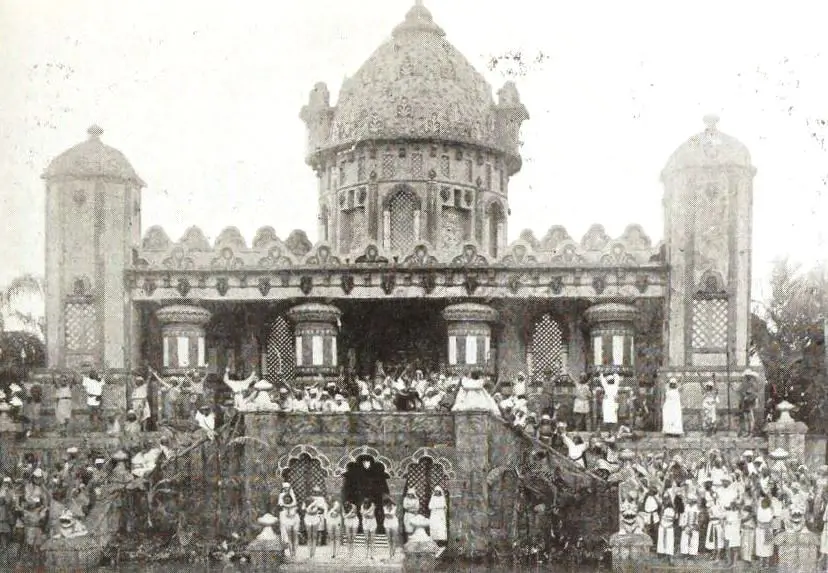
While the film revels in its exotic tableau, it does not shy away from moral complexity. The joint theft of the war‑god’s jewels by Morgan and Wanada, observed by the jealous Haja, raises questions about the protagonist’s ethical compass. The subsequent crushing of Haja by the toppled statue serves as a visceral reminder that the pursuit of wealth and love often leaves a trail of destruction.
Yet, the narrative frames this act as a necessary transgression, a means to an end that ultimately facilitates Morgan’s return to America and his quest for vengeance. This moral elasticity mirrors the broader cinematic trends of the era, where heroes often operated in shades of gray, a characteristic shared with contemporaneous works such as The Winning of Beatrice and Two‑Gun Betty.
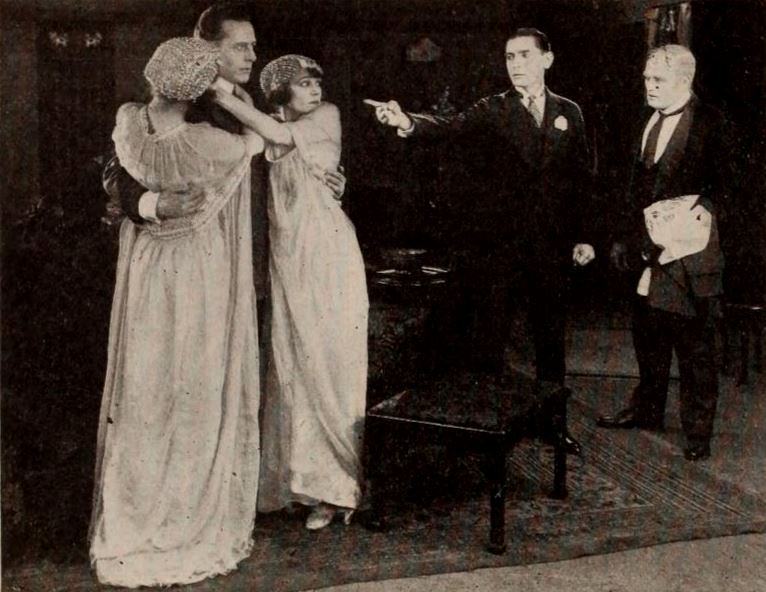
Back in New York, the revelation that Garson deceived Morgan’s mother—showing her a lucky charm and claiming Morgan’s death—catalyzes the film’s final act. The mother’s subsequent demise, wrought by grief, adds a tragic poignancy that fuels Morgan’s resolve. The masquerade as a fortune‑teller, a clever narrative device, allows Morgan to confront Garson in a setting that juxtaposes mysticism with modernity.
The climactic revelation, where Morgan bursts forth from the veil of illusion, is staged with dramatic flair: a sudden burst of light against the dark backdrop, the audience’s gasp mirrored by Wanada’s decisive intervention. The forced surrender of Garson, followed by Morgan’s marriage to Mary, provides a cathartic closure that satisfies both romantic and retributive arcs.
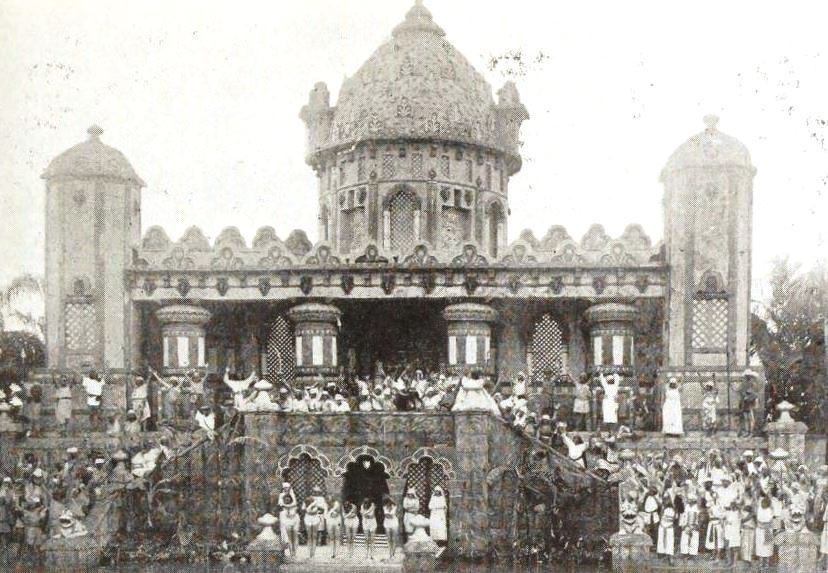
From a technical standpoint, The Jungle Trail showcases impressive set design, particularly in its recreation of the Zulu village and the Hindu temple. The use of practical effects—such as the realistic rattlesnake prop and the flaming hut—demonstrates a commitment to visceral storytelling. Cinematographer’s choice of deep shadows and saturated colors—highlighted by the film’s signature dark orange hues—creates a visual palette that feels both nostalgic and timeless.
The score, though modest by contemporary standards, weaves traditional African drums with subtle Eastern motifs, underscoring the film’s cross‑cultural narrative. Editing maintains a brisk pace, ensuring that each act transitions fluidly, keeping the audience engaged across the film’s roughly 95‑minute runtime.
When positioned alongside other adventure epics of the 1930s, such as Maciste Poliziotto and The Spite Bride, The Jungle Trail distinguishes itself through its layered character arcs and its willingness to blend romance, action, and mythic allegory. While some contemporaries leaned heavily on spectacle, this film balances spectacle with introspection, offering a richer viewing experience.
Modern audiences may find certain depictions dated, particularly the exoticization of African and Hindu cultures. However, when examined through a critical lens, these elements serve as a window into the period’s cinematic imagination, inviting discussions about representation and the evolution of narrative tropes.
In sum, The Jungle Trail is a compelling artifact of early American adventure cinema. Its narrative ambition—spanning continents, cultures, and moral quandaries—paired with strong performances and inventive set pieces, renders it a film worthy of re‑examination. Whether you are a scholar of film history, an enthusiast of classic adventure tales, or simply a viewer seeking a story that intertwines love, betrayal, and redemption, this film offers a richly textured experience that endures beyond its black‑and‑white frame.
© 2026 Classic Film Review Blog. All rights reserved.
IMDb —
1922
Community
Log in to comment.