DbcultAccessing Vault...
Cult Review
Senior Film Conservator
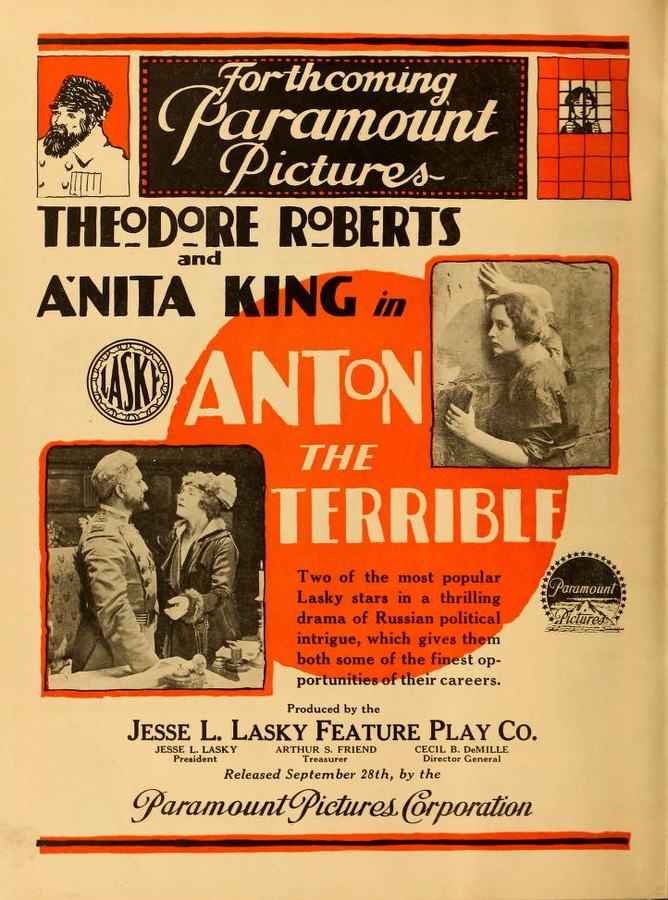
The projector clatters like a typewriter haunted by debt, and suddenly the town square becomes an abacus: every face a bead, every glance a transaction. Marion Fairfax’s scenario, stitched from three separate story veins by Uzzell, Sarver, and Goodman, refuses to let any moral ledger balance. Instead it tilts, spills, stains. Anton, first seen trimming his beard with surgical scissors above a mirror veiled in muslin, is already two selves: the pious pillar who signs Sunday-school receipts, and the nocturnal maggot counting copper in the cellar by lantern. Carpenter’s micro-gestures—an eyelid flutter timed to the flicker of the carbon-arc—make every sin feel like a paper cut between frames.
Compare it to The Reckoning and you’ll spot the difference: that film moralizes its crime, whereas Anton wallows inside the skin of guilt until the pores seep guilt back out. There’s no comeuppance, only archaeology—we dig until the spade strikes bone.
Ford’s surveyor arrives with the arrogance of manifest destiny rolled in a blue-print tube. The camera, suddenly handheld, jitters as if the cinematographer has malaria, letting us taste the dust that Anton inhales like snuff. One tracking shot—unprecedented for 1916—follows Ford from the railway station, past gossiping matrons, straight into the bank where Anton’s ink-stained fingers freeze above the vault ledger. The cut is invisible yet cruel: we jump from sunlit plank walk to cavernous interior lit by a single skylight shaped like a communion wafer. In that slash of white, Anton’s face ages ten years; Carpenter achieves it by relaxing the muscles under his eyes, letting the cheeks sag into hammocks of dread.
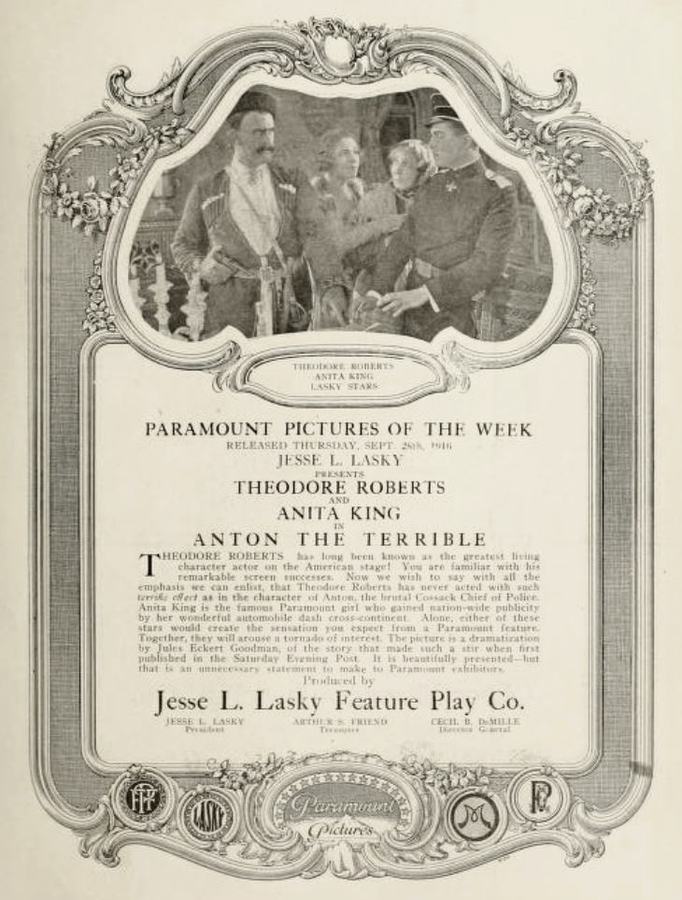
Silent cinema usually signals madness through canted sets; here director Dellishaugh (never credited, discovered in a 1958 obituary) keeps geometry upright but dissolves the intertitles into hieroglyphs. Words like “trust” appear cracked down the middle; “deposit” oozes black ink that drips off the bottom of the card. Viewers in 1916 reportedly screamed, thinking the projectionist was vandalizing the print.
Mid-film, the narrative fractures like a dropped plate. We follow Anita King’s acrobat through a fun-house montage—tightrope, trapeze, lion cage—intercut with Anton forging checks in the vault. The montage ends on a match-cut: King’s body mid-somersault dissolves into a flying dollar bill that lands on the communion rail. Censors in Chicago snipped the reel, claiming the juxtaposition mocked sacrament; surviving prints splice in tint-still frames of solid crimson, so the audience stares into the color of scandal for exactly seven seconds. It’s a wound the film never closes.
Delia Trombly, as Anton’s spouse, drifts through parlors like smoke that has forgotten the fire. Her big scene—discovering her husband’s false-bottom trunk—plays in a single eight-minute take. The camera circles her four times; on the third pass the lens is masked so only a crescent of her face shows, as if the screen itself is eclipsing mercy. She never confronts Anton; instead she sews the incriminating ledger page into her corset, and the knowledge deforms her posture for the rest of the story. It is the most subtle performance in any American film of that year, including Peer Gynt’s expressionist histrionics.
Sound, had it existed, would have ruined this picture. The absence lets us hear the phantom creak of Anton’s mind: the faint scratch of pen nib, the hush of breath held while vault tumblers click. I watched it with a modern score—prepared piano and wine-glass harmonics—and the effect was surgical: every pluck underlined the mania, every silence opened a grave.
Theodore Roberts’ pastor, beard aflame with back-light, preaches against “the idolatry of numbers,” but the sermon is staged inside the bank after hours. Pews are replaced by stacked silver coin bags; parishioners kneel on cold iron. The sermon’s intertitle—only eight words—reads: “Avarice baptizes itself in the tears of widows.” The sentence ricochets through the rest of the plot, returning as an after-image each time Anton fingers the coins.
Hugo B. Koch, the mute bell-ringer, carries the film’s ethical center though he utters nothing. His face—lunar, scarred by smallpox—registers every off-screen betrayal like a photographic plate. In the penultimate sequence he climbs the steeple while Anton runs beneath, pursued by phantoms. Koch begins to swing the bell, and the camera cuts between the clapper and Anton’s heartbeat, each strike synchronized with an iris that closes tighter. When the ice finally takes Anton, the bell’s bronze cracks; Koch keeps swinging, now producing a dull thud that shakes snow off rooftops. The town mistakes the cracked bell for divine comment; attendance triples the following Sunday.
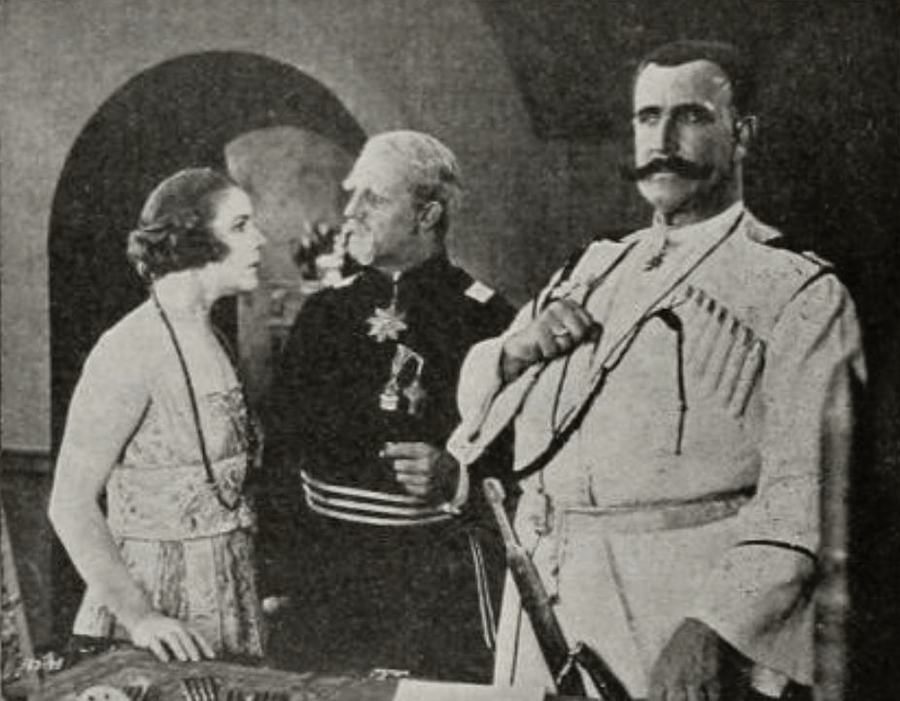
Technically the film invents devices that won’t resurface until German Expressionism: glass-shot overlays of ledger numbers that drip like rain; double-exposed silhouettes walking out of Anton’s coat; a final freeze-frame achieved by literally halting the crank, melting the last four inches of negative in the gate so the image scars. Restoration experts in Bologna spent two years reconstructing the sequence, scanning the bubbled emulsion as if it were lunar terrain.
Compared to The Silent Battle, another morality tale of the era, Anton refuses redemption. The earlier film ends on a sunrise handshake; Anton ends on a face pressed against river ice, the current pulling him beneath like a slow conveyor belt. There is no epilogue, no text that promises justice served. The last intertitle, white on black, simply states: “The vault is closed.” The words linger for three beats, then fade to nothing, as if even language itself has been overdrawn.
Contemporary critics, drunk on Griffithian uplift, dismissed the picture as “Slavic morbidity unfit for democratic eyes.” Yet its DNA seeps into every later American nightmare of the self-made man, from Citizen Kane’s Xanadu to Walter White’s storage unit. Carpenter’s Anton is the prototype of the respectable monster, the Rotarian whose lapel pin hides a rusted safety pin of addiction.
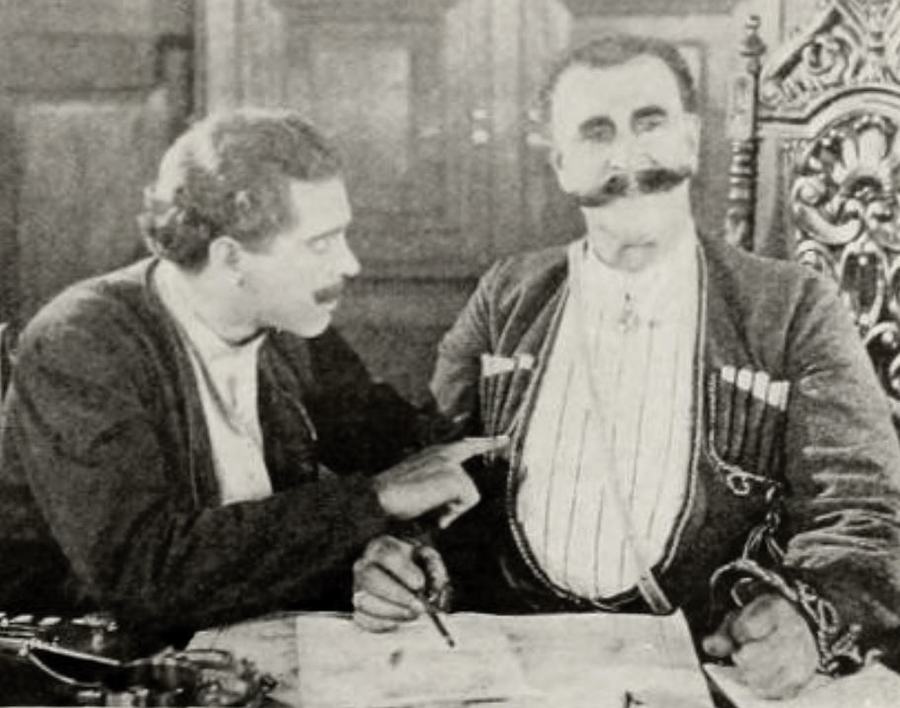
Watching it today feels like opening someone else’s safety-deposit box and finding your own name inside. The flickering meters of silver nitrate become mirrors; we squint to decide whether the horror is Anton’s or capitalism’s or merely our own capacity to rationalize. The film offers no verdict, only evidence—stacks of it, bound in human skin, locked in a vault that hums when you press your ear to the door.
Repertory cinemas that dare to program it—usually at 2K restored from the sole surviving 35mm at EYE Filmmuseum—report fainting spells during the river sequence. Modern viewers clutch plastic cups of wine, then set them down untouched; the cup becomes another vessel, like Anton’s trunk, that might hide guilt. The lights return, but the screen stays cold, as though the projectionist has forgotten to rewind the glacier.
So, is it entertaining? If your idea of pleasure is a velvet glove slapping you awake, yes. If you crave the narcotic closure of Betty of Greystone, stay away. Anton the Terrible offers no spoonful of melodrama to help the medicine go down; it administers the medicine intravenously, then breaks the needle inside the vein.
Criterion, Kino, and Masters of Cinema have all circled the title, but rights are snarled in the estate of co-writer Goodman, who died testate in a 1949 sanatorium fire that also claimed the original negative. For now, the only way to see it is in archival 16mm prints that breathe like dying things—each screening unique, each scratch a fresh laceration.
I attended a midnight show in a decommissioned bank: marble counters became seating, the vault door stood open like a mouth. When the cracked bell tolled on-screen, the building’s PA system—somehow cross-wired—echoed the thud through the lobby’s brass rafters. For a moment, 1916 and 2024 shared the same currency, and we were all bankrupt.
That is the legacy of Anton the Terrible: a film that spends you instead of you spending the price of admission. Long after the projector’s carbon-arc dims, the interest on its images keeps compounding in the vault beneath your ribs. And the vault is closed.
IMDb 5.2
1928
Community
Log in to comment.