DbcultAccessing Vault...
Cult Review
Senior Film Conservator
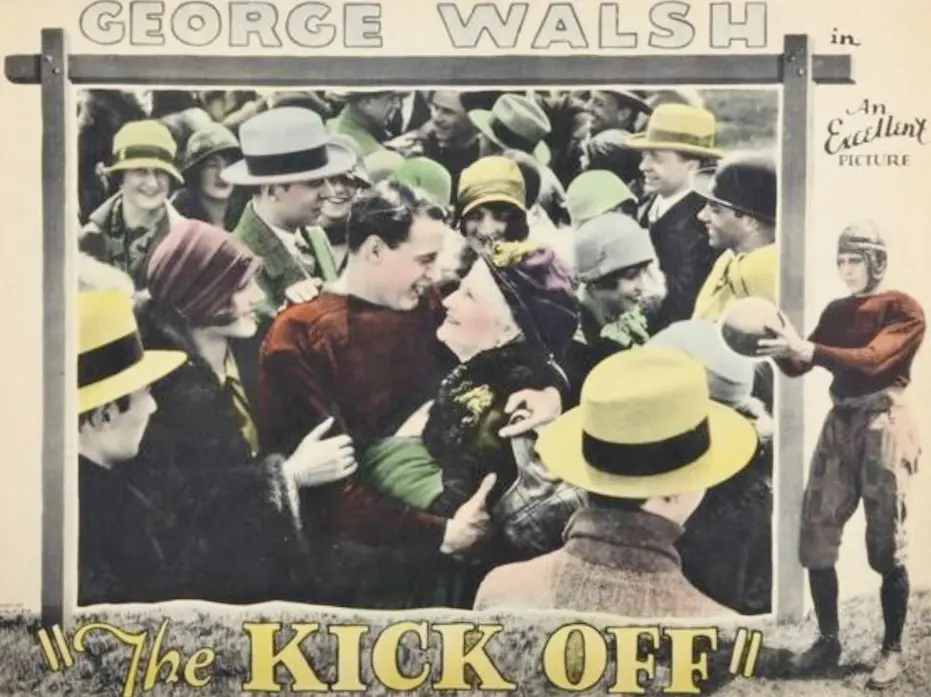
Is The Kick-Off a film that still resonates in the age of hyper-kinetic sports broadcasting? Short answer: yes, but only if you appreciate the foundational architecture of the underdog trope and the raw physicality of silent-era performance.
This film is specifically for historians of the silent era and those who want to see the literal birth of the 'big game' narrative. It is emphatically NOT for viewers who demand complex plot twists or the nuanced character psychology found in modern dramas like those referenced in The Sporting Venus.
1) This film works because George Walsh brings a genuine, unforced athleticism to the role of Tom Stephens that makes the football sequences feel surprisingly modern and visceral.
2) This film fails because the narrative beats are so strictly adhered to that you can predict the final ten minutes within the first five, leaving little room for genuine dramatic tension.
3) You should watch it if you want to witness one of the earliest successful attempts to capture the chaotic energy of American football on celluloid without the benefit of modern camera rigs.
In 1926, George Walsh was more than just an actor; he was a physical specimen whose presence commanded the frame. In The Kick-Off, Walsh avoids the overly theatrical gesticulations common in the mid-20s, opting instead for a grounded, stoic performance. His Tom Stephens isn't a brooding intellectual; he is a man of action whose internal struggle is written in the set of his jaw and the slump of his shoulders when the Farnsworth elite look down upon his small-town roots.
The film relies heavily on Walsh's ability to sell the physical toll of the sport. In the middle act, there is a sequence where Tom is practicing drills under the watchful, cynical eye of the varsity coach. The way Walsh moves—heavy-footed but purposeful—conveys a sense of realism that many contemporary films lost when they began to prioritize stylized choreography over actual physical labor. It is a performance that mirrors the grit found in Over the Top, though set on a field of grass rather than a field of battle.
Directorially, the film is a fascinating specimen. While the indoor scenes are standard for the period—utilizing flat lighting and medium shots—the outdoor football sequences are surprisingly dynamic. The camera is often placed at waist height, putting the viewer in the path of the charging linemen. This creates a sense of peril that is often missing from modern, high-definition broadcasts where the long lens flattens the action.
One specific scene stands out: the first time Tom takes the field for Farnsworth. The use of rapid cutting (for 1926 standards) during the huddle and the subsequent snap creates a rhythmic tension. You can almost feel the dirt and the sweat. It’s a stark contrast to the more polished, aristocratic visuals of The Sporting Venus, showing that the silent era was capable of diverse visual textures depending on the subject matter.
The pacing of The Kick-Off is its greatest enemy. The film spends an inordinate amount of time on the social friction at Farnsworth University. While this is meant to build stakes for the final game, the interactions between Tom and the 'upper crust' students feel repetitive. We get it: they think he's a provincial nobody. He thinks they're snobs. Repeating this beat three times doesn't make the eventual victory sweeter; it just makes the second act feel like a slog.
However, the film is anchored by Jane Jennings as Tom’s mother. Her performance is the emotional glue. In the scene where she receives news of his success, her reaction is understated and deeply moving. It provides a necessary counterweight to the testosterone-heavy locker room scenes. This maternal subplot, while cliché, is handled with more grace here than in similar films like Half-a-Dollar Bill.
If you are looking for a casual evening of entertainment, probably not. The Kick-Off is a historical artifact. It requires a viewer who can look past the limitations of 1920s storytelling to see the sparks of innovation underneath. If you are interested in the evolution of the American 'Hero's Journey,' then it is an essential watch. It captures a moment in time when the university athlete was replacing the frontier explorer as the primary symbol of American masculine virtue.
The film succeeds as a time capsule. It fails as a standalone narrative for the modern palate. It works. But it’s flawed. It’s a rough draft of the greatness that would follow in the genre.
Pros:
Cons:
The Kick-Off is not a masterpiece, but it is a vital piece of the cinematic puzzle. It lacks the visual poetry of a Murnau or the slapstick genius of a Keaton, but it possesses a blue-collar work ethic that is undeniably charming. It treats the sport of football with a reverence that borders on the religious, setting the stage for every sports film from The Sporting Venus to the modern day. It is a film of moments—the crunch of a tackle, the tear in a mother's eye—rather than a cohesive, transcendent narrative. Watch it for the history, stay for Walsh's charisma, but don't expect it to change your life. It is a solid, three-yard gain in the history of cinema.
IMDb —
1918
Community
Log in to comment.