DbcultAccessing Vault...
8.2/10
Senior Film Conservator
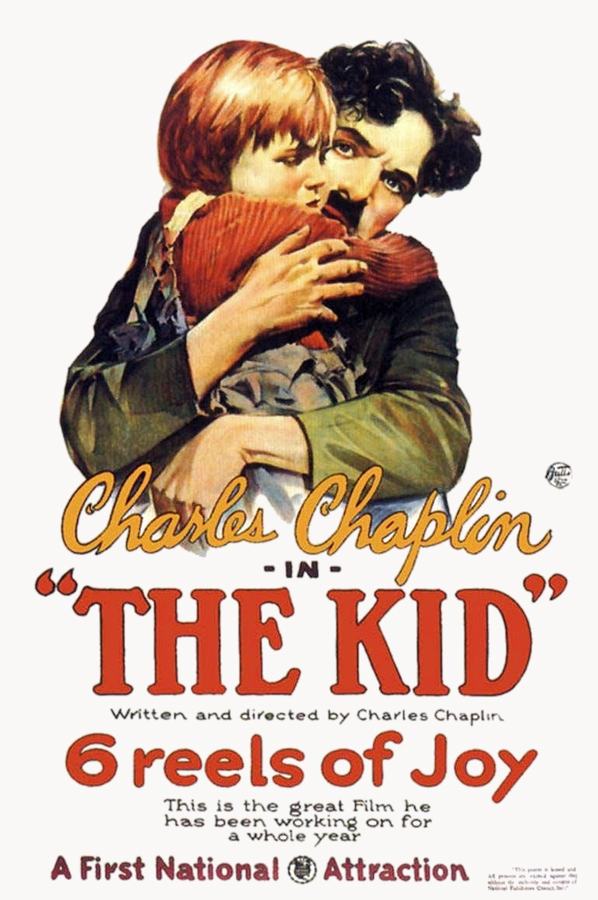
A definitive 8.2/10 rating for a film that redefined the boundaries of cult cinema. The Kid remains a cornerstone of transgressive art.
A waif, a wanderer, and a single sunbeam: how Charlie Chaplin turned sixty-five minutes of celluloid into an immortal petition for human decency.
Strip away the pratfalls and what remains is a social manifesto stitched in flickering monochrome. The Kid arrives scarcely three years after the Armistice, when Europe still coughs up ash and American cities swell with veterans, immigrants, and the freshly dispossessed. Chaplin, ever the street-corner alchemist, transmutes that angst into pantomime. His Tramp is no longer merely a hobo with cane and derby; he is a makeshift father navigating the bureaucratic meat-grinder that chews on parentless children.
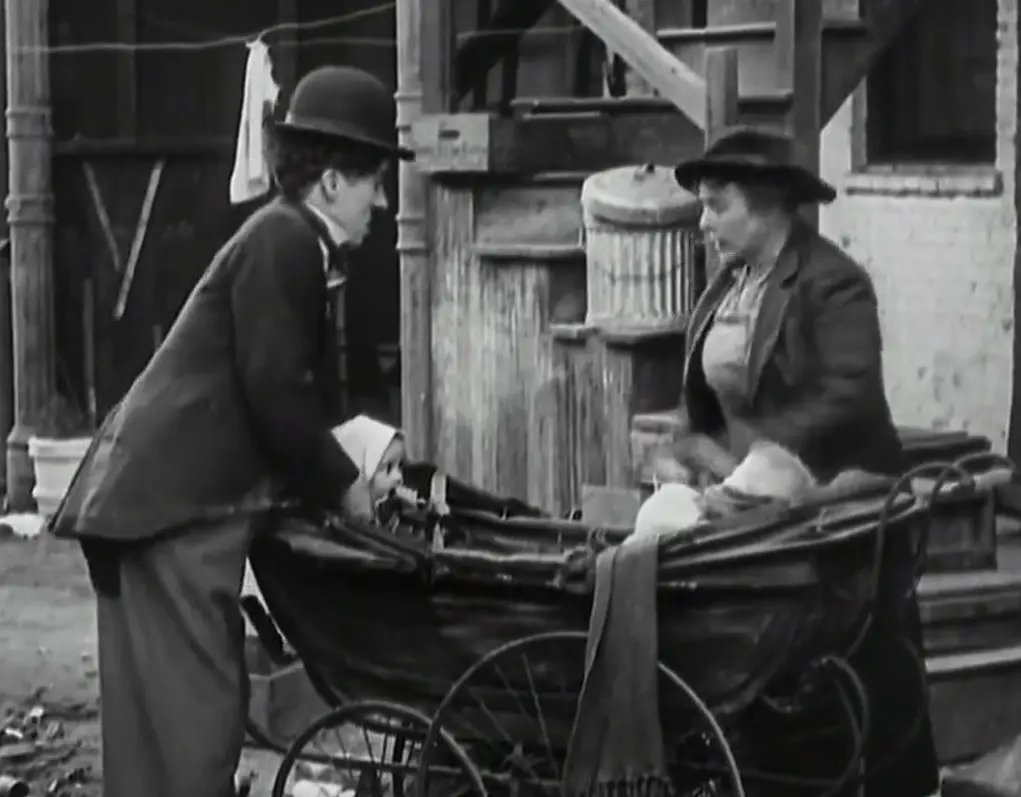
The opening tableau—Edna Purviance’s anguished mother abandoning her newborn inside a flivver—cuts faster than any intertitle. A heel presses the accelerator; the car, like capitalism itself, purrs forward, indifferent to cargo. Enter the Tramp, strolling through a back-aloy Venice of laundry lines and ash cans. One lift of the curtain and he discovers not a prop bundle but a squalling moral imperative. The moment he cradles the child, Chaplin’s eyebrows perform a tremulous semaphore: terror, wonder, duty. In 1921 viewers had seen orphans before, yet seldom had the lens lingered on the tremor of a single man forced to become natal shore.
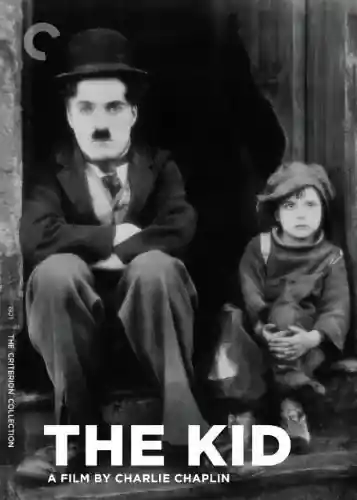
Cut to five years later. The Kid—Jackie Coogan, a moon-faced prodigy with the timing of seasoned vaudevillian—scampers across tenement roofs hurling stones at cops, his laughter ricocheting off brick like skipped marbles. Their livelihood? A bootblack con: Coogan splats mud onto passerby spats; Chaplin materializes with polish and shine cloth. It’s a scam, yes, but filmed with such dexterity that economics becomes ballet. Notice how the camera never moralizes; it merely watches two survivalists choreograph hunger into hustle.
Chaplin the writer-director seeds every frame with contrapuntal detail. When the Trang carves a tin cup into a toy locomotive, metallic shavings spiral downward like industrial snowflakes—an elegy for childhood innocence forged from refuse. Later, during the famous pancake-flip sequence, each airborne disc briefly eclipses the boy’s grin, a solar eclipse of breakfast food underscoring how daily sustenance orbits unpredictably.
Yet pathos lurks. A physician notes malnutrition; municipal officers brandish clipboards. The modern state, personified by granite-jawed agents, barges into the hovel, seizing the kid for placement in an orphanage. Here the film pivots from sentimental comedy to urban nightmare. Coogan’s shriek—raw, unlooped, pre-Method—could peel varnish. Chaplin responds with a kinetic flourish: he pole-vaults across alleyways, commandeers a delivery truck, races to reclaim what bureaucracy would atomize. It’s Keystone velocity fused with Dickensian rage.

The chase climaxes inside a rickety elevator shaft where moonlight drips like mercury. Shadows yawn across walls, turning the corridor into a moral esophagus. When the Tramp finally clasps the boy, the embrace is wordless yet voluble—two bodies soldering into one against the city’s metallic indifference.
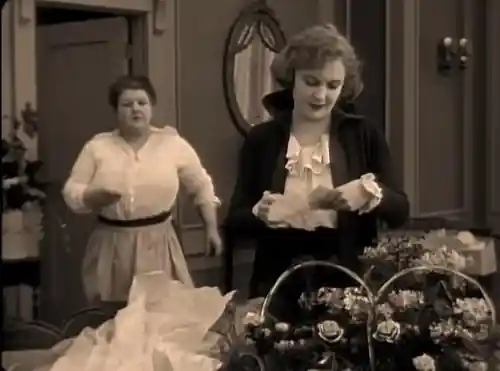
Parallel to this runs the mother’s redemption arc. Purviance, luminous even in nitrate erosion, ascends from destitute waif to prima donna, her limousine now the same species of automobile that once conveyed her infant to abandonment. Irony, thou art a patient editor. She funds orphanages, unaware she bankrolls her own child’s welfare. The narrative chessboard aligns so that the final act occurs inside a flophouse turned makeshift courtroom where destinies are cross-examined beneath a dangling bulb.
But Chaplin reserves his most audacious gambit for the dream sequence. Exhausted, the Tramp nods off and imagines the tenement transfigured into a celestial revue. Angels with celluloid wings flutter past; demons wear cop badges. The kid, now cherubic, sprouts wings of white fluff. When a street thug—sporting Satanic eyebrows—shoots the boy, feathers scatter like burst pillows. Grief detonates into eschatology: the Tramp himself dies, ascends, yet chooses to return, yanking his offspring from celestial conveyor belt back to earthly squalor. It is a moment of profane resurrection: heaven’s bureaucracy rejected for the mortal mess where love, however fractured, can be grasped.
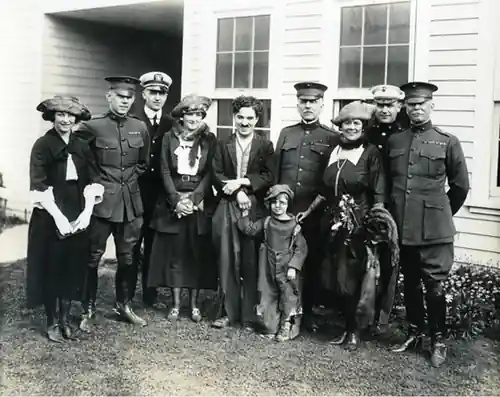
Technically, the sequence is a marvel of double exposure and hanging miniatures. Contemporary critics balked, calling it self-indulgent. History overruled them; the scene prefigures the surrealist fantasias of Cocteau and even the after-life musings in films like A Coney Island Princess. More crucially, it gives narrative permission for the reunion that follows: mother, father-figure, and child stride into sunrise, their silhouettes fused in a triple-exposure halo. No tidy adoption papers, no organ chord of closure—just the open road and the promise of another dawn.
Performances? Coogan’s chemistry with Chaplin is the gold standard for child-adult duos, eclipsing even later pairings in Ginger or Sunshine and Gold. Watch how he mirrors Chaplin’s gait—those pigeon-toed pivots—without slipping into mimicry. Purviance, often underrated, communicates oceans of regret with a single downward glance. Carl Miller as the seducer/artist provides the narrative hinge, his rakish moustache a dark reflection of Chaplin’s bamboo cane.
The film’s socio-economic undercurrent ripples outward. Welfare agents brandish the same clinical detachment found in The First Law, while the street-brawl over a found wallet anticipates the moral chaos of Two A.M. Yet unlike those morality tales, Chaplin refuses to punish poverty as sin. His lens lingers on eviction notices, on empty milk bottles arranged like abandoned artillery shells, indicting structural callousness rather than individual sloth.
Cinematographically, Rollie Totheroh shoots interiors with low-key lighting that predates film noir by two decades. Notice the chiaroscuro when the Tramp tiptoes past a sleeping cop: every creaking floorboard releases a dust plume caught in diagonal shafts of light, as though the mise-en-scène itself were breathing through cracked boards. Exterior scenes exploit deep depth of field; distant smokestacks loom like iron judges over the slums, foreshadowing mechanized futures.
Musically, Chaplin’s 1971 re-orchestration—though anachronistic—deserves mention. Strings underscore pathos; clarinets mock authority. Yet even silent, the film’s rhythm is symphonic. Visual cadence substitutes melody: every sixth shot frames a doorway, a visual leitmotif for transition—womb, threshold, possibility.
Legacy? The Kid became template for every cinematic meditation on surrogate parenthood, from Italian neorealism’s shoeshine boys to the rag-tag orphans of I topi grigi. Academics cite it as first full-length dramedy, bridging short-form slapstick and feature gravitas. Box-office ledgers of 1921 list it among top-grossers, proving audiences craved emotional heft alongside pratfalls.
Why does The Kid still lacerate the heart a century on?
Because it posits that family is not biological destiny but a stubborn covenant forged in the crucible of shared precarity. Because it refuses to tidy grief into moral aphorism. And because Chaplin, that indefatigate tramp-philosopher, understood that laughter without aftertaste of sorrow is mere tinsel. In 2024, as foster systems strain and housing inequities metastasize, the film feels less nostalgia piece than dispatch from frontlines of ongoing class warfare.
So stream it, sure, but mute the phone. Let the flicker of nitrate reveal your own reflection in the puddle outside the Tramp’s hovel. Ask yourself: whom have we abandoned in our jalopy today? And if the answer unsettles, remember Chaplin’s closing gift—sunrise, hand-in-hand, possibility. That, ultimately, is the kid’s final alchemy: transforming celluloid into calligraphy of hope scrawled across the sooty walls of any era.
Verdict: essential, enduring, electric.

IMDb 5.1
1934
Community
Log in to comment.