DbcultAccessing Vault...
4/10
Senior Film Conservator
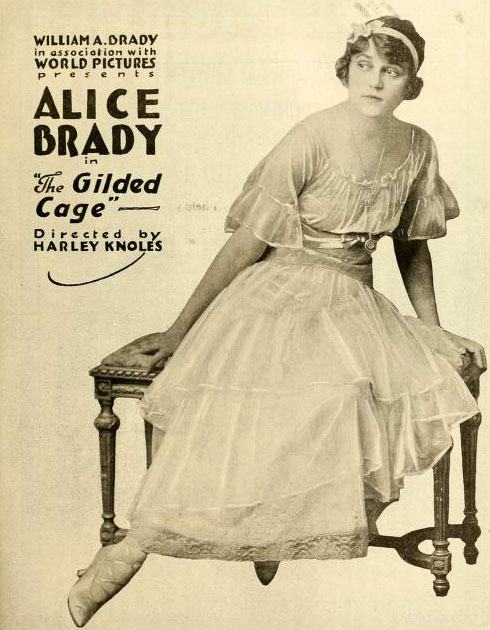
A definitive 4/10 rating for a film that redefined the boundaries of cult cinema. The Gilded Cage remains a cornerstone of transgressive art.
Step into the tumultuous realm of early 20th-century cinema, where grand narratives of power, rebellion, and romance often unfolded against lavish backdrops, even if those backdrops were mere painted canvases. In 1916, amidst the fervent creative boom of the silent film era, The Gilded Cage emerged as a compelling melodrama, a fascinating artifact that, even a century later, speaks volumes about the enduring human struggle against tyranny and the intoxicating allure of freedom. This is not merely a historical curiosity; it is a vibrant tableau of class conflict and personal transformation, wrapped in the dramatic conventions of its time.
The film plunges us into the heart of Balkany, a fictional kingdom teetering on the precipice of revolution. The opening scenes, though likely brief and expository in the original cut, paint a grim picture: King John V and Queen Vesta, a pair of monarchs whose extravagance and detachment have long alienated their subjects, meet a violent, regicidal end. This brutal act of defiance sets the stage for the arrival of Princess Honore, played with an intriguing blend of innocence and burgeoning resolve by Alice Brady. Honore, sequestered in a convent, represents a purity untainted by her parents' excesses, yet simultaneously a naiveté ill-suited for the viper's nest of court politics she is about to inherit. Her ascension is less a triumph and more a tragic inevitability, placing a young, inexperienced woman on a throne already undermined by popular disaffection and internal machinations.
Enter Baron Stefano, the Prime Minister, portrayed by Montagu Love with what one can only imagine was a potent blend of smoldering ambition and aristocratic menace. Stefano is the archetypal cinematic villain: a man whose lust for power is as insatiable as his desire for the queen. His unrequited love for Honore curdles into a dangerous resentment, fueling a meticulously crafted plot to overthrow the monarchy and establish a republic with himself as its de facto ruler. This is where The Gilded Cage truly begins to flex its dramatic muscles, pitting the vulnerability of a young queen against the calculating ruthlessness of a seasoned political predator. Stefano's character embodies the insidious nature of power, demonstrating how easily a trusted advisor can become a kingdom's greatest threat. His schemes are not merely about personal gain; they are a direct challenge to the very fabric of monarchical rule, echoing historical anxieties about the transition from inherited power to more 'democratic' forms, often corrupted by nascent authoritarianism.
The film's exploration of political intrigue finds resonance in other silent-era dramas, though often with different thematic focuses. While a film like To Have and to Hold might explore similar dynamics of power and betrayal within a more personal, domestic sphere, The Gilded Cage elevates these stakes to a national level, making the fate of an entire kingdom contingent on the shifting loyalties and treacherous ambitions within its highest echelons. Montagu Love, a prolific actor of the era, would have brought a seasoned theatricality to Stefano, his gestures and expressions likely conveying the character's sinister intent without the need for spoken dialogue, a hallmark of powerful silent film performances.
Counterbalancing Stefano's malevolence is Prince Boris, played by Irving Cummings. Boris is a fascinating character, a royal who has consciously renounced his title, casting his lot with the peasantry. This act of self-abnegation immediately positions him as a figure of immense moral authority and popular appeal. He is not merely a romantic lead; he is the embodiment of the people's aspirations, a leader forged in the crucible of their suffering. His connection to the common folk, his willingness to share their burdens, makes him a potent symbol of hope against the continued extravagance of the royal household, even under Honore's initial, unwitting reign. The narrative cleverly highlights the disconnect: even a well-meaning monarch can perpetuate systemic injustice if unaware of the daily struggles of her subjects.
The annual fair, a vibrant hub of communal life, serves as a crucial narrative device, bringing together people from all walks of life and amplifying the whispers of discontent into a palpable murmur of rebellion. It is here that Honore, driven by a nascent sense of responsibility and a desire to understand her people, ventures forth in the humble guise of a peasant girl. This trope of the incognito royal, while not entirely novel, is powerfully employed here, allowing Honore to witness firsthand the depth of her kingdom's disfavor and the urgent need for reform. Her chance encounter with Prince Boris, whose impassioned words about the prevailing conditions pierce through her sheltered understanding, marks a pivotal moment in her character arc. It is a moment of awakening, a stark confrontation with the reality of her 'gilded cage' – both the castle walls that separate her from her people and the illusions that have shielded her mind.
The drama escalates when a government spy, overhearing Boris's revolutionary sentiments and failing to recognize the disguised queen, hastily informs Prime Minister Stefano. The ensuing arrest of Boris, and Honore's defiant protest that leads to her own confinement, plunges the narrative into a thrilling sequence of suspense. The image of the rightful queen imprisoned alongside her revolutionary champion, both stripped of their true identities in the eyes of their captors, is a potent visual metaphor for the upside-down world of Balkany. The chief of the Royal Guard's report to Stefano, detailing Honore's defiant claim of royalty during her struggle, piques the Prime Minister's already heightened suspicions. This moment, where a desperate assertion of truth is initially dismissed as madness, adds a layer of tragic irony.
Stefano's solo descent into the dungeon, a dramatic scene likely underscored by tense, atmospheric lighting (or its silent film equivalent), culminates in his chilling discovery: Boris's peasant companion is indeed Queen Honore. This revelation transforms his already sinister plot into something far more personal and terrifying. With the queen now literally in his power, Stefano envisions a forced marriage, solidifying his claim to the throne and rendering his previous machinations legitimate. The 'gilded cage' now takes on a more literal and menacing aspect: Honore is trapped not just by circumstance, but by the direct, physical threat of a ruthless opportunist. This shift from political maneuvering to personal coercion intensifies the stakes, making her escape not just a matter of freedom, but of survival and the preservation of her dignity.
The narrative's reliance on disguise and mistaken identity for dramatic tension is a classic cinematic device, seen in various forms throughout early cinema. One might draw a parallel, though perhaps a less direct one, to films like The Gentleman from Indiana, where characters navigate complex social landscapes under assumed guises, leading to unforeseen complications and revelations. However, in The Gilded Cage, the disguise serves not just as a plot device but as a powerful symbol of Honore's journey of self-discovery and her eventual embrace of her people's plight.
Just as despair threatens to engulf the queen, a beacon of hope emerges in the form of Lesbia, a peasant girl whose love for Ivan, a sergeant in the Royal Guard, proves instrumental. Lesbia's discovery of Stefano's conspiracy and her subsequent efforts to secure Honore's release are a testament to the power of ordinary individuals to effect extraordinary change. She is not a queen or a prince, but a commoner driven by loyalty and affection, highlighting the film's underlying message that true power resides not in titles, but in the collective will and courage of the people. Her actions, born of love and a keen sense of justice, allow Honore to escape back to the safety of the Royal Castle, a momentary reprieve before the storm.
The tolling of the prison bell the following morning, signaling Boris's impending execution, serves as a stark, auditory harbinger of doom. Honore's desperate rush to Stefano's office, her impassioned plea to forbid the execution, and his cruel, dismissive laughter underscore the Prime Minister's absolute power and his contempt for both the queen and justice. This scene, likely played with intense emotionality by Alice Brady, would have been a powerful depiction of a monarch stripped of all but her moral authority, facing the cold indifference of a tyrant.
However, the narrative pivots to the true source of power: the people. Outside the prison walls, the soldiers are poised to execute Prince Boris, but the collective will of the common folk, ignited by their love for their leader, proves insurmountable. They rush forward, overpower the soldiers, and liberate Boris from his bonds. This sequence is the film's climactic revolutionary moment, a powerful depiction of popular uprising that resonates with the socio-political currents of the early 20th century. It’s a moment that, while perhaps less grand in its visual execution than later epics, would have carried immense symbolic weight for contemporary audiences grappling with questions of governance and popular sovereignty.
The revolutionary fervor culminates in an attack on the castle, a direct confrontation between the old order (or at least Stefano's attempted new order) and the rising tide of popular sentiment. It is amidst this chaos that one of the film's most significant revelations occurs: Prince Boris discovers that his brave peasant companion, the woman he has come to admire and love, is none other than Queen Honore herself. This moment of recognition, likely conveyed through close-ups and dramatic intertitles, is a powerful emotional beat, solidifying their romantic bond while simultaneously complicating their political alliance. Their love story, which initially seemed to bridge the chasm between royalty and commoner through disguise, now must contend with the stark realities of their respective stations.
The people, fueled by their success and the deep-seated grievances against the monarchy, clamor for revenge. Yet, it is Honore, having shed her naiveté and embraced her role as a true leader, who guides their righteous anger. She recounts Stefano's treacherous conduct, channeling the crowd's fury towards the true villain. The swift, decisive attack on Baron Stefano, resulting in his death, brings a satisfying, if brutal, resolution to his tyranny. This act of collective justice underscores the film's message about accountability and the power of a united populace.
The film concludes with Honore accepting Prince Boris as her beloved king consort. This ending is not merely a romantic triumph; it is a political statement. The union of the queen, now enlightened and empathetic, with the prince who renounced his title to serve the people, symbolizes a new era for Balkany. It represents a monarchy transformed, one that is rooted in love, understanding, and a genuine commitment to the welfare of its subjects. The 'gilded cage' has been opened, not through the abolition of monarchy, but through its profound reformation, demonstrating that true leadership can bridge divides and usher in an age of stability and justice.
In its blend of political commentary, dramatic intrigue, and heartfelt romance, The Gilded Cage stands as a compelling example of early silent cinema's ability to tackle complex themes. While we can only speculate on the nuances of its direction and the full scope of its visual artistry, the narrative structure penned by Frances Marion and J.I.C. Clarke is undeniably robust. It’s a story that explores the weighty responsibility of leadership, the corrupting influence of unchecked ambition, and the transformative power of popular will. The film, much like The Iron Woman which showcases a strong female protagonist navigating societal challenges, places a woman at the center of profound political upheaval, allowing her character to evolve from sheltered princess to enlightened monarch. Similarly, the romantic entanglements set against a broader struggle for justice echo the emotional depth found in a film like Ramona, albeit with a different cultural and historical context.
The performances by Alice Brady as Honore and Irving Cummings as Boris would have been crucial in conveying the emotional arc of the story, relying heavily on expressive gestures and facial acting, the lingua franca of silent film. Montagu Love's portrayal of Stefano would have provided the necessary contrast, a dark foil to their burgeoning idealism. The film is a reminder that even in its nascent stages, cinema was capable of crafting narratives that were not only entertaining but also deeply resonant with the social and political anxieties of its time. It is a testament to the enduring power of storytelling, a 'gilded cage' of a different kind—one that captures and preserves a moment in cinematic history, inviting us to peer through its bars and reflect on the timeless struggles it depicts.
Viewing The Gilded Cage through a contemporary lens, one can appreciate its historical significance and its contribution to the evolution of narrative film. It’s a drama that doesn’t shy away from the harsh realities of power dynamics, yet ultimately champions the ideals of justice and a leadership that is truly beholden to its people. It serves as a fascinating precursor to countless stories of royal intrigue and popular uprising, a foundational stone in the grand edifice of cinematic narrative. The film, in its essence, argues for a monarchy that is not merely inherited but earned through empathy and a genuine connection to the subjects it serves, a powerful and timeless message encapsulated within its dramatic, silent frames.
IMDb —
1934
Community
Log in to comment.