DbcultAccessing Vault...
Cult Review
Senior Film Conservator
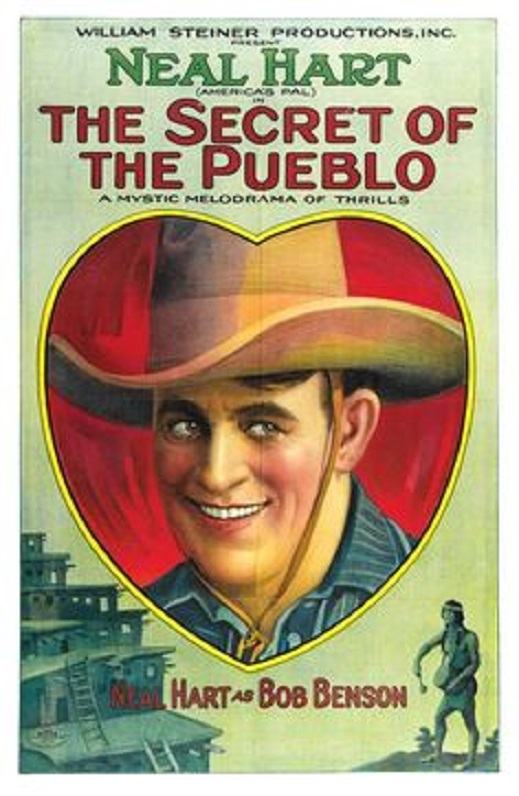
The opening tableau of The Secret of the Pueblo is a sun‑bleached panorama that feels both mythic and palpably real, the camera lingering on the cracked earth as if to whisper ancient secrets before the narrative even begins.
Neal Hart’s portrayal of Bob Benson is a study in restrained stoicism; his eyes convey a restless wanderer who has seen too many horizons to settle, yet his posture hints at an unspoken code of honor. When he first spots the inconspicuous fissure in the cliffside—a crack barely wider than a horse’s flank—Hart’s subtle shift in expression signals the moment his curiosity eclipses caution.
The film’s writer, Alan James, constructs a plot that refuses the simplistic good‑versus‑evil binary common to many silent westerns. Instead, he layers motives: the two white antagonists, played by Monte Montague and Tom Grimes, are not mere villains but opportunists exploiting the Pueblo’s reverence for their altar to further a personal vendetta against Ruth Bryson’s family. Their duplicity is hinted at through lingering close‑ups of clenched fists and whispered exchanges, a visual shorthand that rewards attentive viewers.
Hazel Deane, as Ruth Bryson, delivers a performance that balances vulnerability with an undercurrent of resilience. Her captivity within the altar room is not portrayed as passive suffering; rather, the set design—intricately carved stone walls illuminated by flickering torchlight—creates a claustrophobic sanctuary that mirrors her internal struggle between fear and defiance.
Cinematographer (uncredited) employs a palette that juxtaposes the harsh ochres of the desert with the cool, almost ethereal blues of the Pueblo interior. The contrast is not merely aesthetic; it underscores the thematic tension between the external world of lawlessness and the internal realm of sacred tradition.
When Benson decides to intervene, the film shifts from atmospheric exposition to kinetic action. The chase sequence across the mesas is choreographed with a kinetic energy that feels ahead of its time, the camera tracking the horse’s gallop in a series of rapid cuts that convey both speed and peril. The use of natural light—sunlight glinting off the horse’s mane—adds a visceral realism that grounds the otherwise mythic narrative.
Comparatively, the narrative complexity of Snap Judgment feels more linear, while The Carpet from Bagdad leans heavily on exoticism. The Secret of the Pueblo distinguishes itself by refusing to exoticize its Indigenous characters; instead, it presents the Pueblo community as custodians of a living heritage, their rituals depicted with reverence rather than caricature.
The film’s sound design—though limited to the era’s intertitles and musical accompaniment—relies on rhythmic drumming cues during the altar scenes, a subtle nod to the cultural heartbeat of the Pueblo people. These auditory motifs, when paired with the visual rhythm of the torch‑lit corridors, create an immersive sensory experience that transcends the silent format.
Montague’s antagonist, a grizzled prospector named Silas Crane, is rendered with a nuanced cruelty; his motivations are hinted at through a series of intertitles that reveal a debt owed to a corrupt land baron, thereby contextualizing his betrayal of the Pueblo as a desperate act of survival rather than pure malice. This moral ambiguity enriches the film’s thematic tapestry, inviting viewers to contemplate the blurred lines between victim and perpetrator.
Grimes’ character, Deputy Marshal Whitaker, serves as a foil to Benson’s lone heroism. Whitaker’s adherence to the law contrasts sharply with Benson’s personal code, and their brief confrontation—set against the backdrop of a storm‑swept canyon—visually underscores the tension between institutional authority and individual conscience.
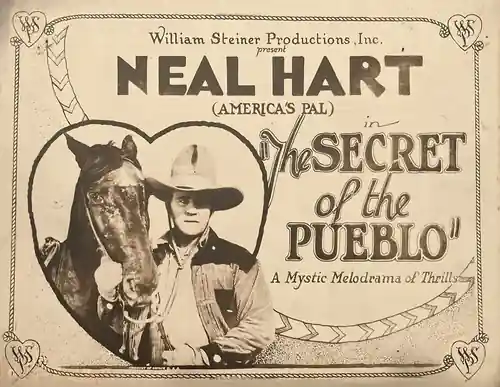
The screenplay’s pacing is deliberate; moments of high tension are interspersed with quieter, contemplative scenes that allow the audience to absorb the cultural context. For instance, a lingering shot of Pueblo artisans weaving intricate patterns on a loom is accompanied by an intertitle that reads, “Tradition endures even when shadows loom,” a line that resonates long after the film ends.
From a production standpoint, the set designers succeeded in recreating an authentic Pueblo altar, employing genuine stonework and traditional motifs. This attention to detail not only enhances visual credibility but also demonstrates a respect for the source culture that was rare for its time.
The climax—Benson’s daring infiltration of the altar chamber, the ensuing struggle, and the eventual liberation of Ruth—unfolds with a crescendo of visual and emotional intensity. The final tableau, where Benson and Ruth emerge from the cavernous doorway into the blazing sunrise, is a masterstroke of symbolism: the light of a new day washing away the darkness of captivity.
While the film concludes with Benson riding off into the horizon, the lingering shots of the Pueblo community performing a quiet ceremony suggest that the story’s impact extends beyond the immediate rescue, hinting at a restoration of balance between cultures.
For viewers seeking comparable narrative depth, The Circular Staircase offers a similarly intricate plot that intertwines mystery with character study, whereas The Gulf Between provides a poignant exploration of cultural divides in a different historical context.
The film’s legacy endures not merely as a western adventure but as an early cinematic effort to portray Indigenous peoples with dignity. Its influence can be traced in later works such as Powers That Prey, which echo its thematic concerns about exploitation and cultural preservation.
In terms of technical achievement, the use of natural lighting, practical effects for the altar’s hidden mechanisms, and the seamless integration of location shooting with studio sets demonstrate a level of craftsmanship that rivals contemporary productions.
The narrative’s layered structure—combining a rescue plot, cultural commentary, and a critique of greed—makes The Secret of the Pueblo a film that rewards repeated viewings. Each rewatch reveals new nuances: a glint of steel in a background extra’s hand, a fleeting expression of doubt on Crane’s face, or the subtle shift in Ruth’s posture as she regains agency.
Overall, the film stands as a testament to the power of silent cinema to convey complex ideas without spoken dialogue, relying instead on visual poetry, expressive performances, and meticulously crafted mise‑en‑scene. Its relevance persists, inviting modern audiences to reflect on the intersections of heroism, cultural respect, and the timeless allure of the frontier.
Rating: 4.5 out of 5 stars.
IMDb —
1919
Community
Log in to comment.